
John 4:34-38
NL
34 JesusA saidB to them, “My foodC isD to doE
A “Jesus” = Iesous. From Hebrew Yehoshua (Joshua, the Lord is salvation); {from YHVH (proper name of the God of Israel; the self-existent and eternal one); {from havah (to become) or from hayah (to come to pass, become, be)} + yasha (to deliver, defend, help, preserve, rescue; properly, to be open, wide or free, which implies being safe. So, in a causative sense, this is to free someone)}. This is Jesus or Joshua in Greek – the Lord saves or the Lord is salvation.
B “said” = lego. This is to speak, say, name, call, command. It is generally to convey verbally.
C “food” = broma. 17x in NT. From bibrosko (to eat); related to bora (food); perhaps from bosko (to feed or pasture a flock; figuratively, to nourish spiritually). This is any kind of food in a literal or figurative sense.
D “is” = eimi. This is to be, exist.
E “do” = poieo. This is to make, do, act, construct, abide, or cause.
the willF of him who sentG me and to completeH his work.I
F “will” = thelema. From thelo (to desire, wise, will, intend). This is the act of will, choice, purpose, or decree.
G “sent” = pempo. This is to send, put forth, or dispatch. This often refers to a temporary errand. It is sending someone with a focus on the place they departed from. By contrast, another Greek word, hiemi, emphasizes the destination and yet another word, stello, focuses on the motion that goes with the sending.
H “complete” = teleioo. From teleios (going through the steps to complete a stage or phase and then moving on to the next one; reaching an end and so being complete or “perfect”; also full grown or mature); from telos (an end, aim, purpose, completion, end goal, consummation, tax). This is finish, accomplish, bring to an end, complete, reach a goal, finish a race, to consummate. It refers to completing stages or phases to get to an ultimate conclusion. It can also mean consecrate or fulfill.
I “work” = ergon. From ergo (to work, accomplish, do). This is work, task, deed, labor, effort.
35 Do you not say, ‘Four monthsJ more,K thenL comesM the harvest’?N
J “four months” = tetramenos. 1x in NT. From tessares (four; figuratively, total coverage) + men (a month). This is a span of four months.
K “more” = eti. Perhaps related to etos (year, age). This is still, even, remain.
L {untranslated} = eimi. Same as “is” in v34. See note D above.
M “comes” = erchomai. This is to come or go.
N “harvest” = therismos. 13x in NT. From therizo (to reap, gather, harvest); from theros (summer; the heat, which implies summer); from thero (to heat). This is harvesting or reaping. By implication, it is the crop that was harvested.
ButO I tellP you, look aroundQ you,
O {untranslated} = idou. From eido (to be aware, see, know, remember, appreciate). This is see! Lo! Behold! Look! Used to express surprise and or draw attention to the statement.
P “tell” = lego. Same as “said” in v34. See note B above.
Q “look around” = epairo + ho + ophthalmos + su. Literally, “lift up your eyes.” Epairo is 19x in NT. From epi (on, upon, among, what is fitting) + airo (raise, take up, lift, remove). This is to lift up or raise in a literal or figurative sense. Figuratively, it could mean to exalt oneself. Ophthalmos is from optanomai (to appear, be seen by); from horao (become, seem, appear). This is eye or sight. It is used figuratively for the mind’s eye, a vision, or for envy.
and seeR how the fieldsS are ripeT for harvesting.
R “see” = theaomai. From thaomai (to gaze at a spectacle; to look at or contemplate as a spectator; to interpret something in efforts to grasp its significance). This is to behold, look upon, see, contemplate, visit like a spectator. This is the root of the word “theatre.”
S “fields” = chora. From chasma (gap, gulf, chasm, open space); from chasko (to gape, yawn). This is space, land, region, fields, open area – the countryside in contrast to the town.
T “ripe” = leukos. Related to luke (light). This is bright, white, or brilliant.
36 The reaperU is already receivingV wagesW and is gatheringX
U “reaper” = therizo. Related to “harvest” in v35. See note N above.
V “receiving” = lambano. It does not refer to passive receiving of something, but active acceptance or taking of something whether it is offered or simply nearby. It focuses on individual decision and action.
W “wages” = misthos. This is wages, pay, or salary. It can also be reward, recompense, or punishment. It is pay for services rendered in a literal or figurative way, either good or bad.
X “gathering” = sunago. From sun (with, together with, closely associated) + ago (to lead, bring, carry, guide, go, drive). This is to lead together and so to assemble, bring together, welcome with hospitality, or entertain. In the sense of assembly, this is the root of the word “synagogue.”
Y “fruit” = karpos. Perhaps from harpazo (to seize by force, snatch away); from haireo (to choose, take). This is a fruit or vegetable, through sometimes it refers to an animal. Figuratively, it is deeds, results, profits, or gain.
Z “eternal” = aionios. From aion (an age, length of time); from the same as aei (ever, always, unceasingly, perpetually; on every occasion). This is age-long, forever, everlasting. Properly, that which lasts for an age. This is where eon comes from.
AA “life” = zoe. From zao (to live, be alive). This is life including the vitality of humans, plants, and animals – it is life physical and spiritual and life everlasting.
so that sowerBB and reaper may rejoiceCC together.DD
BB “sower” = speiro. Probably from spao (to pull or draw like one draws a sword). This is sowing a seed or scattering. It is sowing in a literal or figurative sense.
CC “rejoice” = chairo. From char– (to extend favor, lean towards, be inclined to be favorable towards). This is to rejoice, be glad or cheerful; a greeting. This is the root verb that the Greek word for “grace” comes from (charis).
DD “together” = homou. 4x in NT. From homos (the same). This is together.
37 For here the sayingEE holdsFF true,GG
EE “saying” = logos. Related to “said” in v34. From lego (see note B above). This is word, statement, speech, analogy. It is a word that carries an idea or expresses a thought, a saying. It could refer to a person with a message or reasoning laid out in words. By implication, this could be a topic, line of reasoning, or a motive. It can be used for a divine utterance or as Word – Christ.
FF “holds” = eimi. Same as “is” in v34. See note D above.
GG “true” = alethinos. From alethes (true, unconcealed; true because it is in concert with fact and reality – attested; literally, what cannot be hidden; truth stands up to the test and scrutiny and is undeniable, authentic); {from a (not) + lanthano (concealed, hidden, unnoticed; to shut one’s eyes to, unwittingly, unawares)}. This is literally made of truth – that which is true or real, authentic. Something that is true from its source and has integrity.
HH “one” = allos. This is other, another. Specifically, it is another of a similar kind or type. There is a different word in Greek that speaks of another as a different kind (heteros).
II {untranslated} = eimi. Same as “is” in v34. See note D above.
JJ “sows” = speiro. Same as “sower” in v36. See note BB above.
and anotherKK reaps.’LL 38 I sentMM you to reap
KK “another” = allos. Same as “one” in v37. See note HH above.
LL “reaps” = therizo. Same as “reaper” in v36. See note U above.
MM “sent” = apostello. From apo (from, away from) + stello (to send, set, arrange, prepare, gather up); {probably from histemi (to make to stand, stand, place, set up, establish, appoint, stand firm, be steadfast)}. This is to send forth, send away, dismiss, send as a messenger. It implies one that is sent for a particular mission or purpose rather than a quick errand. This is where “apostle” comes from.
that for which you did not labor.NN OthersOO have labored, and you have enteredPP into their labor.”QQ
NN “labor” = kopiao. From kopos (labor that leads to exhaustion, depletion, weariness, fatigue; working until worn out); from kopto (to cut, strike, cut off; beating the chest to lament and so to mourn). This is working with effort, whether of the body or mind, growing weary, feeling tired, working hard.
OO “others” = allos. Same as “one” in v37. See note HH above.
PP “entered” = eiserchomai. Related to “comes” in v35. From eis (to, into, for, among) + erchomai (see note M above). This is to go in in a literal or figurative sense.
QQ “labor” = kopos. Related to “labor” in v38. 18x in NT. See note NN above.
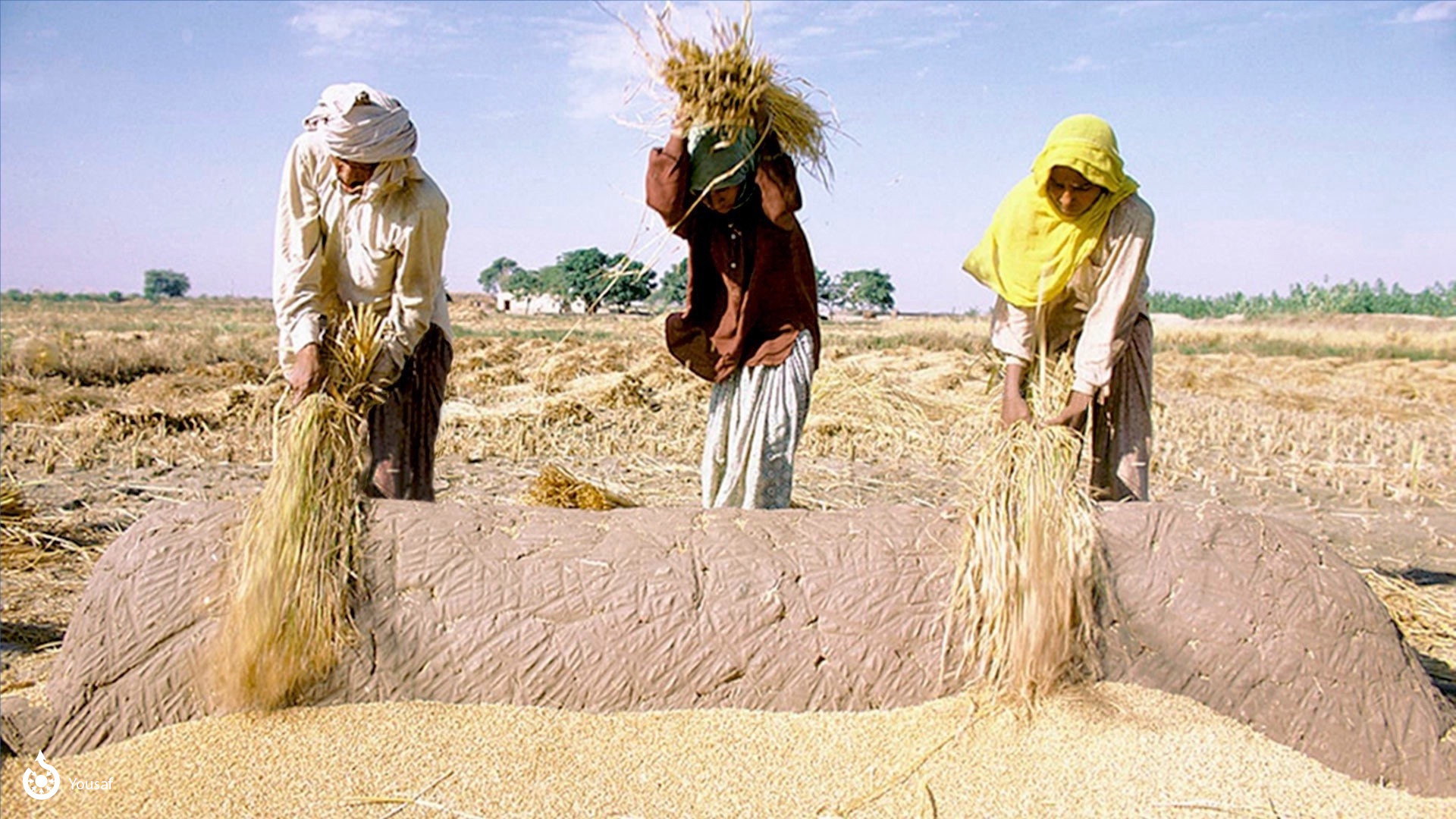
Image credit: “Wheat, Barley and Harvests” by David Padfield at Nazareth Village in Israel.
