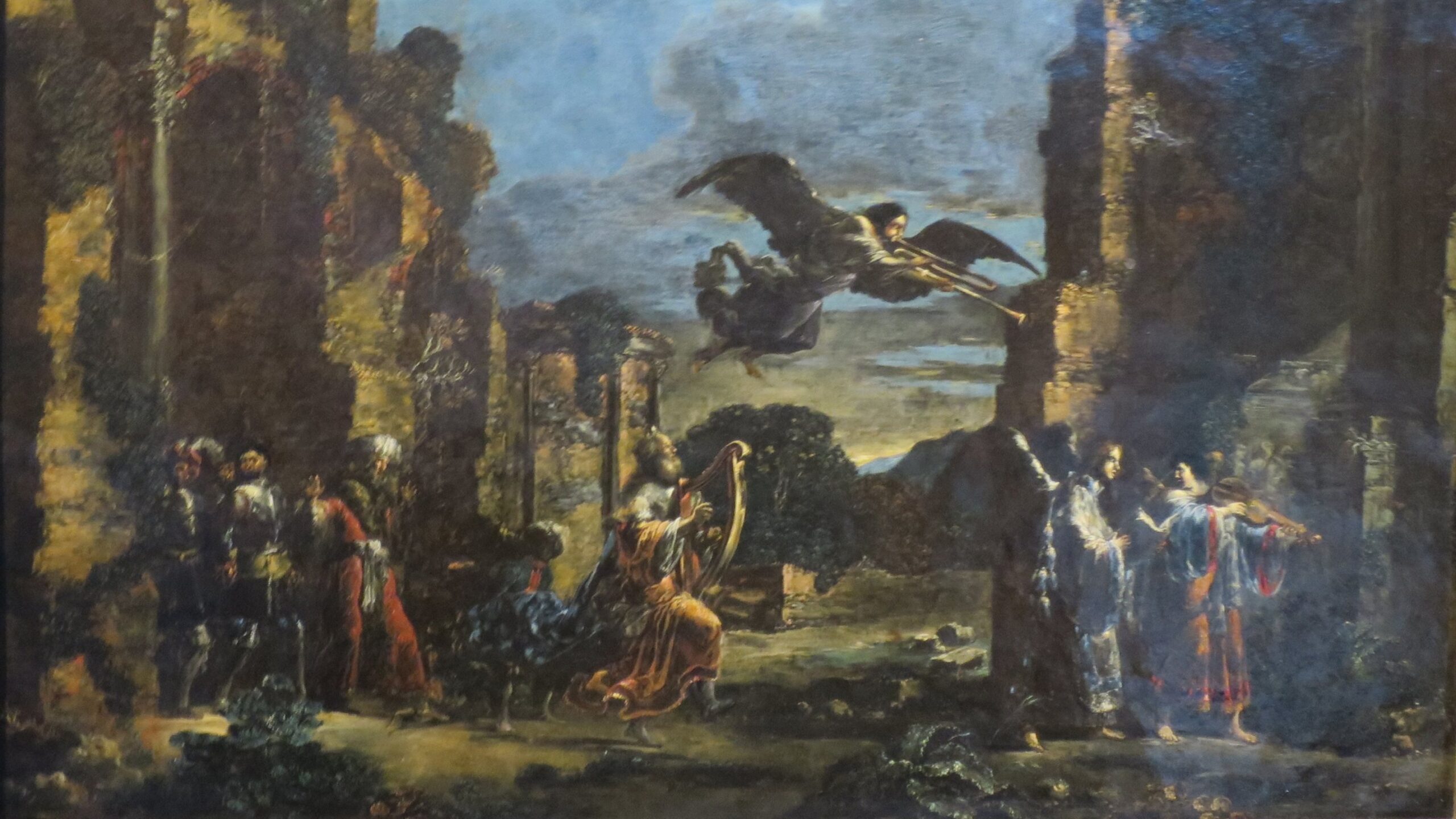
2 Samuel 6
BibleHub
1 DavidI againII gatheredIII allIV the chosenV men
Notes on verse 1a
I “David” = David. From the same as dod (beloved, love, uncle); the root may mean to boil, which is used figuratively to describe love. So, this implies someone you love such as a friend, a lover, or a close family member like an uncle. David’s name likely means something like “beloved one.”
II “again” = od. From ud (to admonish, repeat, duplicate, testify, restore, record, relieve). This is still, yet, again, more.
III “gathered” = yasaph. This is to add, increase, continue, exceed.
IV “all” = kol. From kalal (to complete). This is all or every.
V “chosen” = bachur. From bachar (to choose, appoint, try, excellent). This is choice, chosen, selected. It is a youth or young man.
of Israel,VI thirtyVII thousand.VIII
Notes on verse 1b
VI “Israel” = Yisrael. From sarah (to persist, exert oneself, contend, persevere, wrestle, prevail) + El (God or god). This is Israel, meaning God strives or one who strives with God; new name for Jacob and for his offspring. This refers to the people and to the land.
VII “thirty” = sheloshim. From the same as shalosh (three, fork, triad). This is thirty or thirtieth.
VIII “thousand” = eleph. Perhaps from the same as eleph (herd, cattle); from alaph (to learn, speak, associate with). This is thousand.
2 David and all the peopleIX with him set outX and wentXI
Notes on verse 2a
IX “people” = am. From amam (to darken, hide, associate; creating shadows by huddling together). This is people or nation. It can be used specifically for a tribe, collectively of troops or armies, or figuratively to refer to a flock of animals.
X “set out” = qum. To arise, stand, accomplish, establish, abide. This is rising as in rising against, getting up after being sick or asleep, arising from one state to another, becoming powerful, or rising for action. It can also be standing in a figurative sense.
XI “went” = halak. This is go, come, walk. It is walk literally and figuratively and includes people and animals. It can be used figuratively for one’s moral life – how we walk according to God’s way or against it. It can also refer to the walk of life as in the course one’s life takes, the choices we make, etc.
from Baale-judahXII to bring upXIII from there the arkXIV of God,XV
Notes on verse 2b
XII “Baale-judah” = Baale Yehudah. 1x in OT. From Baal (Baal, used for several Canaanite gods; literally, “lord”); {from the same as baal (owner, master, husband); from baal (to marry, have dominion over, to master)} + Yehudah (Judah, son of Jacob, his tribal descendants, a name for the southern kingdom. Literally, it means praised); {probably from yadah (to throw one’s hands into the air in a gesture of praise)}. This is Baale-judah, meaning “Baal of Judah” or “masters of Judah.”
XIII “bring up” = alah. This is to go up, approach, ascend, be high, be a priority; to arise in a literal or figurative sense.
XIV “ark” = aron. Perhaps from arah (to gather or pluck). This is a chest, box, or coffin. It is used for the Ark of the Covenant.
XV “God” = Elohim. Related to “Israel” in v1. See note VI above.
which is calledXVI by the nameXVII of the LordXVIII
Notes on verse 2c
XVI “called” = qara. This is to call or call out – to call someone by name. Also used more broadly for calling forth.
XVII “name” = shem. May be from sum (to put, place, set). This is name, fame, renown. A name was thought to indicate something essential about a person – something about their individuality. So, this word can also mean honor, authority, or character.
XVIII “Lord” = YHVH. From havah (to be, become) or hayah (to come to pass, become, be). This is the name of the God of Israel, the self-existent and eternal one, the tetragrammaton. This pronunciation has been lost to time so “Lord” is generally used in its place.
of hostsXIX who is enthronedXX on the cherubim.XXI
Notes on verse 2d
XIX “hosts” = tsaba. From tsaba (to wage war, serve, assemble, fight, perform, muster, wait on). This is a large group of persons (used figuratively for a group of things). It implies a campaign literally as with army, war, warfare, battle, company, soldiers. Can also be used figuratively for hardship or for worship.
XX “enthroned” = yashab. This is to sit and so to remain and so to dwell. It is sitting for any reason – as a judge, in order to ambush, or just sitting quietly. Causatively, this can mean settling or marrying. This can also mean continue, endure, or establish.
XXI “cherubim” = kerub. Perhaps related to Akkadian (“to bless” or “one who blesses”). This is a cherub – perhaps a class of angels. See https://en.wiktionary.org/wiki/%D7%9B%D7%A8%D7%95%D7%91#Hebrew
3 They carriedXXII the ark of God on a newXXIII cartXXIV
Notes on verse 3a
XXII “carried” = rakab. This is to ride an animal or in some vehicle. It can also mean bringing on a horse.
XXIII “new” = chadash. From chadash (to renew or restore, to repair or rebuild). This is something fresh or new.
XXIV “cart” = agalah. From the same as egel (male calf as one that frisks about; often one that is almost grown up); may be from the same as agol (round, circular – root meaning revolve). This is something that turns like a cart or chariot – a vehicle with wheels.
and broughtXXV it out of the houseXXVI of Abinadab,XXVII
Notes on verse 3b
XXV “brought” = nasa. This is to lift in a broad sense, literally and figuratively. So it could be to carry, take, or arise. It could also be bring forth, advance, accept.
XXVI “house” = bayit. Probably from banah (to build, make, set up, obtain children; to build literally or figuratively). This is house, court, family, palace, temple.
XXVII “Abinadab” = Abinadab. 12x in OT. From ab (father literal or figurative) + nadab (to offer voluntarily, incite, impel; to volunteer to be a soldier or offer freely). This is Abinadab, meaning “my father is noble” or “father of generosity,” which is to say very generous.
which was on the hill.XXVIII UzzahXXIX and Ahio,XXX
Notes on verse 3c
XXVIII “hill” = gibah. From the same as Geba (Geba or Gibeah; hillock); from the same as gabia (cup, bowl, flower; root might mean being convex). This is hill or little hill.
XXIX “Uzzah” = Uzza. 14x in OT. From azaz (to be strong in a literal or figurative sense, overcome, be impudent). This is Uzzah or Uzza, a name meaning “strength.”
XXX “Ahio” = Achyo. 6x in OT. From the same as ach (brother, kindred, another, other, like) OR from ach (see above) + Yah (the shortened form of the name of the God of Israel; God, Lord); {from YHVH (proper name of the God of Israel; God, Lord; the self-existent or eternal one); from havah (to become) or hayah (see note XVIII above)}} This is Ahio, a name meaning “brotherly” or “Brother of the Lord.” See https://www.abarim-publications.com/Meaning/Ahio.html
the sonsXXXI of Abinadab, were drivingXXXII the new cart 4 XXXIIIwith the ark of God, and Ahio went in front ofXXXIV the ark.
Notes on verses 3d-4
XXXI “sons” = ben. Related to “house” in v3. From banah (see note XXVI above). This is son, age, child. It is son in a literal or figurative sense.
XXXII “driving” = nahag. This is to drive as in driving flocks, but also driving in animal or vehicle like a chariot. It can mean to carry away, lead, drive away, proceed, or guide. It can also relate to behavior and what one is accustomed to.
XXXIII Some manuscripts add “and they brought it out of the house of Abinadab that was on the hill” = nasa + bayit + Abinadab + asher + gibah. Nasa is the same as “brought” in v3. See note XXV above. Bayit is the same as “house” in v3. See note XXVI above. Abinadab is the same as “Abinadab” in v3. See note XXVII above. Gibah is the same as “hill” in v3. See note XXVIII above.
XXXIV “in front of” = paneh. From panah (to turn, face, appear). This is face in a literal or figurative sense. It could be face, presence, anger, respect. It can also be used of God to indicate divine favor or presence.
5 David and all the house of Israel were dancingXXXV beforeXXXVI the Lord with all their might,XXXVII
Notes on verse 5a
XXXV “dancing” = sachaq. This is to laugh, celebrate, joke, mock, scorn. This is laughing, whether for joy or scorn. It can imply plays or holding a contest.
XXXVI “before” = paneh. Same as “in front of” in v4. See note XXXIV above.
XXXVII “might” = ets. Perhaps from atsah (to shut, fasten, firm up, to close one’s eyes). This is tree or other things related to trees like wood, sticks, or stalks. It can also refer to wood products like a plank or staff or gallows. Additionally, this can refer to a carpenter.
with songsXXXVIII and lyresXXXIX and harpsXL
Notes on verse 5b
XXXVIII “songs” = berosh. This is a cypress, fir, or juniper. It can be something made of this wood like a lance of musical instrument.
XXXIX “lyres” = kinnor. Root may be to twang. This is a lyre or harp.
XL “harps” = nebel. From nabel (to fall away, faint, wither, languish, sink; figuratively, being senseless, foolish, or wicked; to despise, disgrace, or fall to nothing, to be seen with contempt). This is a vessel, perhaps made of skins for holding liquids. It could be a skin, vase, or lyre as having a similar shape.
and tambourinesXLI and castanetsXLII and cymbals.XLIII
Notes on verse 5c
XLI “tambourines” = toph. 17x in OT. Perhaps from taphaph (to play a drum, timbrel, or tambourine). This is a timbrel or tambourine.
XLII “castanets” = menaanea. 1x in OT. From nua (to waver in a literal or figurative sense; to tremble, quiver, totter; a fugitive). This is some kind of instrument that rattles. It could be a sistrum, a castanet, or a cornet.
XLIII “cymbals” = tsaltsal. 6x in OT. From tsalal (to tingle or rattle; can express shame or fear). This is something that clatters or rattles. So, it could be a cymbal, locust, spear, harpoon, or cymbal.
6 When they cameXLIV to the threshing floorXLV of Nacon,XLVI
Notes on verse 6a
XLIV “came” = bo. This is to enter, come in, advance, fulfill, bring offerings, enter to worship, attack. It can also have a sexual connotation.
XLV “threshing floor” = goren. Root may mean to smooth. It is a threshing floor, barn, or open areas more generally.
XLVI “Nacon” = Nakon. 1x in OT. From kun (properly, in a perpendicular position; literally, to establish, fix, fasten, prepare; figuratively, it is certainty, to be firm, faithfulness, render sure or prosperous) OR from nakah (to hit whether lightly or severely literal or figurative; beat, punish, give wounds, kill, or slaughter). This is Nacon, which may mean “prepared” or “smitten” or “stricken” or “it’s been determined.” See https://www.abarim-publications.com/Meaning/Nacon.html
Uzzah reached outXLVII his hand to the ark of God and took holdXLVIII of it, for the oxenXLIX lurched.L
Notes on verse 6b
XLVII “reached out” = shalach. This is to send out, away, send for, forsake. It can also mean to divorce or set a slave free.
XLVIII “took hold” = achaz. This is to grasp, catch, seize, take and hold in possession. It can also be to be afraid or hold back.
XLIX “oxen” = baqar. From baqar (to plow, break forth; figuratively, to inquire, inspect, consider). This is cattle – an animal used for plowing.
L “lurched” = shamat. 9x in OT. This is to allow something to drop, release, stumble, upset, let alone, remit, lose.
7 The angerLI of the Lord was kindledLII against Uzzah, and God struckLIII him there,LIV and he diedLV there beside the ark of God.
Notes on verse 7
LI “anger” = aph. From anaph (to be angry; properly, breathing hard as a signifier of being enraged). This properly refers to the nose or nostril and by extension the face. It can specifically refer to anger or wrath as one breathes hard and nostrils flare in times of great anger.
LII “kindled” = charah. Perhaps related to charar (to be hot, burn, glow, melt, be scorched; figuratively, to incite passion, be angry). This is to be displeased, burn with anger, glow, become warn. Figuratively it is a blaze of anger, zeal, or jealousy.
LIII “struck” = nakah. Related to “Nacon” in v6. See note XLVI above.
LIV {untranslated} = shal. 1x in OT. Perhaps from shalah (to be quiet, safe, tranquil; can imply success or happiness; could also mean to deceive or be negligent). This is prosperity, ease, or error.
LV “died” = mut. This is to die in a literal or figurative sense. It can also refer to being a dead body.
8 David was angryLVI because the Lord had burst forthLVII with an outburstLVIII upon Uzzah, so that placeLIX is called Perez-uzzahLX to this day.LXI
Notes on verse 8
LVI “was angry” = charah. Same as “kindled” in v7. See note LII above.
LVII “burst forth” = parats. This is to make a breach, burst out, compel, disperse. It is to break out literally or figuratively.
LVIII “outburst” = perets. Related to “burst forth” in v8. 19x in OT. From parats (see note LVII above). This is a breach or a gap. It could be a break, whether literal or figurative.
LIX “place” = maqom. Related to “set out” inv 2. From qum (see note X above). This is a standing, which is to say a spot or space a place. It can also refer to a locality or a physical/mental condition. HaMaqom is also a Jewish name for God – the place, i.e. the Omnipresent One.
LX “Perez-uzzah” = Perets uzzah. Related to “burst forth” and “outburst” in v8 & to “Uzzah” in v3. 2x in OT. From perets (see note LVIII above) + Uzzah (see note XXIX above). This is Perez-uzzah, which means “breach of Uzzah” or “breakthrough of Uzzah” or “breach of strength” or “defeat of might.” See https://www.abarim-publications.com/Meaning/Perez-uzzah.html
LXI “day” = yom. Root may mean being hot. This is the day in a literal or figurative sense. It can also mean birth, age, daylight, continually or other references to time.
9 David was afraidLXII of the Lord that day; he said,LXIII “How can the ark of the Lord come into my care?”LXIV
Notes on verse 9
LXII “was afraid” = yare. This is to fear, be afraid, dreadful. It can also refer to fearful reverence – to fear in a moral sense is to say to revere, respect.
LXIII “said” = amar. This is to speak, say, answer, command, promise, report.
LIV “come…care” = bo. Same as “came” in v6. See note XLIV above.
10 So David was unwillingLXV to take the ark of the Lord into his careLXVI in the cityLXVII of David;
Notes on verse 10a
LXV “was unwilling” = lo + abah. Abah is to breathe after, be willing, obey, accept, be content with, satisfy.
LXVI “take…care” = sur. This is to turn aside in a literal or figurative sense – to depart, decline, rebel, remove, or withdraw.
LXVII “city” = iyr. From uwr (to awaken or wake oneself up). This can mean excitement in the sense of wakefulness or city. Properly, this is a place that is guarded. Guards kept schedules according to watches. This sense of the word would include cities as well as encampments or posts that were guarded.
instead, David tookLXVIII it to the house of Obed-edomLXIX the Gittite.LXX
Notes on verse 10b
LXVIII “took” = natah. This is to stretch or spread out, to extend, or bend. In can also imply moral deflection.
LXIX “Obed-edom” = Obed edom. From abad (to work, serve, compel; any kind of work; used causatively, can mean to enslave or keep in bondage) + Edom (Edom or Idumaea); {from adom (to be red or flushed)}. This is Obed-edom, a name meaning “servant of Edom,” “slave of Edom,” “serving Edom,” or “servant of the red one” See https://www.abarim-publications.com/Meaning/Obed-edom.html
LXX “Gittite” = Gitti. 10x in OT. From Gath (Gath, a Philistine city whose name means “wine press”); from the same as gath (wine press); probably from nagan (to strike a stringed instrument, to pluck or play it). This is Gittite or someone from Gath.
11 The ark of the Lord remainedLXXI in the house of Obed-edom the Gittite threeLXXII months,LXXIII and the Lord blessedLXXIV Obed-edom and all his household.LXXV
Notes on verse 11
LXXI “remained” = yashab. Same as “enthroned” in v2. See note XX above.
LXXII “three” = shalosh. Related to “thirty” in v1. See note VII above.
LXXIII “months” = chodesh. Related to “new” in v3. From chadash (see note XXIII above). This refers to a new moon. It can also mean monthly.
LXXIV “blessed” = barak. This is to kneel, to bless. It is blessing God as part of worship and adoration or blessing humans to help them. It can be used as a euphemism to say curse God.
LXXV “household” = bayit. Same as “house” in v3. See note XXVI above.
12 It was toldLXXVI KingLXXVII David,LXXVIII “The Lord has blessed the household of Obed-edom and all that belongs to him becauseLXXIX of the ark of God.” So David went and brought upLXXX the ark of God from the house of Obed-edom to the city of David with rejoicing,LXXXI
Notes on verse 12
LXXVI “told” = nagad. This is to declare, make conspicuous, stand in front, manifest, predict, explain.
LXXVII “King” = melek. From malak (to be or become king or queen, to rise to the throne, to be crowned; by implication, to take counsel). This is king or royal.
LXXVIII {untranslated} = amar. Same as “said” in v9. See note LXIII above.
LXXIX “because” = abur. From abar (to pass over, pass through, or pass by; cross over or to alienate; used for transitions). This is for, so that, on account of. Properly, it means crossed.
LXXX “brought up” = alah. Same as “bring up” in v2. See note XIII above.
LXXXI “rejoicing” = simchah. From samach (to rejoice, be glad; properly, to brighten up; also used figuratively). This is joy, rejoicing, pleasure, or glee.
13 andLXXXII when those who boreLXXXIII the ark of the Lord had goneLXXXIV sixLXXXV paces,LXXXVI
Notes on verse 13a
LXXXII {untranslated} = hayah. Related to “Lord” in v2. See note XVIII above.
LXXXIII “bore” = nasa. Same as “brought” in v3. See note XXV above.
LXXXIV “gone” = tsaad. 8x in OT. This is to step, go, run, walk, to pace. It is to march with a regular step, climb up, hurl down.
LXXXV “six” = shesh. This is six. Figuratively, it can be a surplus since it is one more than the number of fingers on the hand.
LXXXVI “paces” = tsaad. Related to “gone” in v13. 14x in OT. From tsaad (see note LXXXIV above). This is a step, pace, or stride.
he sacrificedLXXXVII an oxLXXXVIII and a fatted calf.LXXXIX
Notes on verse 13b
LXXXVII “sacrificed” = zabach. This is slaughtering an animal, generally for the purpose of sacrifice. It can mean kill or offer.
LXXXVIII “ox” = shor. Perhaps from shur (to travel, turn, journey; travelling like a prostitute or a merchant). This is bull, ox, head of cattle, cow.
LXXXIX “fatted calf” = meri. 8x in OT. Perhaps from mara (to rebel, flap wings, whip, be filthy). This is a stall-fed cow, a fatling.
14 David dancedXC beforeXCI the Lord with all his might;XCII
Notes on verse 14a
XC “danced” = karar. 2x in OT – both in this passage. This is to dance or whirl.
XCI “before” = paneh. Same as “in front of” in v4. See note XXXIV above.
XCII “might” = oz. Related to “Uzzah” in v3 & “Perez-uzzah” in v8. From azaz (see note XXIX above). This is strength in the sense of force, majesty, praise, material and physical strength, the abstract notion of security. It can also speak of social or political power.
David was girdedXCIII with a linenXCIV ephod.XCV
Notes on verse 14b
XCIII “girded” = chagar. This is to gird, bind, or arm. Generally, it is using a belt to gather up one’s garment so that it’s easier to run or move quickly.
XCIV “linen” = bad. Perhaps from badad (to divide or be separated; alone, solitary, lonely, isolated, straggler). This is white linen as a fabric of divide fibers, flaxen thread, or yarn.
XCV “ephod” = ephod. This is an ephod, shoulder piece – perhaps a breastplate or apron. It can refer specifically to a ritual garment worn by the high priest. Alternately, it can refer to an image.
15 So David and all the house of Israel brought upXCVI the ark of the Lord with shoutingXCVII and with the soundXCVIII of the trumpet.XCIX
Notes on verse 15
XCVI “brought up” = alah. Same as “bring up” in v2. See note XIII above.
XCVII “shouting” = teruah. From rua (to break or destroy something so figuratively, an ear splitting sound such as a call of alarm or a joyful sound). This is an alarm, trumpet sound, battle cry, rejoicing, joyful shout, or jubilee.
XCVIII “sound” = qol. This is a sound, used often for human voices. Also used when God speaks or angels, animals or instruments. It can be a cry or a noise, thunder or earthquakes and so on.
XCIX “trumpet” = shophar. From shaphar (being beautiful or lovely). This is a ram’s horn, trumpet, or cornet. A shofar is still blown at Jewish festivals such as Rosh Hashanah (the Jewish new year celebration).
16 CAs the ark of the Lord came intoCI the city of David, MichalCII
Notes on verse 16a
C {untranslated} = hayah. Same as {untranslated} in v13. See note LXXXII above.
CI “came into” = bo. Same as “came” in v6. See note XLIV above.
CII “Michal” = Mikal. 18x in OT. Perhaps from the same as mikal (stream, container, brook); {from yakol (to be able, endure, overcome, prevail)} OR from mi (who) + k– (like) + El (God, a god). This is Michal, whose name may mean “rivulet” or “who is like God” or “what is like God?” See https://www.abarim-publications.com/Meaning/Michal.html
daughterCIII of SaulCIV lookedCV
Notes on verse 16b
CIII “daughter” = bat. Related to “house” and “sons” in v3. From ben (see note XXXI above). This is daughter in a literal or figurative sense.
CIV “Saul” = Shaul. From shaal (to ask, inquire, beg, borrow, desire, request; can also mean demand). This is Saul or Shaul, meaning “asked of the Lord.”
CV “looked” = shaqaph. This is to look down or look out. Properly, it is looking by leaning out a window. It can be peeping or gazing.
out ofCVI the windowCVII and sawCVIII King David leapingCIX
Notes on verse 16c
CVI “out of” = baad. Perhaps from ad (up to, while); from adah (to pass on, advance, decorate oneself). This is up to, behind, over, among.
CVII “window” = challon. From chalal (to pierce, which implies to wound; used figuratively for making someone or something profane or breaking your word; to begin as though one opened a wedge; to eat something as a common thing). This is window.
CVIII “saw” = raah. This is to see in a literal or figurative sense so stare, advise, think, view.
CIX “leaping” = pazaz. 2x in OT. This is agile, refine, leap, make strong.
and dancingCX beforeCXI the Lord, and she despisedCXII him in her heart.CXIII
Notes on verse 16d
CX “dancing” = karar. Same as “danced” in v14. See note XC above.
CXI “before” = paneh. Same as “in front of” in v4. See note XXXIV above.
CXII “despised” = bazah. This is to despise, hold in contempt, disesteem, or a person who is vile.
CXIII “heart” = leb. From the same as lebab (the heart, courage, one’s inner self, the mind, the will; only used in a figurative sense in the Bible); may be related to labab (to encourage; properly, to be encased as with fat; used in a good sense, this means to transport someone with love; used in a bad sense, it can mean to dull one’s senses).. This is inner self, mind, will, feelings, the center.
17 They broughtCXIV in the ark of the Lord and setCXV it in its place, insideCXVI the tentCXVII that David had pitchedCXVIII for it,
Notes on verse 17a
CXIV “brought” = bo. Same as “came” in v6. See note XLIV above.
CXV “set” = yatsag. 16x in OT. This is to set, establish, present, stay. It can imply putting something somewhere permanently.
CXVI “inside” = tavek. This is among, middle, in the midst, the center. Perhaps, properly, to sever.
CXVII “tent” = ohel. Perhaps from ahal (to shine, be clear). This is a tent, covering, home, or side pillar.
CXVIII “pitched” = natah. Same as “took” in v10. See note LXVIII above.
and David offeredCXIX burnt offeringsCXX and offerings of well-beingCXXI beforeCXXII the Lord.
Notes on verse 17b
CXIX “offered” = alah. Same as “bring up” in v2. See note XIII above.
CXX “burnt offerings” = olah. Related to “bring up” in v2. From alah (see note XIII above). This is a step, stairs, or some kind of ascent. It is also used for whole burnt offerings, being the offering in which the whole thing is burned and rises as smoke. Burnt offerings were the least common of the offerings: most were eaten, shared with the priest and the one bringing the offering.
CXXI “offerings of well-being” = shelem. From shalam (to make amends, finish, be safe, be friendly, to be complete or sound). This is a peace offering or a sacrifice of well-being. It was a voluntary offering given when one celebrated thanksgiving, alliance, or friendship.
CXXII “before” = paneh. Same as “in front of” in v4. See note XXXIV above.
18 When David had finishedCXXIII offering the burnt offerings and the offerings of well-being, he blessed the people in the name of the Lord of hosts 19 and distributedCXXIV food among all the people, the wholeCXXV multitudeCXXVI of Israel,
Notes on verses 18-19a
CXXIII “finished” = kalah. This is to end, be finished, complete, prepare, consume, spent, or completely destroyed.
CXXIV “distributed” = chalaq. This is to be smooth in a figurative sense. So, it can refer to the stones that were part of casting lots – hence, apportion, share, distribute. Figuratively, it can also mean to flatter.
CXXV “whole” = kol. Same as “all” in v1. See note IV above.
CXXVI “multitude” = hamon. From hamah (to growl, cry out, be moved, murmur, hum, mourn, rage, clamor). This is a sound, noise, roar, rumbling, wealth, crowd, disquietude.
both menCXXVII and women,CXXVIII to eachCXXIX aCXXX cakeCXXXI
Notes on verse 19b
CXXVII “men” = ish. Perhaps from enosh (human, humankind, mortal); from anash (to be weak, sick, or frail). This is man, husband, another, or humankind.
CXXVIII “women” = ishshah. Related to “men” in v19. From ish (see note CXXVII above). This is woman, wife, or female.
CXXIX “each” = ish. Same as “men” in v19. See note CXXVII above.
CXXX “a” = echad. Perhaps from achad (to unify, continue on a path; figuratively, to gather one’s thoughts). This is the number one, first, united. It can also be alone, altogether, a certain, a few.
CXXXI “cake” = challah. Related to “window” in v16. 14x in OT. From chalal (see note CVII above). This is a cake offered up in the Tabernacle/Temple.
of bread,CXXXII aCXXXIII portion of meat,CXXXIV and aCXXXV cake of raisins.CXXXVI
Notes on verse 19c
CXXXII “bread” = lechem. From lacham (to eat, feed on). This is bread, food, loaf. It can refer to food more generally for people or for animals.
CXXXIII “a” = echad. Same as “a” in v19. See note CXXX above.
CXXXIV “portion of meat” = eshpar. 2x in OT. Unclear origin. It may be a portion, cake, or roll.
CXXXV “a” = echad. Same as “a” in v19. See note CXXX above.
CXXXVI “cake of raisins” = ashishah. 4x in OT. From ashash (foundation, a destroyed foundation); from the same as esh (fire, burning, flaming, hot; fire in a literal or figurative sense); related to ashuyah (foundation). This is a raisin cake or other treat, a flagon.
Then all the peopleCXXXVII went backCXXXVIII to their homes.CXXXIX
20 David returnedCXL to bless his household. But Michal the daughter of Saul came outCXLI
Notes on verses 19d-20a
CXXXVII {untranslated} = ish. Same as “men” in v19. See note CXXVII above.
CXXXVIII “went back” = halak. Same as “went” in v2. See note XI above.
CXXXIX “homes” = bayit. Same as “house” in v3. See note XXVI above.
CXL “returned” = shub. To turn back, return, turn away – literally or figuratively. Doesn’t necessarily imply going back to where you started from. This is also the root verb for the Hebrew word for repentance “teshubah.”
CXLI “came out” = yatsa. This is to go or come out, bring forth, appear. It is to go out in a literal or figurative sense.
to meetCXLII David and said, “How the king of Israel honoredCXLIII himself today,CXLIV uncoveringCXLV himself today
Notes on verse 20b
CXLII “meet” = qirah. From the same as qara (to happen, meet, bring about). This is any kind of encounter, whether peaceful, hostile, or incidental. It can also mean help or seek.
CXLIII “honored” = kabad. To be heavy, weighty, or severe. It can also be positive abounding in, rich, or honorable. The Hebrew word for “glory,” kabod, is taken from this root.
CXLIV “today” = yom. Same as “day” in v8. See note LXI above.
CXLV “uncovering” = galah. This is to remove, bring, carry, lead, appear, advertise. It can mean to strip someone or something bare in a negative sense. Captives were typically stripped before they were sent into exile. Used figuratively, in a positive sense, this word means reveal, disclose, discover.
before the eyesCXLVI of his servants’CXLVII maids,CXLVIII
Notes on verse 20c
CXLVI “eyes” = ayin. This is eye in a literal or figurative sense so eye, appearance, favor, or a fountain (the eye of the landscape).
CXLVII “servants’” = ebed. Related to “Obed-edom” in v10. From abad (see note LXIX above). This is a servant, slave, or bondservant.
CXLVIII “maids” = amah. This is female servant or slave, handmaid.
as anyCXLIX vulgar fellowCL might shamelessly uncoverCLI himself!”
Notes on verse 20d
CXLIX “any” = echad. Same as “a” in v19. See note CXXX above.
CL “vulgar fellow” = req. 14x in OT. From riq (to be empty or to make empty; also vanity, emptiness, something worthless, in vain); from ruq (to pour out in a literal or figurative sense, hence, to be or make empty). This is empty, vain, or worthless.
CLI “shamelessly uncover” = galah + galah. Same as “uncovering” in v20. See note CXLV above. The word is repeated twice – the second time as an Infinitive Absolute. The Infinitive Absolute serves to emphasize the sentiment of the word. It is rather like Foghorn Leghorn’s speech pattern, “I said, I said.”
21 David said to Michal, “It was beforeCLII the Lord, who choseCLIII me in place of your fatherCLIV and all his household, to appointCLV me
Notes on verse 21a
CLII “before” = paneh. Same as “in front of” in v4. See note XXXIV above.
CLIII “chose” = bachar. Related to “chosen” in v1. See note V above.
CLIV “father” = ab. Related to “Abinadab” in v3. See note XXVII above.
CLV “appoint” = tsavah. This is to charge, command, order, appoint, or enjoin. This is the root that the Hebrew word for “commandment” comes from (mitsvah).
as princeCLVI over Israel, the people of the Lord—I will danceCLVII beforeCLVIII the Lord. 22 I will make myself yet moreCLIX contemptibleCLX than this,
Notes on verses 21b-22a
CLVI “prince” = nagid. Related to “told” inv 12. From nagad (see note LXXVI above). This is a commander or leader as the one who stands at the front, whether in a military, religious, or civic setting. It can also mean honorable or noble in an abstract sense.
CLVII “dance” = sachaq. Same as “dancing” in v5. See note XXXV above.
CLVIII “before” = paneh. Same as “in front of” in v4. See note XXXIV above.
CLIX “more” = od. Same as “again” in v1. See note II above.
CLX “make…contemptible” = qalal. This is to be little, insignificant, swift. It can also mean to bring down in esteem, create contempt, curse.
and I will beCLXI humbledCLXII in my own eyes, but by the maids of whom you have spoken,CLXIII by them I shall be held in honor.”CLXIV
Notes on verse 22b
CLXI “be” = hayah. Same as {untranslated} in v13. See note LXXXII above.
CLXII “humbled” = shaphal. 19x in OT. From shaphel (to be low, sink, be cast down, put down, humble, or humiliate). This is low, humble, lowly, depressed. It can be used in a literal or figurative sense.
CLXIII “spoken” = amar. Same as “said” in v9. See note LXIII above.
CLXIV “be held in honor” = kabad. Same as “honored” in v20. See note CXLIII above.
23 And Michal the daughter of Saul hadCLXV no childCLXVI to the day of her death.CLXVII
Notes on verse 23
CLXV “had” = hayah. Same as {untranslated} in v13. See note LXXXII above.
CLXVI “child” = yeled. From yalad (to bear, bring forth; can mean to act as midwife or to show one’s lineage). This is something born – so, offspring, youth, fruit. It is the same word used in Isaiah 9:6 “for a child will be born to us.”
CLXVII “death” = mavet. Related to “died” in v7. From mut (see note LV above). This can be death, deadliness, the dead, or the place where the dead go. It can be used figuratively for pestilence or ruin.
Image credit: “King David Dancing” by Leonaert Bramer, 17th century.