2 Samuel 12
BibleHub
1 and the LordI sentII NathanIII to David.IV
Notes on verse 1a
I “Lord” = YHVH. From havah (to be, become) or hayah (to come to pass, become, be). This is the name of the God of Israel, the self-existent and eternal one, the tetragrammaton. This pronunciation has been lost to time so “Lord” is generally used in its place.
II “sent” = shalach. This is to send out, away, send for, forsake. It can also mean to divorce or set a slave free.
III “Nathan” = Natan. From natan (to give, put, set, offer; to give literally or figuratively). This is Nathan, meaning “given” or “[God] gives.”
IV “David” = David. From the same as dod (beloved, love, uncle); the root may mean to boil, which is used figuratively to describe love. So, this implies someone you love such as a friend, a lover, or a close family member like an uncle. David’s name likely means something like “beloved one.”
He cameV to him and saidVI to him, “There wereVII twoVIII
Notes on verse 1b
V “came” = bo. This is to enter, come in, advance, fulfill, bring offerings, enter to worship, attack. It can also have a sexual connotation.
VI “said” = amar. This is to speak, say, answer, command, promise, report.
VII “were” = hayah. Related to “Lord” in v1. See note I above.
VIII “two” = shenayim. From sheni (double, again, another, second); from shanah (to fold, repeat, double, alter, or disguise). This is two, both, second, couple.
menIX in a certainX city,XI
Notes on verse 1c
IX “men” = enosh. From anash (to be weak, sick, or frail). This is human, humankind, another. It is mortal.
X “certain” = echad. Perhaps from achad (to unify, continue on a path; figuratively, to gather one’s thoughts). This is the number one, first, united. It can also be alone, altogether, a certain, a few.
XI “city” = iyr. From uwr (to awaken or wake oneself up). This can mean excitement in the sense of wakefulness or city. Properly, this is a place that is guarded. Guards kept schedules according to watches. This sense of the word would include cities as well as encampments or posts that were guarded.
the oneXII richXIII and the otherXIV poor.XV
Notes on verse 1d
XII “one” = echad. Same as “certain” in v1. See note X above.
XIII “rich” = ashir. From ashar (to be rich, gain, accumulate). This is rich in a literal or figurative sense. It can also be noble or a rich person.
XIV “other” = echad. Same as “certain” in v1. See note X above.
XV “poor” = rush. This is in want, lack, poor, needy.
2 The rich man hadXVI veryXVII manyXVIII flocksXIX and herds,XX
Notes on verse 2
XVI “had” = hayah. Same as “were” in v1. See note VII above.
XVII “very” = meod. Perhaps from the same as uwd (firebrand, a poker). This is very, greatly, exceedingly. It can also mean vehemence, force, abundance.
XVIII “many” = rabah. This is increasing in any aspect whether quantity, authority, size, quality, greatness, etc.
XIX “flocks” = tson. This is a flock of sheep and goats.
XX “herds” = baqar. From baqar (to plow, break forth; figuratively, to inquire, inspect, consider). This is cattle – an animal used for plowing.
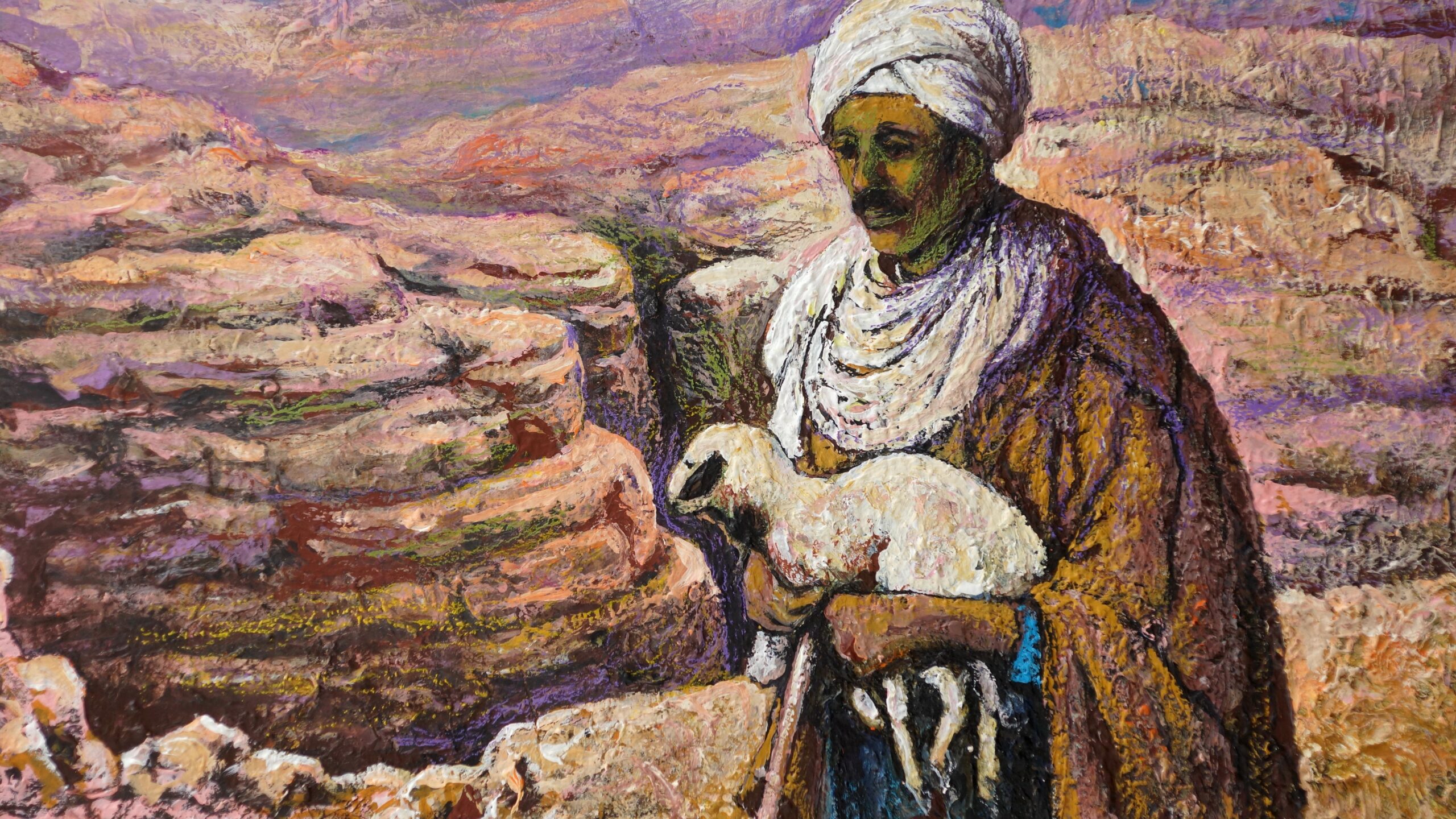
3 but the poor man had nothingXXI but one littleXXII ewe lambXXIII that he had bought.XXIV
Notes on verse 3a
XXI “nothing” = ayin + kol. Ayin is perhaps from a word that means to be nothing. This means nothing, none, non-existent. It can also simply mean not or are not. Kol is from kalal (to complete). This is all or every.
XXII “little” = qatan. From quwt (grieved, cut off, to detest). This is least, small, young, little one. It is literally smaller whether in amount or size. Figuratively it is smaller in the sense of younger or less important.
XXIII “ewe lamb” = kibsah. 8x in OT. From the same as kebes (young male sheep – having just reached the age where it can butt other sheep). This is a ewe lamb.
XXIV “bought” = qanah. This is to acquire, create, purchase, own. Its root may mean to smith or to produce.
He brought it up,XXV and it grew upXXVI with him andXXVII with his children;XXVIII
Notes on verse 3b
XXV “brought…up” = chayah. This is to live or keep alive in a literal or figurative sense. So, it can be revive, nourish, or save.
XXVI “grew up” = gadal. This is to grow up, become great, become wealthy – to advance. The root meaning may be to twist in the sense of the process of growing.
XXVII {untranslated} = yachad. From yachad (to join, be united). This is a unit, both, altogether, unitedness, alike.
XXVIII “children” = ben. From banah (to build or obtain children). This is son, age, child. It is son in a literal or figurative sense.
it used to eatXXIX of his meager fareXXX and drinkXXXI from his cupXXXII
Notes on verse 3c
XXIX “eat” = akal. This is to eat, devour, burn up, or otherwise consume. It can be eating in a literal or figurative sense.
XXX “meager fare” = path. 15x in OT. From pathath (to crumble, open, break). This is a piece, morsel, or fragment.
XXXI “drink” = shathah. This is to drink literally or figuratively. It could also be a drinker.
XXXII “cup” = kos. This is a cup or it could refer to an owl since theirs eyes look similar to cups.
and lieXXXIII in his bosom,XXXIV and it was like a daughterXXXV to him.
Notes on verse 3d
XXXIII “lie” = shakab. This is to lie down, lodge. It is lying for sleep, sex, or other reasons.
XXXIV “bosom” = cheq. Root may mean to enclose. This is bosom in a literal or figurative sense. So, this could be arms, lap, or midst. It can also be care or cherish.
XXXV “daughter” = bat. Related to “children” in v3. From ben (see note XXVIII above). This is daughter in a literal or figurative sense.
4 Now there came a travelerXXXVI to the rich man,XXXVII and he was loathXXXVIII
Notes on verse 4a
XXXVI “traveler” = helek. 2x in OT. From halak (to go, come, walk; to walk literally and figuratively; of people and animals; how we walk according to God’s way or against it; the walk of life). This is a journey, traveler, or a flowing.
XXXVII “man” = ish. Related to “men” in v1. Perhaps from enosh (see note IX above). This is man, husband, another, or humankind.
XXXVIII “was loath” = chamal. This is to spare, commiserate, show compassion.
to takeXXXIX one of his own flock or herd to prepareXL for the wayfarerXLI who had come to him, but he took the poor man’sXLII lambXLIII and prepared that for the guestXLIV who had come to him.”
Notes on verse 4b
XXXIX “take” = laqach. This is to take, accept, carry away, receive. It can also have the sense of take a wife or take in marriage.
XL “prepare” = asah. This is to make, do, act, appoint, become in many senses.
XLI “wayfarer” = arach. 5x in OT. This is to go, travel, wander.
XLII “man’s” = ish. Same as “man” in v4. See note XXXVII above.
XLIII “lamb” = kibsah. Same as “ewe lamb” in v3. See note XXIII above.
XLIV “guest” = ish. Same as “man” in v4. See note XXXVII above.
5 Then David’s angerXLV was greatlyXLVI kindledXLVII against the man.XLVIII
Notes on verse 5a
XLV “anger” = aph. From anaph (to be angry; properly, breathing hard as a signifier of being enraged). This properly refers to the nose or nostril and by extension the face. It can specifically refer to anger or wrath as one breathes hard and nostrils flare in times of great anger.
XLVI “greatly” = meod. Same as “very” in v2. See note XVII above.
XLVII “kindled” = charah. Perhaps related to charar (to be hot, burn, glow, melt, be scorched; figuratively, to incite passion, be angry). This is to be displeased, burn with anger, glow, become warn. Figuratively it is a blaze of anger, zeal, or jealousy.
XLVIII “man” = ish. Same as “man” in v4. See note XXXVII above.
He said to Nathan, “As the Lord lives,XLIX the manL who has doneLI thisLII deserves to die;LIII
Notes on verse 5b
XLIX “lives” = chay. Related to “brought…up” in v3. From chayah (see note XXV above). This is alive, living, lifetime. It can also be used to describe someone’s age. It can refer to animals, plants, water, or a company or congregation of people. It is life in a very broad sense.
L “man” = ish. Same as “man” in v4. See note XXXVII above.
LI “done” = asah. Same as “prepare” in v4. See note XL above.
LII {untranslated} = ben. Same as “children” in v3. See note XXVIII above.
LIII “die” = mavet. From muth (to die in a literal or figurative sense). This can be death, deadliness, the dead, or the place where the dead go. It can be used figuratively for pestilence or ruin.
6 he shall restoreLIV the lamb fourfoldLV becauseLVI he did this thingLVII and because he had no pity.”LVIII
Notes on verse 6
LIV “restore” = shalam. This is to be complete or sound – to have safety mentally, physically, or extending to one’s estate. So, if these things are safe and complete, the implication is that one would be friendly; and, if being friendly, one would make amends and that friendship would be reciprocated. This is the root verb that “shalom” comes from, the Hebrew word for peace.
LV “fourfold” = arbatayim. 1x in OT. From arba (four); perhaps from raba (to make square or be four-sided); perhaps from raba (to lie down flat; can be to lie for mating). This is fourfold.
LVI “because” = eqeb. 15x in OT. Perhaps from aqab (to assail, supplant, overreach, follow or grab someone’s heel, to trip someone up); perhaps from aqeb (heel, hind part, hoof, rear guard of an army, one who lies in wait, usurper). This is a heel as the final part of something i.e. the result, consequence, or reward. It can also be used as an adverb to mean as ever.
LVII “thing” = dabar. From dabar (to speak, declare, discuss). This is speech, a word, a matter, an affair, charge, command, message, promise, purpose, report, request. It is a word, which implies things that are spoken of in a wide sense.
LVIII “had…pity” = chamal. Same as “was loath” in v4. See note XXXVIII above.
7 Nathan said to David, “You are the man!LIX ThusLX says the Lord, the GodLXI of Israel:LXII
Notes on verse 7a
LIX “man” = ish. Same as “man” in v4. See note XXXVII above.
LX “thus” = koh. Perhaps from ki (that, for when, certainly) + hu (he, she, it). This is like this, thus, here, now.
LXI “God” = Elohim.
LXII “Israel” = Yisrael. Related to “God” in v7. From sarah (to persist, exert oneself, contend, persevere, wrestle, prevail) + El (see note LXI above). This is Israel, meaning God strives or one who strives with God; new name for Jacob and for his offspring. This refers to the people and to the land.
I anointedLXIII you kingLXIV over Israel, and I rescuedLXV you from the handLXVI of Saul;LXVII
Notes on verse 7b
LXIII “anointed” = mashach. This is smear, paint, spread, or paint. It can also be to rub with oil or, otherwise stated, to anoint. This implies a consecration. This root verb is where the word “messiah” comes from.
LXIV “king” = melek. From malak (to be or become king or queen, to rise to the throne, to be crowned; by implication, to take counsel). This is king or royal.
LXV “rescued” = natsal. This is to snatch someone or something away in a good sense – as rescue, defend, or deliver – or in a bad sense – as strip or plunder.
LXVI “hand” = yad. This is hand, ability, power. Hand in a literal sense, but also what one can do or the means by which one does it.
LXVII “Saul” = Shaul. From shaal (to ask, inquire, beg, borrow, desire, request; can also mean demand). This is Saul or Shaul, meaning “asked of the Lord.”
8 I gaveLXVIII you your master’sLXIX houseLXX and your master’s wivesLXXI into your bosom
Notes on verse 8a
LXVIII “gave” = natan. Related to “Nathan” in v1. See note III above.
LXIX “master’s” = adon. From a root that means ruling or being sovereign. This is lord, master, or owner.
LXX “house” = bayit. Related to “children” and “daughter” in v3. Probably from banah (see note XXVIII above). This is house, court, family, palace, temple.
LXXI “wives” = ishshah. Related to “men” in v1 & “man” in v4. From ish (see note XXXVII above). This is woman, wife, or female.
and gave you the house of Israel and of Judah,LXXII and if that had been too little,LXXIII I would have addedLXXIV as much more.LXXV
Notes on verse 8b
LXXII “Judah” = Yehudah. Probably from yadah (to throw one’s hands into the air in a gesture of praise); from yad (hand). This is Judah, meaning “praised.”
LXXIII “too little” = me’at. From ma’at (being or becoming small, decrease, diminish, pare off). This is a little or few, lightly little while, very small matter.
LXXIV “added” = yasaph. This is to add, increase, continue, exceed.
LXXV “as much more” = hennah + hennah. Literally, “like them and like them.”
9 WhyLXXVI have you despisedLXXVII the wordLXXVIII of the Lord, to do what is evilLXXIX in his sight?LXXX
Notes on verse 9a
LXXVI “why” = maddua. From mah (what, how long) + yada (to know, be aware, see and so understand – includes observation, care, recognition; can also be used as a euphemism). This is why or how.
LXXVII “despised” = bazah. This is to despise, hold in contempt, disesteem, or a person who is vile.
LXXVIII “word” = dabar. Same as “thing” in v6. See note LVII above.
LXXIX “evil” = ra’. From ra’a’ (to be evil, bad, afflict; properly, to spoil – to destroy by breaking into pieces; figuratively, to cause something to be worthless; this is bad in a physical, social, or moral sense; that which displeases, to do harm or mischief, to punish or vex). This is bad, disagreeable, that which causes pain, misery, something having little or no value, something that is ethically bad, wicked, injury, calamity. This refers to anything that is not what it ought to be – a natural disaster, a disfigurement, an injury, a sin.
LXXX “sight” = ayin. This is eye in a literal or figurative sense so eye, appearance, favor, or a fountain (the eye of the landscape).
You have struck downLXXXI UriahLXXXII the HittiteLXXXIII
Notes on verse 9b
LXXXI “struck down” = nakah. This is to hit whether lightly or severely. It can be used in a literal or figurative sense. So, this could be beat, punish, give wounds, kill, or slaughter.
LXXXII “Uriah” = Uriyah. Related to “Lord” and “were” in v1. From ur (fire, light, the east); {from or (to be or become light, shine)} + Yah (the shortened form of the name of the God of Israel; God, Lord); {from YHVH (see note I above)}. This is Uriah or Urijah, a name meaning “flame of the Lord,” “the Lord is light,” “light of the Lord.” See https://www.abarim-publications.com/Meaning/Uriah.html
LXXXIII “Hittite” = Chitti. From cheth (Heth or Cheth; one of Canaan’s sons from whom perhaps the Hittites descend) OR from hatat (terror, lacking strength or courage); perhaps from hata (to seize; often used of coals from a fire). This is Hittite – perhaps meaning terrors or terrible. See https://www.abarim-publications.com/Meaning/Hittite.html#.XyMgpp5KhPY
with the swordLXXXIV and have taken his wife to be your wife and have killedLXXXV him with the sword of the Ammonites.LXXXVI
Notes on verse 9c
LXXXIV “sword” = chereb. From charab (to attack, slay). This is any sharp instrument like a sword, dagger, axe, or mattock.
LXXXV “killed” = harag. This is to strike with deadly intent so it can be kill, destroy, murder, or put to death.
LXXXVI “Ammonites” = ben + Ammon. Literally, “children of Ammon.” Ben is the same as “children” in v3. See note XXVIII above. Ammon is from im (with, against, before, beside); {perhaps from amam (to darken, hide, associate; creating shadows by huddling together)} OR from am (people or nation; a tribe, troops or armies, or figuratively to refer to a flock of animals); {from amam (see above)}. This is Ammon or Ammonite. It may mean “a people,” “a great people,” or “inbred.” See https://www.abarim-publications.com/Meaning/Ammon.html
10 Now, therefore,LXXXVII the sword shall neverLXXXVIII departLXXXIX from your house, forXC you have despised me and have taken the wife of Uriah the Hittite to be your wife.
Notes on verse 10
LXXXVII “now, therefore” = attah. Perhaps from et (a period or season; whenever or continually); probably from anah (to answer, sing, announce); from ad (forever, all, old); from adah (to pass on, advance, decorate oneself). This is now, from now on.
LXXXVIII “never” = lo…ad + olam. Literally, “not even to always.” Olam is a long scope of time whether in the past (antiquity, ancient time) or in the future (eternal, everlasting).
LXXXIX “depart” = sur. This is to turn aside in a literal or figurative sense – to depart, decline, rebel, remove, or withdraw.
XC “for” = eqeb. Same as “because” in v6. See note LVI above.
11 Thus says the Lord: XCII will raise upXCII troubleXCIII against you from within your own house,
Notes on verse 11a
XCI {untranslated} = hen. This is a remark of surprise or excitement: lo! Behold! It can also mean if or though.
XCII “raise up” = qum. To arise, stand, accomplish, establish, abide. This is rising as in rising against, getting up after being sick or asleep, arising from one state to another, becoming powerful, or rising for action. It can also be standing in a figurative sense.
XCIII “trouble” = ra’. Same as “evil” in v9. See note LXXIX above.
and I will take your wives before your eyesXCIV and give them to your neighbor,XCV and he shall lie with your wives in broadXCVI daylight.XCVII
Notes on verse 11b
XCIV “eyes” = ayin. Same as “sight” in v9. See note LXXX above.
XCV “neighbor” = rea. From raah (to associate with). This is the same as neighbor in Leviticus 19:18 “love your neighbor as yourself.” This is friend, companion, fellow, neighbor. It is someone with whom you associate, whether more or less close.
XCVI “broad” = ayin. Same as “sight” in v9. See note LXXX above.
XCVII “daylight” = shemesh. This is sun or toward the east. Its root may mean being brilliant. Figuratively, this could be a ray or an arch.
12 For you did it secretly,XCVIII but I will do this thing beforeXCIX allC Israel and inCI broad daylight.”CII
Notes on verse 12
XCVIII “secretly” = sether. From sathar (hide, conceal, or be absent; hiding because something is covered – used in a literal or figurative sense). This is covering, shelter, protection, hiding place. It can be hidden by a mountain, by clouds, in the womb, in a matter of secrecy, through slander, or of nations.
XCIX “before” = neged. From nagad (to declare, make conspicuous, stand in front, manifest, predict, explain). This is in front of, opposite to. It can refer to a counterpart or partner, one corresponding to or in the sight of.
C “all” = kol. Same as “nothing” in v3. See note XXI above.
CI “in” = neged. Same as “before” in v12. See note XCIX above.
CII “broad daylight” = shemesh. Same as “daylight” in v11. See note XCVII above.
13 David said to Nathan, “I have sinnedCIII against the Lord.”
Nathan said to David, “NowCIV the Lord has put awayCV your sin;CVI you shall not die.CVII
Notes on verse 13
CIII “sinned” = chata. This is properly to miss, and so figuratively it is used for sinning, bearing the blame. It implies a forfeiture or loss of something.
CIV “now” = gam. This is also, moreover, again.
CV “put away” = abar. This is to pass over or cross over. It is used for transitions, whether literal or figurative. It can also mean to escape, alienate, or fail. This is the root verb from which “Hebrew” is drawn.
CVI “sin” = chatta’ah. Related to “sinned” in v13. From chata’ (see note CIII above). This is sin itself as well as punishment for sin. It is sometimes used specifically to refer to sin that is habitual.
CVII “die” = mut. Related to “die” in v5. See note LIII above.
14 Nevertheless,CVIII because by this deedCIX you have utterly scornedCX
Notes on verse 14a
CVIII “nevertheless” = ephes. From aphes (to finish, fail, stop, come to nothing, disappear). This is an end, ceasing, no further. It is often used to refer to the ends of the earth.
CIX “deed” = dabar. Same as “thing” in v6. See note LVII above.
CX “utterly scorned” = naats + naats. This is to spurn, reject, provoke, abhor, treat with contempt. It can also mean bloom or flourish. The word is repeated twice – the first time as an Infinitive Absolute. The Infinitive Absolute serves to emphasize the sentiment of the word. It is rather like Foghorn Leghorn’s speech pattern, “I said, I said.”
theCXI Lord,CXII the child bornCXIII to you shall die.”CXIV
Notes on verse 14b
CXI {untranslated} = oyeb. From ayab (to hate or be hostile to). This is a foe or enemy as one that you are hostile to.
CXII {untranslated} = gam. Same as “now” in v13. See note CIV above.
CXIII “born” = yillod. 4x in OT. From yalad (to bear, bring forth; can mean to act as midwife or to show one’s lineage). This is to be born in a passive sense. So, “were born.”
CXIV “die” = mut + mut. Same as “die” in v13. See note CVII above. The word is repeated twice – the first time as an Infinitive Absolute. The Infinitive Absolute serves to emphasize the sentiment of the word. It is rather like Foghorn Leghorn’s speech pattern, “I said, I said.”
15 Then Nathan wentCXV to his house.
The Lord struckCXVI the childCXVII whom Uriah’s wife boreCXVIII to David, and it became very ill.CXIX
Notes on verse 15
CXV “went” = halak. Related to “traveler” in v4. See note XXXVI above.
CXVI “struck” = nagaph. This is to strike, beat, hurt, stumble, defeat, inflict disease.
CXVII “child” = yeled. Related to “born” in v14. From yalad (see note CXIII above). This is something born – so, offspring, youth, fruit. It is the same word used in Isaiah 9:6 “for a child will be born to us.”
CXVIII “bore” = yalad. Related to “born” in v14 & to “child” in v15. See note CXIII above.
CXIX “became very ill” = anash. Related to “men” in v1 & “man” in v4 & “wives” in v8. 9x in OT. See note IX above.
16 David therefore pleadedCXX with God forCXXI the child;CXXII
Notes on verse 16a
CXX “pleaded” = baqash. This is to seek, ask, desire, or request. It can be any kind of searching. It can also mean to worship or pray – implies a striving for.
CXXI “for” = baad. Perhaps from ad (up to, while); from adah (to pass on, advance, decorate oneself). This is up to, behind, over, among.
CXXII “child” = naar. May be from na’ar (to shake, toss up and down, tumble around). This is a child or a servant. It is a child in their active years so they could be aged anywhere from infancy to adolescence.
David fastedCXXIII and went inCXXIV and lay all nightCXXV on the ground.CXXVI
Notes on verse 16b
CXXIII “fasted” = tsum…tsom. Tsum is, properly covering one’s mouth. So, by extension, it means abstaining from food. Tsom is related to “fasted” in v16. From tsum (see above). This is fasting or a fast.
CXXIV “went in” = bo. Same as “came” in v1. See note V above.
CXXV “all night” = lun. This is to stop – usually to lodge for the night. It can imply dwelling, enduring, or staying permanently. Figuratively, it can mean being obstinate, particularly with one’s words – to complain.
CXXVI “ground” = erets. Root may mean to be firm. This is earth, ground, field land, or country.
17 The eldersCXXVII of his house stoodCXXVIII beside him urging him to rise from the ground, but he wouldCXXIX not, nor did he eatCXXX foodCXXXI with them.
Notes on verse 17
CXXVII “elders” = zaqen. From the same as zaqan (beard or chin – the beard represents old age). This is old, aged, or elder.
CXXVIII “stood” = qum. Same as “raise up” in v11. See note XCII above.
CXXIX “would” = abah. This is to breathe after, be willing, obey, accept, be content with, satisfy.
CXXX “eat” = bara. This is to create, shape, choose, or select. It is the word used in Genesis 1:1 when God created the heavens and the earth.
CXXXI “food” = lechem. From lacham (to eat, feed on). This is bread, food, loaf. It can refer to food more generally for people or for animals.
18 CXXXIIOn the seventhCXXXIII dayCXXXIV the childCXXXV died.CXXXVI
Notes on verse 18a
CXXXII {untranslated} = hayah. Same as “were” in v1. See note VII above.
CXXXIII “seventh” = shebii. From sheba (seven – the number of perfection/sacred fullness). This is seventh.
CXXXIV “day” = yom. Root may mean being hot. This is the day in a literal or figurative sense. It can also mean birth, age, daylight, continually or other references to time.
CXXXV “child” = yeled. Same as “child” in v15. See note CXVII above.
CXXXVI “died” = mut. Same as “die” in v13. See note CVII above.
And the servantsCXXXVII of David were afraidCXXXVIII to tellCXXXIX him that the childCXL was dead,CXLI
Notes on verse 18b
CXXXVII “servants” = ebed. From abad (to work, serve, compel; any kind of work; used causatively, can mean to enslave or keep in bondage). This is a servant, slave, or bondservant.
CXXXVIII “were afraid” = yare. This is to fear, be afraid, dreadful. It can also refer to fearful reverence – to fear in a moral sense is to say to revere, respect.
CXXXIX “tell” = nagad. Related to “before” in v12. See note XCIX above.
CXL “child” = yeled. Same as “child” in v15. See note CXVII above.
CXLI “was dead” = mut. Same as “die” in v13. See note CVII above.
for they said, “CXLIIWhile the childCXLIII was still alive,CXLIV we spokeCXLV to him,
Notes on verse 18c
CXLII {untranslated} = hinneh. Related to {untranslated} in v11. From hen (see note XCI above). This is to draw attention, show suddenness or surprise, or to emphasize the importance of the coming statement. See! Lo! Behold!
CXLIII “child” = yeled. Same as “child” in v15. See note CXVII above.
CXLIV “alive” = chay. Same as “lives” in v5. See note XLIX above.
CXLV “spoke” = dabar. Related to “thing” in v6. See note LVII above.
and he did not listenCXLVI to us;CXLVII how then can we tellCXLVIII him the childCXLIX is dead?CL He may do himself some harm.”CLI
Notes on verse 18d
CXLVI “listen” = shama. This is to hear, call, consent, or consider. It implies listening intelligently, giving attention, and, because of these two factors, obedience and action are often implied.
CXLVII “us” = qol. Literally, “our voice.” This is a sound, used often for human voices. Also used when God speaks or angels, animals or instruments. It can be a cry or a noise, thunder or earthquakes and so on.
CXLVIII “tell” = amar. Same as “said” in v1. See note VI above.
CXLIX “child” = yeled. Same as “child” in v15. See note CXVII above.
CL “is dead” = mut. Same as “die” in v13. See note CVII above.
CLI “harm” = ra’. Same as “evil” in v9. See note LXXIX above.
19 But when David sawCLII that his servants were whisperingCLIII together, he perceivedCLIV that the childCLV was dead,CLVI
Notes on verse 19a
CLII “saw” = raah. This is to see in a literal or figurative sense so stare, advise, think, view.
CLIII “whispering” = lachash. 3x in OT. This is to whisper or charm i.e. murmur a spell like a magician does.
CLIV “perceived” = bin. This is to discern, consider, attend to. It refers to distinguishing things in one’s mind or, more generally, to understand.
CLV “child” = yeled. Same as “child” in v15. See note CXVII above.
CLVI “was dead” = mut. Same as “die” in v13. See note CVII above.
and David said to his servants, “Is the childCLVII dead?”CLVIII
They said, “He is dead.”CLIX
20 Then David rose from the ground, washed,CLX anointedCLXI himself,
Notes on verses 19b-20a
CLVII “child” = yeled. Same as “child” in v15. See note CXVII above.
CLVIII “is…dead” = mut. Same as “die” in v13. See note CVII above.
CLIX “is dead” = mut. Same as “die” in v13. See note CVII above.
CLX “washed” = rachats. This is to wash, wash away – it can be complete or partial.
CLXI “anointed” = suk. 9x in OT. This is to smear or pour oil. By implication, it is to anoint.
and changedCLXII his clothes.CLXIII He went into the house of the Lord and worshiped;CLXIV he then wentCLXV to his own house, and when he asked,CLXVI
Notes on verse 20b
CLXII “changed” = chalaph. This is to slide by or rush like a flood. It can mean to pass through, change, sprout, renew, break a promise, pierce, or violate.
CLXIII “clothes” = simlah. Perhaps from semel (image, figure, likeness). This is mantle, clothes, wrapper.
CLXIV “worshiped” = shachah. This is to bow down, make a humble entreaty, to do homage to royalty or to God.
CLXV “went” = bo. Same as “came” in v1. See note V above.
CLXVI “asked” = shaal. Related to “Saul” in v7. See note LXVII above.
they setCLXVII food before him, and he ate.CLXVIII 21 Then his servants said to him, “What is this thing that you have done? You fastedCLXIX and weptCLXX
Notes on verses 20c-21a
CLXVII “set” = sim. This is to put or place in a literal or figurative sense. It can be appoint, care, change, make, and may other things.
CLXVIII “ate” = akal. Same as “eat” in v3. See note XXIX above.
CLXIX “fasted” = tsum. Same as “fasted” in v16. See note CXXIII above.
CLXX “wept” = bakah. This is to weep, complain, or lament.
for the childCLXXI whileCLXXII it was alive, but when the childCLXXIII died,CLXXIV you rose and ateCLXXV food.”
Notes on verse 21b
CLXXI “child” = yeled. Same as “child” in v15. See note CXVII above.
CLXXII “while” = abur. Related to “put away” in v13. From abar (see note CV above). This is for, so that, on account of. Properly, it means crossed.
CLXXIII “child” = yeled. Same as “child” in v15. See note CXVII above.
CLXXIV “died” = mut. Same as “die” in v13. See note CVII above.
CLXXV “ate” = akal. Same as “eat” in v3. See note XXIX above.
22 He said, “While the childCLXXVI was stillCLXXVII alive,CLXXVIII I fastedCLXXIX and wept, for I said, ‘Who knows?CLXXX The Lord may be graciousCLXXXI to me,
Notes on verse 22a
CLXXVI “child” = yeled. Same as “child” in v15. See note CXVII above.
CLXXVII “still” = od. From ud (to admonish, repeat, duplicate, testify, restore, record, relieve). This is still, yet, again, more.
CLXXVIII “alive” = chay. Same as “lives” in v5. See note XLIX above.
CLXXIX “fasted” = tsum. Same as “fasted” in v16. See note CXXIII above.
CLXXX “knows” = yada. Related to “why” in v9. See note LXXVI above.
CLXXXI “be gracious” = chanan. This is to beseech, show favor, be gracious. Properly, it is to bend in kindness to someone with less status.
and the childCLXXXII may live.’CLXXXIII 23 But nowCLXXXIV he is dead;CLXXXV why should I fast?CLXXXVI
Notes on verses 22b-23a
CLXXXII “child” = yeled. Same as “child” in v15. See note CXVII above.
CLXXXIII “live” = chay. Same as “lives” in v5. See note XLIX above.
CLXXXIV “now” = attah. Same as “now, therefore” in v10. See note LXXXVII above.
CLXXXV “is dead” = mut. Same as “die” in v13. See note CVII above.
CLXXXVI “fast” = tsum. Same as “fasted” in v16. See note CXXIII above.
CanCLXXXVII I bring him backCLXXXVIII again?CLXXXIX I shall goCXC to him, but he will not returnCXCI to me.”
Notes on verse 23b
CLXXXVII “can” = yakol. This is to be able, endure, overcome, prevail.
CLXXXVIII “bring…back” = shub. To turn back, return, turn away – literally or figuratively. Doesn’t necessarily imply going back to where you started from. This is also the root verb for the Hebrew word for repentance “teshubah.”
CLXXXIX “again” = od. Same as “still” in v22. See note CLXXVII above.
CXC “go” = halak. Same as “went” in v15. See note CXV above.
CXCI “return” = shub. Same as “bring…back” in v23. See note CLXXXVIII above.
24 Then David consoledCXCII his wife BathshebaCXCIII and wentCXCIV to her and lay with her,
Notes on verse 24a
CXCII “consoled” = nacham. Properly, this is a strong breath or a sigh. This can be to be sorry, to pity, console. Comfort, or repent. But, one can also comfort oneself with less righteous thoughts, so this can also mean to avenge oneself.
CXCIII “Bathsheba” = Bath-sheba. Related to “children” and “daughter” in v3 & “house” in v8 and to “seventh” in v18. 11x in OT. From bath (see note XXXV above) + perhaps shaba (to swear, curse, vow, make a covenant; properly, to be complete; this is to seven oneself – as in affirming something so strongly it is as though it were said seven times) {perhaps from sheba (see note CXXXIII above)}. This is Bathsheba, perhaps meaning “daughter of oath.”
CXCIV “went” = bo. Same as “came” in v1. See note V above.
and she boreCXCV a son,CXCVI and he namedCXCVII him Solomon.CXCVIII
Notes on verse 24b
CXCV “bore” = yalad. Same as “bore” in v15. See note CXVIII above.
CXCVI “son” = ben. Same as “children” in v3. See note XXVIII above.
CXCVII “named” = qara + et + shem. Literally, “called his name.” Qara is to call or call out – to call someone by name. Also used more broadly for calling forth. Shem is related to “set” in v20. May be from sim (see note CLXVII above). This is name, fame, renown. A name was thought to indicate something essential about a person – something about their individuality. So, this word can also mean honor, authority, or character.
CXCVIII “Solomon” = Shelomoh. Related to “restore” in v6. From shalam (see note LIV above). This is Solomon or Shelomoh, meaning “peaceful.” It is the same word as the Hebrew word for peace – shalom.
The Lord lovedCXCIX him 25 and sent a message byCC the prophetCCI Nathan, so he named him JedidiahCCII becauseCCIII of the Lord.
Notes on verses 24c-25
CXCIX “loved” = aheb. This is to love, beloved, friend. It is to have affection for sexually or otherwise.
CC “by” = yad. Same as “hand” in v7. See note LXVI above.
CCI “prophet” = nabi. This is prophet, prophecy, speaker, or someone inspired.
CCII “Jedidiah” = Yedideyah. Related to “David” in v1 and to “Lord” and “were” in v1 & “Uriah” in v9. 1x in OT. From yadid (lovely, amiable, beloved); {perhaps from the same as dod (see note IV above)} + Yah (see note LXXXII above). This is Jedidiah, which means “beloved of the Lord.”
CCIII “because” = abur. Same as “while” in v21. See note CLXXII above.
26 Now JoabCCIV foughtCCV against RabbahCCVI of the Ammonites
Notes on verse 26a
CCIV “Joab” = Yoab. Related to “Lord” and “were” in v1 & “Uriah” in v9 & “Jedidiah” in v25. From YHVH (see note I above) + ab (father, ancestor, grandfather; father in a literal or figurative sense). This is Joab or Yoab, meaning “the Lord is father.”
CCV “fought” = lacham. Related to “food” in v17. See note CXXXI above.
CCVI “Rabbah” = Rabbah. 15x in OT. From rab (abundance, many, elder, exceedingly, great; abundance of amount, rank, or status); from rabab (increasing in any aspect whether quantity, authority, size, quality, greatness, etc.). This is Rabbah, a place whose name means “great,” “great city,” or “populous.” See https://www.abarim-publications.com/Meaning/Rabbah.html
and tookCCVII the royalCCVIII city. 27 Joab sent messengersCCIX to David
Notes on verses 26b-27a
CCVII “took” = lakad. This is to capture, seize, or imprison. It is to catch something in a snare or net or trap. It can also mean to occupy of select something by casting lots.
CCVIII “royal” = melukah. Related to “king” in v7. From the same as melek (see note LXIV above). This is kingship, kingdom, reign. It can also mean royalty.
CCIX “messengers” = malak. This is a messenger, an angel, or a deputy of some kind. Can be used for human messengers literally or for prophets, priests, or teachers as messengers of God. Also used for supernatural messengers i.e. angels.
and said, “I have fought against Rabbah; moreover,CCX I have takenCCXI the waterCCXII city. 28 Now, then,CCXIII gatherCCXIV
Notes on verses 27b-28a
CCX “moreover” = gam. Same as “now” in v13. See note CIV above.
CCXI “taken” = lakad. Same as “took” in v26. See note CCVII above.
CCXII “water” = mayim. This is water, waters, or waterway in a general sense. Figuratively, it can also mean juice, urine, or semen.
CCXIII “now, then” = attah. Same as “now, therefore” in v10. See note LXXXVII above.
CCXIV “gather” = asaph. This is to gather, assemble, or bring. It can also mean to take away, destroy, or remove.
the restCCXV of the peopleCCXVI together, encampCCXVII against the city,
Notes on verse 28b
CCXV “rest” = yether. From yathar (to jut over, remain behind, preserve, to excel). This is a remainder or excess. It can imply abundant or superiority. Additionally, it can be cord a free-hanging rope.
CCXVI “people” = am. Related to “Ammonites” in v9. See note LXXXVI above.
CCXVII “encamp” = chanah. This is decline, bending down, or living in tents. It can be camping to create a home or camping as a part of battle.
and takeCCXVIII it, lestCCXIX I myself takeCCXX the city and it is calledCCXXI by my name.”CCXXII
Notes on verse 28c
CCXVIII “take” = lakad. Same as “took” in v26. See note CCVII above.
CCXIX “lest” = pen. Perhaps from panah (to turn, face, appear). This is lest, if, or.
CCXX “take” = lakad. Same as “took” in v26. See note CCVII above.
CCXXI “called” = qara. Same as “named” in v24. See note CXCVII above.
CCXXII “name” = shem. Same as “named” in v24. See note CXCVII above.
29 So David gathered all the people together and wentCCXXIII to Rabbah and fought against it and tookCCXXIV it. 30 He tookCCXXV the crownCCXXVI of MilcomCCXXVII from his head;CCXXVIII
Notes on verses 29-30a
CCXXIII “went” = halak. Same as “went” in v15. See note CXV above.
CCXXIV “took” = lakad. Same as “took” in v26. See note CCVII above.
CCXXV “took” = laqach. Same as “take” in v4. See note XXXIX above.
CCXXVI “crown” = atarah. From atar (to surround or encircle to defend, protect, or attack; to crown in a literal or figurative sense). This is a crown or wreath. Figuratively, it can mean honor.
CCXXVII “Milcom” = melek. Same as “king” in v7. See note LXIV above.
CCXXVIII “head” = rosh. This may come a word that means to shake. It is the head, captain, or chief. It can also be excellent or the forefront. It can be first in position or in statue or in time (i.e. the beginning).
the weightCCXXIX of it was a talentCCXXX of gold,CCXXXI
Notes on verse 30b
CCXXIX “weight” = mishqal. From shaqal (to weigh, spend, trade). This is to weigh, or a unit of weight. It shares a root with the word “shekel.”
CCXXX “talent” = kikkar. From karar (to dance or whirl). This is round so it can refer to a circle, a circular region, a weight used for measurement, money, a loaf of bread that is round, a cover, a plain, or a valley in the Jordan.
CCXXXI “gold” = zahab. Root may mean to shimmer. This is gold or something that has the color of gold like oil. It can also refer to a clear sky – to good weather.
and in it was a preciousCCXXXII stone,CCXXXIII and it was placedCCXXXIV on David’s head.
Notes on verse 30c
CCXXXII “precious” = yaqar. From yaqar (to be precious, costly, rare, valued; properly, to be heavy; figuratively, valuable or inhibit). This is precious, splendid, noble, weighty, or rare. It is valuable in a subjective or objective sense.
CCXXXIII “stone” = eben. This is a stone, weight, or mason. It is part of the word “Ebenezer.”
CCXXXIV “placed” = hayah. Same as “were” in v1. See note VII above.
He also brought forthCCXXXV the spoilCCXXXVI of the city, a very great amount.CCXXXVII 31 He brought outCCXXXVIII the people who were in it and set them to workCCXXXIX
Notes on verses 30d-31a
CCXXXV “brought forth” = yatsa. This is to go or come out, bring forth, appear. It is to go out in a literal or figurative sense.
CCXXXVI “spoil” = shalal. From shalal (to plunder, loot, capture). This is spoil, prey, or plunder.
CCXXXVII “great amount” = rabah. Same as “many” in v2. See note XVIII above.
CCXXXVIII “brought out” = yatsa. Same as “brought forth” in v30. See note CCXXXV above.
CCXXXIX “set…to work” = sim. Same as “set” in v20. See note CLXVII above.
with sawsCCXL and ironCCXLI picksCCXLII and iron axesCCXLIII
Notes on verse 31b
CCXL “saws” = megerah. 4x in OT. From garar (to drag or drag off in a rough fashion, chew, sweep, destroy; to chew the cud). This is a saw or ax.
CCXLI “iron” = barzel. From the same as Birzoth (a name meaning holes). Root may mean to pierce. This is iron as something used as a cutting implement. It can also specifically mean ax head.
CCXLII “picks” = charits. 3x in OT. From charats (to cut, sharpen, decree, wound, be alert, move). This is a cut, slice, or a tool that is sharp like a threshing-sledge.
CCXLIII “axes” = magzerah. 1x in OT. From gazar (to cut or cut down; figuratively, to divide, exclude, decree, or destroy). This is ax, blade, or some kind of cutting tool.
or sentCCXLIV them to the brickworks.CCXLV ThusCCXLVI he did to all the cities of the Ammonites. Then David and all the people returned to Jerusalem.CCXLVII
Notes on verse 31c
CCXLIV “sent” = abar. Same as “put away” in v13. See note CV above.
CCXLV “brickworks” = malben. 3x in OT. From laban (to be or make white, to make bricks). This is a brick, brickkiln, a square, or a mold used to make a brick.
CCXLVI “thus” = ken. Perhaps from kun (properly, in a perpendicular position; literally, to establish, fix, fasten, prepare; figuratively, it is certainty, to be firm, faithfulness, render sure or prosperous). This is to set upright. Generally used figuratively to mean thus, so, afterwards, rightly so.
CCXLVII “Jerusalem” = Yerushalaim. Related to “restore” in v6 & “Solomon” in v24. From yarah (to throw, shoot, be stunned; to flow as water so figuratively to instruct or teach) + shalam (see note LIV above). This is Jerusalem, dwelling of peace.
Image credit: Detail of “Mides” by Paolo Boncompagni, 1977.