1 Kings 12
BibleHub
1 RehoboamI wentII to Shechem,III
Notes on verse 1a
I “Rehoboam” = Rechabam. From rachab (to grow wide or enlarge in a literal or figurative sense; extend, relieve, rejoice, or speak boldly) + am (people, folk, nation; also troops or attendants; used figuratively for a flock); {from amam (to darken, hide, associate; creating shadows by huddling together)}. This is Rehoboam, meaning “a people are enlarged” or “people of width” or “enlarges the people.” See https://www.abarim-publications.com/Meaning/Rehoboam.html
II “went” = halak. This is go, come, walk. It is walk literally and figuratively and includes people and animals. It can be used figuratively for one’s moral life – how we walk according to God’s way or against it. It can also refer to the walk of life as in the course one’s life takes, the choices we make, etc.
III “Shechem” = Shekem. From the same as shekem (shoulder, neck, or some other place that bears burdens; figuratively, the spur of a hill, or one’s allotted portion); from shakam (to rise early, begin work early; properly, this is leaning one’s shoulder or back into a load or a burden; also, loading an animal for work). This is Shechem, meaning “ridge.”
for allIV IsraelV had comeVI to Shechem to make him king.VII
Notes on verse 1b
IV “all” = kol. From kalal (to complete). This is all or every.
V “Israel” = Yisrael. From sarah (to persist, exert oneself, contend, persevere, wrestle, prevail) + El (God or god). This is Israel, meaning God strives or one who strives with God; new name for Jacob and for his offspring. This refers to the people and to the land.
VI “come” = bo. This is to enter, come in, advance, fulfill, bring offerings, enter to worship, attack. It can also have a sexual connotation.
VII “make…king” = malak. To be or become king or queen, to rise to the throne, to be crowned. By implication, to take counsel. This word may be from the Hebrew word for king “melek” or vice versa.
2 VIIIWhen JeroboamIX sonX of NebatXI
Notes on verse 2a
VIII {untranslated} = hayah. This is to be or become, to happen.
IX “Jeroboam” = Yarobam. Related to ‘Rehoboam” in v1. From rabab (to be or become much or many, multiply) + am (see note I above) OR from rib (properly to toss or grapple; used figuratively to mean wrangling and so for arguments, complaints, or disputes; used in a legal setting for pleading or defending a case) + am (see above). This is Jeroboam, a name meaning “the people increase” or “the people will contend” or “whose people are countless.” See https://www.abarim-publications.com/Meaning/Jeroboam.html
X “son” = ben. From banah (to build or obtain children). This is son, age, child. It is son in a literal or figurative sense.
XI “Nebat” = Nebat. From nabat (to behold, look at intently, consider, or scan; to have respect or regard someone favorably). This is Nebat, meaning “regard” or “look” or “aspect.” See https://www.abarim-publications.com/Meaning/Nebat.html
heardXII of it (for he was stillXIII in Egypt,XIV where he had fledXV
Notes on verse 2b
XII “heard” = shama. This is to hear, call, consent, or consider. It implies listening intelligently, giving attention, and, because of these two factors, obedience and action are often implied.
XIII “still” = od. From ud (to admonish, repeat, duplicate, testify, restore, record, relieve). This is still, yet, again, more.
XIV “Egypt” = Mitsrayim. Perhaps from matsor (besieged or fortified place, bulwark, entrenchment; something hemmed in; a siege or distress or fastness); from tsur (to confine, besiege, to cramp). This is Egypt.
XV “fled” = barach. This is to flee, drive away, hurry, to bolt.
fromXVI KingXVII Solomon),XVIII then Jeroboam remainedXIX in Egypt.
Notes on verse 2c
XVI “from” = paneh. From panah (to turn, face, appear). This is face in a literal or figurative sense. It could be face, presence, anger, respect. It can also be used of God to indicate divine favor or presence.
XVII “King” = melek. Related to “make…king” in v1. From malak (see note VII above). This is king or royal.
XVIII “Solomon” = Shelomoh. From shalam (to be complete or sound; to have safety mentally, physically, or extending to one’s estate; so, if these things are safe and complete, the implication is that one would be friendly; and, if being friendly, one would make amends and that friendship would be reciprocated). This is Solomon or Shelomoh, meaning “peaceful.” It is the same word as the Hebrew word for peace – shalom.
XIX “remained” = yashab. This is to sit and so to remain and so to dwell. It is sitting for any reason – as a judge, in order to ambush, or just sitting quietly. Causatively, this can mean settling or marrying. This can also mean continue, endure, or establish.
3 And they sentXX and calledXXI him, and Jeroboam and all the assemblyXXII of Israel came and saidXXIII to Rehoboam,XXIV
Notes on verse 3
XX “sent” = shalach. This is to send out, away, send for, forsake. It can also mean to divorce or set a slave free.
XXI “called” = qara. This is to call or call out – to call someone by name. Also used more broadly for calling forth.
XXII “assembly” = qahal. This is an assembly, congregation, or multitude.
XXIII “said” = dabar. This is generally to speak, answer, declare, or command. It might mean to arrange and so to speak in a figurative sense as arranging words.
XXIV {untranslated} = amar. This is to speak, say, answer, command, promise, report.
4 “Your fatherXXV made our yokeXXVI heavy.XXVII Now,XXVIII therefore, lightenXXIX
Notes on verse 4a
XXV “father” = ab. This is father, chief, or ancestor. It is father in a literal or figurative sense.
XXVI “yoke” = ol. From alal (to insert). This is a yoke that is borne on the neck, whether a literal yoke or used of a figurative one.
XXVII “heavy” = qashah. This is to be fierce, cruel, dense, tough, severe.
XXVIII “now” = attah. Perhaps from et (a period or season; whenever or continually); probably from anah (to answer, sing, announce); from ad (forever, all, old); from adah (to pass on, advance, decorate oneself). This is now, from now on.
XXIX “lighten” = qalal. This is to be little, insignificant, swift. It can also mean to bring down in esteem, create contempt, curse.
the hardXXX serviceXXXI of your father and his heavyXXXII yoke that he placedXXXIII on us, and we will serveXXXIV you.”
Notes on verse 4b
XXX “hard” = qasheh. Related to “heavy” in v4. From qashah (see note XXVII above). This is hard, severe, heavy, obstinate, hard-hearted.
XXXI “service” = abodah. From abad (to work, serve, compel; any kind of work; used causatively, can mean to enslave or keep in bondage). This is labor, service, bondage, job, servitude, worker. It can refer to any kind of work.
XXXII “heavy” = kabed. From kabad (to be heavy, weighty, burdensome). This is heavy, grievous, sore. It can also be weighty in the sense of gravitas. The word for “glory” in Hebrew comes from this root (kabod).
XXXIII “placed” = natan. This is to give, put, set, offer. It is to give literally or figuratively.
XXXIV “serve” = abad. Related to “service” in v4. See note XXXI above.
5 He saidXXXV to them, “Go awayXXXVI for threeXXXVII days,XXXVIII then come againXXXIX to me.” So the peopleXL went away.
Notes on verse 5
XXXV “said” = amar. Same as {untranslated} in v3. See note XXIV above.
XXXVI {untranslated} = od. Same as “still” in v2. See note XIII above.
XXXVII “three” = shalosh. This is three, fork, three times.
XXXVIII “days” = yom. Root may mean being hot. This is the day in a literal or figurative sense. It can also mean birth, age, daylight, continually or other references to time.
XXXIX “come again” = shub. To turn back, return, turn away – literally or figuratively. Doesn’t necessarily imply going back to where you started from. This is also the root verb for the Hebrew word for repentance “teshubah.”
XL “people” = am. Related to “Rehoboam” in v1 & “Jeroboam” in v2. See note I above.
6 Then King Rehoboam took counselXLI with the older menXLII whoXLIII had attendedXLIV
Notes on verse 6a
XLI “took counsel” = yaats. This is to advise, counsel, consult, decide, plan, purpose, or determine. It can also have a negative sense of conspire or devise.
XLII “older men” = zaqen. From the same as zaqan (beard or chin – the beard represents old age). This is old, aged, or elder.
XLIII {untranslated} = hayah. Same as {untranslated} in v2. See note VIII above.
XLIV “attended” = amad. This is to stand up in a literal or figurative sense. So it can be establish, continue, endure, take a stand, act, be a servant, stand still, remain, stand against an enemy.
XLVhis father Solomon while he wasXLVI still alive,XLVII
Notes on verse 6b
XLV {untranslated} = paneh. Same as “from” in v2. See note XVI above.
XLVI “was” = hayah. Same as {untranslated} in v2. See note VIII above.
XLVII “alive” = chay. From chayah (to live or keep alive literally or figuratively). This is alive, living, lifetime. It can also be used to describe someone’s age. It can refer to animals, plants, water, or a company or congregation of people. It is life in a very broad sense.
saying,XLVIII “How do you adviseXLIX me to answerL this people?”
Notes on verse 6c
XLVIII “saying” = amar. Same as {untranslated} in v3. See note XXIV above.
XLIX “advise” = yaats. Same as “took counsel” in v6. See note XLI above.
L “answer” = shub…dabar. Shub is the same as “come again” in v5. See note XXXIX above. Dabar is related to “said” in v3. From dabar (see note XXIII above). This is speech, a word, a matter, an affair, charge, command, message, promise, purpose, report, request. It is a word, which implies things that are spoken of in a wide sense.
7 They answeredLI him,LII “If you will be a servantLIII to this people todayLIV and serve them
Notes on verse 7a
LI “answered” = dabar. Same as “said” in v3. See note XXIII above.
LII {untranslated} = amar. Same as {untranslated} in v3. See note XXIV above.
LIII “servant” = ebed. Related to “service” and “serve” in v4. From abad (see note XXXIV above). This is a servant, slave, or bondservant.
LIV “today” = yom. Same as “days” in v5. See note XXXVIII above.
and speakLV goodLVI wordsLVII to them when you answerLVIII them, then they will be your servants forever.”LIX
Notes on verse 7b
LV “speak” = dabar. Same as “said” in v3. See note XXIII above.
LVI “good” = tob. From tob (to be pleasing, to be good). This is good, beautiful, pleasant, agreeable, bountiful, at ease. This word is used for goodness as a concept, a good thing, a good person. This can refer to prosperity and welfare as well as joy, kindness, sweetness, and graciousness. So, this is ethically good, but also enjoyably good.
LVII “words” = dabar. Same as “answer” in v6. See note L above.
LVIII “answer” = anah. Related to “now” in v4. See note XXVIII above.
LIX “forever” = kol + yom. Literally, “all days.” Kol is the same as “all” in v1. See note IV above. Yom is the same as “days” in v5. See note XXXVIII above.
8 But he disregardedLX the adviceLXI that the older men gaveLXII him and consultedLXIII
Notes on verse 8a
LX “disregarded” = azab. To loosen, relinquish, permit, forsake, fail, leave destitute.
LXI “advice” = etsah. Related to “took counsel” in v6. From yaats (see note XLI above). This is advice, purpose, plan, prudence, or counselor.
LXII “gave” = yaats. Same as “took counsel” in v6. See note XLI above.
LXIII “consulted” = yaats. Same as “took counsel” in v6. See note XLI above.
with the young menLXIV who had grown upLXV with him and now attendedLXVI him.
Notes on verse 8b
LXIV “young men” = yeled. From yalad (to bear, bring forth; can mean to act as midwife or to show one’s lineage). This is something born – so, offspring, youth, fruit. It is the same word used in Isaiah 9:6 “for a child will be born to us.”
LXV “grown up” = gadal. This is to grow up, become great, become wealthy – to advance. The root meaning may be to twist in the sense of the process of growing.
LXVI {untranslated} = paneh. Same as “from” in v2. See note XVI above.
9 He saidLXVII to them,LXVIII “What do you advise that we answerLXIX this people who have saidLXX to me, ‘Lighten the yoke that your father putLXXI on us’?”
Notes on verse 9
LXVII “said” = amar. Same as {untranslated} in v3. See note XXIV above.
LXVIII {untranslated} = amar. Same as {untranslated} in v3. See note XXIV above.
LXIX “answer” = shub + dabar. Shub is the same as “come again” in v5. See note XXXIX above. Dabar is the same as “answer” in v6. See note L above.
LXX “said” = dabar. Same as “said” in v3. See note XXIII above.
LXXI “put” = natan. Same as “placed” in v4. See note XXXIII above.
10 The young men who had grown up with him saidLXXII to him,LXXIII “ThusLXXIV you should sayLXXV to this people who spoke to you,LXXVI ‘Your father made our yoke heavy,LXXVII but you must lighten it for us’;
Notes on verse 10a
LXXII “said” = dabar. Same as “said” in v3. See note XXIII above.
LXXIII {untranslated} = amar. Same as {untranslated} in v3. See note XXIV above.
LXXIV “thus” = koh. Perhaps from ki (that, for when, certainly) + hu (he, she, it). This is like this, thus, here, now.
LXXV “say” = amar. Same as {untranslated} in v3. See note XXIV above.
LXXVI {untranslated} = amar. Same as {untranslated} in v3. See note XXIV above.
LXXVII “made…heavy” = kabad. Related to “heavy” in v4. See note XXXII above.
thus you should sayLXXVIII to them, ‘My little fingerLXXIX is thickerLXXX than my father’s loins.LXXXI
Notes on verse 10b
LXXVIII “say” = dabar. Same as “said” in v3. See note XXIII above.
LXXIX “little finger” = qeton. 2x in OT. From qaton (to be small, diminished, insignificant, or unworthy); perhaps from qatan (least, small, young, little one; it is literally smaller whether in amount or size; figuratively smaller in the sense of younger or less important). Little finger or something petty.
LXXX “thicker” = abah. 3x in OT. This is to be thick, fat, or dense.
LXXXI “loins” = mothen. This is the waist, slender, or small of back. It can also refer to the loins when in plural.
11 Now, whereas my father laidLXXXII on you a heavyLXXXIII yoke, I will addLXXXIV to your yoke. My father disciplinedLXXXV you with whips,LXXXVI but I will discipline you with scorpions.’”LXXXVII
Notes on verse 11
LXXXII “laid” = amas. 9x in OT. This is to carry a load, to load, lift. Figuratively, it can mean infliction.
LXXXIII “heavy” = kabed. Same as “heavy” in v4. See note XXXII above.
LXXXIV “add” = yasaph. This is to add, increase, continue, exceed.
LXXXV “disciplined” = yasar. This is to discipline, correct, train, teach, punish. Literally, it is disciplining with blows, but figuratively using words.
LXXXVI “whips” = shot. 11x in OT. From shut (to push, wander around, row, travel). This is a scourge or whip. It can be used in a literal or figurative sense.
LXXXVII “scorpions” = aqrab. 6x in OT. From aqar (to uproot, pluck out, dig out by the roots, to hamstring; figuratively, to exterminate). This is scorpion, whip.
12 So Jeroboam and all the people cameLXXXVIII to Rehoboam the thirdLXXXIX day, as the king had said,XC, XCI “Come to me againXCII the third day.”
Notes on verse 12
LXXXVIII “came” = bo. Same as “come” in v1. See note VI above.
LXXXIX “third” = shelishi. Related to “three” in v5. From shalosh (see note XXXVII above). This is third or one-third of something.
XC “said” = dabar. Same as “said” in v3. See note XXIII above.
XCI {untranslated} = amar. Same as {untranslated} in v3. See note XXIV above.
XCII “come…again” = shub. Same as “come again” in v5. See note XXXIX above.
13 The king answeredXCIII the people harshly.XCIV He disregarded the advice that the older men had given him 14 and spoke to them according to the advice of the young men,XCV “My father made your yoke heavy,XCVI but I will add to your yoke; my father disciplined you with whips, but I will discipline you with scorpions.”
15 So the king did not listenXCVII to the people because it was a turnXCVIII of affairs
Notes on verses 13-15a
XCIII “answered” = anah. Same as “answer” in v7. See note LVIII above.
XCIV “harshly” = qasheh. Same as “hard” in v4. See note XXX above.
XCV {untranslated} = amar. Same as {untranslated} in v3. See note XXIV above.
XCVI “made…heavy” = kabad. Same as “made…heavy” in v10. See note LXXVII above.
XCVII “listen” = shama. Same as “heard” in v2. See note XII above.
XCVIII “turn” = sibbah. 1x in OT. From sabab (turning around, going around; to surround, cast, walk, fetch; to revolve or border in a literal or figurative sense). This is a turn or cause – as in something that changes what is going on.
brought about by the LordXCIX toC fulfillCI his word
Notes on verse 15b
XCIX “Lord” = YHVH. Related to {untranslated} in v2. From havah (to be, become) or hayah (see note VIII above). This is the name of the God of Israel, the self-existent and eternal one, the tetragrammaton. This pronunciation has been lost to time so “Lord” is generally used in its place.
C “to” = maan. Related to “now” in v4 & “answer” in v7. From anah (see note XXVIII above). This is because of, occurring because of a motive or purpose.
CI “fulfill” = qum. To arise, stand, accomplish, establish, abide. This is rising as in rising against, getting up after being sick or asleep, arising from one state to another, becoming powerful, or rising for action. It can also be standing in a figurative sense.
that the Lord had spoken byCII AhijahCIII the ShiloniteCIV to Jeroboam son of Nebat.
Notes on verse 15c
CII “by” = yad. This is hand, ability, power. Hand in a literal sense, but also what one can do or the means by which one does it.
CIII “Ahijah” = Achiyyah. Related to {untranslated} in v2 & “Lord” in v15. From ach (brother, kindred, another, other, like) + Yah (the shortened form of the name of the God of Israel; God, Lord); {from YHVH (see note XCIX above)}. This is Ahijah, meaning “brother of the Lord” or “friend of the Lord” or “worshipper of the Lord.” See https://www.abarim-publications.com/Meaning/Ahijah.html
CIV “Shilonite” = Shiloni. 6x in OT. From Shiloh (Shiloh; perhaps meaning “he whose it is” or “tranquil”); from shalah (to draw out, take away, require) OR from the same as Shiyloh (Shiloh; perhaps “he whose it is” or “tranquil”); perhaps from shalah (to be quiet, safe, tranquil; can imply success or happiness; could also mean to deceive or be negligent). This is Shilonite – someone from Shiloh.
16 When all Israel sawCV that the king would not listen to them, the people answeredCVI the king,CVII
Notes on verse 16a
CV “saw” = raah. This is to see in a literal or figurative sense so stare, advise, think, view.
CVI “answered” = shub…dabar. Shub is the same as “come again” in v5. See note XXXIX above. Dabar is the same as “answer” in v6. See note L above.
CVII {untranslated} = amar. Same as {untranslated} in v3. See note XXIV above.
“What shareCVIII do we have in David?CIX
We have no inheritanceCX in the son of Jesse.CXI
Notes on verse 16b
CVIII “share” = cheleq. From chalaq (to be smooth in a figurative sense; can refer to the stones that were part of casting lots – hence, apportion, share, distribute; figuratively, it can also mean to flatter). This is a division, lot, inheritance, legacy, or portion. It can also refer to a smooth tongue.
CIX “David” = David. From the same as dod (beloved, love, uncle); the root may mean to boil, which is used figuratively to describe love. So, this implies someone you love such as a friend, a lover, or a close family member like an uncle. David’s name likely means something like “beloved one.”
CX “inheritance” = nachalah. Related to nachal (to inherit, occupy, distribute, take as heritage). This is properly something that was inherited. It can mean occupancy generally or, more particularly, an heirloom or an estate. This can be an inheritance, gift, possession, or portion.
CXI “Jesse” = Yishay. Perhaps from ish (man); {perhaps from enosh (human, humankind, mortal); from anash (to be weak, sick, or frail)} OR from the same as yesh (being, existence, substance). This is Jesse, a name which means “my husband” or “the Lord exists.” See https://www.abarim-publications.com/Meaning/Jesse.html
To your tents,CXII O Israel!
LookCXIII now to your own house,CXIV O David.”
So Israel went away to their tents. 17 But Rehoboam reignedCXV over the IsraelitesCXVI
Notes on verses 16c-17a
CXII “tents” = ohel. Perhaps from ahal (to shine, be clear). This is a tent, covering, home, or side pillar.
CXIII “look” = raah. Same as “saw” in v16. See note CV above.
CXIV “house” = bayit. Related to “son” in v2. Probably from banah (see note X above). This is house, court, family, palace, temple.
CXV “reigned” = malak. Same as “made…king” in v1. See note VII above.
CXVI “Israelites” = ben + Yisrael. Literally, “children of Israel.” Ben is the same as “son” in v2. See note X above. Yisrael is the same as “Israel” in v1. See note V above.
who were livingCXVII in the townsCXVIII of Judah.CXIX
Notes on verse 17b
CXVII “living” = yashab. Same as “remained” in v2. See note XIX above.
CXVIII “towns” = iyr. From uwr (to awaken or wake oneself up). This can mean excitement in the sense of wakefulness or city. Properly, this is a place that is guarded. Guards kept schedules according to watches. This sense of the word would include cities as well as encampments or posts that were guarded.
CXIX “Judah” = Yehudah. Probably from yadah (to throw one’s hands into the air in a gesture of praise); from yad (hand). This is Judah, meaning “praised.”
18 When King Rehoboam sent Adoram,CXX who was taskmaster over the forced labor,CXXI all Israel stonedCXXII him to death.CXXIII
Notes on verse 18a
CXX “Adoram” = Adoram. 2x in OT. From Adoniram (Adoniram, “my Lord is exalted” or “lord of height”); {from adon (lord, master, owner) + rum (to be high, rise, exalt self, extol, be haughty; to rise literally or figuratively)} OR from adar (wide, glorious, honorable, great, magnificent). This is Adoram, a shortened form of Adoniram, meaning “my Lord is exalted” or “lord of height” or “twofold majesty.” See https://www.abarim-publications.com/Meaning/Adoram.html
CXXI “forced labor” = mas. Perhaps from masas (to melt, discourage, faint; to deteriorate from a sickness or weaken because of sleepiness or an emotional response). This is a burden that creates weariness and or exhaustion. It is forced labor, taskwork, or other levy.
CXXII “stoned” = ragam…eben. Ragam is 16x in OT. This is to stone or lapidate. Eben is a stone, weight, or mason. It is part of the word “Ebenezer.”
CXXIII “death” = mut. This is to die in a literal or figurative sense. It can also refer to being a dead body.
King Rehoboam then hurriedlyCXXIV mountedCXXV his chariotCXXVI to fleeCXXVII to Jerusalem.CXXVIII 19 So Israel has been in rebellionCXXIX against the house of David to this day.
Notes on verses 18b-19
CXXIV “hurriedly” = amets. This is to be strong, stout, alert, or bold, It can also mean harden, make firm, be courageous or mighty, fortify, or establish. It can refer to physical alertness or mental courage or steadfastness.
CXXV “mounted” = alah. This is to go up, approach, ascend, be high, be a priority; to arise in a literal or figurative sense.
CXXVI “chariot” = merkabah. From merkab (chariot, saddle, covering; any seat in a vehicle); from rakab (to ride an animal or in some vehicle; also, bringing on a horse). This is a chariot.
CXXVII “flee” = nus. This is to flee, vanish away, hide, escape, be displayed.
CXXVIII “Jerusalem” = Yerushalaim. Related to “Solomon” in v2. From yarah (to throw, shoot, be stunned; to flow as water so figuratively to instruct or teach) + shalam (see note XVIII above). This is Jerusalem, dwelling of peace.
CXXIX “been in rebellion” = pasha. This is to rebel, offend, quarrel. It is making a break from proper authority so can also refer to an apostate.
20 CXXXWhen all Israel heard that Jeroboam had returned,CXXXI they sent and called him to the assemblyCXXXII and made him king over all Israel.
Notes on verse 20a
CXXX {untranslated} = hayah. Same as {untranslated} in v2. See note VIII above.
CXXXI “returned” = shub. Same as “come again” in v5. See note XXXIX above.
CXXXII “assembly” = edah. Related to “still” in v2. From yaad (to appoint, assemble or gather selves, agree) OR from ed (witness, testimony, recorder); from ud (see note XIII above). This is a congregation, assembly, or company. It could be a family, crowd, or fixture.
There was no one who followedCXXXIII the house of David exceptCXXXIV the tribeCXXXV of Judah alone.CXXXVI
Notes on verse 20b
CXXXIII “followed” = achar. From achar (to remain behind, linger, continue, be behind, or delay; can also imply procrastination). This is after or the last part, following.
CXXXIV “except” = zulah. 16x in OT. Perhaps from zul (to shake out, lavish, despise). This is removal, except, besides.
CXXXV “tribe” = shebet. This is a rod, staff, club, scepter, dart, or tribe. Literally a stick that can be used for punishing, writing, fighting, walking, ruling; thus, used figuratively for a clan.
CXXXVI “alone” = bad. From badad (to divide or be separated; alone, solitary, lonely, isolated, straggler). This is apart, alone, separation, body part, tree branch, except. It can also be a city’s chief.
21 When Rehoboam came to Jerusalem, he assembledCXXXVII all the house of Judah and the tribe of Benjamin,CXXXVIII one hundredCXXXIX
Notes on verse 21a
CXXXVII “assembled” = qahal. Related to “assembly” in v3. From qahal (see note XXII above). This is to gather, convene, assemble like a congregation.
CXXXVIII “Benjamin” = Binyamin. Related to “son” in v2 & “house” in v16. From ben (see note X above) + from yamin (right hand or side; that which is stronger or more agile; the south); {perhaps yamam (to go or choose the right, use the right hand; to be physically fit or firm)}. This is Benjamin, meaning “son of the right hand.” It could refer to Benjamin himself, his offspring, their tribe, or their territory.
CXXXIX “hundred” = meah. This is hundred or some number times one hundred (i.e. hundredfold or the base of two hundred, three hundred, etc.).
eightyCXL thousandCXLI chosenCXLII troops,CXLIII
Notes on verse 21b
CXL “eighty” = shemonim. From the same as shemoneh (eight or eighth; abundance as being more than 7, the number of sacred fullness); perhaps from shamen (to shine, which implies being oily, growing fat); from shaman (to grow fat, shine, be oily). This is eighty.
CXLI “thousand” = eleph. Perhaps from the same as eleph (herd, cattle); from alaph (to learn, speak, associate with). This is thousand.
CXLII “chosen” = bachar. This is to choose, appoint, try, excellent.
CXLIII “troops” = asah + milchamah. Asah is to make, do, act, appoint, become in many senses. Milchamah is from lacham (to eat or feed on; figuratively, to battle as a kind of consumption/destruction). This is battle, war, fighting, or one who fights (i.e. a warrior).
to fightCXLIV against the house of Israel, to restoreCXLV the kingdomCXLVI to Rehoboam son of Solomon.
22 But the word of GodCXLVII cameCXLVIII
Notes on verses 21c-22a
CXLIV “fight” = lacham. Related to “troops” in v21. See note CXLIII above.
CXLV “restore” = shub. Same as “come again” in v5. See note XXXIX above.
CXLVI “kingdom” = melukah. Related to “make…king” in v1 & “King” in v2. From the same as melek (see note XVII above). This is kingship, kingdom, reign. It can also mean royalty.
CXLVII “God” = Elohim. Related to “Israel” in v1. See note V above.
CXLVIII “came” = hayah. Same as {untranslated} in v2. See note VIII above.
to ShemaiahCXLIX the manCL of God:CLI
Notes on verse 22b
CXLIX “Shemaiah” = Shemayah. Related to “heard” in v2 & related to {untranslated} in v2 & “Lord” in v15 & “Ahijah” in v15. From shama (see note XII above) + Yah (see note CIII above). This is Shemaiah, meaning “the Lord has heard” or “heard of the Lord.” See https://www.abarim-publications.com/Meaning/Shemaiah.html
CL “man” = ish. Related to “Jesse” in v16. See note CXI above.
CLI {untranslated} = amar. Same as {untranslated} in v3. See note XXIV above.
23 “SayCLII to King Rehoboam of Judah, son of Solomon, and to all the house of Judah and Benjamin, and to the restCLIII of the people:CLIV 24 Thus saysCLV the Lord: You shall not go upCLVI
Notes on verses 23-24a
CLII “say” = amar. Same as {untranslated} in v3. See note XXIV above.
CLIII “rest” = yether. From yathar (to jut over, remain behind, preserve, to excel). This is a remainder or excess. It can imply abundant or superiority. Additionally, it can be cord a free-hanging rope.
CLIV {untranslated} = amar. Same as {untranslated} in v3. See note XXIV above.
CLV “says” = amar. Same as {untranslated} in v3. See note XXIV above.
CLVI “go up” = alah. Same as “mounted” in v18. See note CXXV above.
or fight against your kindredCLVII the peopleCLVIII of Israel. Let everyoneCLIX goCLX home,CLXI for this thingCLXII is from me.”
Notes on verse 24b
CLVII “kindred” = ach. Related to “Ahijah” in v15. See note CIII above.
CLVIII “people” = ben. Same as “son” in v2. See note X above.
CLIX “everyone” = ish. Same as “man” in v22. See note CL above.
CLX “go” = shub. Same as “come again” in v5. See note XXXIX above.
CLXI “home” = bayit. Same as “house” in v16. See note CXIV above.
CLXII “thing” = dabar. Same as “answer” in v6. See note L above.
So they heededCLXIII the word of the Lord and went home again,CLXIV according to the word of the Lord.
25 Then Jeroboam builtCLXV Shechem in the hill countryCLXVI of EphraimCLXVII and residedCLXVIII there;
Notes on verses 24c-25a
CLXIII “heeded” = shama. Same as “heard” in v2. See note XII above.
CLXIV “went home again” = shub + halak. Shub is the same as “come again” in v5. See note XXXIX above. Halak is the same as “went” in v1. See note II above.
CLXV “built” = banah. Related to “son” in v2 & “house” in v16 & “Benjamin” in v21. See note X above.
CLXVI “hill country” = har. From harar (hill or mountain). This is mountain, hill, hilly region.
CLXVII “Ephraim” = Ephrayim. From the same as epher (ashes or dust – properly something strewn) OR from parah (to grow, increase, be fruitful in a literal or figurative sense). This is Ephraim, one of Joseph’s sons, his descendants, and their land.
CLXVIII “resided” = yashab. Same as “remained” in v2. See note XIX above.
he went outCLXIX from there and built Penuel.CLXX 26 Then Jeroboam saidCLXXI to himself,CLXXII
Notes on verses 25b-26a
CLXIX “went out” = yatsa. This is to go or come out, bring forth, appear. It is to go out in a literal or figurative sense.
CLXX “Penuel” = Penuel. Related to “from” in v2 & related to “Israel” in v1 & “God” in v22. 9x in OT. From paneh (see note XVI above) + El (see note V above). This is Peniel or Penuel, meaning “face of God.”
CLXXI “said” = amar. Same as {untranslated} in v3. See note XXIV above.
CLXXII “to himself” = leb. Literally, “in his heart.” From the same as lebab (the heart, courage, one’s inner self, the mind, the will; only used in a figurative sense in the Bible); may be related to labab (to encourage; properly, to be encased as with fat; used in a good sense, this means to transport someone with love; used in a bad sense, it can mean to dull one’s senses). This is inner self, mind, will, feelings, the center.
“Now the kingdomCLXXIII may well revertCLXXIV to the house of David. 27 If this peopleCLXXV continues to go up to offerCLXXVI sacrificesCLXXVII in the house of the Lord at Jerusalem,
Notes on verses 26b-27a
CLXXIII “kingdom” = mamlakah. Related to “make…king” in v1 & “King” in v2 & “kingdom” in v21. From the same as melek (see note XVII above). This is kingdom, dominion, sovereignty, rule. It can also refer to the realm.
CLXXIV “revert” = shub. Same as “come again” in v5. See note XXXIX above.
CLXXV “people” = am. Same as “people” in v5. See note XL above.
CLXXVI “offer” = asah. Same as “troops” in v21. See note CXLIII above.
CLXXVII “sacrifices” = zebach. From zabach (to kill, slay, offer; slaughtering an animal to offer as a sacrifice). This is a slaughter – literally of an animal. So, it implies the act or the animals used in sacrifice. Further, it can mean offering.
the heartCLXXVIII of this peopleCLXXIX will turn againCLXXX to their master,CLXXXI King Rehoboam of Judah; they will killCLXXXII me and return to King Rehoboam of Judah.”
Notes on verse 27b
CLXXVIII “heart” = leb. Same as “to himself” in v26. See note CLXXII above.
CLXXIX “people” = am. Same as “people” in v5. See note XL above.
CLXXX “turn again” = shub. Same as “come again” in v5. See note XXXIX above.
CLXXXI “master” = adon. Related to “Adoram” in v18. See note CXX above.
CLXXXII “kill” = harag. This is to strike with deadly intent so it can be kill, destroy, murder, or put to death.
28 So the king took counsel and madeCLXXXIII twoCLXXXIV calvesCLXXXV of gold.CLXXXVI
Notes on verse 28a
CLXXXIII “made” = asah. Same as “troops” in v21. See note CXLIII above.
CLXXXIV “two” = shenayim. From sheni (double, again, another, second); from shanah (to fold, repeat, double, alter, or disguise). This is two, both, second, couple.
CLXXXV “calves” = egel. May be from the same as agol (round, circular – root meaning revolve). This is a male calf as one that frisks about. Often used for one that is almost grown up. This is also the word used for the molten calf in Ex 32.
CLXXXVI “gold” = zahab. Root may mean to shimmer. This is gold or something that has the color of gold like oil. It can also refer to a clear sky – to good weather.
He saidCLXXXVII to the people, “You have gone up to Jerusalem long enough.CLXXXVIII HereCLXXXIX are your gods,CXC O Israel, who brought you upCXCI out of the landCXCII of Egypt.”
Notes on verse 28b
CLXXXVII “said” = amar. Same as {untranslated} in v3. See note XXIV above.
CLXXXVIII “long enough” = rab. Related to “Jeroboam” in v2. From rabab (see note IX above). This is abundance, many, elder, exceedingly, great. It refers to abundance of amount, rank, or status.
CLXXXIX “here” = hinneh. From hen (lo! Behold! If, though; an expression of surprise). This is to draw attention, show suddenness or surprise, or to emphasize the importance of the coming statement. See! Lo! Behold!
CXC “gods” = elohim. Same as “God” in v22. See note CXLVII above.
CXCI “brought…up” = alah. Same as “mounted” in v18. See note CXXV above.
CXCII “land” = erets. Root may mean to be firm. This is earth, ground, field land, or country.
29 He setCXCIII oneCXCIV in Bethel,CXCV and the otherCXCVI he put in Dan.CXCVII
Notes on verse 29
CXCIII “set” = sim. This is to put or place in a literal or figurative sense. It can be appoint, care, change, make, and may other things.
CXCIV “one” = echad. Perhaps from achad (to unify, continue on a path; figuratively, to gather one’s thoughts). This is the number one, first, united. It can also be alone, altogether, a certain, a few.
CXCV “Bethel” = Bethel. Related to “son” in v2 & “house” in v16 & “Benjamin” in v21 & “built” in v25 & related to “Israel” in v1 & “God” in v22 & “Penuel” in v25. From bayit (see note CXIV above) + El (see note V above). This is Bethel, literally meaning “house of God.”
CXCVI “other” = echad. Same as “one” in v29. See note CXCIV above.
CXCVII “Dan” = Dan. From din (to judge, defend, dispute, govern, quarrel, plead). This is Dan or a Danite. It means “judge” and can refer to Dan, his tribe, or the lands of the tribe.
30 And this thing becameCXCVIII a sin,CXCIX for the peopleCC wentCCI to worship beforeCCII the one at Bethel and before the other as far as Dan.
Notes on verse 30
CXCVIII “became” = hayah. Same as {untranslated} in v2. See note VIII above.
CXCIX “sin” = chatta’ah. From chata’ (to miss or go wrong and so to sin, bear the blame; it can also include the sense of forfeiting or lacking). This is sin itself as well as punishment for sin. It is sometimes used specifically to refer to sin that is habitual.
CC “people” = am. Same as “people” in v5. See note XL above.
CCI “went” = halak. Same as “went” in v1. See note II above.
CCII “before” = paneh. Same as “from” in v2. See note XVI above.
31 He also made houses on high placesCCIII and appointedCCIV priestsCCV from amongCCVI all the peopleCCVII who were not Levites.CCVIII
Notes on verse 31
CCIII “high places” = bamah. The root might mean being high. This is height, wave, or elevation.
CCIV “appointed” = asah. Same as “troops” in v21. See note CXLIII above.
CCV “priests” = kohen. This is literally the one who officiates i.e. the priest. This is where the Jewish last name “Cohen” (and its variants) comes from.
CCVI “among” = qatsah. From qatseh (end, brink, border, edge, frontier; that which is within set boundaries); from qatsah (to cut off, cut short; figuratively, to destroy). This is an end, corner, outer limit, coast, corner, fringe.
CCVII “people” = am. Same as “people” in v5. See note XL above.
CCVIII “Levites” = ben + Levi. Literally, “sons of Levi.” Ben is the same as “son” in v2. See note X above. Levi is perhaps from lavah (to join, twine, unite, remain, borrow, lend). This is Levi, perhaps meaning “attached.” It can refer to Jacob’s son, his tribe, and descendants.
32 Jeroboam appointed a festivalCCIX on the fifteenthCCX day of theCCXI eighthCCXII monthCCXIII like the festival that was in Judah,
Notes on verse 32a
CCIX “festival” = chag. From chagag (feast, celebrating a festival, making a pilgrimage; properly, going in a circle or marching in sacred procession; implies giddiness and dancing; reeling to and fro). This is a feast, a sacrifice as part of a festival, or the gathering of the festival.
CCX “fifteenth” = chamesh + asar. Chamesh is five or fifth. Asar is from the same as eser (ten). This is -teen or -teenth.
CCXI {untranslated} = chodesh. Same as “month” in v32. See note CCXIII below.
CCXII “eighth” = shemini. Related to “eighty” in v21. From the same as shemoneh (see note CXL above). This is eighth or sheminith.
CCXIII “month” = chodesh. From chadash (to renew, repair). This refers to a new moon. It can also mean monthly.
and he offered sacrificesCCXIV on the altar;CCXV soCCXVI he didCCXVII in Bethel, sacrificingCCXVIII to the calves that he had made. And he placedCCXIX in Bethel the priests of the high places that he had made.
Notes on verse 32b
CCXIV “offered sacrifices” = alah. Same as “mounted” in v18. See note CXXV above.
CCXV “altar” = mizbeach. Related to “sacrifices” in v27. From zabach (see note CLXXVII above). This is an altar.
CCXVI “so” = ken. Perhaps from kun (properly, in a perpendicular position; literally, to establish, fix, fasten, prepare; figuratively, it is certainty, to be firm, faithfulness, render sure or prosperous). This is to set upright. Generally used figuratively to mean thus, so, afterwards, rightly so.
CCXVII “did” = asah. Same as “troops” in v21. See note CXLIII above.
CCXVIII “sacrificing” = zabach. Related to “sacrifices” in v27 & “altar” in v32. See note CLXXVII above.
CCXIX “placed” = amad. Same as “attended” in v6. See note XLIV above.
33 He went up to the altar that he had made in Bethel on the fifteenth day in the eighth month, in the month that he had selectedCCXX on his own;CCXXI he appointed a festival for the peopleCCXXII of Israel, and he went up to the altar to offer incense.CCXXIII
Notes on verse 33
CCXX “selected” = bada. 2x in OT. This is to invent, devise, or feign.
CCXXI “own” = bad. Same as “alone” in v20. See note CXXXVI above.
CCXXII “people” = ben. Same as “son” in v2. See note X above.
CCXXIII “offer incense” = qatar. Perhaps from qetoreth (smoke, incense, the scent of the sacrifice as it burned); from the same as qitor (thick smoke, vapor). This is to make an offering, particular one of burned incense. It focuses on the fragrance made from the sacrificial fire. This is generally used to refer to worship.
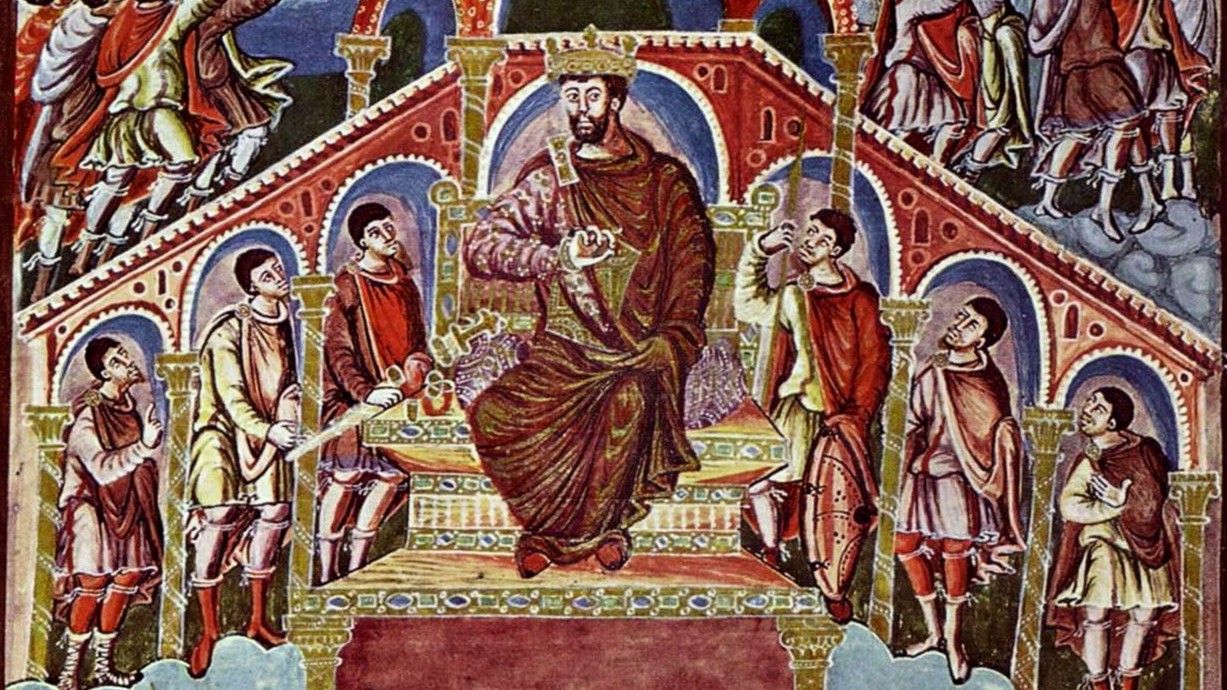
Image credit: Detail of “Judgment of Solomon” attributed to Ingobertus, 880.