2 Samuel 7
BibleHub
1 NowI when the kingII was settledIII
Notes on verse 1a
I {untranslated} = hayah. This is to be or become, to happen.
II “king” = melek. From malak (to be or become king or queen, to rise to the throne, to be crowned; by implication, to take counsel). This is king or royal.
III “settled” = yashab. This is to sit and so to remain and so to dwell. It is sitting for any reason – as a judge, in order to ambush, or just sitting quietly. Causatively, this can mean settling or marrying. This can also mean continue, endure, or establish.
in his houseIV and the LordV had given him restVI
Notes on verse 1b
IV “house” = bayit. Probably from banah (to build, make, set up, obtain children; to build literally or figuratively). This is house, court, family, palace, temple.
V “Lord” = YHVH. Related to {untranslated} in v1. From havah (to be, become) or hayah (see note I above). This is the name of the God of Israel, the self-existent and eternal one, the tetragrammaton. This pronunciation has been lost to time so “Lord” is generally used in its place.
VI “given…rest” = nuach. This is to rest, calm, camp, free, place, remain, satisfy, settle, station, or wait. It is rest and so implies settling down in a literal or figurative sense. This is perhaps the root verb of the name “Noah.”
from allVII his enemiesVIII aroundIX him,
Notes on verse 1c
VII “all” = kol. From kalal (to complete). This is all or every.
VIII “enemies” = oyeb. From ayab (to hate or be hostile to). This is a foe or enemy as one that you are hostile to.
IX “around” = sabib. From sabab (turning around, going around; to surround, cast, walk, fetch; to revolve or border in a literal or figurative sense). This is a circuit or a circle. It could refer to an environment, one’s neighbors, or a circular path round about.
2 the king saidX to the prophetXI Nathan,XII “SeeXIII now,XIV
Notes on verse 2a
X “said” = amar. This is to speak, say, answer, command, promise, report.
XI “prophet” = nabi. This is prophet, prophecy, speaker, or someone inspired.
XII “Nathan” = Natan. From natan (to give, put, set, offer; to give literally or figuratively). This is Nathan, meaning “given” or “[God] gives.”
XIII “see” = raah. This is to see in a literal or figurative sense so stare, advise, think, view.
XIV “now” = na. This particle is used for requests or for urging. It can be we pray, now, I ask you, oh. This is the same “na” in “hosanna.”
I am livingXV in a house of cedar,XVI but the arkXVII of GodXVIII staysXIX inXX a tent.”XXI
Notes on verse 2b
XV “living” = yashab. Same as “settled” in v1. See note III above.
XVI “cedar” = erez. Perhaps from araz (made from cedar; to be firm, strong). This is cedar or a cedar tree as strong.
XVII “ark” = aron. Perhaps from arah (to gather or pluck). This is a chest, box, or coffin. It is used for the Ark of the Covenant.
XVIII “God” = Elohim. This is God or a god.
XIX “stays” = yashab. Same as “settled” in v1. See note III above.
XX “in” = tavek. This is among, middle, in the midst, the center. Perhaps, properly, to sever.
XXI “tent” = yeriah. From yara (to tremble, fear, quiver). This is a hanging curtain – a tent curtain that can shake.
3 Nathan said to the king, “Go,XXII doXXIII all that you have in mind,XXIV for the Lord is with you.”
Notes on verse 3
XXII “go” = halak. This is go, come, walk. It is walk literally and figuratively and includes people and animals. It can be used figuratively for one’s moral life – how we walk according to God’s way or against it. It can also refer to the walk of life as in the course one’s life takes, the choices we make, etc.
XXIII “do” = asah. This is to make, do, act, appoint, become in many senses.
XXIV “mind” = lebab. May be related to labab (to encourage; properly, to be encased as with fat; used in a good sense, this means to transport someone with love; used in a bad sense, it can mean to dull one’s senses). This is the heart, courage, one’s inner self, the mind, or the will. Heart is only used in a figurative sense in the Old and New Testaments.
4 ButXXV that same nightXXVI the wordXXVII of the Lord cameXXVIII to Nathan,XXIX
Notes on verse 4
XXV {untranslated} = hayah. Same as {untranslated} in v1. See note I above.
XXVI “night” = layil. Properly, this refers to light twisting away. It is used for night or midnight. Figuratively, this can mean adversity.
XXVII “word” = dabar. From dabar (to speak, declare, discuss). This is speech, a word, a matter, an affair, charge, command, message, promise, purpose, report, request. It is a word, which implies things that are spoken of in a wide sense.
XXVIII “came” = hayah. Same as {untranslated} in v1. See note I above.
XXIX {untranslated} = amar. Same as “said” in v2. See note X above.
5 “Go and tellXXX my servantXXXI David:XXXII
Notes on verse 5a
XXX “tell” = amar. Same as “said” in v2. See note X above.
XXXI “servant” = ebed. From abad (to work, serve, compel; any kind of work; used causatively, can mean to enslave or keep in bondage). This is a servant, slave, or bondservant.
XXXII “David” = David. From the same as dod (beloved, love, uncle); the root may mean to boil, which is used figuratively to describe love. So, this implies someone you love such as a friend, a lover, or a close family member like an uncle. David’s name likely means something like “beloved one.”
ThusXXXIII says the Lord: Are you the one to buildXXXIV me a house to live in? 6 I have not lived in a house since the dayXXXV I brought upXXXVI
Notes on verses 5b-6a
XXXIII “thus” = koh. Perhaps from ki (that, for when, certainly) + hu (he, she, it). This is like this, thus, here, now.
XXXIV “build” = banah. Related to “house” in v1. See note IV above.
XXXV “day” = yom. Root may mean being hot. This is the day in a literal or figurative sense. It can also mean birth, age, daylight, continually or other references to time.
XXXVI “brought up” = alah. This is to go up, approach, ascend, be high, be a priority; to arise in a literal or figurative sense.
the peopleXXXVII of IsraelXXXVIII from EgyptXXXIX to this day,
Notes on verse 6b
XXXVII “people” = ben. Related to “house” in v1 & “build” in v5. From banah (see note IV above). This is son, age, child. It is son in a literal or figurative sense.
XXXVIII “Israel” = Yisrael. Related to “God” in v2. From sarah (to persist, exert oneself, contend, persevere, wrestle, prevail) + El (see note XVIII above). This is Israel, meaning God strives or one who strives with God; new name for Jacob and for his offspring. This refers to the people and to the land.
XXXIX “Egypt” = Mitsrayim. Perhaps from matsor (besieged or fortified place, bulwark, entrenchment; something hemmed in; a siege or distress or fastness); from tsur (to confine, besiege, to cramp). This is Egypt.
but I haveXL been moving aboutXLI in a tentXLII and a tabernacle.XLIII
Notes on verse 6c
XL “have” = hayah. Same as {untranslated} in v1. See note I above.
XLI “moving about” = halak. Same as “go” in v3. See note XXII above.
XLII “tent” = ohel. Perhaps from ahal (to shine, be clear). This is a tent, covering, home, or side pillar.
XLIII “tabernacle” = mishkan. From shakan (to settle down in the sense of residing somewhere or staying there permanently; to abide or continue). This is a place where one lives – a tabernacle, tent, or other kind of dwelling. It can also be a lair where animals live, the grave, the Temple, or the Tabernacle.
7 Wherever I have moved about among all the people of Israel, did I ever speakXLIV a word with anyXLV of the tribal leadersXLVI of Israel, whom I commandedXLVII
Notes on verse 7a
XLIV “speak” = dabar. Related to “word” in v4. See note XXVII above.
XLV “any” = echad. Perhaps from achad (to unify, continue on a path; figuratively, to gather one’s thoughts). This is the number one, first, united. It can also be alone, altogether, a certain, a few.
XLVI “tribal leaders” = shebet. This is a rod, staff, club, scepter, dart, or tribe. Literally a stick that can be used for punishing, writing, fighting, walking, ruling; thus, used figuratively for a clan.
XLVII “commanded” = tsavah. This is to charge, command, order, appoint, or enjoin. This is the root that the Hebrew word for “commandment” comes from (mitsvah).
to shepherdXLVIII my peopleXLIX Israel, saying, ‘Why have you not built me a house of cedar?’ 8 Now thereforeL thus you shall say to my servant David:
Notes on verses 7b-8a
XLVIII “shepherd” = ra’ah. This is to tend a flock, pasture, or graze. It can mean to rule or to associate with someone. Figuratively, it can be ruler or teacher.
XLIX “people” = am. From amam (to darken, hide, associate; creating shadows by huddling together). This is people or nation. It can be used specifically for a tribe, collectively of troops or armies, or figuratively to refer to a flock of animals.
L “now therefore” = attah. Perhaps from et (a period or season; whenever or continually); probably from anah (to answer, sing, announce); from ad (forever, all, old); from adah (to pass on, advance, decorate oneself). This is now, from now on.
Thus says the Lord of hosts:LI I tookLII you from the pasture,LIII from followingLIV
Notes on verse 8b
LI “Hosts” = tsaba. From tsaba (to wage war, serve, assemble, fight, perform, muster, wait on). This is a large group of persons (used figuratively for a group of things). It implies a campaign literally as with army, war, warfare, battle, company, soldiers. Can also be used figuratively for hardship or for worship.
LII “took” = laqach. This is to take, accept, carry away, receive. It can also have the sense of take a wife or take in marriage.
LIII “pasture” = naveh. From navah (home, beautify, praise) This is home, place where shepherd or sheep live. It is at home – implies a lovely place or a place of satisfaction. It can also be used for the Temple or a pasture as the home of wild animals.
LIV “following” = achar. From achar (to remain behind, linger, continue, be behind, or delay; can also imply procrastination). This is after or the last part, following.
the sheepLV to beLVI princeLVII over my peopleLVIII Israel,
Notes on verse 8c
LV “sheep” = tson. This is a flock of sheep and goats.
LVI “be” = hayah. Same as {untranslated} in v1. See note I above.
LVII “prince” = nagid. From nagad (this is to declare, make conspicuous, stand in front, manifest, predict, explain). This is a commander or leader as the one who stands at the front, whether in a military, religious, or civic setting. It can also mean honorable or noble in an abstract sense.
LVIII “people” = am. Same as “people” in v7. See note XLIX above.
9 and I have been with you whereverLIX you went and have cut offLX all your enemies from beforeLXI you, and I will makeLXII for you
Notes on verse 9a
LIX “wherever” = kol. Same as “all” in v1. See note VII above.
LX “cut off” = karat. This is to cut down, cut off, or make a covenant (idiom for making a covenant is “to cut a covenant”). It can also mean to destroy, fail, or consume.
LXI “before” = paneh. From panah (to turn, face, appear). This is face in a literal or figurative sense. It could be face, presence, anger, respect. It can also be used of God to indicate divine favor or presence.
LXII “make” = asah. Same as “do” in v3. See note XXIII above.
a greatLXIII name,LXIV like the name of the great ones of the earth.LXV
Notes on verse 9b
LXIII “great” = gadol. From gadal (to grow up, become great, become wealthy – to advance. The root meaning may be to twist in the sense of the process of growing). This is great, high, bigger, noble, old, marvelous. It can also refer to someone who is powerful or distinguished.
LXIV “name” = shem. May be from sim (to put, place, set). This is name, fame, renown. A name was thought to indicate something essential about a person – something about their individuality. So, this word can also mean honor, authority, or character.
LXV “earth” = erets. Root may mean to be firm. This is earth, ground, field land, or country.
10 And I will appointLXVI a placeLXVII for my peopleLXVIII Israel and will plantLXIX them,
Notes on verse 10a
LXVI “appoint” = sim. Related to “name” in v9. See note LXIV above.
LXVII “place” = maqom. From qum (to arise, stand, accomplish, establish, abide; rising against, getting up after being sick or asleep, arising from one state to another, becoming powerful, or rising for action; standing in a figurative sense). This is a standing, which is to say a spot or space a place. It can also refer to a locality or a physical/mental condition. HaMaqom is also a Jewish name for God – the place, i.e. the Omnipresent One.
LXVIII “people” = am. Same as “people” in v7. See note XLIX above.
LXIX “plant” = nata. To fix or fasten, establish or plant. This is planting in a literal or figurative sense.
so that they may liveLXX in their own placeLXXI and be disturbedLXXII no more,LXXIII
Notes on verse 10b
LXX “live” = shakan. Related to “tabernacle” in v6. See note XLIII above.
LXXI “own place” = tachat. This is underneath, below, the bottom, instead of.
LXXII “be disturbed” = ragaz. This is shaking from any strong emotion, particularly anger or fear. It can be agitated, excited, perturbed, afraid, quaking, quivering.
LXXIII “more” = yasaph. This is to add, increase, continue, exceed.
and evildoersLXXIV shall afflictLXXV them no more, as formerly,LXXVI
Notes on verse 10c
LXXIV “evildoers” = ben + evel. Literally, “children of wickedness.” Ben is the same as “people” in v6. See note XXXVII above. Evel is perhaps from aval (to deal unjustly, act in a wrongful way, a wrongdoer). This is injustice, wrong, moral evil, acts of violence, or unrighteousness.
LXXV “afflict” = anah. This is to be occupied with. It can also be bowed down. It can refer to a sense of humility or to a sense of being browbeaten, oppressed, afflicted, or depressed. This can be literal or figurative – depressed in mood or circumstance.
LXXVI “formerly” = rishon. From rishah (beginning or early time); from rosh (head, captain, or chief; excellent or the forefront; first in position or in statue or in time). This is first, former, ancestor, beginning, ranked first.
11 from the timeLXXVII that I appointedLXXVIII judgesLXXIX over my peopleLXXX Israel, and I will give you rest from all your enemies. Moreover, the Lord declaresLXXXI to you that the Lord will make you a house.
Notes on verse 11
LXXVII “time” = yom. Same as “day” in v6. See note XXXV above.
LXXVIII “appointed” = tsavah. Same as “commanded” in v7. See note XLVII above.
LXXIX “judges” = shaphat. This is to judge, defend, pronounce judgment, condemn, or govern. It can refer to God judging or to human judges. This is pronouncing a verdict in favor or against so it implies consequences or punishment. It can also mean to litigate or govern as one with authority.
LXXX “people” = am. Same as “people” in v7. See note XLIX above.
LXXXI “declares” = nagad. Related to “prince” in v8. See note LVII above.
12 When your days are fulfilledLXXXII and you lie downLXXXIII with your ancestors,LXXXIV I will raise upLXXXV your offspringLXXXVI afterLXXXVII you,
Notes on verse 12a
LXXXII “fulfilled” = male. This is fill, satisfy, replenish, accomplish, fulfill, confirm, or consecrate. It is fill in a literal or figurative sense.
LXXXIII “lie down” = shakab. This is to lie down, lodge. It is lying for sleep, sex, or other reasons.
LXXXIV “ancestors” = ab. This is father, chief, or ancestor. It is father in a literal or figurative sense.
LXXXV “raise up” = qum. Related to “place” in v10. See note LXVII above.
LXXXVI “offspring” = zera. From zara (to sow or scatter seed; conceive or yield). This is seed or sowing. It can, thus, mean a fruit, plant, sowing time, child, offspring, or posterity.
LXXXVII “after” = achar. Same as “following” in v8. See note LIV above.
who shall come forthLXXXVIII from your body,LXXXIX and I will establishXC his kingdom.XCI
Notes on verse 12b
LXXXVIII “come forth” = yatsa. This is to go or come out, bring forth, appear. It is to go out in a literal or figurative sense.
LXXXIX “body” = meeh. This is inward parts, belly, heart, womb, intestines, vastness. It can also be figurative for sympathy.
XC “establish” = kun. Properly, this means in a perpendicular position. So, it is set up in a literal sense – establish, fix, fasten, prepare. In a figurative sense, it is certainty, to be firm, faithfulness, render sure or prosperous.
XCI “kingdom” = mamlakah. Related to “king” in v1. From the same as melek (see note II above). This is kingdom, dominion, sovereignty, rule. It can also refer to the realm.
13 He shall build a house for my name, and I will establish the throneXCII of his kingdom forever.XCIII 14 I will be a fatherXCIV to him, and he shall be a sonXCV to me.
Notes on verses 13-14a
XCII “throne” = kisse. From the same as kese (full moon); perhaps from kasah (to cover, conceal, overwhelm; to cover as clothes do or to hide a secret). This is throne – a seat that is covered or has a canopy. Thus, it is a seat that conveys authority.
XCIII “forever” = olam. This is a long scope of time whether in the past (antiquity, ancient time) or in the future (eternal, everlasting).
XCIV “father” = ab. Same as “ancestors” in v12. See note LXXXIV above.
XCV “son” = ben. Same as “people” in v6. See note XXXVII above.
When he commits iniquity,XCVI I will punishXCVII him with a rodXCVIII
Notes on verse 14b
XCVI “commits iniquity” = avah. 17x in OT. This is to bend, turn, be crooked in a literal or figurative sense. So, it can refer to committing iniquity.
XCVII “punish” = yakach. This is to decide, be right, argue, or convince. It can also be to decide, convict, reason together, or reprove.
XCVIII “rod” = shebet. Same as “tribal leaders” in v7. See note XLVI above.
such as mortalsXCIX use, with blowsC inflicted by human beings.CI
Notes on verse 14c
XCIX “mortals” = ish. Perhaps from enosh (human, humankind, mortal); from anash (to be weak, sick, or frail). This is man, husband, another, or humankind.
C “blows” = nega. From naga (touch, reach, arrive, come near, strike; touching for any reason including sexual or violent). This is a blow or stroke, wound, sore, mark plague. It can refer to someone with leprosy or to dress.
CI “human beings” = ben + adam. Literally, “children of humanity.” Ben is the same as “people” in v6. See note XXXVII above. Adam is perhaps from adam (to be red, make ruddy); related to adamah (ground, dirt, earth). This is man, humankind, also Adam’s name. It refers to a human individual or humanity.
15 But I will not takeCII my steadfast loveCIII from him, as I tookCIV it from Saul,CV
Notes on verse 15a
CII “take” = sur. This is to turn aside in a literal or figurative sense – to depart, decline, rebel, remove, or withdraw.
CIII “steadfast love” = chesed. From chasad (being good, kind, merciful; may mean bowing one’s neck as is done in the presence of an equal for courtesy’s sake; so, if one in a superior position is treating you like an equal, that is what is captured here). This is favor, goodness, kindness, loving kindness, pity, reproach, or a good deed. When done by God to humanity, this is mercy/loving kindness. When done by humanity to God, it is piety.
CIV “took” = sur. Same as “take” in v15. See note CII above.
CV “Saul” = Shaul. From shaal (to ask, inquire, beg, borrow, desire, request; can also mean demand). This is Saul or Shaul, meaning “asked of the Lord.”
whom I put awayCVI from beforeCVII you. 16 Your house and your kingdom shall be made sureCVIII forever beforeCIX me; your throne shall be established forever.”
Notes on verses 15b-16
CVI “put away” = sur. Same as “take” in v15. See note CII above.
CVII “before” = paneh. Same as “before” in v9. See note LXI above.
CVIII “made sure” = aman. This is to believe, endure, fulfill, confirm, support, be faithful. It is to put one’s trust in, be steadfast. Figuratively, this is to be firm, steadfast, or faithful, trusting, believing, being permanent, morally solid. This is where the word “amen” comes from.
CIX “before” = paneh. Same as “before” in v9. See note LXI above.
17 In accordance with all these words and with all this vision,CX CXINathan spoke to David.
18 Then King David went inCXII and satCXIII beforeCXIV the Lord
Notes on verses 17-18a
CX “vision” = chizzayon. 9x in OT. From chazah (to gaze at – to see or behold; perceiving as a mental process or looking at something with pleasure; seeing a vision). This is a vision or revelation that comes in a dream.
CXI {untranslated} = ken. Related to “establish” in v12. Perhaps from kun (see note XC above). This is to set upright. Generally used figuratively to mean thus, so, afterwards, rightly so.
CXII “went in” = bo. This is to enter, come in, advance, fulfill, bring offerings, enter to worship, attack. It can also have a sexual connotation.
CXIII “sat” = yashab. Same as “settled” in v1. See note III above.
CXIV “before” = paneh. Same as “before” in v9. See note LXI above.
and said, “Who am I, O LordCXV God,CXVI and what is my house, that you have broughtCXVII me thus far?CXVIII
Notes on verse 18b
CXV “Lord” = Adonai. From adon (lord, master, owner); root means to rule or be sovereign. This is the actual Hebrew word for Lord used (in a different form) of humans and (in the present form) of God. It means someone who is in control.
CXVI “God” = YHVH. Related to {untranslated} and “Lord” in v1. From the same as YHVH (see note V above). This is a secondary spelling of the Lord, the name of the God of Israel. It has the same meaning.
CXVII “brought” = bo. Same as “went in” in v18. See note CXII above.
CXVIII “far” = halom. 11x in OT. This is here or this far.
19 And yet this was a small thingCXIX in your eyes,CXX O LordCXXI God;CXXII
Notes on verse 19a
CXIX “small thing” = qaton. 4x in OT. Perhaps from qatan (least, small, young, littlfe one; it is literally smaller whether in amount or size; figuratively smaller in the sense of younger or less important); from qut (grieved, cut off, to detest). This is to be small, diminished, insignificant, or unworthy.
CXX “eyes” = ayin. This is eye in a literal or figurative sense so eye, appearance, favor, or a fountain (the eye of the landscape).
CXXI “Lord” = Adonai. Same as “Lord” in v18. See note CXV above.
CXXII “God” = YHVH. Same as “Lord” in v1. See note V above.
you have spoken alsoCXXIII of your servant’s house into the distant future.CXXIV May this be instructionCXXV for the people,CXXVI O LordCXXVII God!CXXVIII
Notes on verse 19b
CXXIII “also” = gam. This is also, moreover, again.
CXXIV “distant future” = rachoq. From rachaq (to widen, become distant, cast, or remove in a literal or figurative sense). This is distant or far, whether of space or of time.
CXXV “instruction” = torah. 1x in OT. Probably from tor (ornament, standard, plait, seek, a series, an order, border, row, turn); from tur (to seek, explore, follow, spy out; meandering whether to do business or to spy). This is law, custom, or manner. This is a different word and a different origin than the “Torah.”
CXXVI “people” = adam. Same as “human beings” in v14. See note CI above.
CXXVII “Lord” = Adonai. Same as “Lord” in v18. See note CXV above.
CXXVIII “God” = YHVH. Same as “Lord” in v1. See note V above.
20 And what more can David sayCXXIX to you? For you knowCXXX your servant, O LordCXXXI God!CXXXII
Notes on verse 20
CXXIX “say” = dabar. Same as “speak” in v7. See note XLIV above.
CXXX “know” = yada. This is to know, acknowledge, advise, answer, be aware, be acquainted with. Properly, this is to figure something out by seeing. It includes ideas of observation, recognition, and care about something. It can be used causatively for instruction, designation, and punishment.
CXXXI “Lord” = Adonai. Same as “Lord” in v18. See note CXV above.
CXXXII “God” = YHVH. Same as “God” in v18. See note CXVI above.
21 BecauseCXXXIII of your promiseCXXXIV and according to your own heart,CXXXV you have wroughtCXXXVI all this greatnessCXXXVII so that your servant may know it.
Notes on verse 21
CXXXIII “because” = abur. From abar (to pass over, pass through, or pass by; cross over or to alienate; used for transitions). This is for, so that, on account of. Properly, it means crossed.
CXXXIV “promise” = dabar. Same as “word” in v4. See note XXVII above.
CXXXV “heart” = leb. Related to “mind” in v3. From the same as lebab (see note XXIV above). This is inner self, mind, will, feelings, the center.
CXXXVI “wrought” = asah. Same as “do” in v3. See note XXIII above.
CXXXVII “greatness” = gedullah. Related to “great” in v9. 12x in OT. From gadal (see note LXIII above). This is greatness, dignity, distinction, or mighty acts.
22 ThereforeCXXXVIII you are great,CXXXIX O LordCXL God,CXLI for there is no oneCXLII like you,
Notes on verse 22a
CXXXVIII “therefore” = ken. Same as {untranslated} in v17. See note CXI above.
CXXXIX “are great” = gadal. Related to “great” in v9 & “greatness” in v21. See note LXIII above.
CXL “Lord” = Adaoni. Same as “Lord” in v18. See note CXV above.
CXLI “God” = YHVH. Same as “God” in v18. See note CXVI above.
CXLII “no one” = ayin. Perhaps from a word that means to be nothing. This means nothing, none, non-existent. It can also simply mean not or are not.
and there is noCXLIII GodCXLIV besidesCXLV you, according to all that we have heardCXLVI with our ears.CXLVII
Notes on verse 22b
CXLIII “no” = ayin. Same as “no one” in v22. See note CXLII above.
CXLIV “God” = Elohim. Same as “God” in v2. See note XVIII above.
CXLV “besides” = zulah. 16x in OT. Perhaps from zul (to shake out, lavish, despise). This is removal, except, besides.
CXLVI “heard” = shama. This is to hear, call, consent, or consider. It implies listening intelligently, giving attention, and, because of these two factors, obedience and action are often implied.
CXLVII “ears” = ozen. This is ear, hearing, audience, show. Properly, it is broadness – applied to its ear in reference to its shape.
23 Who is like your people,CXLVIII like Israel? Is there anotherCXLIX nationCL on earth
Notes on verse 23a
CXLVIII “people” = am. Same as “people” in v7. See note XLIX above.
CXLIX “another” = echad. Same as “any” in v7. See note XLV above.
CL “nation” = goy. From the same root as gevah (the back, person, or body); related to gev (among); related to gaah (to rise up). This is nation or people. Often used to refer to Gentiles or foreign nations. It can also be used figuratively for a group of animals. This is where the Yiddish “goy” comes from.
whose GodCLI went to redeemCLII it as a peopleCLIII and to makeCLIV a name for himself,
Notes on verse 23b
CLI “God” = Elohim. Same as “God” in v2. See note XVIII above.
CLII “redeem” = padah. This is to sever, which is to say to ransom. To secure someone’s release (by paying their debt to free them from slavery) and thus redeem, rescue, deliver, preserve. Can also be the redemption price.
CLIII “people” = am. Same as “people” in v7. See note XLIX above.
CLIV “make” = sim. Same as “appoint” in v10. See note LXVI above.
doing greatCLV and awesome things,CLVI, CLVIIdriving out nations and their godsCLVIII beforeCLIX your people,CLX whom you redeemed for yourself from Egypt?
Notes on verse 23c
CLV “great” = gedullah. Same as “greatness” in v21. See note CXXXVII above.
CLVI “awesome things” = yare. This is to fear, be afraid, dreadful. It can also refer to fearful reverence – to fear in a moral sense is to say to revere, respect.
CLVII {untranslated} = erets. Same as “earth” in v9. See note LXV above.
CLVIII “gods” = elohim. Same as “God” in v2. See note XVIII above.
CLIX “before” = paneh. Same as “before” in v9. See note LXI above.
CLX “people” = am. Same as “people” in v7. See note XLIX above.
24 And you established your peopleCLXI Israel for yourself to be your peopleCLXII forever, and you, O Lord,CLXIII becameCLXIV their God.CLXV
Notes on verse 24
CLXI “people” = am. Same as “people” in v7. See note XLIX above.
CLXII “people” = am. Same as “people” in v7. See note XLIX above.
CLXIII “Lord” = YHVH. Same as “Lord” in v1. See note V above.
CLXIV “became” = hayah. Same as {untranslated} in v1. See note I above.
CLXV “God” = Elohim. Same as “God” in v2. See note XVIII above.
25 And now,CLXVI O LordCLXVII God,CLXVIII as for the word that you have spoken concerning your servant and concerning his house, confirmCLXIX it forever; do as you have promised.
Notes on verse 25
CLXVI “now” = attah. Same as “now therefore” in v8. See note L above.
CLXVII “Lord” = YHVH. Same as “Lord” in v1. See note V above.
CLXVIII “God” = Elohim. Same as “God” in v2. See note XVIII above.
CLXIX “confirm” = qum. Same as “raise up” in v12. See note LXXXV above.
26 Thus your name will be magnifiedCLXX forever in the saying,CLXXI ‘The LordCLXXII of hosts is GodCLXXIII over Israel,’ and the house of your servant David will be established beforeCLXXIV you.
Notes on verse 26
CLXX “magnified” = gadal. Same as “are great” in v22. See note CXXXIX above.
CLXXI “saying” = amar. Same as “said” in v2. See note X above.
CLXXII “Lord” = YHVH. Same as “Lord” in v1. See note V above.
CLXXIII “God” = Elohim. Same as “God” in v2. See note XVIII above.
CLXXIV “before” = paneh. Same as “before” in v9. See note LXI above.
27 For you, O LordCLXXV of hosts, the GodCLXXVI of Israel, have made this revelationCLXXVII to your servant, saying,CLXXVIII ‘I will build you a house’;
Notes on verse 27a
CLXXV “Lord” = YHVH. Same as “Lord” in v1. See note V above.
CLXXVI “God” = Elohim. Same as “God” in v2. See note XVIII above.
CLXXVII “made…revelation” = galah…ozen. Galah is to remove, bring, carry, lead, appear, advertise. It can mean to strip someone or something bare in a negative sense. Captives were typically stripped before they were sent into exile. Used figuratively, in a positive sense, this word means reveal, disclose, discover. Ozen is the same as “ears” in v22. See note CXLVII above.
CLXXVIII “saying” = amar. Same as “said” in v2. See note X above.
therefore your servant has foundCLXXIX courageCLXXX to prayCLXXXI this prayerCLXXXII to you.
Notes on verse 27b
CLXXIX “found” = matsa. This is to find, catch or acquire. It can also mean to come forth or appear. Figuratively, this can mean to meet or be together with.
CLXXX “courage” = leb. Same as “heart” in v21. See note CXXXV above.
CLXXXI “pray” = palal. This is to judge for oneself or in an official capacity. It can also mean to pray or make supplication, to entreat.
CLXXXII “prayer” = tephillah. Related to “pray” in v27. From palal (see note CLXXXI above). This is prayer or intercession. It can also be a hymn.
28 And now,CLXXXIII O LordCLXXXIV God,CLXXXV you are God,CLXXXVI
Notes on verse 28a
CLXXXIII “now” = attah. Same as “now therefore” in v8. See note L above.
CLXXXIV “Lord” = Adonai. Same as “Lord” in v18. See note CXV above.
CLXXXV “God” = YHVH. Same as “God” in v18. See note CXVI above.
CLXXXVI “God” = Elohim. Same as “God” in v2. See note XVIII above.
and your words are true,CLXXXVII and you have promised this good thingCLXXXVIII to your servant; 29 now, therefore,CLXXXIX may it pleaseCXC you
Notes on verses 28b-29a
CLXXXVII “true” = emet. Related to “made sure” in v16. From aman (see note CVIII above). This is firmness or stability. Figuratively, it is faithfulness, truth, or trustworthiness. This is the same root that “amen” comes from.
CLXXXVIII “good thing” = tob. From tob (to be pleasing, to be good). This is good, beautiful, pleasant, agreeable, bountiful, at ease. This word is used for goodness as a concept, a good thing, a good person. This can refer to prosperity and welfare as well as joy, kindness, sweetness, and graciousness. So, this is ethically good, but also enjoyably good.
CLXXXIX “now, therefore” = attah. Same as “now therefore” in v8. See note L above.
CXC “may…please” = yaal. 19x in OT. This to be pleased or willing, determined, to take on something, to try, to do willingly, to begin. It can have the idea of assent or consent as well as continuing or persisting as.
to blessCXCI the house of your servant so that it may continueCXCII forever beforeCXCIII you, for you, O LordCXCIV God,CXCV have spoken, and with your blessingCXCVI shall the house of your servant be blessed forever.”
Notes on verse 29b
CXCI “bless” = barak. This is to kneel, to bless. It is blessing God as part of worship and adoration or blessing humans to help them. It can be used as a euphemism to say curse God.
CXCII “continue” = hayah. Same as {untranslated} in v1. See note I above.
CXCIII “before” = paneh. Same as “before” in v9. See note LXI above.
CXCIV “Lord” = Adonai. Same as “Lord” in v18. See note CXV above.
CXCV “God” = YHVH. Same as “God” in v18. See note CXVI above.
CXCVI “blessing” = barakah. Related to “bless” in v29. From barak (see note CXCI above). This is blessing, which implies prosperity or peace.
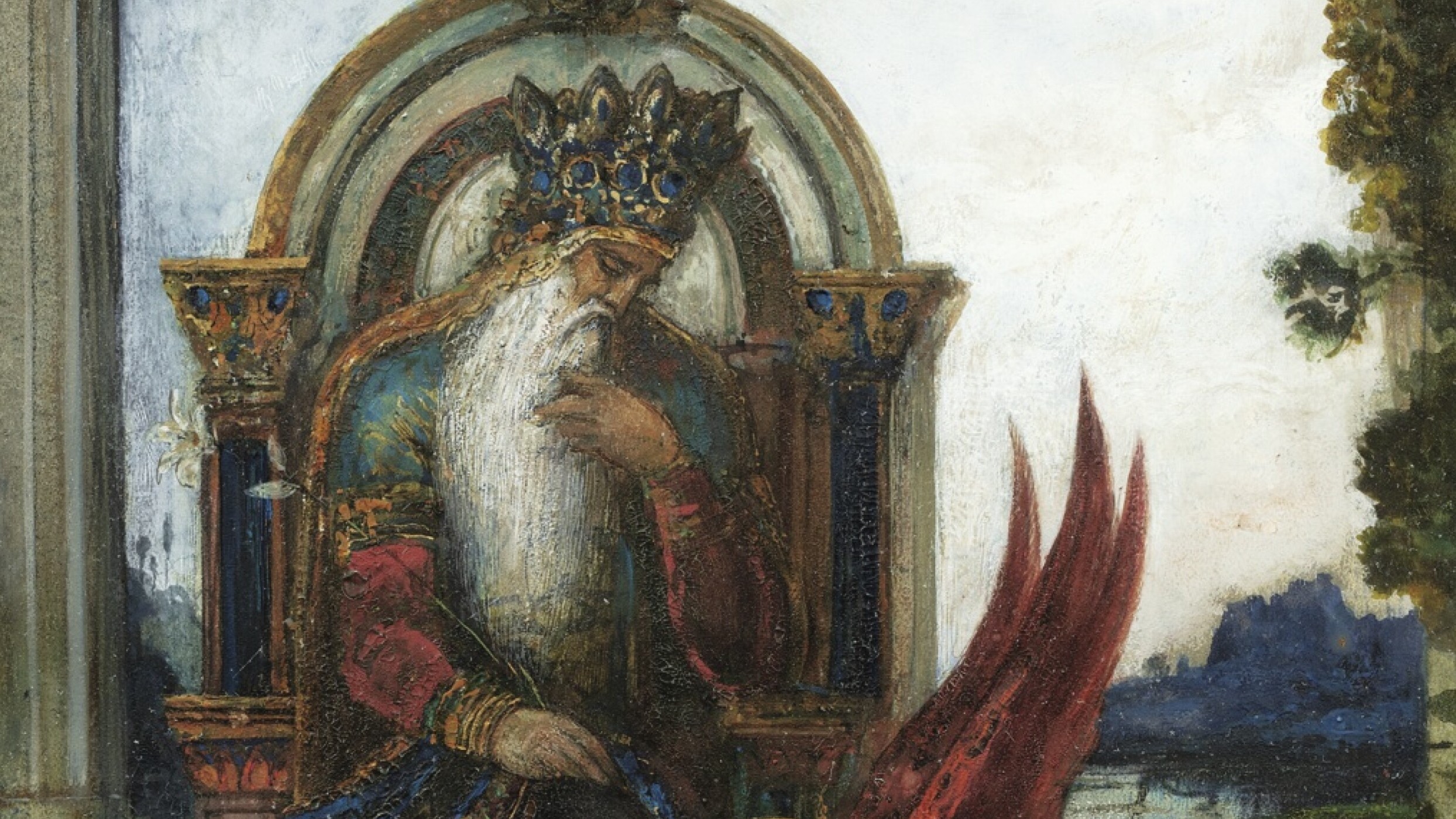
Image credit: Detail of “King David” by Gustave Moreau.