
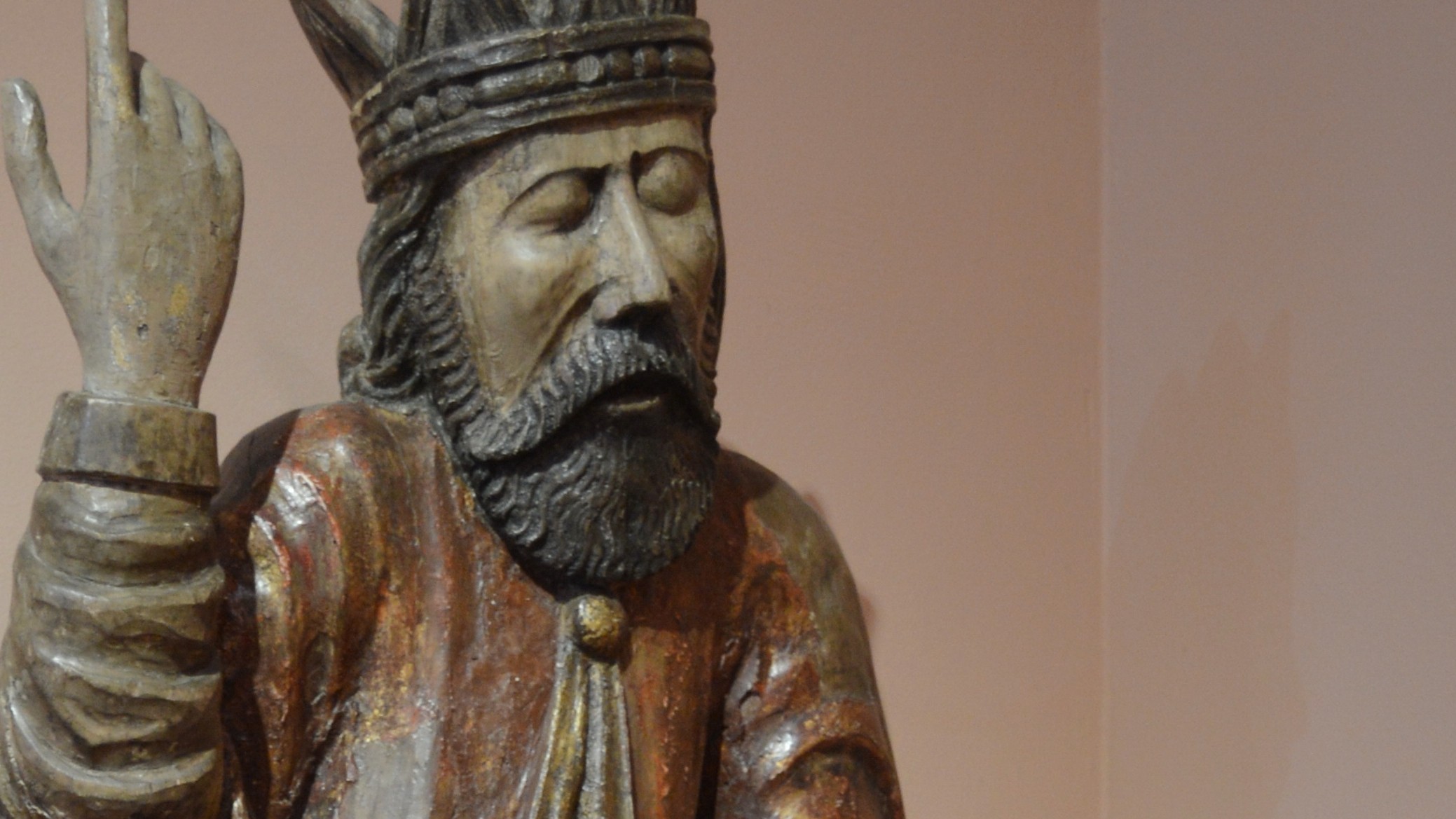
2 Samuel 22
1 DavidI spokeII to the LordIII
I “David” = David. From the same as dod (beloved, love, uncle); the root may mean to boil, which is used figuratively to describe love. So, this implies someone you love such as a friend, a lover, or a close family member like an uncle. David’s name likely means something like “beloved one.”
II “spoke” = dabar. This is generally to speak, answer, declare, or command. It might mean to arrange and so to speak in a figurative sense as arranging words.
III “Lord” = YHVH. From havah (to be, become) or hayah (to come to pass, become, be). This is the name of the God of Israel, the self-existent and eternal one, the tetragrammaton. This pronunciation has been lost to time so “Lord” is generally used in its place.
the wordsIV of this songV on the dayVI
IV “words” = dabar. Related to “spoke” in v1. From dabar (see note II above). This is speech, a word, a matter, an affair, charge, command, message, promise, purpose, report, request. It is a word, which implies things that are spoken of in a wide sense.
V “song” = shir. From shir (to sing; one who is singing or leading others in song). This is song or singer.
VI “day” = yom. Root may mean being hot. This is the day in a literal or figurative sense. It can also mean birth, age, daylight, continually or other references to time.
when the Lord deliveredVII him from the handVIII of allIX his enemiesX and from the hand of Saul.XI
VII “delivered” = natsal. This is to snatch someone or something away in a good sense – as rescue, defend, or deliver – or in a bad sense – as strip or plunder.
VIII “hand” = kaph. From kaphaph (to bend – from a root meaning curve or bend down). This is palm of the hand or sole of the foot, footstep, grasp. Figuratively, it can also mean power.
IX “all” = kol. From kalal (to complete). This is all or every.
X “enemies” = oyeb. From ayab (to hate or be hostile to). This is a foe or enemy as one that you are hostile to.
XI “Saul” = Shaul. From shaal (to ask, inquire, beg, borrow, desire, request; can also mean demand). This is Saul or Shaul, meaning “asked of the Lord.”
2 He said,XII
“The Lord is my rock,XIII my fortress,XIV and my deliverer,XV
XII “said” = amar. This is to speak, say, answer, command, promise, report.
XIII “rock” = sela. Root may mean being lofty. This is a rock, cliff, crag, mountain. It could be used figuratively for obstinance or to show God as a refuge. It can also more generally mean fortress or stronghold.
XIV “fortress” = matsud. From matsod (bulwark, siege works, net, snare); from tsud (to hunt, to lie in wait in order to catch an animal; used figuratively for capturing people). This is a castle, fortress, or stronghold. Also, a snare, net, or prey. It can abstractly mean capture.
XV “deliverer” = palat. This is to escape, slip out, deliver, carry away, or calve.
3 my God,XVI my rockXVII in whom I take refuge,XVIII
XVI “God” = Elohim.
XVII “rock” = tsur. From tsur (to confine, cramp, or bind in a literal or figurative sense; to besiege, assault, or distress). This is rock, stone, cliff, boulder, rocky. It can also be a refuge, a way to refer to God.
XVIII “take refuge” = chasah. This is to take refuge or flee for protection. Figuratively, it means to hope or trust in someone or something.
my shieldXIX and the hornXX of my salvation,XXI
XIX “shield” = magen. From ganan (to surround, cover, defend, protect). This is a shield, defense, or figuratively a protector. It can also be used for a crocodile’s hide.
XX “horn” = qeren. This is horn or hill. It can be a flask or cornet, ivory, altar corner, mountain peak, or figuratively power.
XXI “salvation” = yesha. From yasha (to deliver, defend, help, preserve, rescue, be safe. Properly, to be open, wide or free, which implies being safe. Used causatively, it means to free). This is salvation, deliverance, rescue, safety, welfare, liberty.
my strongholdXXII and my refuge,XXIII
my savior;XXIV you saveXXV me from violence.XXVI
XXII “stronghold” = misgab. 17x in OT. From sagab (raise, lifted, high, secure on high, excellent, strong; literal and figurative). This is a high or inaccessible location. Abstractly, it can be altitude. Concretely it is a cliff or height. Figuratively, it is a refuge or stronghold – a high fort or tower. There is also a place called Misgab in Moab.
XXIII “refuge” = manos. 8x in OT. From nus (to flee, vanish away, hide, escape, be displayed). This is a place to which one escapes. It is a refuge in a literal or figurative sense. It can also mean fleeing.
XXIV “savior” = yasha. Related to “salvation” in v3. See note XXI above.
XXV “save” = yasha. Same as “savior” in v3. See note XXIV above.
XXVI “violence” = chamas. From chamas (to violate, do violence, to wrong; implies mistreatment). This is violence, cruelty, damage, wrong, injustice, or unrighteous. Violence implies a wrong done. The term is also used to describe unjust gain.
4 I callXXVII upon the Lord, who is worthy to be praised,XXVIII
and I am saved from my enemies.
5 For the wavesXXIX of deathXXX encompassedXXXI me;
XXVII “call” = qara. This is to call or call out – to call someone by name. Also used more broadly for calling forth.
XXVIII “worthy to be praised” = halal. This is to be clear – it originally referred to a sound, then a color. It was to shine and then make a show or boast then to rave. In a causative sense it came to mean celebrate, give glory, sing praise, or be worth of praise. Because of the celebratory nature of the word, it could also mean to give in marriage. This is where Hallelujah comes from.
XXIX “waves” = mishbar. 5x in OT. From shabar (break, collapse, destroy, break in pieces, tear; bursting in a literal or figurative sense). This is a breaker or wave in the water.
XXX “death” = mavet. From muth (to die in a literal or figurative sense). This can be death, deadliness, the dead, or the place where the dead go. It can be used figuratively for pestilence or ruin.
XXXI “encompassed” = aphaph. 5x in OT. This is to surround or encompass.
the torrentsXXXII of perditionXXXIII assailedXXXIV me;
XXXII “torrents” = nachal. From nachal (to take as heritage, inherit, or distribute). This is a river or stream. It could be a wadi or arroyo – sometimes a narrow valley with no water at all, but in strong rains or when winter snow melts, it swells or floods with water.
XXXIII “perdition” = beliyaal. From beli (lack, nothing, without, wearing out, failure, destruction); {from balah (to grow old, wear out, waste away, consume, spend)} + yaal (to gain, profit, do good, ascend, be useful or valuable; benefitted). This is lacking profit i.e. worthlessness, destruction, evil, ungodly person, wickedness, or Belial.
XXXIV “assailed” = baath. 16x in OT. This is to terrify, startle, overwhelm, terrorize, or fall upon.
6 the cordsXXXV of SheolXXXVI entangledXXXVII me;
XXXV “cords” = chebel. From chabal (to bind, pledge, or wind tight; figuratively, can refer to perverting or destroying something; can also be used of writhing in pain, particularly in reference to childbirth). This is a band, rope, measuring line, noose. It can be a company, territory, or country. It can also refer to a throe of labor or ruin.
XXXVI “Sheol” = Sheol. Related to “Saul” in v1. Perhaps from shaal (see note XI above). This is the place where the dead go, the grace, the underworld.
XXXVII “entangled” = sabab. This is turning around, going around; to surround, cast, walk, fetch. It is to revolve or border in a literal or figurative sense.
the snaresXXXVIII of death confrontedXXXIX me.
7 In my distressXL I called upon the Lord;
to my God I called.
XXXVIII “snares” = moqesh. From yaqosh (ensnare, lay bait, lure, trapper; to snare literally or figuratively). This is bait, barb, snare, trap; a noose or hook to trap animals in a literal or figurative sense.
XXXIX “confronted” = qadam. May be from qedem (front, formerly, before, east, eternal, everlasting, antiquity). This is to come in front or be in front and so meet, anticipate, confront, receive, or rise. It sometimes means to meet for help.
XL “distress” = tsar. From tsarar (to bind, restrict, narrow, be cramped, an adversary). Properly, this is a narrow or constricted place. Figuratively, it can be trouble, a pebble, an enemy, anguish, or distress.
From his templeXLI he heardXLII my voice,XLIII
XLI “temple” = hekal. Perhaps from yakol (to be able, endure, overcome, prevail). This is a large building with public access such as a palace or temple.
XLII “heard” = shama. This is to hear, call, consent, or consider. It implies listening intelligently, giving attention, and, because of these two factors, obedience and action are often implied.
XLIII “voice” = qol. This is a sound, used often for human voices. Also used when God speaks or angels, animals or instruments. It can be a cry or a noise, thunder or earthquakes and so on.
and my cryXLIV came to his ears.XLV
8 Then the earthXLVI reeledXLVII and rocked;XLVIII
XLIV “cry” = shavah. 11x in OT. From shava (crying or shouting aloud; seeking freedom from some kind of trouble). This is cry, cry for help.
XLV “ears” = ozen. This is ear, hearing, audience, show. Properly, it is broadness – applied to its ear in reference to its shape.
XLVI “earth” = erets. Root may mean to be firm. This is earth, ground, field land, or country.
XLVII “reeled” = gaash. 9x in OT. This is to shake, quake, move, trouble, surge, or agitate violently.
XLVIII “rocked” = raash. This is to quake, shake, tremble, shake from fear; leap like a locust.
the foundationsXLIX of the heavensL trembledLI
and reeled because he was angry.LII
XLIX “foundations” = mosadah. 11x in OT. From mosad (foundation); from yasad (to establish, appoint, instruct; to set in a literal or figurative sense; also, to sit down together and so to consult or take counsel). This is a foundation.
L “heavens” = shamayim. Root may mean being lofty. This is sky, the air, or heaven. It is in a dual noun form so this might refer to the part of the sky where the clouds move on the one hand and the part beyond that where the sun, moon, and stars are on the other hand.
LI “trembled” = ragaz. This is shaking from any strong emotion, particularly anger or fear. It can be agitated, excited, perturbed, afraid, quaking, quivering.
LII “was angry” = charah. Perhaps related to charar (to be hot, burn, glow, melt, be scorched; figuratively, to incite passion, be angry). This is to be displeased, burn with anger, glow, become warn. Figuratively it is a blaze of anger, zeal, or jealousy.
9 SmokeLIII went upLIV from his nostrilsLV
LIII “smoke” = ashan. From ashan (to smoke or burn in a literal or figurative sense; to be angry). This is smoke, vapor, dust, or anger.
LIV “went up” = alah. This is to go up, approach, ascend, be high, be a priority; to arise in a literal or figurative sense.
LV “nostrils” = aph. From anaph (to be angry; properly, breathing hard as a signifier of being enraged). This properly refers to the nose or nostril and by extension the face. It can specifically refer to anger or wrath as one breathes hard and nostrils flare in times of great anger.
and devouringLVI fireLVII from his mouth;LVIII
glowing coalsLIX flamed forthLX from him.
LVI “devouring” = akal. This is to eat, devour, burn up, or otherwise consume. It can be eating in a literal or figurative sense.
LVII “fire” = esh. This is fire, burning, flaming, hot. It is fire in a literal or figurative sense.
LVIII “mouth” = peh. This is mouth in a literal or figurative sense. So, more literally, it can be beak or jaws. More figuratively, it refers to speech, commands, or promises.
LIX “glowing coals” = gechel. 18x in OT. Root may mean to glow or kindle. This is a cot or hot ember.
LX “flamed forth” = baar. This is to burn, consume, heat, remove. It can also be to consume by a fire or through eating, being brutish or wasting.
10 He bowedLXI the heavens and came down;LXII
thick darknessLXIII was underLXIV his feet.LXV
LXI “bowed” = natah. This is to stretch or spread out, to extend, or bend. In can also imply moral deflection.
LXII “came down” = yarad. This is to go down, descend; going down in a literal or figurative sense. It can be going to the shore or a boundary, bringing down an enemy.
LXIII “thick darkness” = araphel. 15x in OT. From araph (to droop, drip, drop). This is a cloud or deep darkness. It is gloom or gloomy as the sky being lowered.
LXIV “under” = tachat. This is underneath, below, the bottom, instead of.
LXV “feet” = regel. This is foot, endurance, or journey. It is a foot as the means of walking and so it implies a step or a greater journey. It can be used euphemistically for private parts.
11 He rodeLXVI on a cherubLXVII and flew;LXVIII
he was seenLXIX upon the wingsLXX of the wind.LXXI
LXVI “rode” = rakab. This is to ride an animal or in some vehicle. It can also mean bringing on a horse.
LXVII “cherub” = kerub. Perhaps related to Akkadian (“to bless” or “one who blesses”). This is a cherub – perhaps a class of angels. See https://en.wiktionary.org/wiki/%D7%9B%D7%A8%D7%95%D7%91#Hebrew
LXVIII “flew” = uph. This is to fly, flee, be weary. It can also mean to cloak with wings or darkness.
LXIX “seen” = raah. This is to see in a literal or figurative sense so stare, advise, think, view.
LXX “wings” = kanaph. This is wing, edge, corner, extremity. It can also be a flap or fold of a garment or the pinnacle of a building.
LXXI “wind” = ruach. From ruach (smell, breathe, perceive, anticipate, accept, enjoy). This is breath, wind, air, cool, spirit. This is wind, which resembles the breath and so this can be used figuratively for life itself or being frail/mortal/impermanent. It can refer to the air of the sky or the spirit.
12 He madeLXXII darknessLXXIII aroundLXXIV him a canopy,LXXV
LXXII “made” = shith. This is to place, set, bring, appoint, consider, bring, array or look.
LXXIII “darkness” = choshek. From chashak (to be or become dark). This is literal darkness is contrast to light. Figuratively, it can be obscurity, sorrow, misery, blindness, wickedness, destruction, death. It can also be hiding places. Additionally, it can mean judgment, mourning, ignorance, evil, or sin.
LXXIV “around” = sabib. Related to “entangled” in v6. From sabab (see note XXXVII above). This is a circuit or a circle. It could refer to an environment, one’s neighbors, or a circular path round about.
LXXV “canopy” = sukkah. From sok (lair, thicket, den, or hiding place; a den or pavilion as made of intertwined boughs); from sakak (to interweave, knit). This is a booth, canopy, shelter, tent, or tabernacle. This is also the “sukkah” from the Jewish holiday “sukkot,” which remembers the wilderness wanderings.
thick clouds,LXXVI a gatheringLXXVII of water.LXXVIII
LXXVI “thick clouds” = ab + shachaq. Ab is perhaps from uwb (to be a think or dark cloud, a cloud covering). This is a dark or thick cloud that can envelope in darkness. It can also refer to a copse or to clay. Shachaq is from shachaq (to rub off, wear away, pulverize). This is powder, dust, vapor. It can also refer to the sky or a cloud.
LXXVII “gathering” = chashrah. 1x in OT. From the same as chishshur (plan, device; combined as a wheel joins spokes). This is mass, collection, combination.
LXXVIII “water” = mayim. This is water, waters, or waterway in a general sense. Figuratively, it can also mean juice, urine, or semen.
13 Out of the brightnessLXXIX beforeLXXX him
coals of fire flamed forth.
14 The LordLXXXI thunderedLXXXII from heaven;
LXXIX “brightness” = nogah. 19x in OT. From nagah (to shine – root may mean to glitter). This is light, radiance, being bright, sunshine.
LXXX “before” = neged. From nagad (to declare, make conspicuous, stand in front, manifest, predict, explain). This is in front of, opposite to. It can refer to a counterpart or partner, one corresponding to or in the sight of.
LXXXI “Lord” = YHVH. Related to “Lord” in v1. From the same as YHVH (see note III above). This is a secondary spelling of the Lord, the name of the God of Israel. It has the same meaning.
LXXXII “thundered” = raam. 13x in OT. From raam (thunder). This is to trouble, be agitated, irritated, angered. It is used specifically for a peal of thunder.
the Most HighLXXXIII utteredLXXXIV his voice.
15 He sent outLXXXV arrowsLXXXVI and scatteredLXXXVII them,
LXXXIII “Most High” = Elyon. Related to “went up” in v9. From alah (see note LIV above). This is most high, upper. It refers to elevation – so, lofty.
LXXXIV “uttered” = natan. This is to give, put, set, offer. It is to give literally or figuratively.
LXXXV “sent out” = shalach. This is to send out, away, send for, forsake. It can also mean to divorce or set a slave free.
LXXXVI “arrows” = chets. From chatsats (to divide, chop, pierce, distribute, shoot an arrow, an archer). This is an arrow or archer, shaft, staff. Properly, it is someone or something that pierces, such as an arrow. It can imply a wound. Used figuratively of God’s thunder bolt.
LXXXVII “scattered” = puts. This is to dash in pieces, scatter, disperse, drive.
lightningLXXXVIII and routedLXXXIX them.
16 Then the channelsXC of the seaXCI were seen;
LXXXVIII “lightning” = baraq. From baraq (to flash, a flash of lightning). This is lightning. Figuratively, it could be a gleaming or glittering. Concretely, it could be a flashing sword.
LXXXIX “routed” = hamam. 14x in OT. This is being noisy, confused, thrown into confusion, trouble, cause a commotion, disturb, rout, damage, destroy.
XC “channels” = aphiq. 19x in OT. From aphaq (to be strong, force, control, hold). This is a channel, brook, stream, tube, river. It is something that contains so it is a tube or valley where a stream is. It can also be something strong or a hero.
XCI “sea” = yam. Root may mean to roar. This is the sea, often referring to the Mediterranean. It comes from the root in the sense of the roar of crashing surf. This word is sometimes used for rivers or other sources of water. It can mean to the west or to the south.
the foundations of the worldXCII were laid bareXCIII
at the rebukeXCIV of the Lord,XCV
XCII “world” = tebel. From yabal (to lead, bring, carry, conduct; properly, to flow; to bring or lead with fanfare). This is world, confusion, inhabited part of the earth, but also used for the whole world.
XCIII “laid bare” = galah. This is to remove, bring, carry, lead, appear, advertise. It can mean to strip someone or something bare in a negative sense. Captives were typically stripped before they were sent into exile. Used figuratively, in a positive sense, this word means reveal, disclose, discover.
XCIV “rebuke” = gearah. 15x in OT. From gaar (to rebuke, corrupt, or chide). This is a rebuke, reproof, or threat.
XCV “Lord” = YHVH. Same as “Lord” in v1. See note III above.
at the blastXCVI of the breathXCVII of his nostrils.
17 He reachedXCVIII from on high;XCIX he tookC me;
XCVI “blast” = neshamah. From nasham (to blow away, pant, gasp). This is a breath or blast – a puff like of wind. It is also a spirit or soul or divine inspiration or intellect. It could also be an animal. This is the word used for the breath of life when humanity was created in Genesis 2:7.
XCVII “breath” = ruach. Same as “wind” in v11. See note LXXI above.
XCVIII “reached” = shalach. Same as “sent out” in v15. See note LXXXV above.
XCIX “on high” = marom. From rum (to be high, rise, exalted, become proud, display, offer, present, set apart, extol; to rise in a literal or figurative sense). This can be height, high place, or lofty. It can be either exalted or haughty/proud. It can refer to dignity or to heaven.
C “took” = laqach. This is to take, accept, carry away, receive. It can also have the sense of take a wife or take in marriage.
he drewCI me out of mightyCII waters.
18 He deliveredCIII me from my strongCIV enemy,
CI “drew” = mashah. 3x in OT. This is to pull out in a literal or figurative sense, to draw out. It is the proposed root for Moses’s name.
CII “mighty” = rab. From rabab (increasing in any aspect whether quantity, authority, size, quality, greatness, etc.). This is abundance, many, elder, exceedingly, great. It refers to abundance of amount, rank, or status.
CIII “delivered” = natsal. Same as “delivered” in v1. See note VII above.
CIV “strong” = az. From azaz (to be strong, become fixed, be bold, prevail, be impudent; it means to be stout literally or figuratively; a Late Hebrew word). This is strong or mighty. It can also refer to power or vehemence or mean greedy.
from those who hatedCV me,
for they were too mightyCVI for me.
19 They came uponCVII me in the day of my calamity,CVIII
but the Lord wasCIX my stay.CX
CV “hated” = sane. This is to hate, an enemy. It is a personal hatred and not an abstract one.
CVI “were too mighty” = amets. This is to be strong, stout, alert, or bold, It can also mean harden, make firm, be courageous or mighty, fortify, or establish. It can refer to physical alertness or mental courage or steadfastness.
CVII “came upon” = qadam. Same as “confronted” in v6. See note XXXIX above.
CVIII “calamity” = ed. From the same as odoth (turning, occasion, cause, concerning); from the same as ud (firebrand, a poker). This is distress, destruction, disaster, ruin, misfortune, or oppression.
CIX “was” = hayah. Related to “Lord” in v1 & “Lord” in v14. See note III above.
CX “stay” = mish’en. 5x in OT. From sha’an (to lean or support oneself; to rely or trust). This is a support or staff. Figuratively, it can mean a protector or sustenance.
20 He brought me outCXI into a broad place;CXII
he deliveredCXIII me because he delightedCXIV in me.
CXI “brought…out” = yatsa. This is to go or come out, bring forth, appear. It is to go out in a literal or figurative sense.
CXII “broad place” = merchab. 6x in OT. From rachab (to grow wide or enlarge in a literal or figurative sense; extend, relieve, rejoice, or speak boldly). This is a broad place, a large field, an open space. This is a wide open space, generally in a good sense. Figuratively, it can mean liberty.
CXIII “delivered” = chalats. This is to pull off, withdraw, arm, loose, depart, deliver, prepare for a battle, strengthen.
CXIV “delighted” = chaphets. Properly, this means inclined towards or bending to. Figuratively, it means to desire, delight in, or be pleased with.
21 The LordCXV rewardedCXVI me according to my righteousness;CXVII
CXV “Lord” = YHVH. Same as “Lord” in v1. See note III above.
CXVI “rewarded” = gamal. This is how one deals with someone whether positively or negatively – so to reward, requite. It can also mean to wean or the work that goes into something ripening.
CXVII “righteousness” = tsedaqah. From the same as tsedeq (rightness, righteousness, vindication. It is everything that is just or ethical. That which is right in a natural, moral, or legal sense. It also includes just weights (i.e. true weights). Figuratively, this is justice, righteousness, equity – even prosperity). This is righteousness, justice, righteous acts, and moral virtue.
according to the cleannessCXVIII of my handsCXIX he recompensedCXX me.
CXVIII “cleanness” = bor. 6x in OT. From barar (to select, polish, cleanse, brighten, purify). This is cleanness or pureness.
CXIX “hands” = yad. This is hand, ability, power. Hand in a literal sense, but also what one can do or the means by which one does it.
CXX “recompensed” = shub. To turn back, return, turn away – literally or figuratively. Doesn’t necessarily imply going back to where you started from. This is also the root verb for the Hebrew word for repentance “teshubah.”
22 For I have keptCXXI the waysCXXII of the LordCXXIII
and have not wickedly departedCXXIV from my God.
CXXI “kept” = shamar. This is to keep, watch, or preserve. It means to guard something or to protect it as a thorny hedge protects something.
CXXII “ways” = derek. From darak (to tread, march, to walk. Can also mean affixing a string to a box since one needs to step on it to bend it in the process; so also an archer). This is a road as a thing that is walked on. Can be used figuratively for the path that one’s life takes or how one chooses to live one’s life.
CXXIII “Lord” = YHVH. Same as “Lord” in v1. See note III above.
CXXIV “wickedly departed” = rasha. From resha (wrong, particularly moral wrong; wickedness, evil, wicked deeds, or something that is ill-gotten). This is to be or do something wicked, condemn, give punishment, vex, disturb, or violate.
23 For all his ordinancesCXXV were before me,
and from his statutesCXXVI I did not turnCXXVII aside.
CXXV “ordinances” = mishpat. From shaphat (to judge, defend, pronounce judgment, condemn, govern). This is a verdict or formal sentence whether from humans or from God. It includes the act of judging as well as the place that judging takes place, the suit itself, and the penalty. Abstractly, this is justice, which includes the rights of the participants.
CXXVI “statutes” = chuqqah. From choq (statute, boundary, condition, custom, limit, ordinance; something that is prescribed or something that is owed); from chaqaq (to inscribe, carve, or decree; a lawmaker; literally, this is engraving, but it implies enacting a law because laws were carved into stone or metal). This is something prescribed such as a statue, custom, or ordinance.
CXXVII “turn” = sur. This is to turn aside in a literal or figurative sense – to depart, decline, rebel, remove, or withdraw.
24 I was blamelessCXXVIII before him,
and I kept myself from guilt.CXXIX
25 Therefore the LordCXXX has recompensed me according to my righteousness,
according to my cleanness inCXXXI his sight.CXXXII
CXXVIII “blameless” = tamim. From tamam (to finish or accomplish; to make perfect, demonstrate that you are upright; consume; to complete in a literal or figurative sense). This is entire in a literal or figurative sense. So, it could be complete, full, intact, or without defect. Alternately, it could refer to being sound, having integrity, being sincere or perfect.
CXXIX “guilt” = avon. Perhaps related to avah (to bend, twist, be amiss). This is sin, mischief, guilt, fault, punishment for iniquity, or moral evil.
CXXX “Lord” = YHVH. Same as “Lord” in v1. See note III above.
CXXXI “in” = neged. Same as “before” in v13. See note LXXX above.
CXXXII “sight” = ayin. This is eye in a literal or figurative sense so eye, appearance, favor, or a fountain (the eye of the landscape).
26 With the loyalCXXXIII you show yourself loyal;CXXXIV
with theCXXXV blameless you show yourself blameless;CXXXVI
CXXXIIII “loyal” = chasid. From chasad (being good, kind, merciful; may mean bowing one’s neck as is done in the presence of an equal for courtesy’s sake; so, if one in a superior position is treating you like an equal, that is what is captured here). This is faithful, kind, pious, merciful, or gracious. It can also refer to godly or pious people. This is where Chasidic Jews take their name from.
CXXXIV “show…loyal” = chasad. Related to “loyal” in v26. 3x in OT. See note CXXXIII above.
CXXXV {untranslated} = gibbor. From gabar (to be strong or mighty; to prevail or be insolent). This is strong, mighty, or powerful. This can imply a warrior, hero, or tyrant.
CXXXVI “show…blameless” = tamam. Related to “blameless” in v24. See note CXXVIII above.
27 with the pureCXXXVII you show yourself pure,CXXXVIII
and with the crookedCXXXIX you show yourself shrewd.CXL
CXXXVII “pure” = barar. Related to “cleanness” in v21. 18x in OT. See note CXVIII above.
CXXXVIII “show…pure” = barar. Same as “pure” in v27. See note CXXXVII above.
CXXXIX “crooked” = iqqesh. 11x in OT. From aqash (to twist, knot, distort; to act in a perverse manner). This is twisted, distorted, crooked, or perverted.
CXL “show…shrewd” = pathal. 5x in OT. This is to twist or twine. It can mean to struggle, be cunning, wily, or astute, or to wrestle.
28 You deliverCXLI a humbleCXLII people,CXLIII
CXLI “deliver” = yasha. Same as “savior” in v3. See note XXIV above.
CXLII “humble” = ani. From anah (to be bowed down; humility or being browbeaten, oppressed, afflicted, or depressed; literal or figurative – depressed in mood or circumstance). This is humble, lowly, poor, or afflicted.
CXLIII “people” = am. From amam (to darken, hide, associate; creating shadows by huddling together). This is people or nation. It can be used specifically for a tribe, collectively of troops or armies, or figuratively to refer to a flock of animals.
but your eyesCXLIV are upon the haughtyCXLV to bring them down.CXLVI
29 Indeed, you are my lamp,CXLVII O Lord;CXLVIII
the LordCXLIX lightensCL my darkness.
CXLIV “eyes” = ayin. Same as “sight” in v25. See note CXXXII above.
CXLV “haughty” = rum. Related to “on high” in v17. See note XCIX above.
CXLVI “bring…down” = shaphel. This is to be low, sink, be cast down, put down, humble, or humiliate.
CXLVII “lamp” = ner. This is to glisten. It is used for a lamp, candle, or light in a literal or figurative sense.
CXLVIII “Lord” = YHVH. Same as “Lord” in v1. See note III above.
CXLIX “Lord” = YHVH. Same as “Lord” in v1. See note III above.
CL “lightens” = nagah. Related to “brightness” in v13. 6x in OT. See note LXXIX above.
30 By you I can outrunCLI a troop,CLII
and by my God I can leapCLIII over a wall.CLIV
CLI “outrun” = ruts. This is to run or rush, divide quickly, bring swiftly. It can also refer to a footman or guard.
CLII “troop” = gedud. From gadad (to cut, gather, assemble, crowd; also, to gash as pushing in). This is a crowd, but generally used to refer to soldiers. So, it is a band, troop, or company. It can also be a group of robbers.
CLIII “leap” = dalag. 5x in OT. This is to leap or spring over, to climb.
CLIV “wall” = shur. 4x in OT. From the same as shor (bull, ox, head of cattle); perhaps from shur (to travel, turn, journey; travelling like a prostitute or a merchant). This is a wall as something that goes around something else.
31 This GodCLV—his way is perfect;CLVI
the promiseCLVII of the LordCLVIII proves true;CLIX
CLV “God” = El. Related to “God” in v3. See note XVI above.
CLVI “perfect” = tamim. Same as “blameless” in v24. See note CXXVIII above.
CLVII “promise” = imrah. Related to “said” in v2. From emer (speech, thing, utterance, promise, argument, command); from amar (see note XII above). This is any kind of utterance, a word or commandment.
CLVIII “Lord” = YHVH. Same as “Lord” in v1. See note III above.
CLIX “proves true” = tsaraph. This is to refine, smalt, or fuse metal. It can also refer to the smelter (goldsmith or silversmith). Figuratively, this is refine in a literal or figurative sense – to test or try, make pure.
he is a shield for all who take refugeCLX in him.
32 For who is GodCLXI butCLXII the Lord?CLXIII
And who is a rockCLXIV exceptCLXV our God?CLXVI
CLX “take refuge” = chasah. Same as “take refuge” in v3. See note XVIII above.
CLXI “God” = El. Same as “God” in v31. See note CLV above.
CLXII “but” = bilade. Related to “perdition” in v5. 17x in OT. From bal (not, none, nothing, a failure); {from balah (see note XXXIII above)} + ad (up to, while) or ad (eternal, forever, old). This is apart from, besides, without.
CLXIII “Lord” = YHVH. Same as “Lord” in v1. See note III above.
CLXIV “rock” = tsur. Same as “rock” in v3. Same as “rock” in v3. See note XVII above.
CLXV “except” = bilade. Same as “but” in v32. See note CLXII above.
CLXVI “God” = Elohim. Same as “God” in v3. See note XVI above.
33 The GodCLXVII who has girdedCLXVIII me with strengthCLXIX
CLXVII “God” = El. Same as “God” in v31. See note CLV above.
CLXVIII “girded” = chayil. From chul (to be firm, strong, prosperous; to endure). This is strength, wealth, ability, activity. It can refer to soldier or a company of soldiers as well as goods. It is a force of people, means, or goods. It can speak of valor, virtue, or strength.
CLXIX “strength” = maoz. Related to “strong” in v18. From uz (to run for refuge, to seek safety, be strong) OR from azaz (see note CIV above). This is a defense, refuge, safety, fortress, rock, strength, or stronghold. It is somewhere one goes to be safe and protected or something one uses to be safe. Figuratively, it could be a defense or a force.
has openedCLXX wideCLXXI my path.CLXXII
34 He madeCLXXIII my feet like the feet of deerCLXXIV
CLXX “opened” = nathar. 8x in OT. This is to jump, spring, undo, be greatly agitated, untie, or terrify.
CLXXI “wide” = tamim. Same as “blameless” in v24. See note CXXVIII above.
CLXXII “path” = derek. Same as “ways” in v22. See note CXXII above.
CLXXIII “made” = shavah. This is to equalize, resemble, agree with, compare, adjust, compose, place, or yield.
CLXXIV “deer” = ayyalah. 8x in OT. From ayyal (deer, stag); from the same as ulam (porch, hall); from the same as ul (mighty, strength, body, belly; root may mean to twist and that implies strength and power); from alam (to bind or tie fast; to be silent or speechless, whether voluntary or involuntary) or from ayil (strength; things that are strong or powerful: political chiefs, rams, posts, trees, oaks). This is a doe, female deer.
and set me secureCLXXV on the heights.CLXXVI
35 He trainsCLXXVII my handsCLXXVIII for war,CLXXIX
CLXXV “sets…secure” = amad. This is to stand up in a literal or figurative sense. So it can be establish, continue, endure, take a stand, act, be a servant, stand still, remain, stand against an enemy.
CLXXVI “heights” = bamah. The root might mean being high. This is height, wave, or elevation.
CLXXVII “trains” = lamad. Properly, this refers to goading (using a pointed stick to guide or prod one’s flock). By implication, it means teaching or instructing.
CLXXVIII “hands” = yad. Same as “hands” in v21. See note CXIX above.
CLXXIX “war” = milchamah. From lacham (to eat or feed on; figuratively, to battle as a kind of consumption/destruction). This is battle, war, fighting, or one who fights (i.e. a warrior).
so that my armsCLXXX can bendCLXXXI a bowCLXXXII of bronze.CLXXXIII
CLXXX “arms” = zeroa. Perhaps from zara (to sow, scatter seed, conceive). This is the arm, shoulder, or foreleg of an animal. It is figuratively used for power, force, might, or help.
CLXXXI “bend” = nacheth. 11x in OT. This is to sink or descend, settle, press down, be broken.
CLXXXII “bow” = qeshet. Perhaps from qush (to set a trap, lure, ensnare) OR from qashah (to be fierce, cruel, dense, tough, severe). This is a bow, arrow, or archer. Bow can be used figuratively for strength.
CLXXXIII “bronze” = nechushah. 10x in OT. From nachush (made of bronze or brass, coppery; figuratively, hard); from the same as nechosheth (copper, bronze, brass – something made from this metal – a coin or fetter; something considered base in contrast to gold or silver) or nachash (to divine, interpret omens, learn from experience, observe; to hiss) or nachash (a serpent or snake). This is copper, bronze, brass, or steel.
36 You have givenCLXXXIV me the shield of your salvation,
and your helpCLXXXV has made me great.CLXXXVI
37 You have made me stride freely,CLXXXVII
CLXXXIV “given” = natan. Same as “uttered” in v14. See note LXXXIV above.
CLXXXV “help” = anah. Related to “humble” in v28. See note CXLII above.
CLXXXVI “made…great” = rabah. This is increasing in any aspect whether quantity, authority, size, quality, greatness, etc.
CLXXXVII “stride freely” = rachab + tsaad + tachat. Rachab is related to “broad place” in v20. See note CXII above. Tsaad is 14x in OT. From tsaad (to step, go, run, walk, to pace; to march with a regular step, climb up, hurl down). This is a step, pace, or stride. Tachat is the same as “under” in v10. See note LXIV above.
and my feetCLXXXVIII do not slip;CLXXXIX
38 I pursuedCXC my enemies and destroyedCXCI them
and did not turn backCXCII until they were consumed.CXCIII
CLXXXVIII “feet” = qarsol. 2x in OT. From qaras (to stoop, crouch, protrude; to be hunchbacked). This is an ankle or foot.
CLXXXIX “slip” = maad. 6x in OT. This is to slip, totter, shake, or waver.
CXC “pursued” = radaph. This is to chase after, pursue, hunt, or persecute. It is running after someone or something, generally with hostile motives.
CXCI “destroyed” = shamad. This is to demolish, destroy, perish, overthrow, pluck down.
CXCII “turn back” = shub. Same as “recompensed” in v21. See note CXX above.
CXCIII “consumed” = kalah. This is to end, be finished, complete, prepare, consume, spent, or completely destroyed.
39 I consumed them; I struck them downCXCIV so that they did not rise;CXCV
they fellCXCVI under my feet.CXCVII
CXCIV “struck…down” = machats. 14x in OT. This is to dash asunder, severely wound, strike, crush. Figuratively, it is to subdue or destroy.
CXCV “rise” = qum. To arise, stand, accomplish, establish, abide. This is rising as in rising against, getting up after being sick or asleep, arising from one state to another, becoming powerful, or rising for action. It can also be standing in a figurative sense.
CXCVI “fell” = naphal. This is to fall, whether by accident, to fall prostrate, or to fall in violent death. Figuratively, it can refer to personal ruin or calamity, a city falling, an attack or a falling away. It can also be a deep sleep or wasting away.
CXCVII “feet” = regel. Same as “feet” in v10. See note LXV above.
40 For you girdedCXCVIII me with strengthCXCIX for the battle;CC
you made my assailantsCCI sinkCCII under me.
CXCVIII “girded” = azar. 16x in OT. This is to encircle, bind, encompass, to belt or gird.
CXCIX “strength” = chayil. Same as “girded” in v33. See note CLXVIII above.
CC “battle” = milchamah. Same as “war” in v35. See note CLXXIX above.
CCI “assailants” = qum. Same as “rise” in v39. See note CXCV above.
CCII “sink” = kara. This is to bow, crouch, kneel down, subdue. It is to bend the knee in many senses. It can also mean to smite, a woman crouching in childbirth, or bowing to worship God.
41 You made my enemies turnCCIII their backsCCIV to me,
those who hated me, and I destroyedCCV them.
42 They looked,CCVI but there was no oneCCVII to save them;
CCIII “turn” = natan. Same as “uttered” in v14. See note LXXXIV above.
CCIV “backs” = oreph. This is the back of the neck – also used for stiff-necked. It is also used for the back more generally in a literal or figurative sense.
CCV “destroyed” = tsamath. 15x in OT. This is to destroy, cut off, silence, or vanish. It is to put an end to in a literal or figurative sense.
CCVI “looked” = shaah. 15x in OT. This is to gaze at, gaze around, regard – to look to, especially for help. It is to consider or be compassionate. It could also be to look at in amazement or while confounded.
CCVII “no one” = ayin. Perhaps from a word that means to be nothing. This means nothing, none, non-existent. It can also simply mean not or are not.
they cried to the Lord,CCVIII but he did not answerCCIX them.
43 I beatCCX them fine like the dustCCXI of the earth;
CCVIII “Lord” = YHVH. Same as “Lord” in v1. See note III above.
CCIX “answer” = anah. This is answer, respond, announce, sing, shout, or testify. It means to pay attention, which implies responding and, by extension, starting to talk. Used in a specific sense for singing, shouting, testifying, etc.
CCX “beat” = shachaq. Related to “thick clouds” in v12. 4x in OT. See note LXXVI above.
CCXI “dust” = aphar. May be related to aphar (to throw dust, be dust). This is dust as powdered, perhaps gray colored. It could be ashes, powder, ground, dry earth, clay mud, or rubbish.
I crushedCCXII them and stamped them downCCXIII like the mireCCXIV of the streets.CCXV
CCXII “crushed” = daqaq. 12x in OT. This is to crush, crumble, make dust, thresh, grind, be very small.
CCXIII “stamped…down” = raqa. 11x in OT. This is to beat the earth in a fit of passion. By analogy, it is to hammer something so that it is spread out or spread thin. By extension, it is decoratively overlaying something with metal.
CCXIV “mire” = tit. 13x in OT. Root perhaps means being sticky. This is mud, clay, or mire. Figuratively, it can refer to calamity.
CCXV “streets” = chuts. Root may mean to sever. So, this is something that is separated by a wall – the outside, the street, a field, highway, or abroad.
44 You deliveredCCXVI me from strifeCCXVII with the peoples;
you kept me as the headCCXVIII of the nations;CCXIX
CCXVI “delivered” = palat. Same as “deliverer” in v2. See note XV above.
CCXVII “strife” = rib. From rib (properly to toss or grapple; used figuratively to mean wrangling and so for arguments, complaints, or disputes; used in a legal setting for pleading or defending a case). This is strife or dispute – whether a personal one or one in a court of law.
CCXVIII “head” = rosh. This may come a word that means to shake. It is the head, captain, or chief. It can also be excellent or the forefront. It can be first in position or in statue or in time (i.e. the beginning).
CCXIX “nations” = goy. From the same root as gevah (the back, person, or body); related to gev (among); related to gaah (to rise up). This is nation or people. Often used to refer to Gentiles or foreign nations. It can also be used figuratively for a group of animals. This is where the Yiddish “goy” comes from.
people whom I had not knownCCXX servedCCXXI me.
45 ForeignersCCXXII came cringingCCXXIII to me;
CCXX “known” = yada. This is to know, acknowledge, advise, answer, be aware, be acquainted with. Properly, this is to figure something out by seeing. It includes ideas of observation, recognition, and care about something. It can be used causatively for instruction, designation, and punishment.
CCXXI “served” = abad. This is to work, serve, or compel. It can describe any kind of work or service (including religious devotion). Also, till or cultivate. Used causatively, it can mean to enslave or keep in bondage.
CCXXII “foreigners” = ben + nekar. Literally, “children of that which is foreign.” Ben is from banah (to build or obtain children). This is son, age, child. It is son in a literal or figurative sense. Nekar is from the same as neker (misfortune, disaster). This is foreign or something that is foreign i.e. strange.
CCXXIII “came cringing” = kachash. This is deceive, fail, or deny. It can be lying or disappointing. It can also mean becoming lean or cringe.
as soon as they heardCCXXIV of me, they obeyedCCXXV me.
46 Foreigners lost heartCCXXVI
and came tremblingCCXXVII out of their strongholds.CCXXVIII
CCXXIV {untranslated} = ozen. Same as “ears” in v7. See note XLV above.
CCXXV “obeyed” = shama. Same as “heard” in v7. See note XLII above.
CCXXVI “lost heart” = nabel. This is to fall away, faint, wither, languish, sink. Figuratively, it can mean being senseless, foolish, or wicked. Further, it can be to despise, disgrace, or fall to nothing, to be seen with contempt.
CCXXVII “came trembling” = chagar. This is to gird, bind, or arm. Generally, it is using a belt to gather up one’s garment so that it’s easier to run or move quickly.
CCXXVIII “strongholds” = misgereth. 17x in OT. From sagar (to shut up, imprison, lock, hand over, or figuratively surrender). This is something that encloses – a margin, panel, rim, hole, stronghold.
47 The LordCCXXIX lives!CCXXX Blessed beCCXXXI my rock,CCXXXII
CCXXIX “Lord” = YHVH. Same as “Lord” in v1. See note III above.
CCXXX “lives” = chay. From chayah (to live or keep alive literally or figuratively). This is alive, living, lifetime. It can also be used to describe someone’s age. It can refer to animals, plants, water, or a company or congregation of people. It is life in a very broad sense.
CCXXXI “blessed be” = barak. This is to kneel, to bless. It is blessing God as part of worship and adoration or blessing humans to help them. It can be used as a euphemism to say curse God.
CCXXXII “rock” = tsur. Same as “rock” in v3. Same as “rock” in v3. See note XVII above.
and exalted beCCXXXIII my God,CCXXXIV the rockCCXXXV of my salvation,
48 the GodCCXXXVI who gave me vengeanceCCXXXVII
and brought downCCXXXVIII peoples under me,
CCXXXIII “exalted be” = rum. Same as “haughty” in v28. See note CXLV above.
CCXXXIV “God” = Elohim. Same as “God” in v3. See note XVI above.
CCXXXV “rock” = tsur. Same as “rock” in v3. Same as “rock” in v3. See note XVII above.
CCXXXVI “God” = El. Same as “God” in v31. See note CLV above.
CCXXXVII “vengeance” = neqamah. From naqam (a quarrel or vengeance); from naqam (to avenge, punish, have a grudge, execute). This is vengeance, or revenge – whether the act of vengeance or the drive towards vengeance.
CCXXXVIII “brought down” = yarad. Same as “came down” in v10. See note LXII above.
49 who brought me outCCXXXIX from my enemies;
you exalted me aboveCCXL my adversaries;CCXLI
you deliveredCCXLII me from the violent.CCXLIII
CCXXXIX “brought…out” = yatsa. Same as “brought…out” in v20. See note CXI above.
CCXL “exalted…above” = rum. Same as “haughty” in v28. See note CXLV above.
CCXLI “adversaries” = qum. Same as “rise” in v39. See note CXCV above.
CCXLII “delivered” = natsal. Same as “delivered” in v1. See note VII above.
CCXLIII “violent” = ish + chamas. Literally “man violent.” Ish is perhaps from enosh (human, humankind, mortal); from anash (to be weak, sick, or frail). This is man, husband, another, or humankind. Chamas is the same as “violence” in v3. See note XXVI above.
50 For thisCCXLIV I will extolCCXLV you, O Lord,CCXLVI among the nations
CCXLIV “this” = ken. Perhaps from kun (properly, in a perpendicular position; literally, to establish, fix, fasten, prepare; figuratively, it is certainty, to be firm, faithfulness, render sure or prosperous). This is to set upright. Generally used figuratively to mean thus, so, afterwards, rightly so.
CCXLV “extol” = yadah. From yad (hand). This is to throw one’s hands into the air in a gesture of praise. So, it is to praise, give thanks, or make a confession.
CCXLVI “Lord” = YHVH. Same as “Lord” in v1. See note III above.
and sing praisesCCXLVII to your name.CCXLVIII
51 He is a towerCCXLIX of salvationCCL for his kingCCLI
CCXLVII “sing praises” = zamar. Perhaps from zamar (to trim or prune). This is making music. It is used specially of music to worship God. So, music with singing, singing praise, or singing psalms.
CCXLVIII “name” = shem. May be from sim (to put, place, set). This is name, fame, renown. A name was thought to indicate something essential about a person – something about their individuality. So, this word can also mean honor, authority, or character.
CCXLIX “tower” = gadal. This is to grow up, become great, become wealthy – to advance. The root meaning may be to twist in the sense of the process of growing.
CCL “salvation” = yeshuah. Related to “salvation” and “savior” in v3. From yasha (see note XXI above). This is salvation, deliverance, health, victory, prosperity.
CCLI “king” = melek. From malak (to be or become king or queen, to rise to the throne, to be crowned; by implication, to take counsel). This is king or royal.
and showsCCLII steadfast loveCCLIII to his anointed,CCLIV
to David and his descendantsCCLV forever.”CCLVI
CCLII “shows” = asah. This is to make, do, act, appoint, become in many senses.
CCLIII “steadfast love” = chesed. Related to “loyal” and “show…loyal” in v26. From chasad (see note CXXXIII above). This is favor, goodness, kindness, loving kindness, pity, reproach, or a good deed. When done by God to humanity, this is mercy/loving kindness. When done by humanity to God, it is piety.
CCLIV “anointed” = mashiach. From mashach (to smear or anoint; to run oil on, to consecrate). This is the anointed or consecrated one. So, it could refer to a king, priest, or saint. It is also the root of the word “messiah.”
CCLV “descendants” = zera. Related to “arms” in v35. From zara (see note CLXXX above). This is seed or sowing. It can, thus, mean a fruit, plant, sowing time, child, offspring, or posterity.
CCLVI “forever” = olam. This is a long scope of time whether in the past (antiquity, ancient time) or in the future (eternal, everlasting).
Image credit: Detail of “David the Psalmist” from the Smolensk Art Gallery, 18th century. Photo by Lapot, 2025.
