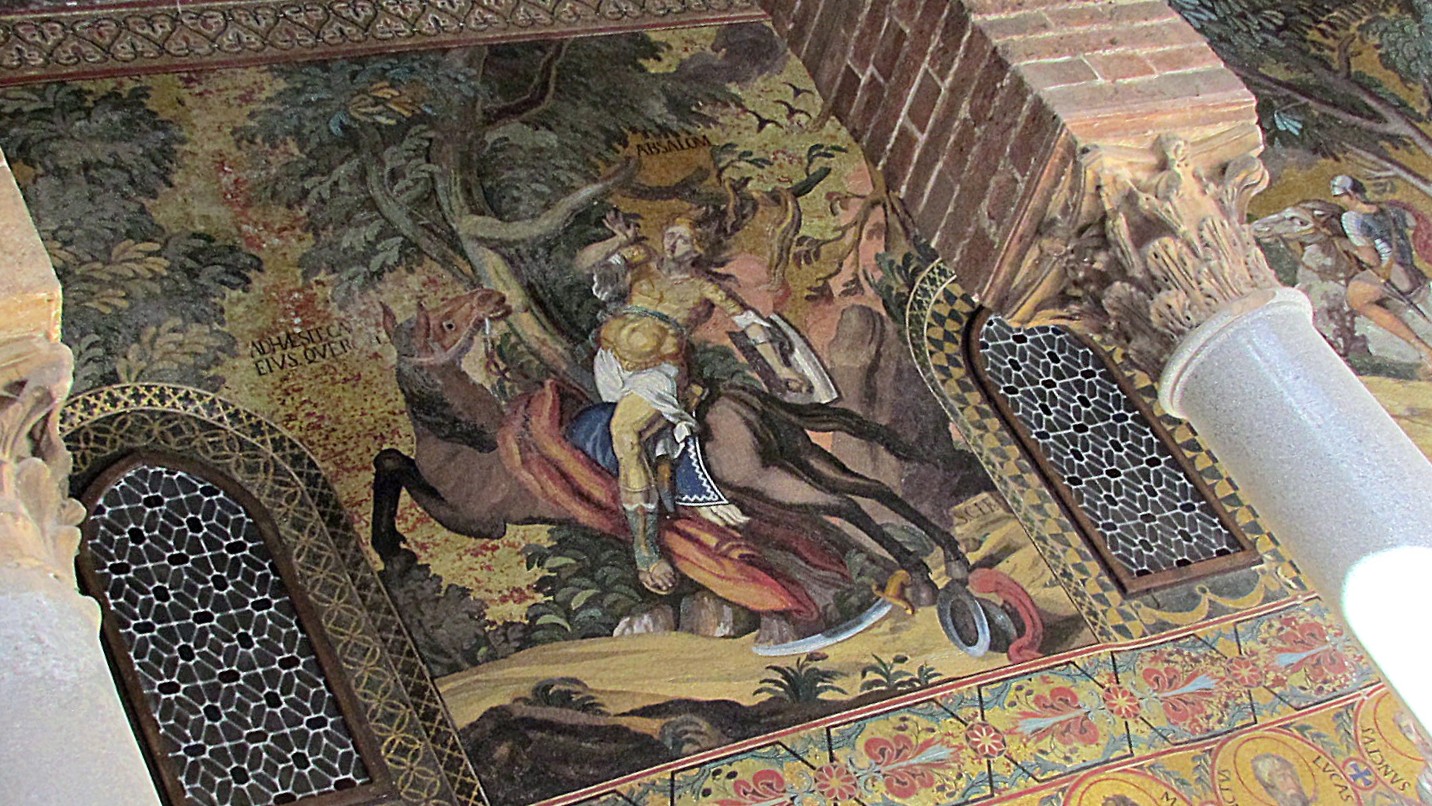
2 Samuel 18
BibleHub
1 Then DavidI musteredII the menIII who were with him
Notes on verse 1a
I “David” = David. From the same as dod (beloved, love, uncle); the root may mean to boil, which is used figuratively to describe love. So, this implies someone you love such as a friend, a lover, or a close family member like an uncle. David’s name likely means something like “beloved one.”
II “mustered” = paqad. This is to attend to or visit – can be used for a friendly or violent encounter. So, it can be to oversee, care for, avenge, or charge.
III “men” = am. From amam (to darken, hide, associate; creating shadows by huddling together). This is people or nation. It can be used specifically for a tribe, collectively of troops or armies, or figuratively to refer to a flock of animals.
and setIV over them commandersV of thousandsVI and commanders of hundreds.VII
Notes on verse 1b
IV “set” = sim. This is to put or place in a literal or figurative sense. It can be appoint, care, change, make, and may other things.
V “commanders” = sar. This is chief, leader, ruler, lord, official, governor, prince, military leader. It refers to someone at the top of a rank or class.
VI “thousands” = eleph. Perhaps from the same as eleph (herd, cattle); from alaph (to learn, speak, associate with). This is thousand.
VII “hundreds” = meah. This is hundred or some number times one hundred (i.e. hundredfold or the base of two hundred, three hundred, etc.).
2 And David sent forthVIII the army:IX one thirdX under the commandXI of Joab;XII
Notes on verse 2a
VIII “sent forth” = shalach. This is to send out, away, send for, forsake. It can also mean to divorce or set a slave free.
IX “army” = am. Same as “men” in v1. See note III above.
X “one third” = shelishi. From shalosh (three, fork, triad). This is third or one-third of something.
XI “command” = yad. This is hand, ability, power. Hand in a literal sense, but also what one can do or the means by which one does it.
XII “Joab” = Yoab. From YHVH (proper name of the God of Israel; God, Lord; the self-existent or eternal one); {from havah (to become) or hayah (to be, become, happen)}. + ab (father, ancestor, grandfather; father in a literal or figurative sense). This is Joab or Yoab, meaning “the Lord is father.”
one third under the command of AbishaiXIII sonXIV of Zeruiah,XV
Notes on verse 2b
XIII “Abishai” = Abishay. Related to “Joab” in v2. From ab (see note XII above) + shay (gift or present; something given as an act of homage); {from shavah (to equalize, resemble, agree with, compare, adjust, compose, place, or yield)}. This is Abishai, which means “father of a gift,” which is to say “generous.”
XIV “son” = ben. From banah (to build or obtain children). This is son, age, child. It is son in a literal or figurative sense.
XV “Zeruiah” = Tseruyah. Related to “Joab” in v2.From the same as tsori (root might be to crack as under pressure, to leak; gum from the balsam tree – perhaps commiphora gileadensis) + Yah (the shortened form of the name of the God of Israel; God, Lord); {from YHVH (see note XII above)} OR tsur (rock, stone, cliff, boulder, rocky; a refuge, God); {from tsur (to confine, cramp, or bind in a literal or figurative sense; to besiege, assault, or distress)} + Yah (see above). This is Zeruiah, meaning “wounded” or “balsam of the Lord” or “his rock is the Lord.” See https://www.abarim-publications.com/Meaning/Zeruiah.html & https://en.wikipedia.org/wiki/Balsam & https://en.wikipedia.org/wiki/Balm_of_Gilead.
Joab’s brother;XVI and one third under the command of IttaiXVII the Gittite.XVIII
Notes on verse 2c
XVI “brother” = ach. This is brother, kindred, another, other, like. It is literally brother, but it can also be someone who is similar, resembling, or related to.
XVII “Ittai” = Ittay. Related to “Joab” and “Zeruiah” in v2. 9x in OT. From et (with, among, beside, concerning, near); {from anah (to meet, happen, approach)} OR perhaps et (see above) + Yah (the shortened form of the name of the God of Israel; God, Lord); {from YHVH (see note XII above)}. This is Ithai or Ittai, a name which may mean, “companionable” or “near.” It could also mean “nearness of the Lord.” See https://www.abarim-publications.com/Meaning/Ittai.html
XVIII “Gittite” = Gitti. 10x in OT. From Gath (Gath, a Philistine city whose name means “wine press”); from the same as gath (wine press); probably from nagan (to strike a stringed instrument, to pluck or play it). This is Gittite or someone from Gath.
The kingXIX saidXX to the men, “I myself will alsoXXI go outXXII with you.”
Notes on verse 2d
XIX “king” = melek. From malak (to be or become king or queen, to rise to the throne, to be crowned; by implication, to take counsel). This is king or royal.
XX “said” = amar. This is to speak, say, answer, command, promise, report.
XXI “also” = gam. This is also, moreover, again.
XXII “go out” = yatsa + yatsa. This is to go or come out, bring forth, appear. It is to go out in a literal or figurative sense. The word is repeated twice – the first time as an Infinitive Absolute. The Infinitive Absolute serves to emphasize the sentiment of the word. It is rather like Foghorn Leghorn’s speech pattern, “I said, I said.”
3 But the men said, “You shall not go out. For if we flee,XXIII they will not careXXIV about us. If halfXXV of us die,XXVI they will not care about us.
Notes on verse 3a
XXIII “flee” = nus + nus. This is to flee, vanish away, hide, escape, be displayed. The word is repeated twice – the first time as an Infinitive Absolute. The Infinitive Absolute serves to emphasize the sentiment of the word. It is rather like Foghorn Leghorn’s speech pattern, “I said, I said.”
XXIV “care” = sim + el + leb. Literally, “set their heart on us.” Sim is the same as “set” in v1. See note IV above. Leb is from the same as lebab (the heart, courage, one’s inner self, the mind, the will; only used in a figurative sense in the Bible); may be related to labab (to encourage; properly, to be encased as with fat; used in a good sense, this means to transport someone with love; used in a bad sense, it can mean to dull one’s senses). This is inner self, mind, will, feelings, the center.
XXV “half” = chatsi. From chatsah (to halve, divide, reach, participate). This is half, middle, midnight, midst.
XXVI “die” = mut. This is to die in a literal or figurative sense. It can also refer to being a dead body.
ButXXVII you are worthXXVIII tenXXIX thousand of us;
Notes on verse 3b
XXVII {untranslated} = attah. Perhaps from et (a period or season; whenever or continually); probably from anah (to answer, sing, announce); from ad (forever, all, old); from adah (to pass on, advance, decorate oneself). This is now, from now on.
XXVIII “wrote” = kemo. This is like, as, according to, compared to.
XXIX “ten” = eser. Perhaps from asar (to tithe, render a tenth of). This is ten or -teen. While 7 is symbolically the number of perfection, ten is also symbolically a number of perfection (but to a lesser degree than 7 is).
thereforeXXX it is betterXXXI thatXXXII you send us helpXXXIII from the city.”XXXIV
Notes on verse 3c
XXX “therefore” = attah. Same as {untranslated} in v3. See note XXVII above.
XXXI “better” = tob. From tob (to be pleasing, to be good). This is good, beautiful, pleasant, agreeable, bountiful, at ease. This word is used for goodness as a concept, a good thing, a good person. This can refer to prosperity and welfare as well as joy, kindness, sweetness, and graciousness. So, this is ethically good, but also enjoyably good.
XXXII {untranslated} = hayah. Related to “Joab” and “Zeruiah” in v2. See note XII above.
XXXIII “send…help” = azar. This is to surround, which implies encircling to protect someone or help them out. It can also be help, ally, or support.
XXXIV “city” = iyr. From uwr (to awaken or wake oneself up). This can mean excitement in the sense of wakefulness or city. Properly, this is a place that is guarded. Guards kept schedules according to watches. This sense of the word would include cities as well as encampments or posts that were guarded.
4 The king said to them, “Whatever seems bestXXXV to youXXXVI I will do.”XXXVII
Notes on verse 4a
XXXV “seems best” = yatab. This is to be good or pleasing, joyful. It can also mean doing good in an ethical sense or be beautiful, happy, successful, or right.
XXXVI “you” = ayin. Literally, “in your eyes.” This is eye in a literal or figurative sense so eye, appearance, favor, or a fountain (the eye of the landscape).
XXXVII “do” = asah. This is to make, do, act, appoint, become in many senses.
So the king stoodXXXVIII at the sideXXXIX of the gate,XL while allXLI the army marched outXLII by hundreds and by thousands.
Notes on verse 4b
XXXVIII “stood” = amad. This is to stand up in a literal or figurative sense. So it can be establish, continue, endure, take a stand, act, be a servant, stand still, remain, stand against an enemy.
XXXIX “side” = yad. Same as “command” in v2. See note XI above.
XL “gate” = shaar. May be related to sha’ar (to calculate or reckon; may come from a root that means to open up or split). This is a gate, door, or other opening like a port.
XLI “all” = kol. From kalal (to complete). This is all or every.
XLII “marched out” = yarad. This is to go down, descend; going down in a literal or figurative sense. It can be going to the shore or a boundary, bringing down an enemy.
5 The king orderedXLIII Joab and Abishai and Ittai, saying, “Deal gentlyXLIV for my sake with the young manXLV Absalom.”XLVI
Notes on verse 5a
XLIII “ordered” = tsavah. This is to charge, command, order, appoint, or enjoin. This is the root that the Hebrew word for “commandment” comes from (mitsvah).
XLIV “gently” = at. 7x in OT. This is softly or gently. It can also refer to a charmer because their spells are whispered.
XLV “young man” = naar. May be from na’ar (to shake, toss up and down, tumble around). This is a child or a servant. It is a child in their active years so they could be aged anywhere from infancy to adolescence.
XLVI “Absalom” = Abshalom. Related to “Joab” and “Abishai” in v2. From ab (see note XII above) + shalom (completeness, soundness, welfare, favor, friend, good health; to be safe and figuratively well, happy, at peace, friendly; abstractly, includes the ideas of welfare and prosperity – not in excessive wealth, but in having enough); {from shalam (to be complete or sound; to have safety mentally, physically, or extending to one’s estate; so, if these things are safe and complete, the implication is that one would be friendly; and, if being friendly, one would make amends and that friendship would be reciprocated)}. This is Absalom or Abishalom, which means “my father is peace” or “father of peace” or “friendly.”
And all the peopleXLVII heardXLVIII when the king gave orders to all the commanders concerningXLIX Absalom.
Notes on verse 5b
XLVII “people” = am. Same as “men” in v1. See note III above.
XLVIII “heard” = shama. This is to hear, call, consent, or consider. It implies listening intelligently, giving attention, and, because of these two factors, obedience and action are often implied.
XLIX {untranslated} = dabar. From dabar (to speak, declare, discuss). This is speech, a word, a matter, an affair, charge, command, message, promise, purpose, report, request. It is a word, which implies things that are spoken of in a wide sense.
6 So the army went out into the fieldL againstLI Israel,LII
Notes on verse 6a
L “field” = sadeh.From the same as shadday (almighty, field, land); from shadad (to devastate, ruin, destroy, oppress, be powerful). Or, it may be from a word that means to spread out. This is field, ground, soil, or land. It can be used to mean wild as in a wild animal.
LI “against” = qirah. From the same as qara (to happen, meet, bring about). This is any kind of encounter, whether peaceful, hostile, or incidental. It can also mean help or seek.
LII “Israel” = Yisrael. From sarah (to persist, exert oneself, contend, persevere, wrestle, prevail) +El (God or god). This is Israel, meaning God strives or one who strives with God; new name for Jacob and for his offspring. This refers to the people and to the land.
and the battleLIII wasLIV fought in the forestLV of Ephraim.LVI
Notes on verse 6b
LIII “battle” = milchamah. From lacham (to eat or feed on; figuratively, to battle as a kind of consumption/destruction). This is battle, war, fighting, or one who fights (i.e. a warrior).
LIV “was” = hayah. Same as {untranslated} in v. See note XXXII above.
LV “forest” = ya’ar. This is honeycomb, forest, thicket. Root may mean thick with green growth. It is a forest as a place where one would find honeycomb.
LVI “Ephraim” = Ephrayim. From the same as epher (ashes or dust – properly something strewn) OR from parah (to grow, increase, be fruitful in a literal or figurative sense). This is Ephraim, one of Joseph’s sons, his descendants, and their land.
7 The men of Israel were defeatedLVII there byLVIII the servantsLIX of David,
Notes on verse 7a
LVII “defeated” = nagaph. This is to strike, beat, hurt, stumble, defeat, inflict disease.
LVIII “by” = paneh. From panah (to turn, face, appear). This is face in a literal or figurative sense. It could be face, presence, anger, respect. It can also be used of God to indicate divine favor or presence.
LIX “servants” = ebed. From abad (to work, serve, compel; any kind of work; used causatively, can mean to enslave or keep in bondage). This is a servant, slave, or bondservant.
and the slaughterLX there was greatLXI on that day,LXII twentyLXIII thousand men.
Notes on verse 7b
LX “slaughter” = maggephah. Related to “defeated” in v7. From nagaph (see note LVII above). This is a blow, calamity, plague, or defeat.
LXI “great” = gadol. From gadal (to grow up, become great, become wealthy – to advance. The root meaning may be to twist in the sense of the process of growing). This is great, high, bigger, noble, old, marvelous. It can also refer to someone who is powerful or distinguished.
LXII “day” = yom. Root may mean being hot. This is the day in a literal or figurative sense. It can also mean birth, age, daylight, continually or other references to time.
LXIII “twenty” = esrim. Related to “ten” in v3. From the same as eser (see note XXIX above). This is twenty or twentieth.
8 LXIVThe battle spreadLXV over the faceLXVI of all the country,LXVII and the forest claimedLXVIII
Notes on verse 8a
LXIV {untranslated} = hayah. Same as {untranslated} in v. See note XXXII above.
LXV “spread” = puts. This is to dash in pieces, scatter, disperse, drive.
LXVI “face” = paneh. Same as “by” in v7. See note LVIII above.
LXVII “country” = erets. Root may mean to be firm. This is earth, ground, field land, or country.
LXVIII “claimed” = akal. This is to eat, devour, burn up, or otherwise consume. It can be eating in a literal or figurative sense.
moreLXIX victimsLXX that day thanLXXI the sword.LXXII
Notes on verse 8b
LXIX “more” = rabah. This is increasing in any aspect whether quantity, authority, size, quality, greatness, etc.
LXX “victims” = am. Same as “men” in v1. See note III above.
LXXI {untranslated} = akal. Same as “claimed” in v8. See note LXVIII above.
LXXII “sword” = chereb. From charab (to attack, slay). This is any sharp instrument like a sword, dagger, axe, or mattock.
9 Absalom happened to meetLXXIII LXXIVthe servants of David. Absalom was ridingLXXV on his mule,LXXVI
Notes on verse 9a
LXXIII “happened to meet” = qara. Related to “against” in v6. See note LI above.
LXXIV {untranslated} = paneh. Same as “by” in v7. See note LVIII above.
LXXV “riding” = rakab. This is to ride an animal or in some vehicle. It can also mean bringing on a horse.
LXXVI “mule” = pered. 14x in OT. Perhaps from parad (to divide, break through, scatter, sever, stretch, to spread oneself, or to be out of joint). This is a mule – perhaps as a lonely creature.
and the mule wentLXXVII underLXXVIII the thick branchesLXXIX of a great oak.LXXX
Notes on verse 9b
LXXVII “went” = bo. This is to enter, come in, advance, fulfill, bring offerings, enter to worship, attack. It can also have a sexual connotation.
LXXVIII “under” = tachat. This is underneath, below, the bottom, instead of.
LXXIX “thick branches” = sobek. 1x in OT. Perhaps from sebok (thicket, forest); from sabak (to entangle, entwine). This is interlaced branches, thick branches.
LXXX “oak” = elah. 13x in OT. From ayil (terebinth, oak); from the same as ulam (porch, hall); from the same as ul (mighty, strength, body, belly; root may mean to twist and that implies strength and power). This is an oak or terebinth. It could some other kind of tree that is strong.
His headLXXXI caught fastLXXXII in the oak, and he was left hangingLXXXIII betweenLXXXIV
Notes on verse 9c
LXXXI “head” = rosh. This may come a word that means to shake. It is the head, captain, or chief. It can also be excellent or the forefront. It can be first in position or in statue or in time (i.e. the beginning).
LXXXII “caught fast” = chazaq. This is to strengthen, seize, be courageous, repair, bind, heal, conquer, harden.
LXXXIII “left hanging” = natan. From natan (to give, put, set, offer; to give literally or figuratively). This is Nathan, meaning “given” or “[God] gives.”
LXXXIV “between” = bayin. From bin (to discern, consider, attend to; distinguishing things in one’s mind or, more generally, to understand). This is among, between, interval.
heavenLXXXV andLXXXVI earth,LXXXVII while the mule that was under him went on.LXXXVIII
Notes on verse 9d
LXXXV “heaven” = shamayim. Root may mean being lofty. This is sky, the air, or heaven. It is in a dual noun form so this might refer to the part of the sky where the clouds move on the one hand and the part beyond that where the sun, moon, and stars are on the other hand.
LXXXVI {untranslated} = bayin. Same as “between” in v9. See note LXXXIV above.
LXXXVII “earth” = erets. Same as “country” in v8. See note LXVII above.
LXXXVIII “went on” = abar. This is to pass over or cross over. It is used for transitions, whether literal or figurative. It can also mean to escape, alienate, or fail. This is the root verb from which “Hebrew” is drawn.
10 ALXXXIX manXC sawXCI it
Notes on verse 10a
LXXXIX “a” = echad. Perhaps from achad (to unify, continue on a path; figuratively, to gather one’s thoughts). This is the number one, first, united. It can also be alone, altogether, a certain, a few.
XC “man” = ish. Perhaps from enosh (human, humankind, mortal); from anash (to be weak, sick, or frail). This is man, husband, another, or humankind.
XCI “saw” = raah. This is to see in a literal or figurative sense so stare, advise, think, view.
and toldXCII Joab,XCIII “I saw Absalom hangingXCIV in an oak.”
Notes on verse 10b
XCII “told” = nagad. This is to declare, make conspicuous, stand in front, manifest, predict, explain.
XCIII {untranslated} = amar + hinneh. Amar is the same as “said” in v2. See note XX above. Hinneh is from hen (lo! Behold! If, though; an expression of surprise). This is to draw attention, show suddenness or surprise, or to emphasize the importance of the coming statement. See! Lo! Behold!
XCIV “left hanging” = talah. This is to hang or suspend. It can also be used for hanging someone on gallows.
11 Joab said to the manXCV who told him, “What,XCVI you saw him! WhyXCVII then did you not strikeXCVIII him there to the ground?XCIX
Notes on verse 11a
XCV “man” = ish. Same as “man” in v10. See note XC above.
XCVI “what” = hinneh. Same as {untranslated} in v10. See note XCIII above.
XCVII “why” = maddua. From mah (what, how long) + yada (to know, be aware, see and so understand – includes observation, care, recognition; can also be used as a euphemism). This is why or how.
XCVIII “strike” = nakah. This is to hit whether lightly or severely. It can be used in a literal or figurative sense. So, this could be beat, punish, give wounds, kill, or slaughter.
XCIX “ground” = erets. Same as “country” in v8. See note LXVII above.
I would have been glad to giveC you ten pieces of silverCI and aCII belt.”CIII
Notes on verse 11b
C “give” = natan. Same as “left hanging” in v9. See note XCIV above.
CI “silver” = keseph. From kasaph (to long for, be greedy; to become pale). This is silver or money.
CII “a” = echad. Same as “a” in v10. See note LXXXIX above.
CIII “belt” = chagor. 7x in OT. From chagar (to gird, bind, or arm; using a belt to gather up one’s garment so that it’s easier to run or move quickly). This is a loincloth, belt, or armor.
12 But the manCIV said to Joab, “Even ifCV I felt in my handCVI the weightCVII of a thousand pieces of silver,
Notes on verse 12a
CIV “man” = ish. Same as “man” in v10. See note XC above.
CV “even if” = lu. This is if, oh that. It is an interjection. It could indicate something one would like or a polite request.
CVI “hand” = kaph. From kaphaph (to bend – from a root meaning curve or bend down). This is palm of the hand or sole of the foot, footstep, grasp. Figuratively, it can also mean power.
CVII “felt…the weight” = shaqal. This is to weigh, spend, trade.
I would not raiseCVIII my handCIX against the king’s son, for in our hearingCX the king commanded you and Abishai and Ittai, saying, ‘For my sake protectCXI the young man Absalom!’
Notes on verse 12b
CVIII “raise” = shalach. Same as “sent forth” in v2. See note VIII above.
CIX “hand” = yad. Same as “command” in v2. See note XI above.
CX “hearing” = ozen. This is ear, hearing, audience, show. Properly, it is broadness – applied to its ear in reference to its shape.
CXI “protect” = shamar. This is to keep, watch, or preserve. It means to guard something or to protect it as a thorny hedge protects something.
13 On the other hand, if I had dealtCXII treacherouslyCXIII against his lifeCXIV
Notes on verse 13a
CXII “dealt” = asah. Same as “do” in v4. See note XXXVII above.
CXIII “treacherously” = sheqer. This is deception, lie, or disappointment. It can also be something that is vain or wrongfully.
CXIV “life” = nephesh. Related to naphash (to refresh or be refreshed). This is soul, self, person, emotion. It is a breathing creature. Can also refer to appetites and desires.
(and there is nothingCXV hiddenCXVI from the king), then you yourself would have stoodCXVII aloof.”CXVIII
Notes on verse 13b
CXV “nothing” = kol + dabar + lo. Kol is the same as “all” in v4. See note XLI above. Dabar is the same as {untranslated} in v5. See note XLIX above.
CXVI “hidden” = kachad. This is to hide or conceal or destroy. It can also refer to doing secret actions or secret speech.
CXVII “stood” = yatsab. This is to set oneself, take a stand, remain, continue, to station or set something in place.
CXVIII “aloof” = neged. Related to “told” in v10. From nagad (see note XCII above). This is in front of, opposite to. It can refer to a counterpart or partner, one corresponding to or in the sight of.
14 Joab said, “I will not waste timeCXIX like thisCXX with you.”CXXI
Notes on verse 14a
CXIX “waste time” = yachal. This is to wait, which implies patience, hope, and trust. It can also be pained waiting.
CXX “this” = ken. Perhaps from kun (properly, in a perpendicular position; literally, to establish, fix, fasten, prepare; figuratively, it is certainty, to be firm, faithfulness, render sure or prosperous). This is to set upright. Generally used figuratively to mean thus, so, afterwards, rightly so.
CXXI “you” = paneh. Same as “by” in v7. See note LVIII above.
He tookCXXII threeCXXIII spearsCXXIV in his handCXXV and thrustCXXVI them
Notes on verse 14b
CXXII “took” = laqach. This is to take, accept, carry away, receive. It can also have the sense of take a wife or take in marriage.
CXXIII “three” = shalosh. Related to “one third” in v2. See note X above.
CXXIV “spears” = shebet. This is a rod, staff, club, scepter, dart, or tribe. Literally a stick that can be used for punishing, writing, fighting, walking, ruling; thus, used figuratively for a clan.
CXXV “hand” = kaph. Same as “hand” in v12. See note CVI above.
CXXVI “thrust” = taqa. This is to clap, clatter, thrust, sound an instrument, hammer a nail, be a bondsman.
into the heartCXXVII of Absalom while he was stillCXXVIII aliveCXXIX inCXXX the oak.
Notes on verse 14c
CXXVII “heart” = leb. Same as “care” in v3. See note XXIV above.
CXXVIII “still” = od. From ud (to admonish, repeat, duplicate, testify, restore, record, relieve). This is still, yet, again, more.
CXXIX “alive” = chay. From chayah (to live or keep alive literally or figuratively). This is alive, living, lifetime. It can also be used to describe someone’s age. It can refer to animals, plants, water, or a company or congregation of people. It is life in a very broad sense.
CXXX “in” = leb. Same as “care” in v3. See note XXIV above.
15 And ten young men, Joab’s armor-bearers,CXXXI surroundedCXXXII Absalom and struck him and killedCXXXIII him.
Notes on verse 15
CXXXI “armor-bearers” = nasa + keli. Nasa is to lift in a broad sense, literally and figuratively. So it could be to carry, take, or arise. It could also be bring forth, advance, accept. Keli is from kalah (to end, be finished, complete, prepare, consume, spent, or completely destroyed). This is something that was prepared – any implement, utensil, article, vessel, weapon, or instrument. Also includes jewels, weapons, bags, carriages, and furniture.
CXXXII “surrounded” = sabab. This is turning around, going around; to surround, cast, walk, fetch. It is to revolve or border in a literal or figurative sense.
CXXXIII “killed” = mut. Same as “die” in v3. See note XXVI above.
16 Then Joab soundedCXXXIV the trumpet,CXXXV and the troopsCXXXVI
Notes on verse 16a
CXXXIV “sounded” = taqa. Same as “thrust” in v14. See note CXXVI above.
CXXXV “trumpet” = shophar. From shaphar (being beautiful or lovely). This is a ram’s horn, trumpet, or cornet. A shofar is still blown at Jewish festivals such as Rosh Hashanah (the Jewish new year celebration).
CXXXVI “troops” = am. Same as “men” in v1. See note III above.
came backCXXXVII from pursuingCXXXVIII Israel, for Joab restrainedCXXXIX the troops.
Notes on verse 16b
CXXXVII “came back” = shub. To turn back, return, turn away – literally or figuratively. Doesn’t necessarily imply going back to where you started from. This is also the root verb for the Hebrew word for repentance “teshubah.”
CXXXVIII “pursuing” = radaph + achar. Radaph is to chase after, pursue, hunt, or persecute. It is running after someone or something, generally with hostile motives. Achar is from achar (to remain behind, linger, continue, be behind, or delay; can also imply procrastination). This is after or the last part, following.
CXXXIX “restrained” = chasak. This is to restrain, refrain, or hold back. It can mean to spare, to preserve or to punish, depending on the context.
17 They took Absalom, threwCXL him into a great pitCXLI in the forest, and raisedCXLII over him a veryCXLIII great
Notes on verse 17a
CXL “threw” = shalak. This is to throw, fling, or hurl. It can also be to throw away in a literal or figurative sense.
CXLI “pit” = pachath. 10x in OT. May come from a word meaning digging. This is a pit, cave, or trap. It’s often used to describe a hole used for trapping animals.
CXLII “raised” = natsab. This is to station, appoint, establish, take a stand.
CXLIII “very” = meod. Related to “still” in v14. Perhaps from the same as ud (see note CXXVIII above). This is very, greatly, exceedingly. It can also mean vehemence, force, abundance.
heapCXLIV of stones.CXLV Meanwhile all the IsraelitesCXLVI fled to their homes.CXLVII
Notes on verse 17b
CXLIV “heap” = gal. From galal (to roll, roll away, wallow, commit, remove; rolling in a literal or figurative sense). This is a wave, billow, rock pile, something rolled, a spring of water.
CXLV “stones” = eben. This is a stone, weight, or mason. It is part of the word “Ebenezer.”
CXLVI “Israelites” = Yisrael. Same as “Israel” in v6. See note LII above.
CXLVII “homes” = ish + ohel. Literally, “each to his tents.” Ish is from the same as “man” in v10. See note XC above. Ohel is perhaps from ahal (to shine, be clear). This is a tent, covering, home, or side pillar.
18 Now Absalom in his lifetimeCXLVIII had taken and set upCXLIX for himself a pillarCL that is in the King’s Valley,CLI
Notes on verse 18a
CXLVIII “lifetime” = chay. Same as “alive” in v14. See note CXXIX above.
CXLIX “set up” = natsab. Same as “raised” in v17. See note CXLII above.
CL “pillar” = matstsebeth. Related to “raised” in v17. 6x in OT. From the same as matstsebah (literally something that is stationed; a column, a stump, some kind of image or idol, or a garrison); from natsab (see note CXLII above). This is a pillar, monumental stone, or tree stump.
CLI “Valley” = emeq. From amoq (to be deep in a literal or figurative sense; profound). This is Vale or valley – frequently part of place names.
for he said, “I have noCLII son toCLIII keep my nameCLIV in remembrance.”CLV
Notes on verse 18b
CLII “no” = ayin. Perhaps from a word that means to be nothing. This means nothing, none, non-existent. It can also simply mean not or are not.
CLIII “to” = abur. Related to “went on” in v9. From abar (see note LXXXVIII above). This is for, so that, on account of. Properly, it means crossed.
CLIV “name” = shem. Related to “set” in v1. May be from sim (see note IV above). This is name, fame, renown. A name was thought to indicate something essential about a person – something about their individuality. So, this word can also mean honor, authority, or character.
CLV “keep…in remembrance” = zakar. This is to remember, to mark something so that it can be recalled, to be mindful of, to mention.
He calledCLVI the pillar by his own name; it is called Absalom’s MonumentCLVII to this day.
19 Then AhimaazCLVIII
Notes on verses 18c-19a
CLVI “called” = qara. This is to call or call out – to call someone by name. Also used more broadly for calling forth.
CLVII “Monument” = yad. Same as “command” in v2. See note XI above.
CLVIII “Ahimaaz” = Achimaats. Related to “brother” in v2. 15x in OT. From ach (see note XVI above) + Maats (Maats, a name meaning “closure”); {perhaps from atsah (to shut, fasten, firm up, to close one’s eyes)}. This is Ahimaaz, a name meaning “my brother is wrath” or “brother of anger.”
son of ZadokCLIX said, “Let me runCLX, CLXI and carry tidingsCLXII to the king
Notes on verse 19b
CLIX “Zadok” = Tsadoq. From tsadaq (to be just or righteous, do justice); from tsedeq (rightness, righteousness, just cause, vindication; that which is right in a natural, moral, or legal sense; abstractly equity; figuratively prosperity). This is Zadok, a name meaning “just” or “righteous.” See https://www.abarim-publications.com/Meaning/Zadok.html
CLX “run” = ruts. This is to run or rush, divide quickly, bring swiftly. It can also refer to a footman or guard.
CLXI {untranslated} = na. This particle is used for requests or for urging. It can be we pray, now, I ask you, oh. This is the same “na” in “hosanna.”
CLXII “carry tidings” = basar. This is being a messenger, to publish, carry, or preach. Properly, this is being fresh, rosy or cheerful as one bearing news.
that the LordCLXIII has deliveredCLXIV him from the powerCLXV of his enemies.”CLXVI
Notes on verse 19c
CLXIII “Lord” = YHVH. Related to “Joab” and “Zeruiah” in v2 & {untranslated} in v3. See note XII above.
CLXIV “delivered” = shaphat. This is to judge, defend, pronounce judgment, condemn, or govern. It can refer to God judging or to human judges. This is pronouncing a verdict in favor or against so it implies consequences or punishment. It can also mean to litigate or govern as one with authority.
CLXV “power” = yad. Same as “command” in v2. See note XI above.
CLXVI “enemies” = oyeb. From ayab (to hate or be hostile to). This is a foe or enemy as one that you are hostile to.
20 Joab said to him, “You are notCLXVII to carry tidingsCLXVIII today;CLXIX you may carry tidingsCLXX anotherCLXXI day, but today you shall not do soCLXXII because the king’s son is dead.”CLXXIII
Notes on verse 20
CLXVII {untranslated} = ish. Same as “man” in v10. See note XC above.
CLXVIII “tidings” = besorah. Related to “carry tidings” in v19. 6x in OT. From basar (see note CLXII above). This is tidings, news, or a reward given when good news is given.
CLXIX “today” = yom + zeh. Literally, “this day.” Yom is the same as “day” in v7. See note LXII above.
CLXX “carry tidings” = basar. Same as “carry tidings” in v19. See note CLXII above.
CLXXI “another” = acher. Related to “pursuing” in v16. From achar (to be behind, delay, be late, procrastinate, continue). This is following, next, strange, other.
CLXXII “do so” = basar. Same as “carry tidings” in v19. See note CLXII above.
CLXXIII “is dead” = mut. Same as “die” in v3. See note XXVI above.
21 Then Joab said to a Cushite,CLXXIV “Go,CLXXV tell the king what you have seen.” The Cushite bowedCLXXVI before Joab and ran.
Notes on verse 21
CLXXIV “Cushite” = Kushi. From Kush (Cush or his descendants; Ethiopia – a place south of the Nile Valley); perhaps from Egyptia k’sh (Cush). This is Cushite or Ethiopian. See https://en.wiktionary.org/wiki/%D7%9B%D7%95%D7%A9#Hebrew
CLXXV “go” = halak. This is go, come, walk. It is walk literally and figuratively and includes people and animals. It can be used figuratively for one’s moral life – how we walk according to God’s way or against it. It can also refer to the walk of life as in the course one’s life takes, the choices we make, etc.
CLXXVI “bowed” = shachah. This is to bow down, make a humble entreaty, to do homage to royalty or to God.
22 Then Ahimaaz son of Zadok said againCLXXVII to Joab, “ComeCLXXVIII what may, letCLXXIX me also run afterCLXXX the Cushite.”
And Joab said, “Why will you run, my son, seeingCLXXXI that you have noCLXXXII reward for the tidings?”CLXXXIII
Notes on verse 22
CLXXVII “again” = yasaph + od. Yasaph is to add, increase, continue, exceed. Od is the same as “still” in v14. See note CXXVIII above.
CLXXVIII “come” = hayah. Same as {untranslated} in v. See note XXXII above.
CLXXIX {untranslated} = na. Same as {untranslated} in v19. See note CLXI above.
CLXXX “after” = achar. Same as “pursuing” in v16. See note CXXXVIII above.
CLXXXI “seeing” = matsa. This is to find, catch or acquire. It can also mean to come forth or appear. Figuratively, this can mean to meet or be together with.
CLXXXII “no” = ayin. Same as “no” in v18. See note CLII above.
CLXXXIII “tidings” = besorah. Same as “tidings” in v20. See note CLXVIII above.
23 “ComeCLXXXIV what may,” he said, “I will run.”
So he said to him, “Run.” Then Ahimaaz ran by the wayCLXXXV of the PlainCLXXXVI and outranCLXXXVII the Cushite.
Notes on verse 23
CLXXXIV “come” = hayah. Same as {untranslated} in v. See note XXXII above.
CLXXXV “way” = derek. From darak (to tread, march, to walk. Can also mean affixing a string to a box since one needs to step on it to bend it in the process; so also an archer). This is a road as a thing that is walked on. Can be used figuratively for the path that one’s life takes or how one chooses to live one’s life.
CLXXXVI “Plain” = kikkar. From karar (to dance or whirl). This is round so it can refer to a circle, a circular region, a weight used for measurement, money, a loaf of bread that is round, a cover, a plain, or a valley in the Jordan.
CLXXXVII “outran” = abar. Same as “went on” in v9. See note LXXXVIII above.
24 Now David was sittingCLXXXVIII between the twoCLXXXIX gates. The sentinelCXC went upCXCI
Notes on verse 24a
CLXXXVIII “sitting” = yashab. This is to sit and so to remain and so to dwell. It is sitting for any reason – as a judge, in order to ambush, or just sitting quietly. Causatively, this can mean settling or marrying. This can also mean continue, endure, or establish.
CLXXXIX “two” = shenayim. From sheni (double, again, another, second); from shanah (to fold, repeat, double, alter, or disguise). This is two, both, second, couple.
CXC “sentinel” = tsaphah. This is to look out, look around, spy watchman, sentinel. It is leaning out to look far away. So it is to await or observe.
CXCI “went up” = halak. Same as “go” in v21. See note CLXXV above.
to the roofCXCII of the gate by the wall,CXCIII and when he looked upCXCIV
Notes on verse 24b
CXCII “roof” = gag. Perhaps from ga’ah (to rise up, increase, grow, be highly exalted; figuratively to be majestic). This is a housetop or other top. It can refer to the surface of an altar.
CXCIII “wall” = chomah. From the same as cham (father-in-law – one’s husband’s father; perhaps from a root meaning to join). This is a wall – a wall as used for protection.
CXCIV “looked up” = nasa + et + ayin. Literally, “lifted his eyes.” Nasa is the same as “armor-bearers” in v15. See note CXXXI above. Ayin is the same as “you” in v4. See note XXXVI above.
he sawCXCV a manCXCVI running alone.CXCVII
25 The sentinel shoutedCXCVIII and told the king. The king said, “If he is alone, there are tidingsCXCIX in his mouth.”CC
Notes on verses 24c-25a
CXCV “saw” = hinneh. Same as {untranslated} in v10. See note XCIII above.
CXCVI “man” = ish. Same as “man” in v10. See note XC above.
CXCVII “alone” = bad. From badad (to divide or be separated; alone, solitary, lonely, isolated, straggler). This is apart, alone, separation, body part, tree branch, except. It can also be a city’s chief.
CXCVIII “shouted” = qara. Same as “called” in v18. See note CLVI above.
CXCIX “tidings” = besorah. Same as “tidings” in v20. See note CLXVIII above.
CC “mouth” = peh. This is mouth in a literal or figurative sense. So, more literally, it can be beak or jaws. More figuratively, it refers to speech, commands, or promises.
He kept comingCCI and drew near.CCII
26 Then the sentinel sawCCIII another manCCIV running,
Notes on verses 25b-26a
CCI “kept coming” = halak + halak. Same as “go” in v21. See note CLXXV above. The word is repeated twice – the second time as an Infinitive Absolute. The Infinitive Absolute serves to emphasize the sentiment of the word. It is rather like Foghorn Leghorn’s speech pattern, “I said, I said.”
CCII “drew near” = qareb. 8x in OT. From qarab (to come near, offer, make ready). This is to come, approach, draw near.
CCIII “saw” = raah. Same as “saw” in v10. See note XCI above.
CCIV “man” = ish. Same as “man” in v10. See note XC above.
and the sentinel called to the gatekeeperCCV and said, “See,CCVI another manCCVII running alone!”
The king said, “He also is bringing tidings.”CCVIII
Notes on verse 26b
CCV “gatekeeper” = shoer. Related to “gate” in v4. From the same as shaar (see note XL above). This is gatekeeper or porter.
CCVI “see” = hinneh. Same as {untranslated} in v10. See note XCIII above.
CCVII “man” = ish. Same as “man” in v10. See note XC above.
CCVIII “bringing tidings” = basar. Same as “carry tidings” in v19. See note CLXII above.
27 The sentinel said, “I thinkCCIX the first oneCCX runsCCXI likeCCXII Ahimaaz son of Zadok.”
Notes on verse 27a
CCIX “think” = raah. Same as “saw” in v10. See note XCI above.
CCX “first one” = rishon. Related to “head” in v9.From rishah (beginning or early time); from rosh (see note LXXXI above). This is first, former, ancestor, beginning, ranked first.
CCXI “runs” = merutsah. Related to “run” in v19. 4x in OT. From merots (race, running); from ruts (see note CLX above). This is a race or course.
CCXII {untranslated} = merutsah. Literally, “runs like the running of.” Same as “runs” in v27. See note CCXI above.
The king said, “He is a goodCCXIII manCCXIV and comesCCXV with good tidings.”CCXVI
28 Then Ahimaaz cried outCCXVII, CCXVIII to the king, “All is well!”CCXIX
Notes on verses 27b-28a
CCXIII “good” = tob. Same as “better” in v3. See note XXXI above.
CCXIV “man” = ish. Same as “man” in v10. See note XC above.
CCXV “comes” = bo. Same as “went” in v9. See note LXXVII above.
CCXVI “tidings” = besorah. Same as “tidings” in v20. See note CLXVIII above.
CCXVII “cried out” = qara. Same as “called” in v18. See note CLVI above.
CCXVIII {untranslated} = amar. Same as “said” in v2. See note XX above.
CCXIX “well” = shalom. Related to “Absalom” in v5. See note XLVI above.
He prostratedCCXX himself before the king with his faceCCXXI to the ground and said, “Blessed beCCXXII the Lord your God,CCXXIII
Notes on verse 28b
CCXX “prostrated” = shachah. Same as “bowed” in v21. See note CLXXVI above.
CCXXI “face” = aph. This is also, furthermore, even.
CCXXII “blessed be” = barak. This is to kneel, to bless. It is blessing God as part of worship and adoration or blessing humans to help them. It can be used as a euphemism to say curse God.
CCXXIII “God” = Elohim. Related to “Israel” in v6. See note LII above.
who has delivered upCCXXIV the menCCXXV who raisedCCXXVI their handCCXXVII against my lordCCXXVIII the king.”
Notes on verse 28c
CCXXIV “delivered up” = sagar. This is to shut up, imprison, lock, hand over, or figuratively surrender.
CCXXV “men” = ish. Same as “man” in v10. See note XC above.
CCXXVI “raised” = nasa. Same as “armor-bearers” in v15. See note CXXXI above.
CCXXVII “hand” = yad. Same as “command” in v2. See note XI above.
CCXXVIII “lord” = adon. From a root that means ruling or being sovereign. This is lord, master, or owner.
29 The king said, “Is it well with the young man Absalom?”
Ahimaaz answered,CCXXIX “I sawCCXXX a great tumultCCXXXI when the king’s servant Joab sentCCXXXII your servant, but I do not knowCCXXXIII what it was.”
Notes on verse 29
CCXXIX “answered” = amar. Same as “said” in v2. See note XX above.
CCXXX “saw” = raah. Same as “saw” in v10. See note XCI above.
CCXXXI “tumult” = hamon. From hamah (to growl, cry out, be moved, murmur, hum, mourn, rage, clamor). This is a sound, noise, roar, rumbling, wealth, crowd, disquietude.
CCXXXII “sent” = shalach. Same as “sent forth” in v2. See note VIII above.
CCXXXIII “know” = yada. Related to “why” in v11. See note XCVII above.
30 The king said, “Turn aside,CCXXXIV and standCCXXXV here.” So he turned aside and stood still.CCXXXVI
31 ThenCCXXXVII the Cushite came,CCXXXVIII and the Cushite said, “Good tidingsCCXXXIX for my lordCCXL the king!
Notes on verses 30-31a
CCXXXIV “turn aside” = sabab. Same as “surrounded” in v15. See note CXXXII above.
CCXXXV “stand” = yatsab. Same as “stood” in v13. See note CXVII above.
CCXXXVI “stood still” = amad. Same as “stood” in v4. See note XXXVIII above.
CCXXXVII “then” = hinneh. Same as {untranslated} in v10. See note XCIII above.
CCXXXVIII “came” = bo. Same as “went” in v9. See note LXXVII above.
CCXXXIX “good tidings” = basar. Same as “carry tidings” in v19. See note CLXII above.
CCXL “lord” = adon. Same as “lord” in v28. See note CCXXVIII above.
For the LordCCXLI has vindicatedCCXLII you this day, delivering you from the power of all who rose upCCXLIII against you.”
Notes on verse 31b
CCXLI “Lord” = YHVH. Same as “lord” in v19. See note CLXIII above.
CCXLII “vindicated” = shaphat. Same as “delivered” in v19. See note CLXIV above.
CCXLIII “rose up” = qum. To arise, stand, accomplish, establish, abide. This is rising as in rising against, getting up after being sick or asleep, arising from one state to another, becoming powerful, or rising for action. It can also be standing in a figurative sense.
32 The king said to the Cushite, “Is it well with the young man Absalom?”
The Cushite answered, “May the enemies of my lordCCXLIV the king and all who rise upCCXLV to do you harmCCXLVI be like that young man.”
Notes on verse 32
CCXLIV “lord” = adon. Same as “lord” in v28. See note CCXXVIII above.
CCXLV “rise up” = qum. Same as “rose up” in v31. See note CCXLIII above.
CCXLVI “do…harm” = ra’. From ra’a’ (to be evil, bad, afflict; properly, to spoil – to destroy by breaking into pieces; figuratively, to cause something to be worthless; this is bad in a physical, social, or moral sense; that which displeases, to do harm or mischief, to punish or vex). This is bad, disagreeable, that which causes pain, misery, something having little or no value, something that is ethically bad, wicked, injury, calamity. This refers to anything that is not what it ought to be – a natural disaster, a disfigurement, an injury, a sin.
33 The king was deeply movedCCXLVII and went upCCXLVIII to the chamber overCCXLIX the gate
Notes on verse 33a
CCXLVII “deeply moved” = ragaz. This is shaking from any strong emotion, particularly anger or fear. It can be agitated, excited, perturbed, afraid, quaking, quivering.
CCXLVIII “went up” = alah. This is to go up, approach, ascend, be high, be a priority; to arise in a literal or figurative sense.
CCXLIX “chamber over” = aliyyah. Related to “went up” in v33. 19x in OT. From alah (see note CCXLVIII above). This is a lofty place. So, it could be stairs, an upstairs room, or a chamber on the roof. It could also be an ascent or the sky.
and wept,CCL and as he wentCCLI he said, “O my son Absalom, my son, my son Absalom! WouldCCLII I had died instead ofCCLIII you, O Absalom, my son, my son!”
Notes on verse 33b
CCL “wept” = bakah. This is to weep, complain, or lament.
CCLI “went” = halak. Same as “go” in v21. See note CLXXV above.
CCLII “would” = natan. Same as “left hanging” in v9. See note XCIV above.
CCLIII “instead of” = tachat. Same as “under” in v9. See note LXXVIII above.
Image credit: Detail of Mosaic of Absalom in the portico of the Cappella Palatina in Palermo. Photo by Gmihail, 2014.