
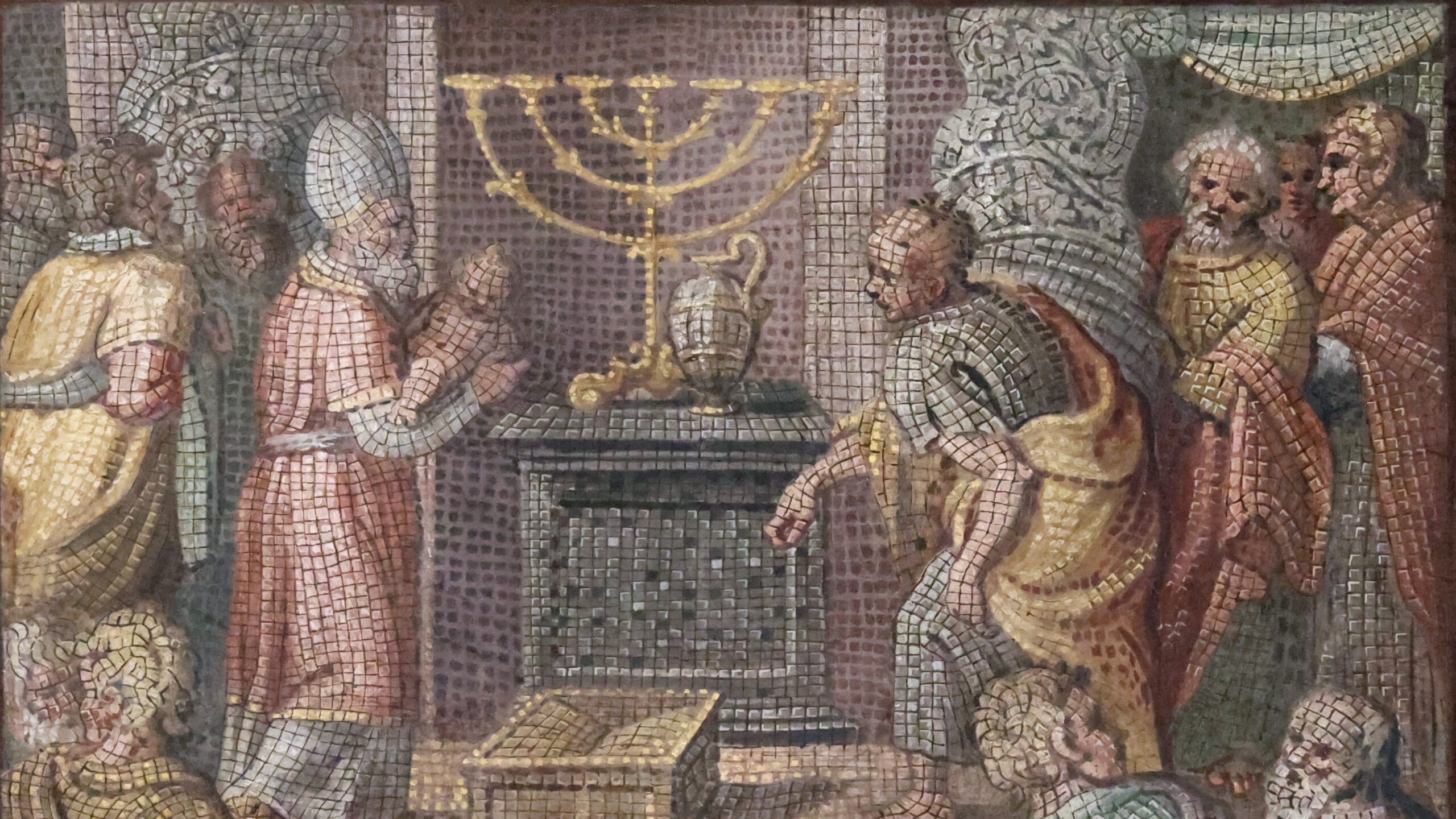
1 Kings 9
1 IWhen SolomonII had finishedIII
I {untranslated} = hayah. This is to be or become, to happen.
II “Solomon” = Shelomoh. From shalam (to be complete or sound; to have safety mentally, physically, or extending to one’s estate; so, if these things are safe and complete, the implication is that one would be friendly; and, if being friendly, one would make amends and that friendship would be reciprocated). This is Solomon or Shelomoh, meaning “peaceful.” It is the same word as the Hebrew word for peace – shalom.
III “finished” = kalah. This is to end, be finished, complete, prepare, consume, spent, or completely destroyed.
buildingIV the houseV of the LordVI and the king’sVII house and allVIII
IV “building” = banah. This is to build, make, set up, restore, repair, or obtain children. It is to build literally or figuratively.
V “house” = bayit. Related to “building” in v1. From banah (see note IV above). This is house, court, family, palace, temple.
VI “Lord” = YHVH. Related to {untranslated} in v1. From havah (to be, become) or hayah (see note I above). This is the name of the God of Israel, the self-existent and eternal one, the tetragrammaton. This pronunciation has been lost to time so “Lord” is generally used in its place.
VII “king’s” = melek. From malak (to be or become king or queen, to rise to the throne, to be crowned; by implication, to take counsel). This is king or royal.
VIII “all” = kol. From kalal (to complete). This is all or every.
that Solomon desiredIX to build,X 2 the Lord appearedXI to Solomon a secondXII time, as he had appeared to him at Gibeon.XIII
IX “desired” = chesheq…chaphets. Chesheq is 4x in OT. From chashaq (to cling, have a desire, love, join, deliver). This is desire, delight, or affection. Chaphets, properly means inclined towards or bending to. Figuratively, it means to desire, delight in, or be pleased with.
X “build” = asah. This is to make, do, act, appoint, become in many senses.
XI “appeared” = raah. This is to see in a literal or figurative sense so stare, advise, think, view.
XII “second” = sheni. From shanah (to fold, repeat, double, alter, or disguise). This is double, again, another, second.
XIII “Gibeon” = Gibon. From the same as Geba (Geba or Gibeah; hillock); from the same as gabia (cup, bowl, flower; root might mean being convex). This is Gibeon or Gibon, meaning hilly.
3 The Lord saidXIV to him, “I have heardXV your prayerXVI and your pleaXVII
XIV “said” = amar. This is to speak, say, answer, command, promise, report.
XV “heard” = shama. This is to hear, call, consent, or consider. It implies listening intelligently, giving attention, and, because of these two factors, obedience and action are often implied.
XVI “prayer” = tephillah. From palal (to judge for oneself or in an official capacity; to pray or make supplication, to entreat). This is prayer or intercession. It can also be a hymn.
XVII “plea” = techinnah. From chanan (beseech, show favor, be gracious; properly, to bend in kindness to someone with less status). This is grace, favor, entreaty, mercy.
that you madeXVIII beforeXIX me; I have consecratedXX this house that you have builtXXI
XVIII “made” = chanan. Related to “plea” in v3. See note XVII above.
XIX “before” = paneh. From panah (to turn, face, appear). This is face in a literal or figurative sense. It could be face, presence, anger, respect. It can also be used of God to indicate divine favor or presence.
XX “consecrated” = qadash. From qodesh (set apart and so sacred; God is different from us and so God is holy/set apart; things we dedicate to God’s service are set apart for God and so they, too, are holy). This is set apart, consecrated, hallowed, sanctified. This is something or someone that is set apart for a holy purpose or use – ceremonially or morally clean.
XXI “built” = banah. Same as “building” in v1. See note IV above.
and putXXII my nameXXIII there forever;XXIV my eyesXXV
XXII “put” = sim. This is to put or place in a literal or figurative sense. It can be appoint, care, change, make, and may other things.
XXIII “name” = shem. Related to “put” in v3. May be from sim (see note XXII above). This is name, fame, renown. A name was thought to indicate something essential about a person – something about their individuality. So, this word can also mean honor, authority, or character.
XXIV “forever” = olam. This is a long scope of time whether in the past (antiquity, ancient time) or in the future (eternal, everlasting).
XXV “eyes” = ayin. This is eye in a literal or figurative sense so eye, appearance, favor, or a fountain (the eye of the landscape).
and my heartXXVI will beXXVII there for all time.XXVIII
XXVI “heart” = leb. From the same as lebab (the heart, courage, one’s inner self, the mind, the will; only used in a figurative sense in the Bible); may be related to labab (to encourage; properly, to be encased as with fat; used in a good sense, this means to transport someone with love; used in a bad sense, it can mean to dull one’s senses).. This is inner self, mind, will, feelings, the center.
XXVII “be” = hayah. Same as {untranslated} in v1. See note I above.
XXVIII “time” = yom. Root may mean being hot. This is the day in a literal or figurative sense. It can also mean birth, age, daylight, continually or other references to time.
4 As for you, if you will walkXXIX beforeXXX me as DavidXXXI your fatherXXXII walked,
XXIX “walk” = halak. This is go, come, walk. It is walk literally and figuratively and includes people and animals. It can be used figuratively for one’s moral life – how we walk according to God’s way or against it. It can also refer to the walk of life as in the course one’s life takes, the choices we make, etc.
XXX “before” = paneh. Same as “before” in v3. See note XIX above.
XXXI “David” = David. From the same as dod (beloved, love, uncle); the root may mean to boil, which is used figuratively to describe love. So, this implies someone you love such as a friend, a lover, or a close family member like an uncle. David’s name likely means something like “beloved one.”
XXXII “father” = ab. This is father, chief, or ancestor. It is father in a literal or figurative sense.
with integrityXXXIII of heartXXXIV and uprightness,XXXV doingXXXVI according to all that I have commandedXXXVII you
XXXIII “integrity” = tom. From tamam (to finish or accomplish; to make perfect, demonstrate that you are upright; consume; to complete in a literal or figurative sense). This is completeness or full measure. So, it can be blameless, moral innocence, prosperity, or integrity. Also used to refer to a portion of the high priest’s breastplate.
XXXIV “heart” = lebab. Related to “heart” in v3. See note XXVI above.
XXXV “uprightness” = yosher. 14x in OT. From yashar (to be straight, right, even, smooth, or agreeable; figuratively, to make something pleasant or prosperous). This is uprightness, integrity, equity, honest.
XXXVI “doing” = asah. Same as “build” in v1. See note X above.
XXXVII “commanded” = tsavah. This is to charge, command, order, appoint, or enjoin. This is the root that the Hebrew word for “commandment” comes from (mitsvah).
and keepingXXXVIII my statutesXXXIX and my ordinances,XL
XXXVIII “keeping” = shamar. This is to keep, watch, or preserve. It means to guard something or to protect it as a thorny hedge protects something.
XXXIX “statutes” = choq. From chaqaq (to inscribe, carve, or decree; a lawmaker; literally, this is engraving, but it implies enacting a law because laws were carved into stone or metal). This is statute, boundary, condition, custom, limit, ordinance It is something that is prescribed or something that is owed.
XL “ordinances” = mishpat. From shaphat (to judge, defend, pronounce judgment, condemn, govern). This is a verdict or formal sentence whether from humans or from God. It includes the act of judging as well as the place that judging takes place, the suit itself, and the penalty. Abstractly, this is justice, which includes the rights of the participants.
5 then I will establishXLI your royalXLII throneXLIII over IsraelXLIV forever,
XLI “establish” = qum. To arise, stand, accomplish, establish, abide. This is rising as in rising against, getting up after being sick or asleep, arising from one state to another, becoming powerful, or rising for action. It can also be standing in a figurative sense.
XLII “royal” = mamlakah. Related to “king’s” in v1. From the same as melek (see note VII above). This is kingdom, dominion, sovereignty, rule. It can also refer to the realm.
XLIII “throne” = kisse. From the same as kese (full moon); perhaps from kasah (to cover, conceal, overwhelm; to cover as clothes do or to hide a secret). This is throne – a seat that is covered or has a canopy. Thus, it is a seat that conveys authority.
XLIV“Israel” = Yisrael. From sarah (to persist, exert oneself, contend, persevere, wrestle, prevail) + El (God or god). This is Israel, meaning God strives or one who strives with God; new name for Jacob and for his offspring. This refers to the people and to the land.
as I promisedXLV your father David, saying, ‘You shall never lackXLVI a successorXLVII on the throne of Israel.’
XLV “promised” = dabar. This is generally to speak, answer, declare, or command. It might mean to arrange and so to speak in a figurative sense as arranging words.
XLVI “lack” = karat. This is to cut down, cut off, or make a covenant (idiom for making a covenant is “to cut a covenant”). It can also mean to destroy, fail, or consume.
XLVII “successor” = ish. Perhaps from enosh (human, humankind, mortal); from anash (to be weak, sick, or frail). This is man, husband, another, or humankind.
6 “If you turn asideXLVIII from followingXLIX me, you or your children,L
XLVIII “turn aside” = shub + shub. To turn back, return, turn away – literally or figuratively. Doesn’t necessarily imply going back to where you started from. This is also the root verb for the Hebrew word for repentance “teshubah.” The word is repeated twice – the first time as an Infinitive Absolute. The Infinitive Absolute serves to emphasize the sentiment of the word. It is rather like Foghorn Leghorn’s speech pattern, “I said, I said.”
XLIX “following” = achar. From achar (to remain behind, linger, continue, be behind, or delay; can also imply procrastination). This is after or the last part, following.
L “children” = ben. Related to “building” and “house” in v1. From banah (see note IV above). This is son, age, child. It is son in a literal or figurative sense.
and do not keep my commandmentsLI and my statutesLII that I have setLIII beforeLIV you
LI “commandments” = mitsvah. Related to “commanded” in v4. From tsavah (see note XXXVII above). This is a commandment, law, ordinance obligation, or tradition. It is something commanded whether by God or by a human authority. This term is sometimes used collectively to refer to the Law.
LII “statutes” = chuqqah. Related to “statutes” in v4. From choq (see note XXXIX above). This is something prescribed such as a statue, custom, or ordinance.
LIII “set” = natan. This is to give, put, set, offer. It is to give literally or figuratively.
LIV “before” = paneh. Same as “before” in v3. See note XIX above.
but goLV and serveLVI otherLVII godsLVIII and worshipLIX them,
LV “go” = halak. Same as “walk” in v4. See note XXIX above.
LVI “serve” = abad. This is to work, serve, or compel. It can describe any kind of work or service (including religious devotion). Also, till or cultivate. Used causatively, it can mean to enslave or keep in bondage.
LVII “other” = acher. Related to “following” in v6. From achar (see note XLIX above). This is following, next, strange, other.
LVIII “gods” = elohim. Related to “Israel” in v5. See note XLIV above.
LIX “worship” = shachah. This is to bow down, make a humble entreaty, to do homage to royalty or to God.
7 then I will cut Israel offLX fromLXI the landLXII that I have givenLXIII them, and the house that I have consecrated for my name I will castLXIV out of my sight,LXV
LX “cut…off” = karat. Same as “lack” in v5. See note XLVI above.
LXI “from” = paneh. Same as “before” in v3. See note XIX above.
LXII “land” = adamah. From the same as adam (man, humankind); perhaps from ‘adom (to be red). This is ground, earth, soil as red, or land.
LXIII “given” = natan. Same as “set” in v6. See note LIII above.
LXIV “cast” = shalach. This is to send out, away, send for, forsake. It can also mean to divorce or set a slave free.
LXV “sight” = paneh. Same as “before” in v3. See note XIX above.
and Israel will becomeLXVI a proverbLXVII and a tauntLXVIII among all peoples.LXIX
LXVI “become” = hayah. Same as {untranslated} in v1. See note I above.
LXVII “proverb” = mashal. From mashal (to compare, speak in a proverb or riddle – to speak in allegory or liken). This is proverb, parable, taunt, discourse, maxim, adage, poem.
LXVIII “taunt” = sheninah. 4x in OT. From shanan (to sharpen by breaking apart as when one sharpens a blade; to point or pierce; fig. increasing mental astuteness, teach). This is a pointed word, a taunt.
LXIX “peoples” = am. From amam (to darken, hide, associate; creating shadows by huddling together). This is people or nation. It can be used specifically for a tribe, collectively of troops or armies, or figuratively to refer to a flock of animals.
8 This house will become a heap of ruins;LXX everyoneLXXI passingLXXII by it will be astonishedLXXIII and will hiss,LXXIV
LXX “heap of ruins” = elyon. From alah (to go up, ascend, be high, be a priority; to arise in a literal or figurative sense). This is most high, upper. It refers to elevation – so, lofty.
LXXI “everyone” = kol. Same as “all” in v1. See note VIII above.
LXXII “passing” = abar. This is to pass over or cross over. It is used for transitions, whether literal or figurative. It can also mean to escape, alienate, or fail. This is the root verb from which “Hebrew” is drawn.
LXXIII “be astonished” = shamem. This is to amaze or be astonished. It can also mean devastate, stun, become numb, or be appalled.
LXXIV “hiss” = sharaq. 12x in OT. This is to be shrill, whistle, hiss. It can be to signal someone or to scorn them.
and they will say, ‘Why has the Lord done such a thingLXXV to this landLXXVI and to this house?’
9 Then they will say, ‘Because they abandonedLXXVII the Lord their God,LXXVIII who broughtLXXIX their ancestorsLXXX out of the landLXXXI
LXXV “such a thing” = kakah. From koh (like this, thus, here, now) + ki (that, for when, certainly) + hu (he, she, it). This is even so, like this, thus.
LXXVI “land” = erets. Root may mean to be firm. This is earth, ground, field land, or country.
LXXVII “abandoned” = azab. To loosen, relinquish, permit, forsake, fail, leave destitute.
LXXVIII “God” = Elohim. Same as “gods” in v6. See note LVIII above.
LXXIX “brought” = yatsa. This is to go or come out, bring forth, appear. It is to go out in a literal or figurative sense.
LXXX “ancestors” = ab. Same as “father” in v4. See note XXXII above.
LXXXI “land” = erets. Same as “land” in v8. See note LXXVI above.
of Egypt,LXXXII and embracedLXXXIII other gods, worshiping them and serving them; thereforeLXXXIV the Lord
LXXXII “Egypt” = Mitsrayim. Perhaps from matsor (besieged or fortified place, bulwark, entrenchment; something hemmed in; a siege or distress or fastness); from tsur (to confine, besiege, to cramp). This is Egypt.
LXXXIII “embraced” = chazaq. This is to strengthen, seize, be courageous, repair, bind, heal, conquer, harden.
LXXXIV “therefore” = ken. Perhaps from kun (properly, in a perpendicular position; literally, to establish, fix, fasten, prepare; figuratively, it is certainty, to be firm, faithfulness, render sure or prosperous). This is to set upright. Generally used figuratively to mean thus, so, afterwards, rightly so.
broughtLXXXV LXXXVIthis disasterLXXXVII upon them.’”
LXXXV “brought” = bo. This is to enter, come in, advance, fulfill, bring offerings, enter to worship, attack. It can also have a sexual connotation.
LXXXVI {untranslated} = kol. Same as “all” in v1. See note VIII above.
LXXXVII “disaster” = ra’. From ra’a’ (to be evil, bad, afflict; properly, to spoil – to destroy by breaking into pieces; figuratively, to cause something to be worthless; this is bad in a physical, social, or moral sense; that which displeases, to do harm or mischief, to punish or vex). This is bad, disagreeable, that which causes pain, misery, something having little or no value, something that is ethically bad, wicked, injury, calamity. This refers to anything that is not what it ought to be – a natural disaster, a disfigurement, an injury, a sin.
10 LXXXVIIIAt the endLXXXIX of twentyXC years,XCI in which Solomon had builtXCII the twoXCIII houses, the house of the Lord and the king’s house,
LXXXVIII {untranslated} = hayah. Same as {untranslated} in v1. See note I above.
LXXXIX “end” = qatseh. From qatsah (to cut off, cut short; figuratively, to destroy). This is end, brink, border, edge, frontier. It can refer to that which is within set boundaries.
XC “twenty” = esrim. From the same as eser (ten, tenth). This is twenty or twentieth.
XCI “years” = shanah. From shana (to change, alter). This is a year, age, old. It can also mean yearly.
XCII “built” = banah. Same as “building” in v1. See note IV above.
XCIII “two” = shenayim. Related to “second” in v2. From sheni (see note XII above). This is two, both, second, couple.
11 King HiramXCIV of TyreXCV having suppliedXCVI Solomon
XCIV “Hiram” = Chiram. From Churam (Huram, a name); from Achiram (Ahiram; “brother of the lofty” or “brother of height”); {from ach (brother, kindred, another, other, like) + rum (to be high, rise, exalt self, extol, be haughty; to rise literally or figuratively)} OR from hor (noblemen) + rum (see above). This is Hiram or Chiram, a name that means “most noble,” “high born,” “brother of the lofty.” See https://www.abarim-publications.com/Meaning/Hiram.html
XCV “Tyre” = Tsor. Related to “Egypt” in v9. “From Phoenician “𐤑𐤓 (ṣr /Ṣur/, “rock”)”” OR from the same as tsor (flint, stone, knife, edge); from the same as tsar (pebble, flint) or tsur (see note LXXXII above). This is Tyre, the Phoenician city. Its name may mean “rock.” See https://en.wiktionary.org/wiki/Tyre
XCVI “supplied” = nasa. This is to lift in a broad sense, literally and figuratively. So it could be to carry, take, or arise. It could also be bring forth, advance, accept.
with cedarXCVII, XCVIII and cypressXCIX timberC
XCVII “cedar” = erez. Perhaps from araz (made from cedar; to be firm, strong). This is cedar or a cedar tree as strong.
XCVIII {untranslated} = ets. Same as “timber” in v11. See note C below.
XCIX “cypress” = berosh. This is a cypress, fir, or juniper. It can be something made of this wood like a lance of musical instrument.
C “timber” = ets. Perhaps from atsah (to shut, fasten, firm up, to close one’s eyes). This is tree or other things related to trees like wood, sticks, or stalks. It can also refer to wood products like a plank or staff or gallows. Additionally, this can refer to a carpenter.
and gold,CI as much asCII he desired,CIII CIVKing Solomon gave to Hiram
CI “gold” = zahab. Root may mean to shimmer. This is gold or something that has the color of gold like oil. It can also refer to a clear sky – to good weather.
CII “as much as” = kol. Same as “all” in v1. See note VIII above.
CIII “desired” = chephets. Related to “desired” in v1. From chaphets (see note IX above). This is a delight, care, or pleasure. It is what you desire or what is acceptable. It can also be used concretely for a precious thing or something that one is thinking about.
CIV {untranslated} = az. This is beginning, now, from, since.
twenty citiesCV in the landCVI of Galilee.CVII
CV “cities” = iyr. From uwr (to awaken or wake oneself up). This can mean excitement in the sense of wakefulness or city. Properly, this is a place that is guarded. Guards kept schedules according to watches. This sense of the word would include cities as well as encampments or posts that were guarded.
CVI “land” = erets. Same as “land” in v8. See note LXXVI above.
CVII “Galilee” = Galil. 6x in OT. From galal (to roll in a literal or figurative sense, roll away, roll down, wallow, remove, trust). This is a circle, district, or ring. It is also Galilee.
12 But when Hiram cameCVIII from Tyre to seeCIX the cities that Solomon had given him, they did not pleaseCX him.
13 Therefore he said, “What kind of cities are these that you have given me, my brother?”CXI So they are calledCXII the landCXIII
CVIII “came” = yatsa. Same as “brought” in v9. See note LXXIX above.
CIX “see” = raah. Same as “appeared” in v2. See note XI above.
CX “please” = yashar + ayin. Yashar is related to “uprightness” in v4. See note XXXV above. Ayin is the same as “eyes” in v3. See note XXV above.
CXI “brother” = ach. Related to “Hiram” in v11. See note XCIV above.
CXII “called” = qara. This is to call or call out – to call someone by name. Also used more broadly for calling forth.
CXIII “land” = erets. Same as “land” in v8. See note LXXVI above.
of CabulCXIV to this day.CXV 14 But Hiram had sentCXVI to the king one hundredCXVII twenty talentsCXVIII of gold.
CXIV “Cabul” = Kabul. 2x in OT. Perhaps from the same as kebel (may come from a word meaning to twine; fetter). This is Cabul, a city and region whose name may mean “limitation” or “sterile.”
CXV “day” = yom. Same as “time” in v3. See note XXVIII above.
CXVI “sent” = shalach. Same as “cast” in v7. See note LXIV above.
CXVII “hundred” = meah. This is hundred or some number times one hundred (i.e. hundredfold or the base of two hundred, three hundred, etc.).
CXVIII “talents” = kikkar. From karar (to dance or whirl). This is round so it can refer to a circle, a circular region, a weight used for measurement, money, a loaf of bread that is round, a cover, a plain, or a valley in the Jordan.
15 This is the accountCXIX of the forced laborCXX that King Solomon conscriptedCXXI to buildCXXII the house of the Lord and his own house,
CXIX “account” = dabar. Related to “promised” in v5. From dabar (see note XLV above). This is speech, a word, a matter, an affair, charge, command, message, promise, purpose, report, request. It is a word, which implies things that are spoken of in a wide sense.
CXX “forced labor” = mas. Perhaps from masas (to melt, discourage, faint; to deteriorate from a sickness or weaken because of sleepiness or an emotional response). This is a burden that creates weariness and or exhaustion. It is forced labor, taskwork, or other levy.
CXXI “conscripted” = alah. Related to “heap of ruins” in v8. See note LXX above.
CXXII “build” = banah. Same as “building” in v1. See note IV above.
the MilloCXXIII and the wallCXXIV of Jerusalem,CXXV
CXXIII “Millo” = Millo. 10x in OT. From male (fill, satisfy, replenish, accomplish, fulfill, confirm, or consecrate; fill in a literal or figurative sense). This is Millo, a city near Shechem or a stronghold in Jerusalem. It means “filled,” “terrace,” “elevation,” “rampart,” filling,” “setting up,” or “storage facility.” See https://www.abarim-publications.com/Meaning/Millo.html
CXXIV “wall” = chomah. From the same as cham (father-in-law – one’s husband’s father; perhaps from a root meaning to join). This is a wall – a wall as used for protection.
CXXV “Jerusalem” = Yerushalaim. Related to “Solomon” in v1. From yarah (to throw, shoot, be stunned; to flow as water so figuratively to instruct or teach) + shalam (see note II above). This is Jerusalem, dwelling of peace.
Hazor,CXXVI Megiddo,CXXVII GezerCXXVIII
CXXVI “Hazor” = Chatsor. 18x in OT. From the same as chatser (village, settlement); from chatser (enclosure or court – a yard that is fenced in. It could also be a village or hamlet that is walled in); from chatsar (to blow a trumpet, trumpeter, to surround); from chatsotsrah (trumpet). This is Hazor, Chatsor – meaning “village.”
CXXVII “Megiddo” = Megiddo. 12x in OT. Perhaps from abdan (destruction, perishing); {from abad (to wander off, lose self; to perish, destroy, die, vanish, or be broken or corrupt)} OR from gadad (to cut, gather, assemble, crowd; also, to gash as pushing in). This is Megiddo or Megiddon. It may mean “tower” or “rendezvous” or “invading” or “Place of exposure” or “place of troops” or “place of multitudes.” See https://www.abarim-publications.com/Meaning/Megiddo.html
CXXVIII “Gezer” = Gezer. 15x in OT. From gezer (piece, part, portion); from gazar (to cut or cut down; figuratively, to divide, exclude, decree, or destroy). This is Gezer, a city that means “portion.”
16 (PharaohCXXIX king of Egypt had gone upCXXX and capturedCXXXI Gezer and burned it down,CXXXII
CXXIX “Pharaoh” = paroh. From Egyptian pr (palace, pharaoh; literally house + great). This is Pharaoh, a title for Egyptian kings. See https://en.wiktionary.org/wiki/pharaoh
CXXX “gone up” = alah. Same as “conscripted” in v15. See note CXXI above.
CXXXI “captured” = lakad. This is to capture, seize, or imprison. It is to catch something in a snare or net or trap. It can also mean to occupy of select something by casting lots.
CXXXII “burned…down” = saraph + esh. Saraph is to burn or kindle. This is the root that “seraphim” comes from. Esh is fire, burning, flaming, hot. It is fire in a literal or figurative sense.
had killedCXXXIII the CanaanitesCXXXIV who livedCXXXV in the city,
CXXXIII “killed” = harag. This is to strike with deadly intent so it can be kill, destroy, murder, or put to death.
CXXXIV “Canaanites” = Knaani. From Kanaan (Canaan, his descendants, and the land where they settled; perhaps meaning lowlands, describing their land or subjugated in reference to being conquered by Egypt); from kana (to be humble, subdue; properly, bend the knee). This is Canaanite, which in some instances would imply a peddler or sometimes used in place of Ishmaelite. See https://en.wikipedia.org/wiki/Canaan
CXXXV “lived” = yashab. This is to sit and so to remain and so to dwell. It is sitting for any reason – as a judge, in order to ambush, or just sitting quietly. Causatively, this can mean settling or marrying. This can also mean continue, endure, or establish.
and had given it as dowryCXXXVI to his daughter,CXXXVII Solomon’s wife;CXXXVIII
CXXXVI “dowry” = shilluchim. Related to “cast” in v7. 3x in OT. From shalach (see note LXIV above). This is to send back, a present, a dower. It can also be a dismissal, which is to say, a divorce.
CXXXVII “daughter” = bat. Related to “building” and “house” in v1 & “children” in v6. From ben (see note L above). This is daughter in a literal or figurative sense.
CXXXVIII “wife” = ishshah. Related to “successor” in v5. From ish (see note XLVII above). This is woman, wife, or female.
17 so Solomon rebuiltCXXXIX Gezer), LowerCXL Beth-horon,CXLI
CXXXIX “rebuilt” = banah. Same as “building” in v1. See note IV above.
CXL “Lower” = tachton. 13x in OT. From tachat (underneath, below, the bottom, instead of). This is lower, lowest, or bottommost.
CXLI “Beth-horon” = Beth-choron. Related to “building” and “house” in v1 & “children” in v6 & “daughter” in v16. 14x in OT. From bayit (see note V above) + chor (a hole, den, cavity); {from the same as chur (hole; a hole that was bored; a crevice where a snake lives; the cell of a prison)}. This is Beth-horon, the name of a few cities, which means “place of a hollow” or “house of hollowness” or “house of freedom” or “place of the great cavern” or “house of the free men.” See https://www.abarim-publications.com/Meaning/Beth-horon.html
18 Baalath,CXLII TadmorCXLIII in the wilderness,CXLIV within the land,CXLV
CXLII “Baalath” = Baalat. 3x in OT. Probably from baalah (lady, mistress); from baal (owner, master, husband); from ba’al (to marry, have dominion over, to master). This is Baalath, a city whose name means “mistress” or “lady.”
CXLIII “Tadmor” = Tadmor. 2x in OT. From tamar (palm tree; root may mean being erect); from the same as tomer (palm tree, trunk). This is Tadmor, meaning “palm-city” or “place of palms.”
CXLIV “wilderness” = midbar. Related to “promised” in v5 & “account” in v15. From dabar (see note XLV above). This is mouth or speech. It can also be desert or wilderness. Additionally, it can be used for a pasture to which one drives cattle.
CXLV “land” = erets. Same as “land” in v8. See note LXXVI above.
19 as well as allCXLVI of Solomon’s storageCXLVII cities, the cities for his chariots,CXLVIII the cities for his cavalry,CXLIX
CXLVI {untranslated} = hayah. Same as {untranslated} in v1. See note I above.
CXLVII “storage” = miskenoth. 7x in OT. From sakan (being customary, of use, of acquainted with, of service). This is supply or storehouse.
CXLVIII “chariots” = rekeb. From rakab (to ride an animal or in some vehicle; also, bringing on a horse). This is a vehicle, wagon, or chariot. It can be cavalry or an individual rider.
CXLIX “cavalry” = parash. From parash (to make distinct, separate, scatter; can also imply to wound). This is a horse or a person who rides a horse. A chariot driver or cavalry as a collective.
and whatever Solomon desiredCL to buildCLI in Jerusalem, in Lebanon,CLII and in all the landCLIII of his dominion.CLIV
CL “desired” = chesheq…chashaq. Chesheq is the same as “desired” in v1. See note IX above. Chashaq is related to “desired” in v1. 11x in OT. See note IX above.
CLI “build” = banah. Same as “building” in v1. See note IV above.
CLII “Lebanon” = Lebanon. Related to “heart” in v3 & “heart” in v4. From laben (to be white, make white, make bricks) OR form Aramaic lebab (heart); corresponding to Hebrew lebab (see note XXVI above). This is Lebanon. The sense of “white” comes from the snow on the top of its mountains. See https://en.wikipedia.org/wiki/Lebanon
CLIII “land” = erets. Same as “land” in v8. See note LXXVI above.
CLIV “dominion” = memshalah. 14x in OT. From mimshal (dominion, ruler, authority); from mashal (to rule, reign, govern, have authority, wield). This is to rule, govern, a ream, ruler, authority, dominion, forces.
20 All the people who were leftCLV of the Amorites,CLVI the Hittites,CLVII
CLV “left” = yathar. This is to jut over, remain behind, preserve, to excel. It can be to leave or to be in abundance.
CLVI “Amorites” = Emori. Related to “said” in v3. From amar (see note XIV above). This is Amorite or Emori, perhaps meaning talkers.
CLVII “Hittites” = Chitti. From cheth (Heth or Cheth; one of Canaan’s sons from whom perhaps the Hittites descend) OR from hatat (terror, lacking strength or courage); perhaps from hata (to seize; often used of coals from a fire). This is Hittite – perhaps meaning terrors or terrible. See https://www.abarim-publications.com/Meaning/Hittite.html#.XyMgpp5KhPY
the Perizzites,CLVIII the Hivites,CLIX and the Jebusites,CLX who were not of the peopleCLXI of Israel—
CLVIII “Perizzites” = Perizzi. Perhaps from perazi (rural area, unwalled land); from the same as perazah (rural, village without walls, open country); from the same as paraz (root may mean to separate; perhaps warriors, chieftan, or throng). This is Perizzite, perhaps meaning rural or wild one.
CLIX “Hivites” = Chivvi. Probably from the same as chavyah (life-giving, which implies the place where one lives like a village or place where one camps); probably from the same as Chavvah (Eve, life-giver); from chavah (show, tell, live, declare). This is Hivite, perhaps meaning villagers or tent villagers.
CLX “Jebusites” = Yebusi. From yebus (threshing place; one of the former names of Jerusalem); from bus (to trample down, tread in a literal or figurative sense; to loathe, pollute, squirm). This is Jebusite, meaning treaders or threshers.
CLXI “people” = ben. Same as “children” in v6. See note L above.
21 their descendantsCLXII who were stillCLXIII left in the land,CLXIV whom the IsraelitesCLXV were unableCLXVI
CLXII “descendants” = ben. Same as “children” in v6. See note L above.
CLXIII “still” = achar. Same as “following” in v6. See note XLIX above.
CLXIV “land” = erets. Same as “land” in v8. See note LXXVI above.
CLXV “Israelites” = ben + Yisrael. Literally, “children of Israel.” Ben is the same as “children” in v6. See note L above. Yisrael is the same as “Israel” in v5. See note XLIV above.
CLXVI “were unable” = lo + yakol. Yakol is to be able, endure, overcome, prevail.
to destroy completelyCLXVII—these Solomon conscripted for slave labor,CLXVIII and so they areCLXIX to this day. 22 But of the Israelites Solomon madeCLXX no slaves;CLXXI
CLXVII “destroy completely” = charam. This is to ban, destroy, devote, seclude. It is to dedicate to a religious purpose, often for destruction.
CLXVIII “slave labor” = mas. Same as “forced labor” in v15. See note CXX above.
CLXIX “are” = abad. Same as “serve” in v6. See note LVI above.
CLXX “made” = natan. Same as “set” in v6. See note LIII above.
CLXXI “slaves” = ebed. Related to “serve” in v6. From abad (see note LVI above). This is a servant, slave, or bondservant.
they were the soldiers;CLXXII they were his officials,CLXXIII his commanders,CLXXIV his captains,CLXXV and the commanders of his chariotryCLXXVI and cavalry.
CLXXII “soldiers” = ish + milchamah. Literally, “men of war.” Ish is the same as “successor” in v5. See note XLVII above. Milchamah is from lacham (to eat or feed on; figuratively, to battle as a kind of consumption/destruction). This is battle, war, fighting, or one who fights (i.e. a warrior).
CLXXIII “officials” = ebed. Same as “slaves” in v22. See note CLXXI above.
CLXXIV “commanders” = sar. This is chief, leader, ruler, lord, official, governor, prince, military leader. It refers to someone at the top of a rank or class.
CLXXV “captains” = shaliysh. 17x in OT. From shalosh (three, fork, triad). This is literally a third. So, it could refer to some kind of musical instrument like a triangle or a lute with three strings. It could also refer to a triple measure. Additionally, it could be a highly ranked person like a captain, lord, or prince.
CLXXVI “chariotry” = rekeb. Same as “chariots” in v19. See note CXLVIII above.
23 These were the chiefCLXXVII officersCLXXVIII who were over Solomon’s work:CLXXIX
CLXXVII “chief” = sar. Same as “commanders” in v22. See note CLXXIV above.
CLXXVIII “officers” = natsab. This is to station, appoint, establish, take a stand.
CLXXIX “work” = melakah. From the same as malak (messenger, an angel, or a deputy; human messengers literally or for prophets, priests, or teachers as messengers of God; also supernatural messengers i.e. angels). Properly, this is a deputyship or some kind of work. It can also be the product that comes from labor.
fiveCLXXX hundred fiftyCLXXXI who had charge ofCLXXXII the peopleCLXXXIII who carried onCLXXXIV the work.
CLXXX “five” = chamesh. Related to “fifty” in v23. See note CLXXXI below.
CLXXXI “fifty” = chamishshim. From chamesh (five, fifth). This is fifty.
CLXXXII “had charge of” = radah. This is to step down, rule, dominate, have victory over, crumble.
CLXXXIII “people” = am. Same as “peoples” in v7. See note LXIX above.
CLXXXIV “carried on” = asah. Same as “build” in v1. See note X above.
24 ButCLXXXV Pharaoh’s daughter went upCLXXXVI from the city of David to her own house that Solomon had builtCLXXXVII for her; thenCLXXXVIII he builtCLXXXIX the Millo.
CLXXXV “but” = ak. Related to “therefore” in v9. Related to aken (surely, truly, nevertheless); from kun (see note LXXXIV above). This is a positive statement – surely, also, certainly, alone, only.
CLXXXVI “went up” = alah. Same as “conscripted” in v15. See note CXXI above.
CLXXXVII “built” = banah. Same as “building” in v1. See note IV above.
CLXXXVIII “then” = az. Same as {untranslated} in v11. See note CIV above.
CLXXXIX “built” = banah. Same as “building” in v1. See note IV above.
25 ThreeCXC timesCXCI a year Solomon used to offer upCXCII burnt offeringsCXCIII
CXC “three” = shalosh. Related to “captains” in v22. See note CLXXV above.
CXCI “times” = paam. From paam (to move, trouble; to tap in a regular rhythm; to agitate). This is a beat, stroke, footstep, or occurrence.
CXCII “offer up” = alah. Same as “conscripted” in v15. See note CXXI above.
CXCIII “burnt offerings” = olah. Related to “heap of ruins” in v8 & “conscripted” in v15. From alah (see note CXXI above). This is a step, stairs, or some kind of ascent. It is also used for whole burnt offerings, being the offering in which the whole thing is burned and rises as smoke. Burnt offerings were the least common of the offerings: most were eaten, shared with the priest and the one bringing the offering.
and sacrifices of well-beingCXCIV on the altarCXCV that he builtCXCVI for the Lord, offering incenseCXCVII beforeCXCVIII the Lord. So he completedCXCIX the house.
CXCIV “sacrifices of well-being” = shelem. Related to “Solomon” in v1 & “Jerusalem” in v15. From shalam (see note II above). This is a peace offering or a sacrifice of well-being. It was a voluntary offering given when one celebrated thanksgiving, alliance, or friendship.
CXCV “altar” = mizbeach. From zabach (to kill, slay, offer; slaughtering an animal to offer as a sacrifice). This is an altar.
CXCVI “built” = banah. Same as “building” in v1. See note IV above.
CXCVII “offering incense” = qatar. Perhaps from qetoreth (smoke, incense, the scent of the sacrifice as it burned); from the same as qitor (thick smoke, vapor). This is to make an offering, particular one of burned incense. It focuses on the fragrance made from the sacrificial fire. This is generally used to refer to worship.
CXCVIII “before” = paneh. Same as “before” in v3. See note XIX above.
CXCIX “completed” = shalam. Related to “Solomon” in v1 & “Jerusalem” in v15 & “sacrifices of well-being” in v25. See note II above.
26 King Solomon builtCC a fleet of shipsCCI at Ezion-geber,CCII which is near ElothCCIII
CC “built” = asah. Same as “build” in v1. See note X above.
CCI “fleet of ships” = oni. 7x in OT. Pobably from anah (to meet, happen, approach). This is galley, fleet of ships.
CCII “Ezion-geber” = Etsyon geber. Related to “timber” in v11. 7x in OT. Perhaps from atseh (spine, backbone); {from atsah (see note C above)} + geber (man, warrior, a person generally, or a valiant person); {from gabar (to be strong or mighty; to prevail or to be insolent)}. This is Ezion-geber or Etsyon Geber, meaning “backbone-like of a man” or “backbone of a man” or “foundation of human essence” or “backbone of a giant.” See https://www.abarim-publications.com/Meaning/Ezion-geber.html
CCIII “Eloth” = Eloth. 8x in OT. From ayil (terebinth, oak); from the same as ulam (porch, hall); from the same as ul (mighty, strength, body, belly; root may mean to twist and that implies strength and power). This is Elath or Eloth, which means “grove or lofty trees,” referring to palms.
on the shoreCCIV of the RedCCV Sea,CCVI in the landCCVII of Edom.CCVIII
CCIV “shore” = saphah. This is lip, edge, border, bank – used for a boundary. It can also be speech or language.
CCV “Red” = suph. Perhaps from Egyptian twfi (reeds). This is reeds or rushes. It can be used particularly to refer to papyrus, or a flag. See https://www.abarim-publications.com/Dictionary/sa/sa-p-pfin.html#.XzHCuChKhPY
CCVI “Sea” = yam. Root may mean to roar. This is the sea, often referring to the Mediterranean. It comes from the root in the sense of the roar of crashing surf. This word is sometimes used for rivers or other sources of water. It can mean to the west or to the south.
CCVII “land” = erets. Same as “land” in v8. See note LXXVI above.
CCVIII “Edom” = Edom. Related to “land” in v7. From the same as adom (see note LXII above). This is Edom or Idumaea. It means red.
27 Hiram sent his servantsCCIX with the fleet,CCX sailorsCCXI who were familiarCCXII with the sea, together with the servants of Solomon.
CCIX “servants” = ebed. Same as “slaves” in v22. See note CLXXI above.
CCX “fleet” = oni. Same as “fleet of ships” in v26. See note CCI above.
CCXI “sailors” = enosh + oniyyah. Literally, “men of ships.” Enosh is related to “successor” in v5 & “wife” in v16. See note XLVII above. Oniyyah is related to “fleet of ships” in v26. From the same as oni (see note CCI above). This is ships or sailors.
CCXII “were familiar” = yada. This is to know, acknowledge, advise, answer, be aware, be acquainted with. Properly, this is to figure something out by seeing. It includes ideas of observation, recognition, and care about something. It can be used causatively for instruction, designation, and punishment.
28 They wentCCXIII to OphirCCXIV and importedCCXV from there fourCCXVI hundred twenty talents of gold that they delivered to KingCCXVII Solomon.
CCXIII “went” = bo. Same as “brought” in v9. See note LXXXV above.
CCXIV “Ophir” = Ophir. 13x in OT. This is Ophir, a son of Joktan, his lineage, and a place where there is gold.
CCXV “imported” = laqach. This is to take, accept, carry away, receive. It can also have the sense of take a wife or take in marriage.
CCXVI “four” = arba. From raba (to make square or be four-sided). This is four.
CCXVII “delivered” = bo. Same as “brought” in v9. See note LXXXV above.
Image credit: “Painting imitating a mosaic, late 16th century, replacing a lost 5th-century mosaic. Santa Maria Maggiore, Rome; nave mosaics.” Photo by Fabrizio Garrisi, 2024.
