1 Kings 8
BibleHub
1 ThenI SolomonII assembledIII
Notes on verse 1a
I “then” = az. This is beginning, now, from, since.
II “Solomon” = Shelomoh. From shalam (to be complete or sound; to have safety mentally, physically, or extending to one’s estate; so, if these things are safe and complete, the implication is that one would be friendly; and, if being friendly, one would make amends and that friendship would be reciprocated). This is Solomon or Shelomoh, meaning “peaceful.” It is the same word as the Hebrew word for peace – shalom.
III “assembled” = qahal. From qahal (assembly, congregation, multitude). This is to gather, convene, assemble like a congregation.
the eldersIV of IsraelV and allVI the headsVII of the tribes,VIII the eldersIV of IsraelV and allVI the headsVII of the tribes,VIII
Notes on verse 1b
IV “elders” = zaqen. From the same as zaqan (beard or chin – the beard represents old age). This is old, aged, or elder.
V “Israel” = Yisrael. From sarah (to persist, exert oneself, contend, persevere, wrestle, prevail) + El (God or god). This is Israel, meaning God strives or one who strives with God; new name for Jacob and for his offspring. This refers to the people and to the land.
VI “all” = kol. From kalal (to complete). This is all or every.
VII “heads” = rosh. This may come a word that means to shake. It is the head, captain, or chief. It can also be excellent or the forefront. It can be first in position or in statue or in time (i.e. the beginning).
VIII “tribes” = matteh. From natah (to stretch or spread out, extend, bend). This is a staff, rod, branch, or tribe. It could be a rod for discipline or correction. It could be a scepter to indicate authority, a throwing lance, or a walking staff. Figuratively, it could also be something that supports life (like bread).
the leadersIX of the ancestralX houses of the Israelites,XI before KingXII Solomon in Jerusalem,XIII
Notes on verse 1c
IX “leaders” = nasi. From nasa (to lift in a broad sense, literally and figuratively; to carry, take, or arise; to bring forth, advance, accept). This is one lifted up or exalter. So, it could be prince, chief, ruler, captain, king, or vapor.
X “ancestral” = ab. This is father, chief, or ancestor. It is father in a literal or figurative sense.
XI “Israelites” = ben + Yisrael. Literally, “children of Israel.” Ben is from banah (to build or obtain children). This is son, age, child. It is son in a literal or figurative sense. Yisrael is the same as “Israel” in v1. See note V above.
XII “King” = melek. From malak (to be or become king or queen, to rise to the throne, to be crowned; by implication, to take counsel). This is king or royal.
XIII “Jerusalem” = Yerushalaim. Related to “Solomon” in v1. From yarah (to throw, shoot, be stunned; to flow as water so figuratively to instruct or teach) + shalam (see note II above). This is Jerusalem, dwelling of peace.
to bring upXIV the arkXV of the covenantXVI of the LordXVII
Notes on verse 1d
XIV “bring up” = alah. This is to go up, approach, ascend, be high, be a priority; to arise in a literal or figurative sense.
XV “ark” = aron. Perhaps from arah (to gather or pluck). This is a chest, box, or coffin. It is used for the Ark of the Covenant.
XVI “covenant” = berit. Perhaps from barah (to eat, choose, make clear); perhaps from bar (grain, wheat); from barar (to select, purify, cleanse, test, brighten, polish). This is a compact, covenant, alliance, treaty, or league.
XVII “Lord” = YHVH. From havah (to be, become) or hayah (to come to pass, become, be). This is the name of the God of Israel, the self-existent and eternal one, the tetragrammaton. This pronunciation has been lost to time so “Lord” is generally used in its place.
out of the cityXVIII of David,XIX which is Zion.XX
Notes on verse 1e
XVIII “city” = iyr. From uwr (to awaken or wake oneself up). This can mean excitement in the sense of wakefulness or city. Properly, this is a place that is guarded. Guards kept schedules according to watches. This sense of the word would include cities as well as encampments or posts that were guarded.
XIX “David” = David. From the same as dod (beloved, love, uncle); the root may mean to boil, which is used figuratively to describe love. So, this implies someone you love such as a friend, a lover, or a close family member like an uncle. David’s name likely means something like “beloved one.”
XX “Zion” = Tsiyyon. Related to tsyiyyun (signpost, monument); from tsavah (to charge someone, to command, order); from the same as tsiyyah (dryness, drought); from a root meaning parched as desert, dry land. Zion can refer to a mountain in Jerusalem as well as another name for Jerusalem itself or the people.
2 All the peopleXXI of Israel assembled to King Solomon at the festivalXXII in the monthXXIII
Notes on verse 2a
XXI “people” = ish. Perhaps from enosh (human, humankind, mortal); from anash (to be weak, sick, or frail). This is man, husband, another, or humankind.
XXII “festival” = chag. From chagag (feast, celebrating a festival, making a pilgrimage; properly, going in a circle or marching in sacred procession; implies giddiness and dancing; reeling to and fro). This is a feast, a sacrifice as part of a festival, or the gathering of the festival.
XXIII “month” = yerach. 13x in OT. From the same as yareach (moon). This is month.
Ethanim,XXIV which is the seventhXXV month.XXVI 3 And all the elders of Israel came,XXVII and the priestsXXVIII carriedXXIX the ark.
Notes on verses 2b-3
XXIV “Ethanim” = Ethanim. 1x in OT. From ethan (root might mean to continue; mighty, strong, ever-flowing, enduring, or permanence). This is Ethanim, the 7th month, meaning “steady flowings” or “permanent brooks.”
XXV “seventh” = shebii. From sheba (seven – the number of perfection/sacred fullness). This is seventh.
XXVI “month” = chodesh. From chadash (to renew, repair). This refers to a new moon. It can also mean monthly.
XXVII “came” = bo. This is to enter, come in, advance, fulfill, bring offerings, enter to worship, attack. It can also have a sexual connotation.
XXVIII “priests” = kohen. This is literally the one who officiates i.e. the priest. This is where the Jewish last name “Cohen” (and its variants) comes from.
XXIX “carried” = nasa. Related to “leaders” in v1. See note IX above.
4 So they brought up the ark of the Lord, the tentXXX of meeting,XXXI and all the holyXXXII vesselsXXXIII that were in the tent; the priests and the LevitesXXXIV brought them up.
Notes on verse 4
XXX “tent” = ohel. Perhaps from ahal (to shine, be clear). This is a tent, covering, home, or side pillar.
XXXI “meeting” = moed. From yaad (to appoint, assemble or gather selves, agree). This is a meeting, assembly, fixed time. It can be used for a festival or feast. It can also refer to a meeting place.
XXXII “holy” = qodesh. This is set apart and so sacred. God is different from us and so God is holy/set apart. Things we dedicate to God’s service are set apart for God and so they, too, are holy, etc.
XXXIII “vessels” = keli. From kalah (to end, be finished, complete, prepare, consume, spent, or completely destroyed). This is something that was prepared – any implement, utensil, article, vessel, weapon, or instrument. Also includes jewels, weapons, bags, carriages, and furniture.
XXXIV “Levites” = Leviyyi. From Levi (Levi; perhaps meaning “attached”; Jacob’s son, his tribe, and descendants); perhaps from lavah (to join, twine, unite, remain, borrow, lend). This is Levite or levitical.
5 King Solomon and all the congregationXXXV of Israel, who had assembledXXXVI before him, were with him beforeXXXVII the ark, sacrificingXXXVIII
Notes on verse 5a
XXXV “congregation” = edah. Related to “meeting” in v4. From yaad (see note XXXI above) OR from ed (witness, testimony, recorder); from ud (to admonish, repeat, duplicate, testify, restore, record, relieve). This is a congregation, assembly, or company. It could be a family, crowd, or fixture.
XXXVI “assembled” = yaad. Related to “meeting” in v4 & “congregation” in v5. See note XXXI above.
XXXVII “before” = paneh. From panah (to turn, face, appear). This is face in a literal or figurative sense. It could be face, presence, anger, respect. It can also be used of God to indicate divine favor or presence.
XXXVIII “sacrificing” = zabach. This is slaughtering an animal, generally for the purpose of sacrifice. It can mean kill or offer.
so manyXXXIX sheepXL and oxenXLI that they could not be countedXLII or numbered.XLIII
Notes on verse 5b
XXXIX “so many” = rob. From rabab (to be or become much or many, multiply). This is any kind of abundance.
XL “sheep” = tson. This is a flock of sheep and goats.
XLI “oxen” = baqar. From baqar (to plow, break forth; figuratively, to inquire, inspect, consider). This is cattle – an animal used for plowing.
XLII “counted” = saphar. From sepher (writing, document, book, evidence). This is properly to tally or record something. It can be enumerate, recount, number, celebrate, or declare.
XLIII “numbered” = manah. To weigh out, reckon, count, number, set, tell. By implication, it is allotting or providing something officially.
6 Then the priests broughtXLIV the ark of the covenant of the Lord to its place,XLV in the inner sanctuaryXLVI of the house,XLVII
Notes on verse 6a
XLIV “brought” = bo. Same as “came” in v3. See note XXVII above.
XLV “place” = maqom. From qum (to arise, stand, accomplish, establish, abide; rising against, getting up after being sick or asleep, arising from one state to another, becoming powerful, or rising for action; standing in a figurative sense). This is a standing, which is to say a spot or space a place. It can also refer to a locality or a physical/mental condition. HaMaqom is also a Jewish name for God – the place, i.e. the Omnipresent One.
XLVI “inner sanctuary” = debir. 16x in OT. Perhaps from dabar (to speak, declare, discuss). May mean a place of speaking like an oracle. It is the inner sanctuary of Solomon’s Temple.
XLVII “house” = bayit. Related to “Israelites” in v1. Probably from banah (see note XI above). This is house, court, family, palace, temple.
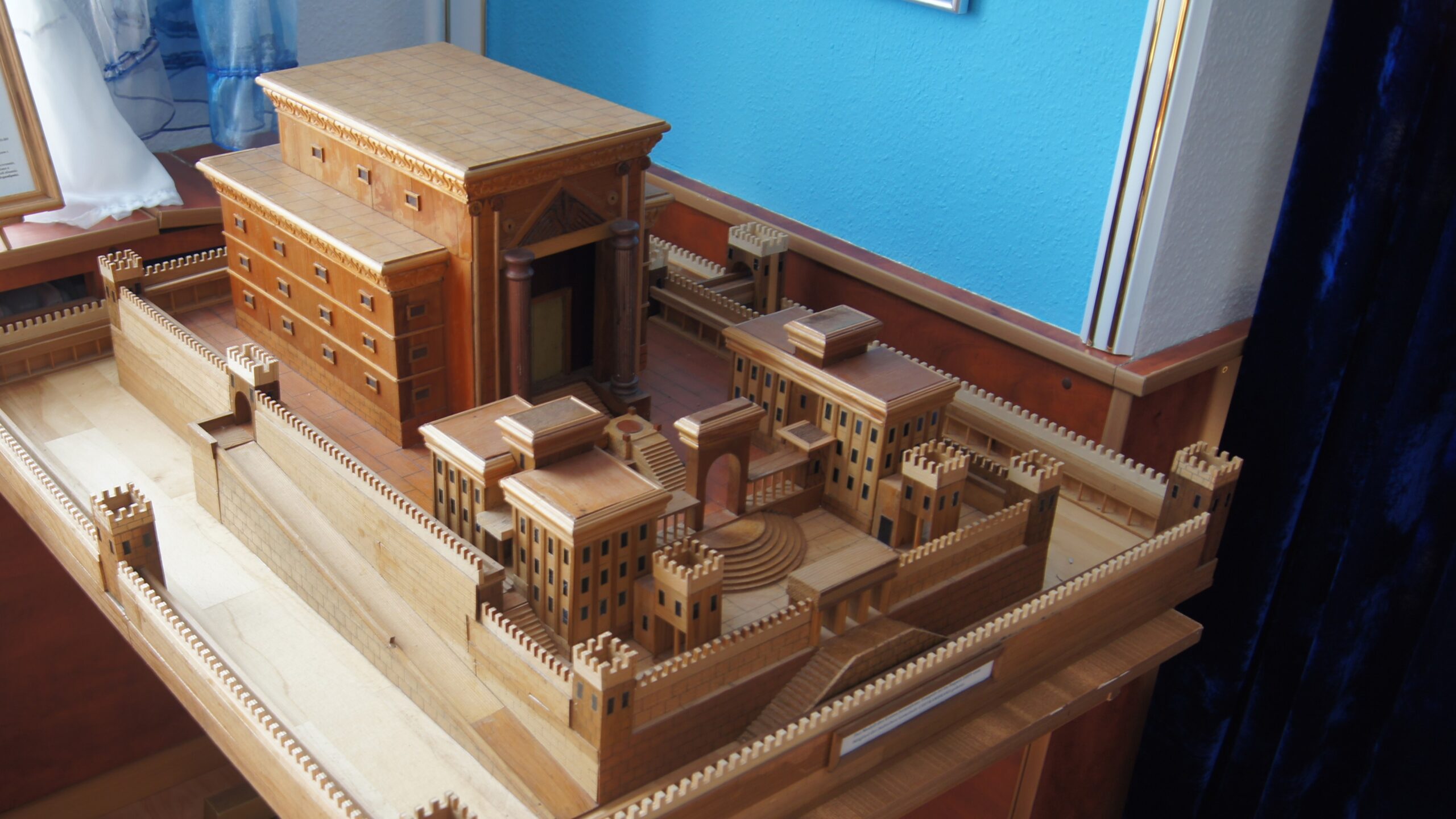
the most holy place, XLVIII underneathXLIX the wingsL of the cherubim.LI 7 For the cherubim spread outLII their wings over the place of the ark,
Notes on verses 6b-7a
XLVIII “most holy place” = qodesh + qodesh. Literally, “holy of holies.” Same as “holy” in v4. See note XXXII above.
XLIX “underneath” = tachat. This is underneath, below, the bottom, instead of.
L “wings” = kanaph. This is wing, edge, corner, extremity. It can also be a flap or fold of a garment or the pinnacle of a building.
LI “cherubim” = kerub. Perhaps related to Akkadian (“to bless” or “one who blesses”). This is a cherub – perhaps a class of angels. See https://en.wiktionary.org/wiki/%D7%9B%D7%A8%D7%95%D7%91#Hebrew
LII “spread out” = paras. This is to spread or stretch out, extend, break up, chop to pieces, disperse, display.
so that the cherubim made a coveringLIII aboveLIV the ark and its poles.LV 8 The poles were so longLVI
Notes on verses 7b-8a
LIII “made a covering” = sakak. This is to cover or overshadow. It could also be to hedge or fence it. Figuratively, this could be to defend, protect, or join together.
LIV “above” = maal. Related to “bring up” in v1. From alah (see note XIV above). This is the upper part, forward, high above, upwards, greater, heaven, or exceedingly.
LV “poles” = bad. From badad (to divide or be separated; alone, solitary, lonely, isolated, straggler). This is apart, alone, separation, body part, tree branch, except. It can also be a city’s chief.
LVI “were so long” = arak. This is to continue, lengthen prolong, delay, or endure. It is being long or causing something to be long in a literal or figurative sense.
that the endsLVII of the poles were seenLVIII from the holy placeLIX in frontLX of the inner sanctuary, but they could not be seen from outside;LXI
Notes on verse 8b
LVII “ends” = rosh. Same as “heads” in v1. See note VII above.
LVIII “seen” = raah. This is to see in a literal or figurative sense so stare, advise, think, view.
LIX “holy place” = qodesh. Same as “holy” in v4. See note XXXII above.
LX “front” = paneh. Same as “before” in v5. See note XXXVII above.
LXI “outside” = chuts. Root may mean to sever. So, this is something that is separated by a wall – the outside, the street, a field, highway, or abroad.
they areLXII there to this day.LXIII 9 There was nothingLXIV in the ark exceptLXV
Notes on verses 8c-9a
LXII “are” = hayah. Related to “Lord” in v1. See note XVII above.
LXIII “day” = yom. Root may mean being hot. This is the day in a literal or figurative sense. It can also mean birth, age, daylight, continually or other references to time.
LXIV “nothing” = ayin. Perhaps from a word that means to be nothing. This means nothing, none, non-existent. It can also simply mean not or are not.
LXV “except” = raq. From the same as raq (thin, surely, only); perhaps from raqaq (to spit). This is but, except, at least. In the sense of being thin, it figuratively refers to some kind of limit.
the twoLXVI tabletsLXVII of stoneLXVIII that MosesLXIX
Notes on verse 9b
LXVI “two” = shenayim. From sheni (double, again, another, second); from shanah (to fold, repeat, double, alter, or disguise). This is two, both, second, couple.
LXVII “tablets” = luach. Root likely means glistening, so this would refer to a tablet as being polished in some sense, whether it’s made of stone, wood, or metal.
LXVIII “stone” = eben. This is a stone, weight, or mason. It is part of the word “Ebenezer.”
LXIX “Moses” = Mosheh. From mashah (to pull out in a literal or figurative sense, to draw out) OR from Egyptian mes or mesu (child, son i.e. child of…). This is Moses – the one drawn out from the water, which is to say, rescued. If derived from the Egyptian, his name would share a root with Rameses and Thutmose.
had placedLXX there at Horeb,LXXI where the Lord madeLXXII a covenant with the Israelites when they came outLXXIII
Notes on verse 9c
LXX “placed” = yanach. Perhaps from the same as nuach (to rest, calm, camp, free, place, remain, satisfy, settle, station, or wait; implies settling down in a literal or figurative sense). This is to lay down, let alone, pacify, cast down, or deposit. It can also mean to allow something or someone to stay.
LXXI “Horeb” = Choreb. 17x in OT. From chareb (to devastate, desolate, or be waste). Horeb means waste or desolate.
LXXII “made” = karat. This is to cut down, cut off, or make a covenant (idiom for making a covenant is “to cut a covenant”). It can also mean to destroy, fail, or consume.
LXXIII “came out” = yatsa. This is to go or come out, bring forth, appear. It is to go out in a literal or figurative sense.
of the landLXXIV of Egypt.LXXV 10 AndLXXVI when the priests came outLXXVII of the holy place, a cloudLXXVIII
Notes on verses 9c-10a
LXXIV “land” = erets. Root may mean to be firm. This is earth, ground, field land, or country.
LXXV “Egypt” = Mitsrayim. Perhaps from matsor (besieged or fortified place, bulwark, entrenchment; something hemmed in; a siege or distress or fastness); from tsur (to confine, besiege, to cramp). This is Egypt.
LXXVI {untranslated} = hayah. Same as “are” in v8. See note LXII above.
LXXVII “came out” = yatsa. Same as “came out” in v9. See note LXXIII above.
LXXVIII “cloud” = anan. May be from anan (cover, cloud over; figuratively, acting in a secret way, practicing magic or soothsaying). This is a cloud as something that covers the sky.
filledLXXIX the houseLXXX of the Lord, 11 so that the priests couldLXXXI not standLXXXII to ministerLXXXIII
Notes on verses 10b-11a
LXXIX “filled” = male. This is fill, satisfy, replenish, accomplish, fulfill, confirm, or consecrate. It is fill in a literal or figurative sense.
LXXX “house” = bayit. Same as “house” in v6. See note XLVII above.
LXXXI “could” = yakol. This is to be able, endure, overcome, prevail.
LXXXII “stand” = amad. This is to stand up in a literal or figurative sense. So it can be establish, continue, endure, take a stand, act, be a servant, stand still, remain, stand against an enemy.
LXXXIII “minister” = sharat. This is ministering, serving, or waiting on. It can refer to one offering service as a worshipper or one serving as a servant.
becauseLXXXIV of the cloud, for the gloryLXXXV of the Lord filled the houseLXXXVI of the Lord.
12 Then Solomon said,LXXXVII
“The Lord has said that he would dwellLXXXVIII in thick darkness.LXXXIX
Notes on verses 11b-12
LXXXIV “because” = paneh. Same as “before” in v5. See note XXXVII above.
LXXXV “glory” = kabod. From kabad (to be heavy, weighty, burdensome). This is weighty. Figuratively, glorious, abundant, riches, honor, splendor – a reference to one’s reputation or character. This word is often used to describe God and God’s presence.
LXXXVI “house” = bayit. Same as “house” in v6. See note XLVII above.
LXXXVII “said” = amar. This is to speak, say, answer, command, promise, report.
LXXXVIII “dwell” = shakan. This is to settle down in the sense of residing somewhere or staying there permanently. It can mean abide or continue. “Mishkan,” taken from this verb, is the Hebrew word for the Tabernacle (as a place where God abided).
LXXXIX “thick darkness” = araphel. 15x in OT. From araph (to droop, drip, drop). This is a cloud or deep darkness. It is gloom or gloomy as the sky being lowered.
13 I have builtXC you an exaltedXCI house,XCII
Notes on verse 13a
XC “built” = banah + banah. Related to “Israelites” in v1 & “house” in v6. See note XI above. The word is repeated twice – the first time as an Infinitive Absolute. The Infinitive Absolute serves to emphasize the sentiment of the word. It is rather like Foghorn Leghorn’s speech pattern, “I said, I said.”
XCI “exalted” = zebul. 5x in OT. From zabal (to dwell, inclose, reside). This is height, dwelling, elevation, place.
XCII “house” = bayit. Same as “house” in v6. See note XLVII above.
a placeXCIII for you to dwellXCIV forever.”XCV
Notes on verse 13b
XCIII “place” = makon. 17x in OT. From kun (properly, in a perpendicular position; literally, to establish, fix, fasten, prepare; figuratively, it is certainty, to be firm, faithfulness, render sure or prosperous). This is a foundation, fixture, basis. It can also be a place or abode as somewhere that is established.
XCIV “dwell” = yashab. This is to sit and so to remain and so to dwell. It is sitting for any reason – as a judge, in order to ambush, or just sitting quietly. Causatively, this can mean settling or marrying. This can also mean continue, endure, or establish.
XCV “forever” = olam. This is a long scope of time whether in the past (antiquity, ancient time) or in the future (eternal, everlasting).
14 Then the king turned aroundXCVI and blessedXCVII all the assemblyXCVIII of Israel, while all the assembly of Israel stood. 15 He said, “Blessed be the Lord, the GodXCIX of Israel, who with his handC
Notes on verses 14-15a
XCVI “turned around” = sabab + paneh. Sabab is turning around, going around; to surround, cast, walk, fetch. It is to revolve or border in a literal or figurative sense. Paneh is the same as “before” in v5. See note XXXVII above.
XCVII “blessed” = barak. This is to kneel, to bless. It is blessing God as part of worship and adoration or blessing humans to help them. It can be used as a euphemism to say curse God.
XCVIII “assembly” = qahal. Related to “assembled” in v1. See note III above.
XCIX “God” = Elohim. Related to “Israel” in v1. See note V above.
C “hand” = yad. This is hand, ability, power. Hand in a literal sense, but also what one can do or the means by which one does it.
has fulfilledCI what he promisedCII with his mouthCIII to my fatherCIV David, saying,
Notes on verse 15b
CI “fulfilled” = male. Same as “filled” in v10. See note LXXIX above.
CII “promised” = dabar. Related to “inner sanctuary” in v6. See note XLVI above.
CIII “mouth” = peh. This is mouth in a literal or figurative sense. So, more literally, it can be beak or jaws. More figuratively, it refers to speech, commands, or promises.
CIV “father” = ab. Same as “ancestral” in v1. See note X above.
16 ‘Since the day that I broughtCV my peopleCVI Israel out of Egypt, I have not chosenCVII a city from anyCVIII of the tribesCIX of Israel
Notes on verse 16a
CV “brought” = yatsa. Same as “came out” in v9. See note LXXIII above.
CVI “people” = am. From amam (to darken, hide, associate; creating shadows by huddling together). This is people or nation. It can be used specifically for a tribe, collectively of troops or armies, or figuratively to refer to a flock of animals.
CVII “chosen” = bachar. This is to choose, appoint, try, excellent.
CVIII “any” = kol. Same as “all” in v1. See note VI above.
CIX “tribes” = shebet. This is a rod, staff, club, scepter, dart, or tribe. Literally a stick that can be used for punishing, writing, fighting, walking, ruling; thus, used figuratively for a clan.
in which to build a house,CX that my nameCXI might be there, nor did I choose anyone to be a ruler over my peopleCXII Israel. But I have chosen Jerusalem in order that my name may be there, and I have chosen David to be over my people Israel.’ 17 My father David hadCXIII it in mindCXIV to build a houseCXV for the name of the Lord, the God of Israel.
Notes on verses 16b-17
CX “house” = bayit. Same as “house” in v6. See note XLVII above.
CXI “name” = shem. May be from sim (to put, place, set). This is name, fame, renown. A name was thought to indicate something essential about a person – something about their individuality. So, this word can also mean honor, authority, or character.
CXII “people” = am. Same as “people” in v16. See note CVI above.
CXIII “had” = hayah. Same as “are” in v8. See note LXII above.
CXIV “mind” = lebab. May be related to labab (to encourage; properly, to be encased as with fat; used in a good sense, this means to transport someone with love; used in a bad sense, it can mean to dull one’s senses). This is the heart, courage, one’s inner self, the mind, or the will. Heart is only used in a figurative sense in the Old and New Testaments.
CXV “house” = bayit. Same as “house” in v6. See note XLVII above.
18 But the Lord said to my father David, ‘CXVIYou did wellCXVII to considerCXVIII building a houseCXIX for my name;CXX, CXXI
Notes on verse 18
CXVI {untranslated} = yaan. From anah (to answer, respond, announce, sing, shout, or testify; to pay attention, which implies responding and, by extension, starting to talk; singing, shouting, testifying, etc.). This is because, since, for the sake of, giving a reason.
CXVII “well” = tob. This is to be good, go well, please.
CXVIII “consider” = lebab. Same as “mind” in v17. See note CXIV above.
CXIX “house” = bayit. Same as “house” in v6. See note XLVII above.
CXX {untranslated} = ki + hayah + lebab. Hayah is the same as “are” in v8. See note LXII above. Lebab is the same as “mind” in v17. See note CXIV above.
CXXI Literally, “because it was in your heart to build a house for my name – you did well that it was in your heart.”
19 nevertheless,CXXII you shall not build the house,CXXIII but your sonCXXIV who shall be born toCXXV you shall build the houseCXXVI for my name.’
Notes on verse 19
CXXII “nevertheless” = raq. Same as “except” in v9. See note LXV above.
CXXIII “house” = bayit. Same as “house” in v6. See note XLVII above.
CXXIV “son” = ben. Same as “Israelites” in v1. See note XI above.
CXXV “born to” = yatsa + chalats. Literally, “come from your loins.” Yatsa is the same as LXXIII above. Chalats is 10x in OT. From chalats (to arm, give strength). This is loins or waist. Figuratively, this refers to fertility or vigor.
CXXVI “house” = bayit. Same as “house” in v6. See note XLVII above.
20 Now the Lord has fulfilledCXXVII the promiseCXXVIII that he made,CXXIX for I have risenCXXX in the placeCXXXI of my father David;
Notes on verse 20a
CXXVII “fulfilled” = qum. Related to “place” in v6. See note XLV above.
CXXVIII “promise” = dabar. Related to “inner sanctuary” in v6 & “promised” in v15. From dabar (see note XLVI above). This is speech, a word, a matter, an affair, charge, command, message, promise, purpose, report, request. It is a word, which implies things that are spoken of in a wide sense.
CXXIX “made” = dabar. Same as “promised” in v15. See note CII above.
CXXX “risen” = qum. Same as “fulfilled” in v20. See note CXXVII above.
CXXXI “place” = tachat. Same as “underneath” in v6. See note XLIX above.
I sitCXXXII on the throneCXXXIII of Israel, as the Lord promised,CXXXIV and have built the houseCXXXV for the name of the Lord, the God of Israel.
Notes on verse 20b
CXXXII “sit” = yashab. Same as “dwell” in v13. See note XCIV above.
CXXXIII “throne” = kisse. From the same as kese (full moon); perhaps from kasah (to cover, conceal, overwhelm; to cover as clothes do or to hide a secret). This is throne – a seat that is covered or has a canopy. Thus, it is a seat that conveys authority.
CXXXIV “promised” = dabar. Same as “promised” in v15. See note CII above.
CXXXV “house” = bayit. Same as “house” in v6. See note XLVII above.
21 There I have providedCXXXVI a placeCXXXVII for the ark, in which is the covenant of the Lord that he madeCXXXVIII with our ancestorsCXXXIX when he brought them outCXL of the land of Egypt.”
Notes on verse 21
CXXXVI “provided” = sim. Related to “name” in v16. See note CXI above.
CXXXVII “place” = maqom. Same as “place” in v6. See note XLV above.
CXXXVIII “made” = karat. Same as “made” in v9. See note LXXII above.
CXXXIX “ancestors” = ab. Same as “ancestral” in v1. See note X above.
CXL “brought…out” = yatsa. Same as “came out” in v9. See note LXXIII above.
22 Then Solomon stood beforeCXLI the altarCXLII of the Lord in the presenceCXLIII of the whole assembly of Israel and spread out his handsCXLIV to heaven.CXLV
Notes on verse 22
CXLI “before” = paneh. Same as “before” in v5. See note XXXVII above.
CXLII “altar” = mizbeach. Related to “sacrificing” in v5. From zabach (see note XXXVIII above). This is an altar.
CXLIII “presence” = neged. From nagad (to declare, make conspicuous, stand in front, manifest, predict, explain). This is in front of, opposite to. It can refer to a counterpart or partner, one corresponding to or in the sight of.
CXLIV “hands” = kaph. From kaphaph (to bend – from a root meaning curve or bend down). This is palm of the hand or sole of the foot, footstep, grasp. Figuratively, it can also mean power.
CXLV “heaven” = shamayim. Root may mean being lofty. This is sky, the air, or heaven. It is in a dual noun form so this might refer to the part of the sky where the clouds move on the one hand and the part beyond that where the sun, moon, and stars are on the other hand.
23 He said, “O Lord, God of Israel, there is noCXLVI God like you in heaven aboveCXLVII or on earthCXLVIII beneath,CXLIX keepingCL covenant
Notes on verse 23a
CXLVI “no” = ayin. Same as “nothing” in v9. See note LXIV above.
CXLVII “above” = maal. Same as “above” in v7. See note LIV above.
CXLVIII “earth” = erets. Same as “land” in v9. See note LXXIV above.
CXLIX “beneath” = tachat. Same as “underneath” in v6. See note XLIX above.
CL “keeping” = shamar. This is to keep, watch, or preserve. It means to guard something or to protect it as a thorny hedge protects something.
and steadfast loveCLI with your servantsCLII who walkCLIII
Notes on verse 23b
CLI “steadfast love” = chesed. From chasad (being good, kind, merciful; may mean bowing one’s neck as is done in the presence of an equal for courtesy’s sake; so, if one in a superior position is treating you like an equal, that is what is captured here). This is favor, goodness, kindness, loving kindness, pity, reproach, or a good deed. When done by God to humanity, this is mercy/loving kindness. When done by humanity to God, it is piety.
CLII “servants” = ebed. From abad (to work, serve, compel; any kind of work; used causatively, can mean to enslave or keep in bondage). This is a servant, slave, or bondservant.
CLIII “walk” = halak. This is go, come, walk. It is walk literally and figuratively and includes people and animals. It can be used figuratively for one’s moral life – how we walk according to God’s way or against it. It can also refer to the walk of life as in the course one’s life takes, the choices we make, etc.
beforeCLIV you with all their heart,CLV 24 the covenant that you kept for your servant my father David as you declaredCLVI to him; you promisedCLVII with your mouth and have this day fulfilledCLVIII with your hand.CLIX
Notes on verses 23c-24
CLIV “before” = paneh. Same as “before” in v5. See note XXXVII above.
CLV “heart” = leb. Related to “mind” in v17. From the same as lebab (see note CXIV above). This is inner self, mind, will, feelings, the center.
CLVI “declared” = dabar. Same as “promised” in v15. See note CII above.
CLVII “promised” = dabar. Same as “promised” in v15. See note CII above.
CLVIII “fulfilled” = male. Same as “fulfilled” in v10. See note LXXIX above.
CLIX “hand” = yad. Same as “hand” in v15. See note C above.
25 Therefore,CLX O Lord, God of Israel, keep for your servant my father David that which you promisedCLXI him, saying, ‘There shall neverCLXII failCLXIII you a successorCLXIV beforeCLXV me to sit on the throne of Israel,
Notes on verse 25a
CLX “therefore” = attah. Related to {untranslated} in v18. Perhaps from et (a period or season; whenever or continually); probably from anah (see note CXVI above). This is now, from now on.
CLXI “promised” = dabar. Same as “promised” in v15. See note CII above.
CLXII {untranslated}= na. This particle is used for requests or for urging. It can be we pray, now, I ask you, oh. This is the same “na” in “hosanna.”
CLXIII “fail” = karat. Same as “made” in v9. See note LXXII above.
CLXIV “successor” = ish. Same as “people” in v2. See note XXI above.
CLXV “before” = paneh. Same as “before” in v5. See note XXXVII above.
if onlyCLXVI your childrenCLXVII look toCLXVIII their way,CLXIX to walk beforeCLXX me as you have walked beforeCLXXI me.’
Notes on verse 25b
CLXVI “only” = raq. Same as “except” in v9. See note LXV above.
CLXVII “children” = ben. Same as “Israelites” in v1. See note XI above.
CLXVIII “look to” = shamar. Same as “keeping” in v23. See note CL above.
CLXIX “way” = derek. From darak (to tread, march, to walk. Can also mean affixing a string to a box since one needs to step on it to bend it in the process; so also an archer). This is a road as a thing that is walked on. Can be used figuratively for the path that one’s life takes or how one chooses to live one’s life.
CLXX “before” = paneh. Same as “before” in v5. See note XXXVII above.
CLXXI “before” = paneh. Same as “before” in v5. See note XXXVII above.
26 Therefore, O God of Israel, let your wordCLXXII be confirmedCLXXIII, CLXXIV that you promisedCLXXV to your servant my father David.
Notes on verse 26
CLXXII “word” = dabar. Same as “promise” in v20. See note CXXVIII above.
CLXXIII “confirmed” = aman. This is to believe, endure, fulfill, confirm, support, be faithful. It is to put one’s trust in, be steadfast. Figuratively, this is to be firm, steadfast, or faithful, trusting, believing, being permanent, morally solid. This is where the word “amen” comes from.
CLXXIV {untranslated} = na. This particle is used for requests or for urging. It can be we pray, now, I ask you, oh. This is the same “na” in “hosanna.”
CLXXV “promised” = dabar. Same as “promised” in v15. See note CII above.
27 “But will God indeedCLXXVI dwellCLXXVII on the earth? CLXXVIIIEven heaven and the highest heavenCLXXIX
Notes on verse 27a
CLXXVI “indeed” = umnam. Related to “be confirmed” in v26. 5x in OT. From aman (see note CLXXIII above) OR from omnam (indeed, truly, no doubt); {from aman (see above)} OR from omen (faithfulness, truth); {from aman (see above)}. This is truly, really, or indeed. It shares a root with the word “amen.”
CLXXVII “dwell” = yashab. Same as “dwell” in v13. See note XCIV above.
CLXXVIII {untranslated} = hinneh. From hen (lo! Behold! If, though; an expression of surprise). This is to draw attention, show suddenness or surprise, or to emphasize the importance of the coming statement. See! Lo! Behold!
CLXXIX “highest heaven” = shamayim + shamayim. Literally, “the heavens of heavens.” Shamayim is the same as “heaven” in v22. See note CXLV above.
cannot containCLXXX you, much lessCLXXXI this houseCLXXXII that I have built! 28 RegardCLXXXIII your servant’s prayerCLXXXIV and his plea,CLXXXV O Lord my God,
Notes on verses 27b-28a
CLXXX “contain” = kul. This is to hold in. So, it can be to contain, measure, guide, or feed. It can also mean to be able to or sustain.
CLXXXI “much less” = aph. This is also, furthermore, even.
CLXXXII “house” = bayit. Same as “house” in v6. See note XLVII above.
CLXXXIII “regard” = panah. Related to “before” in v5. See note XXXVII above.
CLXXXIV “prayer” = tephillah. From palal (to judge for oneself or in an official capacity; to pray or make supplication, to entreat). This is prayer or intercession. It can also be a hymn.
CLXXXV “plea” = techinnah. From chanan (beseech, show favor, be gracious; properly, to bend in kindness to someone with less status). This is grace, favor, entreaty, mercy.
heedingCLXXXVI the cryCLXXXVII and the prayer that your servant praysCLXXXVIII toCLXXXIX you today,CXC
Notes on verse 28b
CLXXXVI “heeding” = shama. This is to hear, call, consent, or consider. It implies listening intelligently, giving attention, and, because of these two factors, obedience and action are often implied.
CLXXXVII “cry” = rinnah. From ranan (a cry of joy or a joyful song; properly, emitting a shrill sound, especially one of joy). This is a song, shout, cry of joy, or proclamation. It could also be a shout of grief.
CLXXXVIII “prays” = palal. Related to “prayer” in v28. See note CLXXXIV above.
CLXXXIX “to” = paneh. Same as “before” in v5. See note XXXVII above.
CXC “today” = yom. Same as “day” in v8. See note LXIII above.
29 that your eyesCXCI may be openCXCII nightCXCIII and day toward this house,CXCIV the placeCXCV of which you said, ‘My name shall be there,’ that you may heed the prayer that your servant prays toward this place.CXCVI
Notes on verse 29
CXCI “eyes” = ayin. This is eye in a literal or figurative sense so eye, appearance, favor, or a fountain (the eye of the landscape).
CXCII “be open” = patach. This is to open wide in a literal or figurative sense. So, it is open, draw out, let something go free, break forth. It can also mean to plow, engrave, or carve.
CXCIII “night” = layil. Properly, this refers to light twisting away. It is used for night or midnight. Figuratively, this can mean adversity.
CXCIV “house” = bayit. Same as “house” in v6. See note XLVII above.
CXCV “place” = maqom. Same as “place” in v6. See note XLV above.
CXCVI “place” = maqom. Same as “place” in v6. See note XLV above.
30 HearCXCVII the plea of your servant and of your peopleCXCVIII Israel when they pray toward this place;CXCIX O hear in heaven your dwellingCC place;CCI hear and forgive.CCII
Notes on verse 30
CXCVII “hear” = shama. Same as “heeding” in v28. See note CLXXXVI above.
CXCVIII “people” = am. Same as “people” in v16. See note CVI above.
CXCIX “place” = maqom. Same as “place” in v6. See note XLV above.
CC “dwelling” = yashab. Same as “dwell” in v13. See note XCIV above.
CCI “place” = maqom. Same as “place” in v6. See note XLV above.
CCII “forgive” = salach. This is to forgive, pardon, spare.
31 “If someoneCCIII sinsCCIV against a neighborCCV and is requiredCCVI
Notes on verse 31a
CCIII “someone” = ish. Same as “people” in v2. See note XXI above.
CCIV “sins” = chata. This is properly to miss, and so figuratively it is used for sinning, bearing the blame. It implies a forfeiture or loss of something.
CCV “neighbor” = rea. From raah (to associate with). This is the same as neighbor in Leviticus 19:18 “love your neighbor as yourself.” This is friend, companion, fellow, neighbor. It is someone with whom you associate, whether more or less close.
CCVI “required” = nasha. 5x in OT. Perhaps from nasha (to deceive, lend with interest, debtor, delude, seduce). This is to deceive, lend with interest, or debt.
to takeCCVII an oathCCVIII and comesCCIX and swearsCCX beforeCCXI your altar in this house,CCXII
Notes on verse 31b
CCVII “take” = alah. Related to “oath” in v31. 6x in OT. See note CCVIII below.
CCVIII “oath” = alah. From alah (to swear, take an oath, curse – usually negative). This is oath, curse, swearing.
CCIX “comes” = bo. Same as “came” in v3. See note XXVII above.
CCX “swears” = alah. Same as “take” in v31. See note CCVII above.
CCXI “before” = paneh. Same as “before” in v5. See note XXXVII above.
CCXII “house” = bayit. Same as “house” in v6. See note XLVII above.
32 then hear in heaven, and act,CCXIII and judgeCCXIV your servants, condemningCCXV the guiltyCCXVI
Notes on verse 32a
CCXIII “act” = asah. This is to make, do, act, appoint, become in many senses.
CCXIV “judge” = shaphat. This is to judge, defend, pronounce judgment, condemn, or govern. It can refer to God judging or to human judges. This is pronouncing a verdict in favor or against so it implies consequences or punishment. It can also mean to litigate or govern as one with authority.
CCXV “condemning” = rasha. From resha (wrong, particularly moral wrong; wickedness, evil, wicked deeds, or something that is ill-gotten). This is to be or do something wicked, condemn, give punishment, vex, disturb, or violate.
CCXVI “guilty” = rasha. This is morally wrong so it refers to someone who is actively bad as wicked, criminal, an evil person, offender, condemned, or ungodly.
by bringingCCXVII their conductCCXVIII on their own heads and vindicatingCCXIX the righteousCCXX by rewardingCCXXI them according to their righteousness.CCXXII
Notes on verse 32b
CCXVII “bringing” = natan. This is to give, put, set, offer. It is to give literally or figuratively.
CCXVIII “conduct” = derek. Same as “way” in v25. See note CLXIX above.
CCXIX “vindicating” = tsadeq. From tsedeq (rightness, righteousness, just cause, vindication; that which is right in a natural, moral, or legal sense; abstractly equity; figuratively prosperity). This is being just or righteousness. It refers to right in a moral or legal sense. So, it can be doing justice, clearing oneself, or turning to righteousness.
CCXX “righteous” = tsaddiq. Related to “vindicating” in v32. From the same as tsedeq (see note CCXIX above). This is just, innocent, righteous, righteous one, or lawful.
CCXXI “rewarding” = natan. Same as “bringing” in v32. See note CCXVII above.
CCXXII “righteousness” = tsedaqah. Related to “vindicating” and “righteous” in v32. From the same as tsedeq (see note CCXIX above). This is righteousness, justice, righteous acts, and moral virtue.
33 “When your peopleCCXXIII Israel, having sinned against you, are defeatedCCXXIV beforeCCXXV an enemyCCXXVI but turn againCCXXVII to you,
Notes on verse 33a
CCXXIII “people” = am. Same as “people” in v16. See note CVI above.
CCXXIV “defeated” = nagaph. This is to strike, beat, hurt, stumble, defeat, inflict disease.
CCXXV “before” = paneh. Same as “before” in v5. See note XXXVII above.
CCXXVI “enemy” = oyeb. From ayab (to hate or be hostile to). This is a foe or enemy as one that you are hostile to.
CCXXVII “turn again” = shub. To turn back, return, turn away – literally or figuratively. Doesn’t necessarily imply going back to where you started from. This is also the root verb for the Hebrew word for repentance “teshubah.”
confessCCXXVIII your name, pray and pleadCCXXIX with you in this house,CCXXX 34 then hear in heaven, forgive the sinCCXXXI of your peopleCCXXXII Israel,
Notes on verses 33b-34a
CCXXVIII “confess” = yadah. From yad (hand). This is to throw one’s hands into the air in a gesture of praise. So, it is to praise, give thanks, or make a confession.
CCXXIX “plead” = chanan. Related to “plea” in v28. See note CLXXXV above.
CCXXX “house” = bayit. Same as “house” in v6. See note XLVII above.
CCXXXI “sin” = chatta’ah. Related to “sins” in v31. From chata (see note CCIV above). This is sin itself as well as punishment for sin. It is sometimes used specifically to refer to sin that is habitual.
CCXXXII “people” = am. Same as “people” in v16. See note CVI above.
and bring them againCCXXXIII to the landCCXXXIV that you gaveCCXXXV to their ancestors.
35 “When heaven is shut upCCXXXVI and there is no rain because they have sinned against you and then they pray toward this place,CCXXXVII confess your name,
Notes on verses 34b-35a
CCXXXIII “bring…again” = shub. Same as “turn again” in v33. See note CCXXVII above.
CCXXXIV “land” = adamah. From the same as adam (man, humankind); perhaps from ‘adom (to be red). This is ground, earth, soil as red, or land.
CCXXXV “gave” = natan. Same as “bringing” in v32. See note CCXVII above.
CCXXXVI “shut up” = atsar. To inclose, restrain, keep, hold back, or prevail. It can also mean to maintain, rule, or gather together.
CCXXXVII “place” = maqom. Same as “place” in v6. See note XLV above.
and turnCCXXXVIII from their sin because you punishCCXXXIX them, 36 then hear in heaven and forgive the sin of your servants, your peopleCCXL Israel, when you teachCCXLI them the goodCCXLII way in which they should walk,
Notes on verses 35b-36a
CCXXXVIII “turn” = shub. Same as “turn again” in v33. See note CCXXVII above.
CCXXXIX “punish” = anah. This is to be occupied with. It can also be bowed down. It can refer to a sense of humility or to a sense of being browbeaten, oppressed, afflicted, or depressed. This can be literal or figurative – depressed in mood or circumstance.
CCXL “people” = am. Same as “people” in v16. See note CVI above.
CCXLI “teach” = yarah. Related to “Jerusalem” in v1. See note XIII above.
CCXLII “good” = tob. Related to “well” in v18. From tob (see note CXVII above). This is good, beautiful, pleasant, agreeable, bountiful, at ease. This word is used for goodness as a concept, a good thing, a good person. This can refer to prosperity and welfare as well as joy, kindness, sweetness, and graciousness. So, this is ethically good, but also enjoyably good.
and grantCCXLIII rain on your land,CCXLIV which you have given to your peopleCCXLV as an inheritance.CCXLVI
Notes on verse 36b
CCXLIII “grant” = natan. Same as “bringing” in v32. See note CCXVII above.
CCXLIV “land” = erets. Same as “land” in v9. See note LXXIV above.
CCXLV “people” = am. Same as “people” in v16. See note CVI above.
CCXLVI “inheritance” = nachalah. Related to nachal (to inherit, occupy, distribute, take as heritage). This is properly something that was inherited. It can mean occupancy generally or, more particularly, an heirloom or an estate. This can be an inheritance, gift, possession, or portion.
37 “If there is famineCCXLVII in the land,CCXLVIII if there is plague,CCXLIX blight,CCL mildew,CCLI
Notes on verse 37a
CCXLVII “famine” = raab. From raeb (to be hungry). This is hunger, death, or hunger from famine.
CCXLVIII “land” = erets. Same as “land” in v9. See note LXXIV above.
CCXLIX “plague” = deber. Related to “inner sanctuary” in v6 & “promised” in v15 & “promise” in v20. From dabar (see note XLVI above). This is plague or thorns.
CCL “blight” = shdephah. 6x in OT. From shadaph (to scorch, blight, blast). This is something that is blasted or blighted.
CCLI “mildew” = yeraqon. 6x in OT. From the same as yereq (something green or yellow-green; could be of pallor or some kind of vegetation); from yaraq (to spit). This is paleness, greenish, mildew, blight from drought.
locust,CCLII or caterpillar;CCLIII ifCCLIV their enemy besiegesCCLV them in any of theirCCLVI cities;CCLVII
Notes on verse 37b
CCLII “locust” = arbeh. From rabah (increasing in any aspect whether quantity, authority, size, quality, greatness, etc.). This is a locust from its abundance – a swarming locust or grasshopper.
CCLIII “caterpillar” = chasil. 6x in OT. From chasal (to finish or consume). This is a locust as having a ravenous appetite – one that strips plants, a grasshopper or caterpillar.
CCLIV {untranslated} = hayah. Same as “are” in v8. See note LXII above.
CCLV “besieges” = tsarar. This is to bind, restrict, narrow, be cramped, an adversary.
CCLVI {untranslated} = erets. Same as “land” in v9. See note LXXIV above.
CCLVII “cities” = shaar. May be related to sha’ar (to calculate or reckon; may come from a root that means to open up or split). This is a gate, door, or other opening like a port.
whateverCCLVIII suffering,CCLIX whatever sicknessCCLX there is; 38 whatever prayer, whatever plea there is from any individualCCLXI or from all your peopleCCLXII Israel,
Notes on verses 37c-38a
CCLVIII “whatever” = kol. Same as “all” in v1. See note VI above.
CCLIX “suffering” = nega. From naga (touch, reach, arrive, come near, strike; touching for any reason including sexual or violent). This is a blow or stroke, wound, sore, mark plague. It can refer to someone with leprosy or to dress.
CCLX “sickness” = machaleh. 6x in OT. From chalah (to be worn; hence, being weak, sick, or afflicted; to grieve or, positively, to flatter or entreat). This is a sickness or infirmity.
CCLXI “individual” = adam. Related to “land” in v34. See note CCXXXIV above.
CCLXII “people” = am. Same as “people” in v16. See note CVI above.
all knowingCCLXIII theCCLXIV suffering of their own heartsCCLXV so that they stretch outCCLXVI their handsCCLXVII toward this house;CCLXVIII
Notes on verse 38b
CCLXIII “knowing” = yada. This is to know, acknowledge, advise, answer, be aware, be acquainted with. Properly, this is to figure something out by seeing. It includes ideas of observation, recognition, and care about something. It can be used causatively for instruction, designation, and punishment.
CCLXIV {untranslated} = ish. Same as “people” in v2. See note XXI above.
CCLXV “hearts” = lebab. Same as “mind” in v17. See note CXIV above.
CCLXVI “stretch out” = paras. Same as “spread out” in v7. See note LII above.
CCLXVII “hands” = kaph. Same as “hands” in v22. See note CXLIV above.
CCLXVIII “house” = bayit. Same as “house” in v6. See note XLVII above.
39 then hear in heaven your dwellingCCLXIX place,CCLXX forgive, act, and renderCCLXXI toCCLXXII all whose heartsCCLXXIII you know—
Notes on verse 39a
CCLXIX “dwelling” = yashab. Same as “dwell” in v13. See note XCIV above.
CCLXX “place” = makon. Same as “place” in v13. See note XCIII above.
CCLXXI “render” = natan. Same as “bringing” in v32. See note CCXVII above.
CCLXXII {untranslated} = ish. Same as “people” in v2. See note XXI above.
CCLXXIII “hearts” = lebab. Same as “mind” in v17. See note CXIV above.
according to all their ways, for onlyCCLXXIV you know CCLXXVthe humanCCLXXVI heartCCLXXVII—
Notes on verse 39b
CCLXXIV “only” = bad. Same as “poles” in v7. See note LV above.
CCLXXV {untranslated} = kol. Same as “all” in v1. See note VI above.
CCLXXVI “human” = ben + adam. Literally, “children of humanity.” Ben is the same as “Israelites” in v1. See note XI above. Adam is the same as “individual” in v38. See note CCLXI above.
CCLXXVII “heart” = lebab. Same as “mind” in v17. See note CXIV above.
40 so thatCCLXXVIII they may fearCCLXXIX you all the days that they liveCCLXXX inCCLXXXI the landCCLXXXII that you gave to our ancestors.
Notes on verse 40
CCLXXVIII “so that” = maan. Related to {untranslated} in v18 & “therefore” in v25. From anah (see note CXVI above). This is because of, occurring because of a motive or purpose.
CCLXXIX “fear” = yare. This is to fear, be afraid, dreadful. It can also refer to fearful reverence – to fear in a moral sense is to say to revere, respect.
CCLXXX “live” = chay. From chayah (to live or keep alive literally or figuratively). This is alive, living, lifetime. It can also be used to describe someone’s age. It can refer to animals, plants, water, or a company or congregation of people. It is life in a very broad sense.
CCLXXXI “in” = paneh. Same as “before” in v5. See note XXXVII above.
CCLXXXII “land” = adamah. Same as “land” in v34. See note CCXXXIV above.
41 “LikewiseCCLXXXIII when foreigners,CCLXXXIV who are not of your peopleCCLXXXV Israel,
Notes on verse 41a
CCLXXXIII “likewise” = gam. This is also, moreover, again.
CCLXXXIV “foreigners” = nokri. From neker (strange; to act foreign or strange; to disguise; can also be misfortune or unexpected calamity); from nakar (to recognize, examine, take notice, show, scrutinize). This is foreign, alien, stranger, extraordinary, adulteress. It is strange in many different senses – foreign, not being one’s relative, different, wonderful, relating to adultery.
CCLXXXV “people” = am. Same as “people” in v16. See note CVI above.
comeCCLXXXVI from a distantCCLXXXVII landCCLXXXVIII because ofCCLXXXIX your name
Notes on verse 41b
CCLXXXVI “come” = bo. Same as “came” in v3. See note XXVII above.
CCLXXXVII “distant” = rachoq. From rachaq (to widen, become distant, cast, or remove in a literal or figurative sense). This is distant or far, whether of space or of time.
CCLXXXVIII “land” = erets. Same as “land” in v9. See note LXXIV above.
CCLXXXIX “because of” = maan. Same as “so that” in v40. See note CCLXXVIII above.
42 —for they shall hear of your greatCCXC name, your mightyCCXCI hand,CCXCII
Notes on verse 42a
CCXC “great” = gadol. From gadal (to grow up, become great, become wealthy – to advance. The root meaning may be to twist in the sense of the process of growing). This is great, high, bigger, noble, old, marvelous. It can also refer to someone who is powerful or distinguished.
CCXCI “mighty” = chazaq. From chazaq (to strengthen, seize, be courageous, repair, bind, heal, conquer, harden). This is strong, hard, powerful, loud, bold, violent, impudent. It is usually strong in a negative sense.
CCXCII “hand” = yad. Same as “hand” in v15. See note C above.
and your outstretchedCCXCIII armCCXCIV—when foreigners comeCCXCV and pray toward this house,CCXCVI 43 then hear in heaven your dwellingCCXCVII placeCCXCVIII
Notes on verses 42b-43a
CCXCIII “outstretched” = natah. Related to “tribes” in v1. See note VIII above.
CCXCIV “arm” = zeroa. Perhaps from zara (to sow, scatter seed, conceive). This is the arm, shoulder, or foreleg of an animal. It is figuratively used for power, force, might, or help.
CCXCV “come” = bo. Same as “came” in v3. See note XXVII above.
CCXCVI “house” = bayit. Same as “house” in v6. See note XLVII above.
CCXCVII “dwelling” = yashab. Same as “dwell” in v13. See note XCIV above.
CCXCVIII “place” = makon. Same as “place” in v13. See note XCIII above.
and doCCXCIX whatever the foreigners askCCC of you, so that all the peoplesCCCI of the earth may know your name and fear you, as do your peopleCCCII Israel, and so they may know that your name has been invokedCCCIII on this houseCCCIV that I have built.
Notes on verse 43b
CCXCIX “do” = asah. Same as “act” in v32. See note CCXIII above.
CCC “ask” = qara. This is to call or call out – to call someone by name. Also used more broadly for calling forth.
CCCI “peoples” = am. Same as “people” in v16. See note CVI above.
CCCII “people” = am. Same as “people” in v16. See note CVI above.
CCCIII “invoked” = qara. Same as “ask” in v43. See note CCC above.
CCCIV “house” = bayit. Same as “house” in v6. See note XLVII above.
44 “If your peopleCCCV go outCCCVI to battleCCCVII against their enemy, by whatever way you shall sendCCCVIII them,
Notes on verse 44a
CCCV “people” = am. Same as “people” in v16. See note CVI above.
CCCVI “go out” = yatsa. Same as “came out” in v9. See note LXXIII above.
CCCVII “battle” = milchamah. From lacham (to eat or feed on; figuratively, to battle as a kind of consumption/destruction). This is battle, war, fighting, or one who fights (i.e. a warrior).
CCCVIII “send” = shalach. This is to send out, away, send for, forsake. It can also mean to divorce or set a slave free.
and they pray to the Lord towardCCCIX the cityCCCX that you have chosen and the houseCCCXI that I have built for your name, 45 then hear in heaven their prayer and their plea and maintainCCCXII their cause.CCCXIII
Notes on verses 44b-45
CCCIX “toward” = derek. Same as “way” in v25. See note CLXIX above.
CCCX “city” = iyr. Same as “city” in v1. See note XVIII above.
CCCXI “house” = bayit. Same as “way” in v25. See note CLXIX above.
CCCXII “maintain” = asah. Same as “act” in v32. See note CCXIII above.
CCCXIII “cause” = mishpat. Related to “judge” in v32. From shaphat (see note CCXIV above). This is a verdict or formal sentence whether from humans or from God. It includes the act of judging as well as the place that judging takes place, the suit itself, and the penalty. Abstractly, this is justice, which includes the rights of the participants.
46 “If they sin against you—for there is noCCCXIV oneCCCXV who does not sin—and you are angryCCCXVI with them and give them toCCCXVII an enemy, so that they are carried awayCCCXVIII captiveCCCXIX
Notes on verse 46a
CCCXIV “no” = ayin. Same as “nothing” in v9. See note LXIV above.
CCCXV “one” = adam. Same as “individual” in v38. See note CCLXI above.
CCCXVI “are angry” = anaph. 14x in OT. This is to breathe hard, i.e. to be angry or displeased.
CCCXVII “to” = paneh. Same as “before” in v5. See note XXXVII above.
CCCXVIII “carried away” = shabah. This is to carry away into captivity, bring away, capture, lead away.
CCCXIX “captive” = shabah. Same as “carried away” in v46. See note CCCXVIII above.
to the landCCCXX of the enemy, far offCCCXXI or near,CCCXXII 47 then if they comeCCCXXIII to their sensesCCCXXIV in the landCCCXXV
Notes on verses 46b-47a
CCCXX “land” = erets. Same as “land” in v9. See note LXXIV above.
CCCXXI “far off” = rachoq. Same as “distant” in v41. See note CCLXXXVII above.
CCCXXII “near” = qarob. From qarab (to come near, offer, make ready). This is near whether nearby, related, near in time, or allied.
CCCXXIII “come” = shub. Same as “turn again” in v33. See note CCXXVII above.
CCCXXIV “senses” = leb. Same as “heart” in v23. See note CLV above.
CCCXXV “land” = erets. Same as “land” in v9. See note LXXIV above.
to which they have been taken captiveCCCXXVI and repentCCCXXVII and plead with you in the landCCCXXVIII of their captors,CCCXXIX saying, ‘We have sinned and have done wrong;CCCXXX we have acted wickedly,’CCCXXXI
Notes on verse 47b
CCCXXVI “taken captive” = shabah. Same as “carried away” in v46. See note CCCXVIII above.
CCCXXVII “repent” = shub. Same as “turn again” in v33. See note CCXXVII above.
CCCXXVIII “land” = erets. Same as “land” in v9. See note LXXIV above.
CCCXXIX “captors” = shabah. Same as “carried away” in v46. See note CCCXVIII above.
CCCXXX “done wrong” = avah. 17x in OT. This is to bend, turn, be crooked in a literal or figurative sense. So, it can refer to committing iniquity.
CCCXXXI “acted wickedly” = rasha. Same as “condemning” in v32. See note CCXV above.
48 if they repent with all their heartCCCXXXIII andCCCXXXIV soulCCCXXXIV in the land ofCCCXXXV their enemies who took them captive and pray to you toward their landCCCXXXVI that you gave to their ancestors, the cityCCCXXXVII that you have chosen, and the houseCCCXXXVIII that I have built for your name,
Notes on verse 48
CCCXXXIII “heart” = lebab. Same as “mind” in v17. See note CXIV above.
CCCXXXIV {untranslated} = kol. Same as “all” in v1. See note VI above.
CCCXXXV “soul” = nephesh. Related to naphash (to refresh or be refreshed). This is soul, self, person, emotion. It is a breathing creature. Can also refer to appetites and desires.
CCCXXXVI “land” = erets. Same as “land” in v9. See note LXXIV above.
CCCXXXVII “city” = iyr. Same as “city” in v1. See note XVIII above.
CCCXXXVIII “house” = bayit. Same as “way” in v25. See note CLXIX above.
49 then hear in heaven your dwellingCCCXXXIX placeCCCXL their prayer and their plea, maintain their cause, 50 and forgive your peopleCCCXLI who have sinned against you and all their transgressionsCCCXLII
Notes on verses 49-50a
CCCXXXIX “dwelling” = yashab. Same as “dwell” in v13. See note XCIV above.
CCCXL “place” = makon. Same as “place” in v13. See note XCIII above.
CCCXLI “people” = am. Same as “people” in v16. See note CVI above.
CCCXLII “transgressions” = pesha. From pasha (to rebel, offend, quarrel; making a break from proper authority so can also refer to an apostate). This is transgression, rebellion, or sin. It could be a revolt on a national scale or an individual moral one.
that they have committedCCCXLIII against you, and grant them compassionCCCXLIV in the sightCCCXLV of their captors, so that they may have compassionCCCXLVI on them
Notes on verse 50b
CCCXLIII “committed” = pasha. Related to “transgressions” in v50. See note CCCXLII above.
CCCXLIV “compassion” = racham. From rechem (womb); from racham (to love, have compassion, have mercy); from racham (compassion, tender love, womb, compassion; the womb as that which cherishes the fetus). This is compassion, mercy, or tender love.
CCCXLV “sight” = paneh. Same as “before” in v5. See note XXXVII above.
CCCXLVI “have compassion” = racham. Related to “compassion” in v50. See note CCCXLIV above.
51 (for they are your peopleCCCXLVII and heritageCCCXLVIII that you broughtCCCXLIX out of Egypt, from the midstCCCL of the ironCCCLI smelter).CCCLII
Notes on verse 51
CCCXLVII “people” = am. Same as “people” in v16. See note CVI above.
CCCXLVIII “heritage” = nachalah. Same as “inheritance” in v36. See note CCXLVI above.
CCCXLIX “brought” = yatsa. Same as “came out” in v9. See note LXXIII above.
CCCL “midst” = tavek. This is among, middle, in the midst, the center. Perhaps, properly, to sever.
CCCLI “iron” = barzel. From the same as Birzoth (a name meaning holes). Root may mean to pierce. This is iron as something used as a cutting implement. It can also specifically mean ax head.
CCCLII “smelter” = kur. 9x in OT. May come from a word that means dig through. This is a furnace or smelting pot.
52 Let your eyes be open to the plea of your servant and to the plea of your peopleCCCLIII Israel, listeningCCCLIV to them wheneverCCCLV they callCCCLVI to you. 53 For you have separatedCCCLVII them from among all the peoplesCCCLVIII of the earth to be your heritage,
Notes on verses 52-53a
CCCLIII “people” = am. Same as “people” in v16. See note CVI above.
CCCLIV “listening” = shama. Same as “heeding” in v28. See note CLXXXVI above.
CCCLV “whenever” = kol. Same as “all” in v1. See note VI above.
CCCLVI “call” = qara. Same as “ask” in v43. See note CCC above.
CCCLVII “separated” = badal. This is to divide, distinguish, select, differ, sever. It is to divine in a literal or figurative sense.
CCCLVIII “peoples” = am. Same as “people” in v16. See note CVI above.
just as you promisedCCCLIX throughCCCLX Moses, your servant, when you broughtCCCLXI our ancestors out of Egypt, O LordCCCLXII God.”CCCLXIII
Notes on verse 53b
CCCLIX “promised” = dabar. Same as “promised” in v15. See note CII above.
CCCLX “through” = yad. Same as “hand” in v15. See note C above.
CCCLXI “brought” = yatsa. Same as “came out” in v9. See note LXXIII above.
CCCLXII “Lord” = Adonai. From adon (lord, master, owner); root means to rule or be sovereign. This is the actual Hebrew word for Lord used (in a different form) of humans and (in the present form) of God. It means someone who is in control.
CCCLXIII “God” = YHVH. Same as “Lord” in v1. See note XVII above.
54 NowCCCLXIV when Solomon finishedCCCLXV offeringCCCLXVI all this prayer and this plea to the Lord,CCCLXVII he aroseCCCLXVIII from facingCCCLXIX
Notes on verse 54a
CCCLXIV {untranslated} = hayah. Same as “are” in v8. See note LXII above.
CCCLXV “finished” = kalah. Related to “vessels” in v4. See note XXXIII above.
CCCLXVI “offering” = palal. Same as “prays” in v28. See note CLXXXVIII above.
CCCLXVII “Lord” = YHVH. Same as “Lord” in v1. See note XVII above.
CCCLXVIII “arose” = qum. Same as “fulfilled” in v20. See note CXXVII above.
CCCLXIX “facing” = paneh. Same as “before” in v5. See note XXXVII above.
the altar of the Lord,CCCLXX where he had kneltCCCLXXI with handsCCCLXXII outstretchedCCCLXXIII toward heaven;
Notes on verse 54b
CCCLXX “Lord” = YHVH. Same as “Lord” in v1. See note XVII above.
CCCLXXI “knelt” = kara + al + berek. Kara is to bow, crouch, kneel down, subdue. It is to bend the knee in many senses. It can also mean to smite, a woman crouching in childbirth, or bowing to worship God. Berek is related to “blessed” in v14. From barak (see note XCVII above). This is the knee.
CCCLXXII “hands” = kaph. Same as “hands” in v22. See note CXLIV above.
CCCLXXIII “outstretched” = paras. Same as “spread out” in v7. See note LII above.
55 he stood and blessed all the assembly of Israel with a loudCCCLXXIV voice:CCCLXXV, CCCLXXVI
56 “Blessed be the Lord,CCCLXXVII who has given restCCCLXXVIII
Notes on verses 55-56a
CCCLXXIV “loud” = gadol. Same as “great” in v42. See note CCXC above.
CCCLXXV “voice” = qol. This is a sound, used often for human voices. Also used when God speaks or angels, animals or instruments. It can be a cry or a noise, thunder or earthquakes and so on.
CCCLXXVI {untranslated} = amar. Same as “said” in v12. See note LXXXVII above.
CCCLXXVII “Lord” = YHVH. Same as “Lord” in v1. See note XVII above.
CCCLXXVIII “rest” = menuchah. Related to “placed” in v9. From manoach (resting place, quiet, home); from nuach (see note LXX above). This is resting place, consolation, ease, quiet. It is the same word in Psalm 23:2, “he leads me beside the still waters.”
to his peopleCCCLXXIX Israel according to all that he promised;CCCLXXX not oneCCCLXXXI word has failedCCCLXXXII
Notes on verse 56b
CCCLXXIX “people” = am. Same as “people” in v16. See note CVI above.
CCCLXXX “promised” = dabar. Same as “promised” in v15. See note CII above.
CCCLXXXI “one” = echad. Perhaps from achad (to unify, continue on a path; figuratively, to gather one’s thoughts). This is the number one, first, united. It can also be alone, altogether, a certain, a few.
CCCLXXXII “failed” = naphal. This is to fall, whether by accident, to fall prostrate, or to fall in violent death. Figuratively, it can refer to personal ruin or calamity, a city falling, an attack or a falling away. It can also be a deep sleep or wasting away.
of all his good promiseCCCLXXXIII that he spokeCCCLXXXIV throughCCCLXXXV his servant Moses. 57 The LordCCCLXXXVI our GodCCCLXXXVII be with us, as he was with our ancestors;
Notes on verses 56c-57a
CCCLXXXIII “promise” = dabar. Same as “promise” in v20. See note CXXVIII above.
CCCLXXXIV “spoke” = dabar. Same as “promised” in v15. See note CII above.
CCCLXXXV “through” = yad. Same as “hand” in v15. See note C above.
CCCLXXXVI “Lord” = YHVH. Same as “Lord” in v1. See note XVII above.
CCCLXXXVII “God” = Elohim. Same as “God” in v15. See note XCIX above.
may he not leaveCCCLXXXVIII us or abandonCCCLXXXIX us, 58 but inclineCCCXC our heartsCCCXCI to him, to walk in all his ways and to keep his commandments,CCCXCII
Notes on verses 57b-58a
CCCLXXXVIII “leave” = azab. To loosen, relinquish, permit, forsake, fail, leave destitute.
CCCLXXXIX “abandon” = natsah. This is to strike – to hit so that something is spread away. It can be abandon, cast away, neglect, spread, leave, thrust out.
CCCXC “incline” = natah. Same as “outstretched” in v42. See note CCXCII above.
CCCXCI “hearts” = lebab. Same as “mind” in v17. See note CXIV above.
CCCXCII “commandments” = mitsvah. Related to “Zion” in v1. From tsavah (see note XX above). This is a commandment, law, ordinance obligation, or tradition. It is something commanded whether by God or by a human authority. This term is sometimes used collectively to refer to the Law.
his statutes,CCCXCIII and his ordinancesCCCXCIV that he commandedCCCXCV our ancestors. 59 LetCCCXCVI these words of mine, with which I pleaded beforeCCCXCVII the Lord,CCCXCVIII
Notes on verses 58b-59a
CCCXCIII “statutes” = choq. From chaqaq (to inscribe, carve, or decree; a lawmaker; literally, this is engraving, but it implies enacting a law because laws were carved into stone or metal). This is statute, boundary, condition, custom, limit, ordinance It is something that is prescribed or something that is owed.
CCCXCIV “ordinances” = mishpat. Same as “cause” in v45. See note CCCXII above.
CCCXCV “commanded” = tsavah. Related to “Zion” in v1 & “commandments” in v58. See note XX above.
CCCXCVI “let” = hayah. Same as “are” in v8. See note LXII above.
CCCXCVII “before” = paneh. Same as “before” in v5. See note XXXVII above.
CCCXCVIII “Lord” = YHVH. Same as “Lord” in v1. See note XVII above.
be near to the LordCCCXCIX our GodCD dayCDI and night, and may he maintain the cause of his servant and the cause of his peopleCDII Israel, as each day requires,CDIII
Notes on verse 59b
CCCXCIX “Lord” = YHVH. Same as “Lord” in v1. See note XVII above.
CD “God” = Elohim. Same as “God” in v15. See note XCIX above.
CDI “day” = yomam. Related to “day” in v8. From yom (see note LXIII above). Root may mean to be hot. So, this is day as the hours that are hot. This can be daytime in a literal or figurative sense.
CDII “people” = am. Same as “people” in v16. See note CVI above.
CDIII “as each day requires” = dabar + yom + yom. Literally, “the word of a day in its day.” Dabar is the same as “promise” in v20. See note CXXVIII above. Yom isthe same as “day” in v8. See note LXIII above.
60 so that all the peoplesCDIV of the earth may know that the LordCDV is God;CDVI there is noCDVII other.CDVIII
Notes on verse 60
CDIV “peoples” = am. Same as “people” in v16. See note CVI above.
CDV “Lord” = YHVH. Same as “Lord” in v1. See note XVII above.
CDVI “God” = Elohim. Same as “God” in v15. See note XCIX above.
CDVII “no” = ayin. Same as “nothing” in v9. See note LXIV above.
CDVIII “other” = od. Related to “congregation” in v5. From ud (see note XXXV above). This is still, yet, again, more.
61 Therefore devoteCDIX yourselves completelyCDX to the LordCDXI our God,CDXII walking in his statutes and keeping his commandments, as at this day.”
Notes on verse 61
CDIX “devote” = hayah + lebab. Hayah is the same as “are” in v8. See note LXII above. Lebab is the same as “mind” in v17. See note CXIV above.
CDX “completely” = shalem. Related to “Solomon” and “Jerusalem” in v1. From shalam (see note II above). This is safe, blameless, perfect, at peace, whole, friendly. It is complete in a literal or a figurative sense.
CDXI “Lord” = YHVH. Same as “Lord” in v1. See note XVII above.
CDXII “God” = Elohim. Same as “God” in v15. See note XCIX above.
62 Then the king and all Israel with him offeredCDXIII sacrificeCDXIV beforeCDXV the Lord.CDXVI
Notes on verse 62
CDXIII “offered” = zabach. Same as “sacrificing” in v5. See note XXXVIII above.
CDXIV “sacrifice” = zebach. Related to “sacrificing” in v5 & “altar” in v22. From zabach (see note XXXVIII above). This is a slaughter – literally of an animal. So, it implies the act or the animals used in sacrifice. Further, it can mean offering.
CDXV “before” = paneh. Same as “before” in v5. See note XXXVII above.
CDXVI “Lord” = YHVH. Same as “Lord” in v1. See note XVII above.
63 Solomon offeredCDXVII as sacrifices of well-beingCDXVIII CDXIXto the LordCDXX twenty-twoCDXXI thousandCDXXII oxen
Notes on verse 63a
CDXVII “offered” = zabach. Same as “sacrificing” in v5. See note XXXVIII above.
CDXVIII “well-being” = shelem. Related to “Solomon” and “Jerusalem” in v1 & “completely” in v61. From shalam (see note II above). This is a peace offering or a sacrifice of well-being. It was a voluntary offering given when one celebrated thanksgiving, alliance, or friendship.
CDXIX {untranslated} = zabach. Same as “sacrificing” in v5. See note XXXVIII above.
CDXX “Lord” = YHVH. Same as “Lord” in v1. See note XVII above.
CDXXI “twenty-two” = esrim + shenayim. Esrim is from the same as eser (ten, tenth). This is twenty or twentieth. Shenayim is the same as “two” in v9. See note LXVI above.
CDXXII “thousand” = eleph. Perhaps from the same as eleph (herd, cattle); from alaph (to learn, speak, associate with). This is thousand.
and one hundredCDXXIII twenty thousand sheep.So the king and all the peopleCDXXIV of Israel dedicatedCDXXV the houseCDXXVI of the Lord.CDXXVII
Notes on verse 63b
CDXXIII “hundred” = meah. This is hundred or some number times one hundred (i.e. hundredfold or the base of two hundred, three hundred, etc.).
CDXXIV “people” = ben. Same as “Israelites” in v1. See note XI above.
CDXXV “dedicated” = chanak. 5x in OT. Perhaps from chek (gums, mouth, roof of the mouth, palate, speech, gums, taste). This is literally to narrow. Figuratively, it is to dedicate, initiate, train, or discipline.
CDXXVI “house” = bayit. Same as “way” in v25. See note CLXIX above.
CDXXVII “Lord” = YHVH. Same as “Lord” in v1. See note XVII above.
64 The same day the king consecratedCDXXVIII the middleCDXXIX of the courtCDXXX that was in frontCDXXXI of the houseCDXXXII of the Lord,CDXXXIII
Notes on verse 64a
CDXXVIII “consecrated” = qadash. Related to “holy” in v4. From qodesh (see note XXXII above). This is set apart, consecrated, hallowed, sanctified. This is something or someone that is set apart for a holy purpose or use – ceremonially or morally clean.
CDXXIX “middle” = tavek. Same as “midst” in v51. See note CCCL above.
CDXXX “court” = chatser. From chatsar (to blow a trumpet, trumpeter, to surround); from chatsotsrah (trumpet). This is an enclosure or court – a yard that is fenced in. It could also be a village or hamlet that is walled in.
CDXXXI “front” = paneh. Same as “before” in v5. See note XXXVII above.
CDXXXII “house” = bayit. Same as “way” in v25. See note CLXIX above.
CDXXXIII “Lord” = YHVH. Same as “Lord” in v1. See note XVII above.
for there he offeredCDXXXIV the burnt offeringsCDXXXV and the grain offeringsCDXXXVI and the fat piecesCDXXXVII of the sacrifices of well-being,CDXXXVIII
Notes on verse 64b
CDXXXIV “offered” = asah. Same as “act” in v32. See note CCXIII above.
CDXXXV “burnt offerings” = olah. Related to “bring up” in v1 & “above” in v7. From alah (see note XIV above). This is a step, stairs, or some kind of ascent. It is also used for whole burnt offerings, being the offering in which the whole thing is burned and rises as smoke. Burnt offerings were the least common of the offerings: most were eaten, shared with the priest and the one bringing the offering.
CDXXXVI “grain offerings” = minchah. This is a gift or an offering, particularly a sacrificial one that is generally bloodless and given spontaneously (voluntarily).
CDXXXVII “fat pieces” = cheleb. This is fat, finest, marrow. It is fat in a literal or figurative sense. It refers to the richest or best part.
CDXXXVIII “sacrifices of well-being” = shelem. Same as “well-being” in v63. See note CDXVIII above.
because the bronzeCDXXXIX altar that was beforeCDXL the LordCDXLI
Notes on verse 64c
CDXXXIX “bronze” = nechosheth. Perhaps from nechushah (copper, bronze, brass – something made from this metal like a coin or fetter; something that is considered base in contrast to gold or silver.; from nachush (made of bronze or brass, coppery; figuratively, hard); from nachash (to divine, interpret omens, learn from experience, observe; to hiss). This is bronze, copper, steel, brass or something made from copper. So, it could be a coin or chains. It can also figuratively mean something considered lesser in contrast to gold or silver.
CDXL “before” = paneh. Same as “before” in v5. See note XXXVII above.
CDXLI “Lord” = YHVH. Same as “Lord” in v1. See note XVII above.
was too smallCDXLII to receiveCDXLIII the burnt offerings and the grain offerings and the fat pieces of the sacrifices of well-being.CDXLIV
65 So Solomon heldCDXLV the festival at that timeCDXLVI and all Israel with him—
Notes on verses 64d-65a
CDXLII “small” = qatan. From quwt (grieved, cut off, to detest). This is least, small, young, little one. It is literally smaller whether in amount or size. Figuratively it is smaller in the sense of younger or less important.
CDXLIII “receive” = kul. Same as “contain” in v27. See note CLXXX above.
CDXLIV “sacrifices of well-being” = shelem. Same as “well-being” in v63. See note CDXVIII above.
CDXLV “held” = asah. Same as “act” in v32. See note CCXIII above.
CDXLVI “time” = et. Related to {untranslated} in v18 & “therefore” in v25 & “so that” in v40. See note CLX above.
a great assembly, people from Lebo-hamathCDXLVII to the WadiCDXLVIII of Egypt—beforeCDXLIX the LordCDL our God,CDLI
Notes on verse 65b
CDXLVII “Lebo-hamath” = bo + Chamath. Bo is to enter, come in, advance, fulfill, bring offerings, enter to worship, attack. It can also have a sexual connotation. Chamath is from the same as chemeth (waterskin, bottle); from the same as chomah (a wall for protection); from the same as cham (father-in-law – one’s husband’s father; perhaps from a root meaning to join). This is Hamath or Chamath, a place whose name means “walled” or “fortification” or “fortress” or “defense” or “citadel” or “waterskin.” See https://www.abarim-publications.com/Meaning/Hamath.html
CDXLVIII “Wadi” = nachal. Related to “inheritance” in v36. From nachal (see note CCXLVI above). This is a river or stream. It could be a wadi or arroyo – sometimes a narrow valley with no water at all, but in strong rains or when winter snow melts, it swells or floods with water.
CDXLIX “before” = paneh. Same as “before” in v5. See note XXXVII above.
CDL “Lord” = YHVH. Same as “Lord” in v1. See note XVII above.
CDLI “God” = Elohim. Same as “God” in v15. See note XCIX above.
sevenCDLII days.CDLIII 66 On the eighthCDLIV day he sent the peopleCDLV away,
Notes on verses 65c-66a
CDLII “seven” = sheba. Related to “seventh” in v2. See note XXV above.
CDLIII Some manuscripts add “and seven days, fourteen days” = sheba + yom + arba + asar + yom. Sheba is the same as “seven” in v65. See note CDLII above. Yom is the same as “day” in v8. See note LXIII above. Arba is from raba (to make square or be four-sided). This is four. Asar is related to “twenty-two” in v63. From the same as eser (see note CDXXI above). This is -teen or -teenth.
CDLIV “eighth” = shemini. From the same as shemoneh (eight; can be figurative for surplus); perhaps from shamen (to shine, which implies being oily, growing fat); from shaman (to grow fat, shine, be oily). This is eighth or sheminith.
CDLV “people” = am. Same as “people” in v16. See note CVI above.
and they blessed the king and went to their tents joyfulCDLVI and in good spiritsCDLVII because of all the goodnessCDLVIII that the LordCDLIX had shownCDLX to his servant David and to his peopleCDLXI Israel.
Notes on verse 66b
CDLVI “joyful” = sameach. From samach (to rejoice, be glad; properly, to brighten up; also used figuratively). This is glad or joyful.
CDLVII “spirits” = leb. Same as “heart” in v23. See note CLV above.
CDLVIII “goodness” = tob. Same as “good” in v36. See note CXVII above.
CDLIX “Lord” = YHVH. Same as “Lord” in v1. See note XVII above.
CDLX “shown” = asah. Same as “act” in v32. See note CCXIII above.
CDLXI “people” = am. Same as “people” in v16. See note CVI above.
Image credit: “Miniature Model of the First Jerusalem Temple” at the Jewish Community House in Frankfurt (Oder) in Brandenburg, Germany. Made by Illya Strambrandt, 2009