
2 Timothy 3:14-4:8, 16-18
Narrative Lectionary
3:14 But as for you, continueI in what you have learnedII and firmly believed,III knowingIV from whom you learned it
I “continue” = meno. This is to stay, remain, wait, await, continue, abide, endure. It can mean to literally stay in a place or to remain in a condition or to continue with hope and expectation.
II “learned” = manthano. This is to learn, ascertain, understand. It is knowledge that one gets from personal experience and it implies reflecting on that experience. It can also focus on gaining knowledge by learning facts. This root is where the Greek word for disciple comes from (mathetes).
III “firmly believed” = pistoo. 1x in NT. From pistos (faithful, trustworthy, reliable, sure, or true; a fullness of faith); from peitho (to have confidence, urge, be persuaded, agree, assure, believe, have confidence, trust). This is to establish, convince, firmly believe, cause to be trustworthy.
IV “knowing” = eido. This is to know, consider perceive, appreciate, behold, or remember. It means seeing with one’s eyes, but also figuratively, it means perceiving – seeing that becomes understanding. So, by implication, this means knowing or being aware.
15 and how from childhoodV you have known sacredVI writingsVII
V “childhood” = brephos. 8x in NT. This is used of a fetus (as when the child leapt in Elizabeth’s womb on seeing Mary in Luke 1:41) or a newborn (as the child found in the manger in Luke 2:12). It is a young child or an infant in a literal or figurative sense.
VI “sacred” = hieros. 4x in NT. This is sacred, something sacred, temple, holy, set apart. It is something consecrated to God or a god.
VII “writings” = gramma. 15x in NT. From grapho (to write, describe). This is something drawn or written. So, it could be a letter of the alphabet, an epistle, a book, literature, etc.
that are ableVIII to instructIX you for salvationX
VIII “are able” = dunamai. This is to be able, or something that is possible. It can also be empowered or being powerful. The Greek word for “miracle” (dunamis) comes from this root.
IX “instruct” = sophizo. 2x in NT. From sopos (wise, clever, skilled, learned, cultivated); related to saphes (clear). This is to teach, give wisdom, devise in a clever way.
X “salvation” = soteria. From soter (a savior, deliverer); from sozo (to save, heal, preserve, or rescue; taking someone from danger to safety; delivering or protecting literally or figuratively); from sos (safe, rescued, well). This is deliverance, salvation, preservation, welfare, prosperity, safety.
through faithXI in ChristXII Jesus.XIII
XI “faith” = pistis. Related to “firmly believed” in v3:14. From peitho (see note III above). This is less about knowing, believing, and repeating a list of doctrines then it is about trusting God. Faith means listening to God and seeking to live a holy life even (and especially) when we don’t understand how everything works or fits together. Faith is about being faithful (trusting and doing) rather than being all knowing.
XII “Christ” = Christos. From chrio (consecrate by anointing with oil; often done for prophets, priests, or kings). Literally, the anointed one, Christ. The Greek word for Messiah.
XIII “Jesus” = Ieosus. From Hebrew Yehoshua (Joshua, the Lord is salvation); {from YHVH (proper name of the God of Israel; the self-existent and eternal one); {from havah (to become) or from hayah (to come to pass, become, be)} + yasha (to deliver, defend, help, preserve, rescue; properly, to be open, wide or free, which implies being safe. So, in a causative sense, this is to free someone)}. This is Jesus or Joshua in Greek – the Lord saves or the Lord is salvation.
16 AllXIV scriptureXV is inspired by GodXVI and is usefulXVII
XIV “all” = pas. This is all, every.
XV “scripture” = graphe. Related to “writings” in v3:15. From grapho (see note VII above). This is literally writing, a document. In the New Testament, this is always used for scripture.
XVI “inspired by God” = theopneustos. 1x in NT. From Theos (God, a god) + pneo (to blow, breathe, breathe hard). This is breathed out by God, which can imply inspiration. It is probably a word that Paul made up.
XVII “useful” = ophelimos. 4x in NT– 2x in 1 Timothy, 1x in 2 Timothy, 1x in Titus. From opheleo (to help, benefit, do good, or be useful); from ophelos (help, gain, profit); from ophello (to heap up or increase). This is valuable, useful, profitable, helpful, of benefit or profit.
for teaching,XVIII for reproof,XIX for correction,XX
XVIII “teaching” = didaskalia. From didaskalos (teacher, master); from didasko (to teach, direct, instruct, or impart knowledge; in the New Testament, almost always used for teaching scripture); from dao (to learn). This is teaching or instruction.
XIX “reproof” = elegchos. 2x in NT. From elegcho (to expose, reprove, discipline, convict, or rebuke; using convincing evidence to expose a wrong). This is proof, evidence, conviction.
XX “correction” = epanorthosis. 1x in NT. From epi (on, upon, among, what is fitting) + anorthoo (to set up straight, restore, strengthen, lift up); {from ana (up, again, back, among, anew) + orthoo (to set up, be straight); {from the base of orthos (straight, direct, morally upright); perhaps from oros (mountain, hill); probably related to airo (raise, take up, lift, remove)}}. This is a correction – to put something or someone back on the right (i.e. straight) path.
and for trainingXXI in righteousness,XXII 17 so that the personXXIII of GodXXIV
XXI “training” = paideia. 6x in NT. From paideuo (training or teaching children; to educate, correct, discipline, and punish); from pais (child, youth, servant, slave); perhaps from paio (to strike or sting). This is training, discipline, correction, nurture. It is the teaching that brings someone from immaturity to maturity or from being partially developed to fully developed.
XXII “righteousness” = dikaiosune. From dikaios (correct, righteous – implies innocent; this is that which conforms to God’s notion of justice, uprightness); from dike (the principle of justice; that which is right in a way that is very clear; a decision or the execution of that decision; originally, this word was for custom or usage; evolved to include the process of law, judicial hearing, execution of sentence, penalty, and even vengeance; more commonly, it refers to what is right); may be from deiknumi (to show, point out, exhibit; figurative for teach, demonstrate, make known). This is judicial or divine approval of character or action. This is righteousness, justice, justness, divine righteousness.
XXIII “person” = anthropos. Probably from aner (man, male, husband) + ops (eye, face); {from optanomai (to appear, be seen); perhaps from horao (become, seem, appear)}. This is human, humankind. Used for all genders.
XXIV “God” = Theos. Related to “inspired by God” in v3:16. See note XVI above.
may beXXV proficient,XXVI equippedXXVII
XXV “be” = eimi. This is to be, exist.
XXVI “proficient” = artios. Related to “correction” in v3:16. 1x in NT. From arti (now, in the moment); from airo (see note XX above). This is fitted or complete – therefore, presently ready to perform a task.
XXVII “equipped” = exartizo. Related to “correction” in v3:16 & “proficient” in v3:17. 2x in NT. From ek (from, from out of) + artizo (get ready, prepare); {akin to artios (see note XXVI above)}. This is to complete, supply, accomplish, end, equip. It is something that is completed because the different parts function together.
for everyXXVIII goodXXIX work.XXX
4:1 In the presence ofXXXI God and of Christ Jesus,
XXVIII “every” = pas. Same as “all” in v3:16. See note XIV above.
XXIX “good” = agathos. This is good, a benefit, or a good thing. It is good by its very nature, intrinsically good. A different word, kalos, refers to external signs of goodness.
XXX “work” = ergon. From ergo (to work, accomplish, do). This is work, task, deed, labor, effort.
XXXI “in the presence of” = enopios. Related to “person” in v3:17. From en (in, on, at, by, with) + ops (see note XXIII above). This is literally “in sight of.” It means before in a literal or figurative sense.
who isXXXII to judgeXXXIII the livingXXXIV and the dead,XXXV
XXXII “is” = mello. Perhaps from melo (something that one is worried or concerned about, something one pays attention to or thinks about). Properly, this is ready, about to happen, to intend, delay, or linger. This is just on the point of acting.
XXXIII “judge” = krino. To judge, decide, think good, condemn, determine, pass judgment, stand trial, sue. This is judging whether it is done in court or in a private setting. Properly, it refers to mentally separating or distinguishing an issue – to come to a choice or decision, to judge positively or negatively in seeking what is right or wrong, who is innocent or guilty. It can imply trying, condemning, punishing, or avenging.
XXXIV “living” = zao. This is to live literally or figuratively. It is used for life including the vitality of humans, plants, and animals – it is life physical and spiritual and life everlasting.
XXXV “dead” = nekros. Perhaps from nekus (corpse). This is dead or lifeless, mortal, corpse. It can also be used figuratively for powerless or ineffective. It is where the word “necrotic” comes from.
and in view of his appearingXXXVI and his kingdom,XXXVII I solemnly urgeXXXVIII you:
XXXVI “appearing” = epiphaneia. 6x in NT. From epiphanes (manifest, glorious, conspicuous, memorable); from epiphaino (to shine on, give light to); {from epi (on, upon, among, what is fitting) + phaino (to bring light, cause to appear, shine, become visible or clear)}. This is manifestation, appearing, brightness. It is literally the word “epiphany” comes from.
XXXVII “kingdom” = basileia. From basileus (king, emperor, sovereign); probably from basis (step, hence foot; a pace); from baino (to walk, to go). This is kingdom, rule, authority, sovereignty, royalty, a realm.
XXXVIII “solemnly urge” = diamarturomai. 15x in NT. From dia (through, across to the other side, thoroughly) + marturomai (to witness, testify, call as a witness, affirm, charge, protest); {from martus (a witness whether having heard or seen something; witness literally, judicially, or figuratively; by analogy, a martyr)}. This is to affirm, give evidence, testify thoroughly. It is giving full testimony.
2 proclaimXXXIX the message;XL be persistentXLI
XXXIX “proclaim” = kerusso. This is to proclaim, preach, publish. Properly, it is to act as a herald – announcing something publicly with confidence and/or to persuade.
XL “message” = logos. From lego (to speak, tell, mention). This is word, statement, speech, analogy. It is a word that carries an idea or expresses a thought, a saying. It could refer to a person with a message or reasoning laid out in words. By implication, this could be a topic, line of reasoning, or a motive. It can be used for a divine utterance or as Word – Christ.
XLI “be persistent” = ephistemi. From epi (on, upon, what is fitting) + histemi (to stand, place, set up, establish, stand ready, stand firm, be steadfast). This is to stand upon, happen, be present. Usually, it is used in a literal sense.
whether the time is favorableXLII or unfavorable;XLIII convince,XLIV
XLII “time is favorable” = eukairos. 2x in NT. From eukairos (timely, suitable, strategic, well-timed, opportune, festival); {from eu (good, well, well done) + kairos (season, opportunity, occasion; spiritually significant time – the right time or appointed time)}. This is opportunely, season, conveniently.
XLIII “unfavorable” = akairos. Related to “time is favorable” in v4:2. From the same as akaireomai (to not have an opportunity or proper occasion); from akairos (unseasonable); {from a (not, without) + kairos (see note XLII above)}. This is unfavorable, unseasonable, inopportunely.
XLIV “convince” = elegcho. Related to “reproof” in v3:16. 17x in NT. See note XIX above.
rebuke,XLV and encourageXLVI with the utmostXLVII
XLV “rebuke” = epitimao. From epi (on, upon, against, what is fitting) + timao (properly, this is setting a value or price on something, to estimate. Figuratively, it speaks to what level of honor we afford someone or something depending on our personal feeling toward it. By implication, this can mean to revere or honor); {from time (worth or perceived value; literally, price, but figuratively, the honor or value one sees in someone or something; can be esteem or dignity; can also mean precious or valuables); from tino (to pay, be punished, pay a penalty or fine because of a crime); from tio (to pay respect, value)}. This is to render what is due – to assign the value that is appropriate for the situation. So, it could mean to honor or to warn, to rebuke or to charge. Generally, it is a warning meant to guide someone away from doing something wrong or taking the wrong path. It can imply to forbid.
XLVI “encourage” = parakaleo. From para (beside, by, in the presence of) + kaleo (to call by name, invite, to name, bid, summon, call aloud) {related to keleuo (to command, order, direct); from kelomai (to urge on)}. This is to call to, summon, invite, request, or beg. It can also be exhort or admonish. Also, this can be encourage, comfort, or console. This word has legal overtones and is used of one’s advocate in a courtroom. It is the root of the name of the Holy Spirit “paraclete” is our advocate and comforter.
XLVII “utmost” = pas. Same as “all” in v3:16. See note XIV above.
patienceXLVIII in teaching.XLIX 3 For the timeL is comingLI
XLVIII “patience” = makrothumia. 14x in NT. From makros (long, long lasting) {from mekos (length); probably related to megas (great or large)} + thumos (passion, wrath; actions emerging from passion or impulse) {from thuo (to rush along, breathe violently, offer sacrifice)}. Properly, this is long-passion or long-suffering – one who waits the needed amount of time before expressing anger. This is also patience, perseverance, and fortitude.
XLIX “teaching” = didache. Related to “teaching” in v3:16. From didasko (see note XVIII above). This is teaching or doctrine.
L “time” = kairos. Related to “time is favorable” and “unfavorable” in v4:2. See note XLII above.
LI “coming” = eimi. Same as “be” in v3:17. See note XXV above.
when people will not put up withLII soundLIII teaching,LIV but, having their earsLV tickled,LVI
LII “put up with” = anecho. 15x in NT. From ana (up, again, back, among, anew) + echo (to have, hold, possess). This is to endure, bear with, tolerate, persist, put up with.
LIII “sound” = hugiaino. 12x in NT. From hugies (healthy, whole, pure, normal, restored, wholesome; figuratively, sound or true teaching); from the base of auxano (to grow or enlarge, whether literal or figurative). This is healthy, sound, reasonable, pure, total health. This is the root that “hygiene” comes from.
LIV “teaching” = didaskalia. Same as “teaching” in v3:16. See note XVIII above.
LV “ears” = akoe. From akouo (listen, hear, understand through hearing). This is hearing, ear, audience, fame, report, rumor.
LVI “tickled” = knetho. 1x in NT. From knao (to scrape). This is to itch, rub, or tickle.
they will accumulateLVII for themselves teachersLVIII to suit their ownLIX desiresLX
LVII “accumulate” = episoreuo. 1x in NT. From epi (on, upon, at, what is fitting) + soreuo (to heap, pile up; can be literal or figurative); {from soros (a heap)}. This is to gather in a heap, get a lot of, accumulate, seek further.
LVIII “teachers” = didaskalos. Related to “teaching” in v3:16 & “teaching” in v4:2. From didasko (see note XVIII above). This is teacher or master.
LIX “own” = idios. This is something that belongs to you or that is personal, private, apart. It indicates a stronger sense of possession than a simple possessive pronoun. This is where “idiot” comes from (denoting someone who hasn’t had formal training or education and so they rely on their own understanding).
LX “desires” = epithumia. Related to “patience” in v4:2. From epithmueo (long for, set one’s heart on, yearn, desire); {from epi (on, upon, at, what is fitting) + thumos (see note XLVIII above)}. This is desire, a longing built on passionate emotion or urges. This can be a positive or a negative passion (lust or eagerness).
4 and will turn awayLXI fromLXII listeningLXIII
LXI “turn away” = apostrepho. 9x in NT. From apo (from, away from) + strepho (to turn, change, turn back, be converted; to turn around completely to take the opposite path or a completely different one); {from trope (turning, shifting, a revolution; figuratively, a variation); from trepo (to turn)}. This is to turn away from so it could be to leave, to reject, remove, or even desert. It places a focus on one’s personal commitment to this turning back and rejecting.
LXII {untranslated} = men. This is truly, indeed, even, in fact. Often, it is not translated, but used to emphasize affirmation.
LXIII “listening” = akoe. Same as “ears” in v4:3. See note LV above.
to the truthLXIV and wander awayLXV to myths.LXVI
LXIV “truth” = aletheia. From alethes (true, unconcealed; true because it is in concert with fact and reality – attested; literally, what cannot be hidden; truth stands up to test and scrutiny and is undeniable, authentic). {from a (not, without) + lanthano (unnoticed, concealed)}. Truth is literally that which is not or cannot be concealed. This word covers more than the sense of true versus false. It spoke of truth as that which corresponds to reality – reality as opposed to illusion. Thus, it includes, sincerity, straightforwardness, and reality itself.
LXV “wander away” = ektrepo. Related to “turn away” in v4:4. 5x in NT. From ek (from, from out of) + the same as trope (see note LXI above). This is turn to, turn away, avoid, wander away, be put out of joint. It can be literal or figurative.
LXVI “myths” = muthos. 5x in NT. Perhaps from the same as mueo (to initiate someone into the secrets or mysteries of an order; to instruct learn, be disciples; properly, shutting your mouth and eyes to experience mystery); from muo (shutting eyes or mouth). This is a story, idle tale, or myth. It could be a word or a saying. It could be a true narrative or an invented tale or even a falsehood. This is where the word “myth” comes from.
5 As for you, be soberLXVII in everything,LXVIII endure suffering,LXIX
LXVII “be sober” = nepho. 6x in NT. To be sober in a literal sense. Also to be calm or vigilant, not subject to illusion or the influence of selfish greed or other sins. This is one who uses clear judgment and has their wits about them.
LXVIII “everything” = pas. Same as “all” in v3:16. See note XIV above.
LXIX “endure suffering” = kakopatheo. 3x in NT. From the same as kakopatheia (suffering, distress, hardship; undergoing evil); {from kakos (bad, evil, harm, ill; evil that is part of someone’s core character – intrinsic, rotted, worthless, depraved, causing harm; deep inner malice that comes from a rotten character) + pathos (passion, lust, suffering, something that happens to you, strong feelings); {from pascho (to be acted on for good or ill; often used for negative treatment; properly, feeling strong emotions – especially suffering; can also be the ability to feel suffering)}}. This is to experience hardship or evil – to suffer.
doLXX the work of an evangelist,LXXI carry out your ministryLXXII fully.LXXIII
LXX “do” = poieo. This is to make, do, act, construct, abide, or cause.
LXXI “evangelist” = euaggelistes. Related to “time is favorable” in v4:2. 3x in NT. From euaggelizo (to evangelize – literally to preach the good news. It can be those who hear the news, the news, or a way to say gospel); {from eu (see note XLII above) + aggelos (angel, messenger; a messenger from God bringing news – whether a prophet or an angel) {from aggellos (to bring tidings); probably from ago (to bring, lead, carry, guide)}}. This is an evangelist or missionary – one who bears good news.
LXXII “ministry” = diakonia. Perhaps from dia (through, across to the other side, thoroughly) + konis (dust) OR from dioko (to chase after, put to flight; by implication, to persecute or to purse like a hunter after its prey; this can be earnestly pursue or zealously persecute) {related to dio (put to flight)}. This is service, ministry, attending someone, service. It can mean serving someone at a table or otherwise as their servant/slave. It is also used for people who serve/minister in temples, as well as the work of Christian ministry. Figuratively, this word can mean money given for charity. This shares a root with “deacon” and is where the word “diaconate” comes from.
LXXIII “carry out…fully” = plerophoreo. 6x in NT. From pleres (to be full, complete, abounding in, or occupied with); {from pletho (to fill, accomplish, supply; to fill to maximum capacity)} + phoreo (to bear constantly or habitually or repeatedly; it can mean to wear or carry a burden); {from phero (to bear, bring, lead, make known publicly; to carry in a literal or figurative sense)}. This is to fulfills, fully convince, satisfy, accomplish, fully assure. It can be to fully convince by using evidence or to make full.
6 As for me, I am alreadyLXXIV being poured out as a libation,LXXV and the time of my departureLXXVI has come.LXXVII
LXXIV “already” = ede. This is already, even now, or by this time.
LXXV “poured out as a libation” = spendo. 2x in NT. This is to make a liquid offering, pour a libation.
LXXVI “departure” = analusis. 1x in NT. From analuo (to unloose, depart, break up; can also be figurative); {from ana (up, again, back, among, between, anew) + luo (to loose, release, untie; figuratively, to break, destroy, or annul; releasing what had been withheld)}. This is a loosing or departing. It can be used to describe releasing the yoke from animals.
LXXVII “come” = ephistemi. Same as “be persistent” in v4:2. See note XLI above.
7 I have foughtLXXVIII the goodLXXIX fight;LXXX
LXXVIII “fought” = agonizomai. Related to “evangelist” in v4:5 & “fight” in v4:7. 8x in NT. From agon (a gathering or contest – as an athletic competition such as a race; also conflict, struggle, opposition or a fight; used figuratively in a positive sense – as fighting the good fight of faith; used in a negative figurative sense for effort or anxiety; properly, refers to a place where people gather, which implies the game or contest); from ago (see note LXXI above). This is to struggle, strive, or fight. It could be contending to win a prize or against an adversary or in war. It can also mean striving to accomplish something. This is where the word “agonize” comes from.
LXXIX “good” = kalos. This is good, noble, beautiful, correct, or worthy. This is external signs of goodness like beauty, demonstrations of honorable character, showing moral virtues. A different word, agathos, speaks of intrinsic good.
LXXX “fight” = agon. Related to “evangelist” in v4:5. 6x in NT. See note LXXVIII above.
I have finishedLXXXI the race;LXXXII I have keptLXXXIII the faith.
LXXXI “finished” = teleo. From telos (an end, aim, purpose, completion, end goal, consummation, tax; going through the steps to complete a stage or phase and then moving on to the next one). This is to complete, fulfill, accomplish, end.
LXXXII “race” = dromos. 3x in NT. From dramein (to run) OR from trecho (to run, make progress, rush; running like an athlete in a race; figuratively, to work quickly towards a goal in a focused way). This is a course, race, or career. It is a track for those who run on foot in a competitive game. Figuratively, it can refer to a career or other course of life. It is part of the word “hippodrome.”
LXXXIII “kept” = tereo. From teros (a guard or a watch that guards keep); perhaps related to theoreo (gazing, beholding, experiencing, discerning; looking at something to analyze it and concentrate on what it means; the root of the word “theatre” in that people concentrate on the action of the play to understand its meaning); from theaomai (to behold, look upon, see, contemplate, visit); from thaomai (to gaze at a spectacle; to look at or contemplate as a spectator; to interpret something in efforts to grasp its significance); from theoros (a spectator or envoy). This is to guard, observe, keep, maintain, or preserve. It can also be used f iguratively for spiritual watchfulness. It is guarding something from being lost or harmed – keeping an eye on it. Contrast the Greek phulasso, which is to guard something so that it doesn’t escape. Also contrast koustodia, which generally denotes a fortress or military presence. This word can mean fulfilling commands, keeping in custody, or maintaining. It can also figuratively mean to remain unmarried.
8 From now onLXXXIV there is reservedLXXXV for me the crownLXXXVI of righteousness,
LXXXIV “from now on” = loipon. 13x in NT. From loipos (the rest, remained, remnant, other, residue); from leipo (to leave behind, be lacking). This is what remains, from now on, finally.
LXXXV “reserved” = apokeimai. 4x in NT. From apo (from, away from) + keimai (to lie, recline, be set, appointed, destined; to lie down literally or figuratively). This is to appoint, put away, store, reserve, await.
LXXXVI “crown” = stephanos. 18x in NT. From stepho (to twine, encircle). This is something that surrounds i.e. a crown or garland. Properly, this refers to the wreath or garland that the winner of athletic games would win. It symbolized victory and honor from skill as contrasted with a royal crown, which is diadema in Greek. This is the word used for the crown that the saints in heaven wear in, for example, Revelation 4:4.
which the Lord,LXXXVII the righteousLXXXVIII judge,LXXXIX
LXXXVII “Lord” = Kurios. From kuros (authority, supremacy). This is a respectful address meaning master or sir. It refers to one who has control or power greater than one’s own. So, it was also applied to God and Jesus as Master or Lord.
LXXXVIII “righteous” = dikaios. Related to “righteousness” in v3:16. See note XXII above.
LXXXIX “judge” = krites. Related to “judge” in v4:1. 19x in NT. From krino (see note XXXIII above). This is judge or ruler.
will giveXC me on that day,XCI and not onlyXCII to me but also to all who have longedXCIII for his appearing.
XC “give” = apodidomi. From apo (from, away from) + didomi (give, offer, place, bestow, deliver; give in a literal or figurative sense). This is to give back, return, give away. It is to restore as when one makes payment – to rend what is due, to sell.
XCI “day” = hemera. Perhaps from hemai (to sit). This is day, time, or daybreak.
XCII “only” = monon. Related to “continue” in v3:14. From monos (alone, single, remaining, mere, desolate); from meno (see note I above). This is merely, only, simply, sole. It can also imply alone.
XCIII “longed” = agapao. Perhaps from agan (much). This is love, longing for, taking pleasure in. It is divine love or human love that echoes divine love.
16 At my firstXCIV defenseXCV no one came to my support,XCVI but all desertedXCVII me.
XCIV “first” = protos. From pro (before, first, in front of, earlier). This is what is first, which could be the most important, the first in order, the main one, the chief.
XCV “defense” = apologia. Related to “message” in v4:2. 8x in NT. From apologeomai (to make an accounting or defend oneself – particularly in court; present proof or evidence using sound logic); {from apo (from, away from) + logos (see note XL above)}. This is a verbal defense, especially in a legal setting, that is well reasoned to respond to the issue at hand. It is an apology, clearing, plea, or vindication.
XCVI “came to…support” = paraginomai. From para (from beside, by) + ginomai (to come into being, to happen, become, be born; to emerge from one state or condition to another; this is coming into being with the sense of movement or growth). This is to arrive, appear, reach. It implies appearing publicly.
XCVII “deserted” = egkataleipo. Related to “from now on” in v4:8. From en (in, on, at, by, with) + kataleipo (to leave or leave behind, abandon, forsake, leave in reserve); {from kata (down, against, throughout, among) + leipo (see note LXXXIV above)}. This is left behind, left as a remainder, desert, forsake. Properly, it means to leave someone or something wanting or lacking – so, to forsake or cause someone to be helpless in a serious scenario.
May it not be countedXCVIII against them! 17 But the Lord stood byXCIX me and gave me strength,C
XCVIII “be counted” = logizomai. Related to “message” in v4:2 & “defense” in v4:16. From logos (see note XL above). This is this is to compute or reckon up, to count; figuratively, it is coming to a conclusion or decision using logic; taking an inventory in a literal or figurative sense.
XCIX “stood by” = paristemi. Related to “be persistent” in v4:2. From para (from beside, by) + histemi (see note XLI above). This is literally to place by stand. It can mean to present, exhibit, appear, bring, stand by, or prove. It can also mean to be ready, to assist, to yield, or to commend.
C “gave…strength” = endunamoo. Related to “are able” in v3:15. 7x in NT. From en (in, on, at, by, with) + dunamoo (to empower, strengthen, enable); {from dunamis (might, strength, physical power, efficacy, energy, and miraculous power; force literally or figuratively – the power of a miracle or the miracle itself); from dunamai (see note VIII above)}. This is to give someone power or ability, to grow or make strong, make able.
so that through me the messageCI might be fully proclaimedCII and all the gentilesCIII might hearCIV it.
CI “message” = kerugma. Related to “proclaim” in v4:2. 9x in NT. From kerusso (see note XXXIX above). This is proclamation – both the preaching and that which is preached. Sometimes times used to refer to the Gospel itself.
CII “be fully proclaimed” = plerophoreo. Same as “carry out…fully” in v4:5. See note LXXIII above.
CIII “gentiles” = ethnos. Probably from etho (a custom or culture). This is people who are united by having similar customs or culture. Generally, it is used to refer to Gentiles. This is a tribe, race, nation, or Gentiles in general. This is where the term “ethnicity” comes from.
CIV “hear” = akouo. Related to “ears” in v4:3. See note CV above.
So I was rescuedCV from the lion’sCVI mouth.CVII
CV “rescued” = rhuomai. 18x in NT– including from the Lord’s prayer “deliver us from evil”. Related to eruo (to draw or drag) OR related to rheo (to flow, overflow). This is to rescue or set free. It is to deliver from danger, to snatch up.
CVI “lion’s” = leon. 9x in NT. This is lion, which is where our word “lion” comes from.
CVII “mouth” = stoma. Perhaps from tomoteros (sharp, keener); from temno (to cut). This is mouth, speech, language, the tip of a sword, an opening in the ground.
18 The Lord will rescue me from every evilCVIII attackCIX and saveCX me
CVIII “evil” = poneros. From poneo (to toil); related to ponos (pain, trouble, labor, distress, suffering; toil, which implies anguish); from the base of penes (a laborer, poor person, starving or indigent person; someone who works for their living); from pernomai (working for a living; laborer, poor person; to work for daily bread); from peno (to toil to survive day by day). This is bad, evil, wicked, malicious, grievous, or toilsome. Properly, it is something that bears pain – it emphasizes the miseries and pains that come with evil. By contrast, the Greek kakos refers to evil as part of someone’s core character. Also contrasting the Greek sapros, which deals with falling away from a previously embodied virtue. This word can mean ill, diseased, morally culpable, derelict, vicious, malicious, or guilt. It can also refer to the devil or sinners.
CIX “attack” = ergon. Same as “work” in v3:17. See note XXX above.
CX “save” = sozo. Related to “salvation” in v3:15. See note X above.
for his heavenlyCXI kingdom. To him be the gloryCXII forever and ever.CXIII Amen.CXIV
CXI “heavenly” = epouranios. Related to “correction” in v3:16 & “proficient” and “equipped” in v3:17. 19x in NT. From epi (on, upon, what is fitting) + ouranos (air, sky, the atmosphere, heaven; the sky that is visible; the spiritual heaven where God dwells; implies happiness, power, and eternity); {perhaps from oros (see note XX above)}. This is heavenly, celestial, high, heavenly one, heavenly thins. It is the heavenly sphere in contrast to the earthly one, the place of spiritual activity. Figuratively, it can mean divine or spiritual. Properly, this describes that which is fitting from heaven’s perspective.
CXII “glory” = doxa. From dokeo (to have an opinion, seem, appear, suppose; a personal judgment; to think); from dokos (opinion). This is literally something that evokes a good opinion – something that connects to our understanding of intrinsic worth. The ultimate expression of this is, of course, God and God’s manifestation. So, this is opinion, honor, and dignity, but also praise, glory, renown, and worship.
CXIII “forever and ever” = eis + ho + aion + ho + aion. Literally, “to the ages of the ages.” Aion is from the same as aei (ever, always, unceasingly, perpetually; on every occasion). This is an age, cycle of time, course, continued duration. It is also used to describe the eternal or forever. This is the word used to discuss the present age or the messianic age.
CXIV “amen” = amen. From Hebrew amen (verily, truly, amen, truth, so be it, faithfulness); from aman (to believe, endure, fulfill, confirm, support, be faithful, put one’s trust in, be steadfast. Figuratively, this is to be firm, steadfast, or faithful, trusting, believing, being permanent, morally solid). This word is literally firmness, but figuratively fidelity, faithfulness, honesty, responsibility, trust, truth, steadfastness. Properly, it is to be sure, certain, or firm. This is a word of emphasis indicating that something crucial follows.
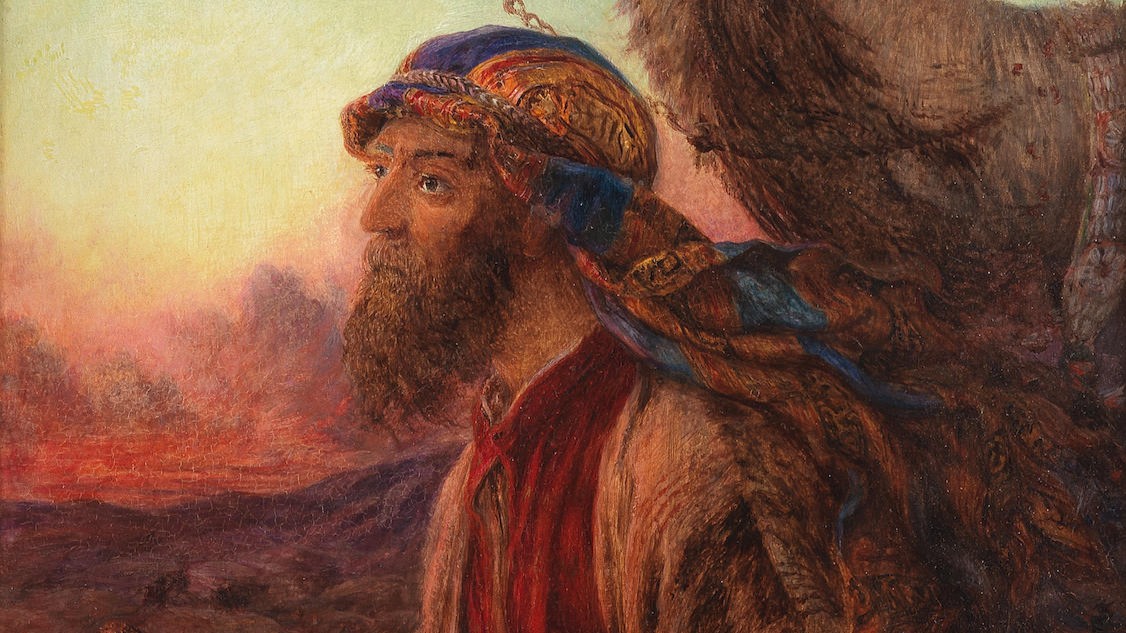
Image credit: “The Homeward Journey” by William James Webbe, 1869.
