1 Kings 1
BibleHub
1 KingI DavidII was oldIII and advancedIV
Notes on verse 1a
I “King” = melek. From malak (to be or become king or queen, to rise to the throne, to be crowned; by implication, to take counsel). This is king or royal.
II “David” = David. From the same as dod (beloved, love, uncle); the root may mean to boil, which is used figuratively to describe love. So, this implies someone you love such as a friend, a lover, or a close family member like an uncle. David’s name likely means something like “beloved one.”
III “was old” = zaqen. From the same as zaqan (beard or chin – the beard represents old age). This is to be old or grow old.
IV “advanced” = bo. This is to enter, come in, advance, fulfill, bring offerings, enter to worship, attack. It can also have a sexual connotation.
in years,V and although they coveredVI him with clothes,VII he could not get warm.VIII
Notes on verse 1b
V “years” = yom. Root may mean being hot. This is the day in a literal or figurative sense. It can also mean birth, age, daylight, continually or other references to time.
VI “covered” = kasah. This is to cover, conceal, overwhelm. It is to cover as clothes do or to hide a secret.
VII “clothes” = beged. From bagad (to cover or conceal; figuratively, to act in a covert or treacherous way, to transgress or pillage). This is clothing, garment, robe, or some other kind of clothing. Figuratively, it can be treachery or pillaging.
VIII “get warm” = yacham. 10x in OT. This is to be hot, mate. It is figuratively, to conceive.
2 So his servantsIX saidX to him, “Let a youngXI virginXII
Notes on verse 2a
IX “servants” = ebed. From abad (to work, serve, compel; any kind of work; used causatively, can mean to enslave or keep in bondage). This is a servant, slave, or bondservant.
X “said” = amar. This is to speak, say, answer, command, promise, report.
XI “young” = naarah. From naar (child or a servant; a child in their active years so they could be aged anywhere from infancy to adolescence); perhaps from naar (to shake, toss up and down, tumble around). This is a girl or young lady ranging anywhere in age from infancy to adolescence.
XII “virgin” = betulah. This is virgin, maiden, or bride. Can also be used figuratively for a place.
be soughtXIII for my lordXIV the king, and let her waitXV onXVI the king and beXVII his attendant;XVIII
Notes on verse 2b
XIII “sought” = baqash. This is to seek, ask, desire, or request. It can be any kind of searching. It can also mean to worship or pray – implies a striving for.
XIV “lord” = adon. From a root that means ruling or being sovereign. This is lord, master, or owner.
XV “wait” = amad. This is to stand up in a literal or figurative sense. So it can be establish, continue, endure, take a stand, act, be a servant, stand still, remain, stand against an enemy.
XVI “on” = paneh. From panah (to turn, face, appear). This is face in a literal or figurative sense. It could be face, presence, anger, respect. It can also be used of God to indicate divine favor or presence.
XVII “be” = hayah. This is to be or become, to happen.
XVIII “attendant” = sakan. 12x in OT. This is being customary, of use, of acquainted with.
let her lieXIX in your bosom,XX so that my lord the king may be warm.”XXI
3 So they searched for a beautifulXXII young womanXXIII
Notes on verses 2c-3a
XIX “lie” = shakab. This is to lie down, lodge. It is lying for sleep, sex, or other reasons.
XX “bosom” = cheq. Root may mean to enclose. This is bosom in a literal or figurative sense. So, this could be arms, lap, or midst. It can also be care or cherish.
XXI “be warm” = chamam. 13x in OT. This is to be warm, heat. It is to be hot in a literal or figurative sense. It can also mean to mate or lust after.
XXII “beautiful” = yapheh. From yaphah (to be beautiful, decorate; root means being bright, which implies being beautiful). This is beautiful in a literal or figurative sense – appropriate, handsome, godly, pleasant.
XXIII “young woman” = naarah. Same as “young” in v2. See note XI above.
throughout allXXIV the territoryXXV of IsraelXXVI and foundXXVII
Notes on verse 3b
XXIV “all” = kol. From kalal (to complete). This is all or every.
XXV “territory” = gebul. Perhaps from gabal (to border, twist like rope). This is boundary, limit, coast, space. Properly, it is a line that is twisted, which implies a boundary and, by extension, the boundaries of a territory or other enclosed space.
XXVI “Israel” = Yisrael. From sarah (to persist, exert oneself, contend, persevere, wrestle, prevail) + El (God or god). This is Israel, meaning God strives or one who strives with God; new name for Jacob and for his offspring. This refers to the people and to the land.
XXVII “found” = matsa. This is to find, catch or acquire. It can also mean to come forth or appear. Figuratively, this can mean to meet or be together with.
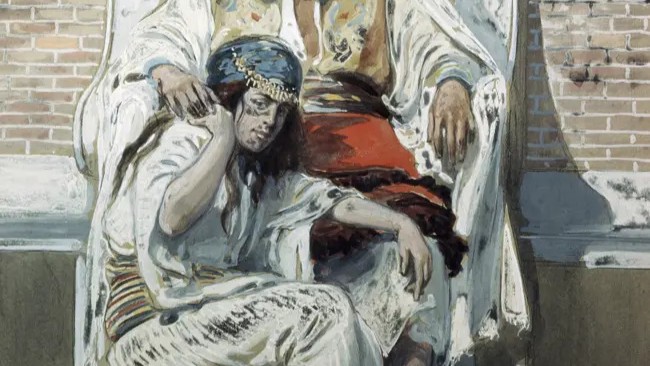
AbishagXXVIII the ShunammiteXXIX and broughtXXX her to the king.
Notes on verse 3c
XXVIII “Abishag” = Abishag. 5x in OT. From ab (father, ancestor, grandfather; father in a literal or figurative sense) + shagah (to go astray, wander, mislead, sin; to reel as if drunk; figuratively being enraptured). This is Abishag, meaning “my father is a wanderer” or “father of error.”
XXIX “Shunammite” = Shunammit. 8x in OT. From Shunem (Shunem, a city meaning “uneven” or “two resting places” or “quietly”); probably from the same as Shuni (Shuni, a name; root may mean to rest or to quiet); from sha’an (be quiet, relaxed, not disturbed) or from shanan (to sharpen by breaking apart as when one sharpens a blade; to point or pierce; fig. increasing mental astuteness, teach) or from shana (to change, repeat). This is a female resident of Shunam. See https://www.abarim-publications.com/Meaning/Shunem.html
XXX “brought” = bo. Same as “advanced” in v1. See note IV above.
4 The young woman was veryXXXI beautiful. She becameXXXII the king’s attendant and servedXXXIII him, but the king did not know her sexually.XXXIV
Notes on verse 4
XXXI “very” = meod. Perhaps from the same as uwd (firebrand, a poker). This is very, greatly, exceedingly. It can also mean vehemence, force, abundance.
XXXII “became” = hayah. Same as “be” in v2. See note XVII above.
XXXIII “served” = sharat. This is ministering, serving, or waiting on. It can refer to one offering service as a worshipper or one serving as a servant.
XXXIV “know…sexually” = yada. This is to know, acknowledge, advise, answer, be aware, be acquainted with. Properly, this is to figure something out by seeing. It includes ideas of observation, recognition, and care about something. It can be used causatively for instruction, designation, and punishment.
5 Now AdonijahXXXV sonXXXVI of HaggithXXXVII
Notes on verse 5a
XXXV “Adonijah” = Adoniyyahu. Related to “lord” in v2 & to “be” in v2. From adon (see note XIV above) + Yah (the shortened form of the name of the God of Israel; God, Lord); {from YHVH (proper name of the God of Israel; God, Lord; the self-existent or eternal one); from havah (to become) or hayah (see note XVII above)}. This is Adonijah or Adoniyyahu, meaning “my Lord is the Lord” or “worshipper of the Lord.”
XXXVI “son” = ben. From banah (to build or obtain children). This is son, age, child. It is son in a literal or figurative sense.
XXXVII “Haggith” = Chaggith. 5x in OT. From Chaggi (Haggi or Chaggi, meaning “festal” “exultation,” or “festive”); from chag (a feast, a sacrifice as part of a festival, or the gathering of the festival); from chagag (feast, celebrating a festival, making a pilgrimage; properly, going in a circle or marching in sacred procession; implies giddiness and dancing; reeling to and fro). This is Haggith or Chaggith, meaning “festal” or “festive.” See https://www.abarim-publications.com/Meaning/Haggi.html
exaltedXXXVIII himself, saying, “I will be king.”XXXIX He preparedXL for himself chariotsXLI and horsemen,XLII
Notes on verse 5b
XXXVIII “exalted” = nasa. This is to lift in a broad sense, literally and figuratively. So it could be to carry, take, or arise. It could also be bring forth, advance, accept.
XXXIX “be king” = malak. Related to “King” in v1. See note I above.
XL “prepared” = asah. This is to make, do, act, appoint, become in many senses.
XLI “chariots” = rekeb. From rakab (to ride an animal or in some vehicle; also, bringing on a horse). This is a vehicle, wagon, or chariot. It can be cavalry or an individual rider.
XLII “horsemen” = parash. From parash (to make distinct, separate, scatter). This is a horseman or a horse. It doesn’t refer to riding horseback, but with some kind of vehicle, a chariot-driver, cavalry.
and fiftyXLIII menXLIV to runXLV beforeXLVI him.
Notes on verse 5c
XLIII “fifty” = chamishshim. From chamesh (five, fifth). This is fifty.
XLIV “men” = ish. Perhaps from enosh (human, humankind, mortal); from anash (to be weak, sick, or frail). This is man, husband, another, or humankind.
XLV “run” = ruts. This is to run or rush, divide quickly, bring swiftly. It can also refer to a footman or guard.
XLVI “before” = paneh. Same as “on” in v2. See note XVI above.
6 His fatherXLVII had never at any timeXLVIII reprimandedXLIX him by asking,L “WhyLI have you doneLII thus and so?”
Notes on verse 6a
XLVII “father” = ab. Related to “Abishag” in v3. See note XXVIII above.
XLVIII “time” = yom. Same as “years” in v1. See note V above.
XLIX “reprimanded” = atsab. 17x in OT– 4x of humanity grieving God including Genesis 6:6 prior to the Flood. This is properly to carve. So it can mean to create or fashion. Figuratively, it means to hurt, grieve, worry, anger, or displease.
L “asking” = amar. Same as “said” in v2. See note X above.
LI “why” = maddua. Related to “know…sexually” in v4. From mah (what, how long) + yada (see note XXXIV above). This is why or how.
LII “done” = asah. Same as “prepared” in v5. See note XL above.
He was alsoLIII a very handsome man,LIV and he was bornLV next afterLVI Absalom.LVII
Notes on verse 6b
LIII “also” = gam. This is also, moreover, again.
LIV “handsome man” = tob + toar. Tob is from tob (to be pleasing, to be good). This is good, beautiful, pleasant, agreeable, bountiful, at ease. This word is used for goodness as a concept, a good thing, a good person. This can refer to prosperity and welfare as well as joy, kindness, sweetness, and graciousness. So, this is ethically good, but also enjoyably good. Toar is 15x in OT. From taar (to incline, extend, mark out). This is an outline and so a form or figure or appearance.
LV “born” = yalad. This is to bear or bring forth. It can mean to act as midwife or to show one’s lineage. This is often used for birth or begetting.
LVI “next after” = achar. From achar (to remain behind, linger, continue, be behind, or delay; can also imply procrastination). This is after or the last part, following.
LVII “Absalom” = Abishalom. Related to “Abishag” in v3 & “father” in v6. From ab (see note XXVIII above) + shalom (completeness, soundness, welfare, favor, friend, good health; to be safe and figuratively well, happy, at peace, friendly; abstractly, includes the ideas of welfare and prosperity – not in excessive wealth, but in having enough); {from shalam (to be complete or sound; to have safety mentally, physically, or extending to one’s estate; so, if these things are safe and complete, the implication is that one would be friendly; and, if being friendly, one would make amends and that friendship would be reciprocated)}. This is Absalom or Abishalom, which means “my father is peace” or “father of peace” or “friendly.”
7 LVIIIHe conferredLIX with JoabLX son of ZeruiahLXI
Notes on verse 7a
LVIII {untranslated} = hayah. Same as “be” in v2. See note XVII above.
LIX “conferred” = dabar. From dabar (to speak, declare, discuss). This is speech, a word, a matter, an affair, charge, command, message, promise, purpose, report, request. It is a word, which implies things that are spoken of in a wide sense.
LX “Joab” = Yoab. Related to “be” in v2 & “Adonijah” in v5 & to “Abishag” in v3 & “father” and “Absalom” in v6. From YHVH (see note XXXV above) + ab (see note XXVIII above). This is Joab or Yoab, meaning “the Lord is father.”
LXI “Zeruiah” = Tseruyah. Related to “be” in v2 & “Adonijah” in v5 & “Joab” in v7. From the same as tsori (root might be to crack as under pressure, to leak; gum from the balsam tree – perhaps commiphora gileadensis) + Yah (see note XXXV above). This is Zeruiah, a name meaning “wounded” or “balsam of the Lord” or “his rock is the Lord.” See https://www.abarim-publications.com/Meaning/Zeruiah.html & https://en.wikipedia.org/wiki/Balsam & https://en.wikipedia.org/wiki/Balm_of_Gilead.
and with the priestLXII Abiathar,LXIII and they supportedLXIV Adonijah.
Notes on verse 7b
LXII “priest” = kohen. This is literally the one who officiates i.e. the priest. This is where the Jewish last name “Cohen” (and its variants) comes from.
LXIII “Abiathar” = Ebyathar. Related to “Abishag” in v3 & “father” and “Absalom” in v6 & “Joab” in v7. From ab (see note XXVIII above) + yathar (to jut over, remain behind, preserve, to excel). This is Abiathar, meaning “the great one is father” or “father of abundance” or “liberal” or “father of a remnant” or “father of preeminence” or “father of plenty.” see https://www.abarim-publications.com/Meaning/Abiathar.html
LXIV “supported” = azar + achar. Azar is to surround, which implies encircling to protect someone or help them out. It can also be help, ally, or support. Achar is the same as “next after” in v6. See note LVI above.
8 But the priest Zadok,LXV and BenaiahLXVI son of Jehoiada,LXVII
Notes on verse 8a
LXV “Zadok” = Tsadoq. From tsadaq (to be just or righteous, do justice); from tsedeq (rightness, righteousness, just cause, vindication; that which is right in a natural, moral, or legal sense; abstractly equity; figuratively prosperity). This is Zadok, a name meaning “just” or “righteous.” See https://www.abarim-publications.com/Meaning/Zadok.html
LXVI “Benaiah” = Benayahu. Related to “son” in v5 & to “be” in v2 & “Adonijah” in v5 & “Joab” and “Zeruiah” in v7. From banah (see note XXXVI above) + Yah (see note XXXV above). This is Benaiah, a name meaning “the Lord has built up;” the name of several Israelites; “the Lord has built;” “built by the Lord;” “son of God.” See https://www.abarim-publications.com/Meaning/Benaiah.html
LXVII “Jehoiada” = Yehoyada. Related to “be” in v2 & “Adonijah” in v5 & “Joab” and “Zeruiah” in v7 & “Benaiah” in v8 & to “know…sexually” in v4 & “why” in v6. From YHVH (see note XXXV above) + yada (see note XXXIV above). This is Jehoiada, a name meaning “the Lord knows” or “Lord-known.”
and the prophetLXVIII Nathan,LXIX and ShammahLXX and his companions,LXXI David’s own warriors,LXXII did not sideLXXIII with Adonijah.
Notes on verse 8b
LXVIII “prophet” = nabi. This is prophet, prophecy, speaker, or someone inspired.
LXIX “Nathan” = Nathan. From natan (to give, put, set, offer; to give literally or figuratively). This is Nathan, meaning “given” or “[God] gives.”
LXX “Shammah” = Shimi. From shama (hear, call, consent, or consider; implies listening intelligently, giving attention; obedience and action are often implied). This is Shmei or Shimeah.
LXXI “companions” = rei. 1x in OT. From rea (associate, companion, friend, neighbor, or other; close family or a lover); from raah (perhaps association with). This is companion. It might also be a name, Rei, which means “social.”
LXXII “warriors” = gibbor. From gabar (to be strong or mighty; to prevail or be insolent). This is strong, mighty, or powerful. This can imply a warrior, hero, or tyrant.
LXXIII “side” = hayah. Same as “be” in v2. See note XVII above.
9 Adonijah sacrificedLXXIV sheep,LXXV oxen,LXXVI and fatted cattleLXXVII by the stoneLXXVIII Zoheleth,LXXIX
Notes on verse 9a
LXXIV “sacrificed” = zabach. This is slaughtering an animal, generally for the purpose of sacrifice. It can mean kill or offer.
LXXV “sheep” = tson. This is a flock of sheep and goats.
LXXVI “oxen” = baqar. From baqar (to plow, break forth; figuratively, to inquire, inspect, consider). This is cattle – an animal used for plowing.
LXXVII “fatted cattle” = meri. 8x in OT. Perhaps from mara (to rebel, flap wings, whip, be filthy). This is a stall-fed cow, a fatling.
LXXVIII “stone” = eben. This is a stone, weight, or mason. It is part of the word “Ebenezer.”
LXXIX “Zoheleth” = Zocheleth. 1x in OT. From zachal (to be afraid, slink back, crawl like a worm). This is Zoheleth, which means “crawling” or “gliding” or “serpent” or maybe “Saturn.” See https://www.abarim-publications.com/Meaning/Zoheleth.html
which is besideLXXX En-rogel,LXXXI and he invitedLXXXII all his brothers,LXXXIII the king’s sons,
Notes on verse 9b
LXXX “beside” = etsel. From atsal (to reserve, refuse, join, separate, keep). This is nearby, toward, joining.
LXXXI “En-rogel” = En rogel. 4x in OT. From Ayin (Ain; a place whose name means “spring” or “fountain”); {from the same as ayin (eye, appearance; eye in a literal or figurative sense; a fountain)} + ragal (to walk along, spy out, slander); {from regel (foot, endurance, or journey; a foot as the means of walking and so it implies a step or a greater journey; can euphemistically mean private parts)}. This is En-rogel, a place whose name means “fountain of a traveler” or “eye and foot” or “fuller’s fountain.” See https://www.abarim-publications.com/Meaning/En-rogel.html
LXXXII “invited” = qara. This is to call or call out – to call someone by name. Also used more broadly for calling forth.
LXXXIII “brothers” = ach. This is brother, kindred, another, other, like. It is literally brother, but it can also be someone who is similar, resembling, or related to.
and all theLXXXIV royalLXXXV officialsLXXXVI of Judah,LXXXVII 10 but he did not invite the prophet Nathan or Benaiah or the warriors or his brother Solomon.LXXXVIII
Notes on verses 9c-10
LXXXIV {untranslated} = ish. Same as “man” in v5. See note XLIV above.
LXXXV “royal” = melek. Same as “King” in v1. See note I above.
LXXXVI “officials” = ebed. Same as “servants” in v2. See note IX above.
LXXXVII “Judah” = Yehudah. Probably from yadah (to throw one’s hands into the air in a gesture of praise); from yad (hand). This is Judah, meaning “praised.”
LXXXVIII “Solomon” = Shelomoh. Related to “Absalom” in v6. From shalam (see note LVII above). This is Solomon or Shelomoh, meaning “peaceful.” It is the same word as the Hebrew word for peace – shalom.
11 Then Nathan said to Bathsheba,LXXXIX Solomon’s mother,XC “Have you not heardXCI that Adonijah son of Haggith has become kingXCII and our lord David does not knowXCIII it?
Notes on verse 11
LXXXIX “Bathsheba” = Bath sheba. Related to “son” in v5 & “Benaiah” in v8. 11x in OT. From bath (daughter in a literal or figurative sense; can also be branch) {from ben (see note XXXVI above)} + perhaps shaba (to swear, curse, vow, make a covenant; properly, to be complete; this is to seven oneself – as in affirming something so strongly it is as though it were said seven times) {perhaps from sheba (seven – the number of perfection/sacred fullness)}. This is Bathsheba, perhaps meaning “daughter of oath.”
XC “mother” = em. This is a mother as binding a family together or a breeding female animal. It could be mother in a literal or figurative sense.
XCI “heard” = shama. Related to “Shammah” in v8. See note LXX above.
XCII “become king” = malak. Same as “be king” in v5. See note XXXIX above.
XCIII “know” = yada. Same as “know…sexually” in v4. See note XXXIV above.
12 Now therefore come,XCIV let me giveXCV, XCVI you advice,XCVII
Notes on verse 12a
XCIV “come” = halak. This is go, come, walk. It is walk literally and figuratively and includes people and animals. It can be used figuratively for one’s moral life – how we walk according to God’s way or against it. It can also refer to the walk of life as in the course one’s life takes, the choices we make, etc.
XCV “give” = yaats. This is to advise, counsel, consult, decide, plan, purpose, or determine. It can also have a negative sense of conspire or devise.
XCVI {untranslated} = na. This particle is used for requests or for urging. It can be we pray, now, I ask you, oh. This is the same “na” in “hosanna.”
XCVII “advice” = etsah. Related to “give” in v12. From yaats (see note XCV above). This is advice, purpose, plan, prudence, or counselor.
so that you may saveXCVIII your own lifeXCIX and the life of your son Solomon. 13 GoC in at onceCI to King David
Notes on verses 12b-13a
XCVIII “save” = malat. This is to be smooth, which implies to escape as slipping away from. It can also be release, rescue, deliver, or preserve. It can be used specifically to meaning giving birth or making sparks.
XCIX “life” = nephesh. Related to naphash (to refresh or be refreshed). This is soul, self, person, emotion. It is a breathing creature. Can also refer to appetites and desires.
C “go” = halak. Same as “come” in v12. See note XCIV above.
CI “at once” = bo. Same as “advanced” in v1. See note IV above.
and say to him, ‘Did you not, my lord the king, swearCII to your servant,CIII saying, “Your son Solomon shall succeed me as king,CIV and he shall sitCV on my throne?CVI Why then is Adonijah king?”’
Notes on verse 13b
CII “swear” = shaba. Related to “Bathsheba” in v11. See note LXXXIX above.
CIII “servant” = amah. This is female servant or slave, handmaid.
CIV “succeed…as king” = malak + achar. Malak is the same as “be king” in v5. See note XXXIX above. Achar is the same as “next after” in v6. See note LVI above.
CV “sit” = yashab. This is to sit and so to remain and so to dwell. It is sitting for any reason – as a judge, in order to ambush, or just sitting quietly. Causatively, this can mean settling or marrying. This can also mean continue, endure, or establish.
CVI “throne” = kisse. Related to “covered” in v1. From the same as kese (full moon); perhaps from kasah (see note VI above). This is throne – a seat that is covered or has a canopy. Thus, it is a seat that conveys authority.
14 ThenCVII while you are still there speakingCVIII with the king, I will come inCIX afterCX you and confirmCXI your words.”CXII
Notes on verse 14
CVII “then” = hinneh. From hen (lo! Behold! If, though; an expression of surprise). This is to draw attention, show suddenness or surprise, or to emphasize the importance of the coming statement. See! Lo! Behold!
CVIII “speaking” = dabar. Related to “conferred” in v7. See note LIX above.
CIX “come in” = bo. Same as “advanced” in v1. See note IV above.
CX “after” = achar. Same as “next after” in v6. See note LVI above.
CXI “confirm” = male. This is fill, satisfy, replenish, accomplish, fulfill, confirm, or consecrate. It is fill in a literal or figurative sense.
CXII “words” = dabar. Same as “conferred” in v7. See note LIX above.
15 So Bathsheba wentCXIII to the king in his room.CXIV The king was very old; Abishag the Shunammite was attendingCXV the king. 16 Bathsheba bowedCXVI and did obeisanceCXVII to the king, and the king said, “What do you wish?”
Notes on verses 15-16
CXIII “went” = bo. Same as “advanced” in v1. See note IV above.
CXIV “room” = cheder. From chadar (to surround or enclose; a room as enclosed; also, by analogy, besieging). This is a chamber or room that is private. Can mean the innermost chamber of a house.
CXV “attending” = sharat. Same as “served” in v4. See note XXXIII above.
CXVI “bowed” = qadad. 15x in OT. Properly, this means to shrivel up. So it is used for bowing one’s head, bowing down, or stooping. It can be used to show deference.
CXVII “did obeisance” = shachah. This is to bow down, make a humble entreaty, to do homage to royalty or to God.
17 She said to him, “My lord, you swore to your servantCXVIII by the LordCXIX your God,CXX saying, ‘Your son Solomon shall succeed me as king, and he shall sit on my throne.’
18 But now suddenlyCXXI Adonijah has become king, though you, my lordCXXII the king, do not know it.
Notes on verses 17-18
CXVIII “servant” = amah. Same as “servant” in v13. See note CIII above.
CXIX “Lord” = YHVH. Related to “be” in v2 & “Adonijah” in v5 & “Joab” and “Zeruiah” in v7 & “Benaiah” and “Jehoiada” in v8. See note XXXV above.
CXX “God” = Elohim. Related to “Israel” in v3. See note XXVI above.
CXXI “suddenly” = hinneh. Same as “then” in v14. See note CVII above.
CXXII “lord” = adon. Same as “lord” in v2. See note XIV above.
19 He has sacrificed oxen,CXXIII fatted cattle, and sheep in abundanceCXXIV and has invited all the childrenCXXV of the king, the priest Abiathar, and Joab the commanderCXXVI of the army,CXXVII but your servantCXXVIII Solomon he has not invited.
Notes on verse 19
CXXIII “oxen” = shor. Perhaps from shur (to travel, turn, journey; travelling like a prostitute or a merchant). This is bull, ox, head of cattle, cow.
CXXIV “abundance” = rob. From rabab (to be or become much or many, multiply). This is any kind of abundance.
CXXV “children” = ben. Same as “son” in v5. See note XXXVI above.
CXXVI “commander” = sar. This is chief, leader, ruler, lord, official, governor, prince, military leader. It refers to someone at the top of a rank or class.
CXXVII “army” = tsaba. From tsaba (to wage war, serve, assemble, fight, perform, muster, wait on). This is a large group of persons (used figuratively for a group of things). It implies a campaign literally as with army, war, warfare, battle, company, soldiers. Can also be used figuratively for hardship or for worship.
CXXVIII “servant” = ebed. Same as “servants” in v2. See note IX above.
20 But you, my lordCXXIX the king, the eyesCXXX of all Israel are on you to tellCXXXI them who shall sit on the throne of my lordCXXXII the king after him. 21 Otherwise it will come to pass,CXXXIII
Notes on verses 20-21a
CXXIX “lord” = adon. Same as “lord” in v2. See note XIV above.
CXXX “eyes” = ayin. Related to “En-rogel” in v9. See note LXXXI above.
CXXI “tell” = nagad. This is to declare, make conspicuous, stand in front, manifest, predict, explain.
CXXXII “lord” = adon. Same as “lord” in v2. See note XIV above.
CXXXIII “come to pass” = hayah. Same as “be” in v2. See note XVII above.
when my lordCXXXIV the king sleepsCXXXV with his ancestors,CXXXVI that my son Solomon and I will be countedCXXXVII offenders.”CXXXVIII
Notes on verse 21b
CXXXIV “lord” = adon. Same as “lord” in v2. See note XIV above.
CXXXV “sleeps” = shakab. Same as “lie” in v2. See note XIX above.
CXXXVI “ancestors” = ab. Same as “father” in v6. See note XLVII above.
CXXXVII “counted” = hayah. Same as “be” in v2. See note XVII above.
CXXXVIII “offenders” = chatta. 19x in OT. From chata (to miss, sin, carry blame, lack). This is sinful or sinner. It is a criminal or someone who is seen as guilty.
22 CXXXIXWhile she was still speaking with the king, the prophet Nathan came in.CXL 23 The king was told,CXLI “HereCXLII is the prophet Nathan.”
Notes on verses 22-23a
CXXXIX {untranslated} = hinneh. Same as “then” in v14. See note CVII above.
CXL “came in” = bo. Same as “advanced” in v1. See note IV above.
CXLI {untranslated} = amar. Same as “said” in v2. See note X above.
CXLII “here” = hinneh. Same as “then” in v14. See note CVII above.
When he came inCXLIII beforeCXLIV the king, he did obeisance to the king, with his faceCXLV to the ground.CXLVI
Notes on verse 23b
CXLIII “came in” = bo. Same as “advanced” in v1. See note IV above.
CXLIV “before” = paneh. Same as “on” in v2. See note XVI above.
CXLV “face” = aph. From anaph (to be angry; properly, breathing hard as a signifier of being enraged). This properly refers to the nose or nostril and by extension the face. It can specifically refer to anger or wrath as one breathes hard and nostrils flare in times of great anger.
CXLVI “ground” = erets. Root may mean to be firm. This is earth, ground, field land, or country.
24 Nathan said, “My lordCXLVII the king, have you said, ‘Adonijah shall succeed me as king, and he shall sit on my throne’? 25 For todayCXLVIII he has gone downCXLIX and has sacrificed oxen,CL fatted cattle, and sheep in abundance and has invited all the king’s children, Joab the commander of the army,
Notes on verses 24-25a
CXLVII “lord” = adon. Same as “lord” in v2. See note XIV above.
CXLVIII “today” = yom. Same as “years” in v1. See note V above.
CXLIX “gone down” = yarad. This is to go down, descend; going down in a literal or figurative sense. It can be going to the shore or a boundary, bringing down an enemy.
CL “oxen” = shor. Same as “oxen” in v19. See note CXXIII above.
and the priest Abiathar, who are nowCLI eatingCLII and drinkingCLIII beforeCLIV him, and saying, ‘Long liveCLV King Adonijah!’
Notes on verse 25b
CLI “now” = hinneh. Same as “then” in v14. See note CVII above.
CLII “eating” = akal. This is to eat, devour, burn up, or otherwise consume. It can be eating in a literal or figurative sense.
CLIII “drinking” = shathah. This is to drink literally or figuratively. It could also be a drinker.
CLIV “before” = paneh. Same as “on” in v2. See note XVI above.
CLV “live” = chayah. This is to live or keep alive in a literal or figurative sense. So, it can be revive, nourish, or save.
26 But he did not invite me, your servant,CLVI and the priest Zadok, and Benaiah son of Jehoiada, and your servantCLVII Solomon. 27 Has this thingCLVIII been brought aboutCLIX by my lordCLX the king and you have not let your servantsCLXI know who should sit on the throne of my lordCLXII the king after him?”
Notes on verses 26-27
CLVI “servant” = ebed. Same as “servants” in v2. See note IX above.
CLVII “servant” = ebed. Same as “servants” in v2. See note IX above.
CLVIII “thing” = dabar. Same as “conferred” in v7. See note LIX above.
CLIX “brought about” = hayah. Same as “be” in v2. See note XVII above.
CLX “lord” = adon. Same as “lord” in v2. See note XIV above.
CLXI “servants” = ebed. Same as “servants” in v2. See note IX above.
CLXII “lord” = adon. Same as “lord” in v2. See note XIV above.
28 King David answered,CLXIII, CLXIV “SummonCLXV Bathsheba to me.”
So she came intoCLXVI the king’s presenceCLXVII and stoodCLXVIII beforeCLXIX the king.
Notes on verse 28
CLXIII “answered” = anah. This is answer, respond, announce, sing, shout, or testify. It means to pay attention, which implies responding and, by extension, starting to talk. Used in a specific sense for singing, shouting, testifying, etc.
CLXIV {untranslated} = amar. Same as “said” in v2. See note X above.
CLXV “summon” = qara. Same as “invited” in v9. See note LXXXII above.
CLXVI “came into” = bo. Same as “advanced” in v1. See note IV above.
CLXVII “presence” = paneh. Same as “on” in v2. See note XVI above.
CLXVIII “stood” = amad. Same as “wait” in v2. See note XV above.
CLXIX “before” = paneh. Same as “on” in v2. See note XVI above.
29 The king swore, saying, “As the LordCLXX lives,CLXXI who has savedCLXXII my lifeCLXXIII from everyCLXXIV adversity,CLXXV
Notes on verse 29
CLXX “Lord” = YHVH. Same as “Lord” inv17. See note CXIX above.
CLXXI “lives” = chay. Related to “live” in v25. From chayah (see note CLV above). This is alive, living, lifetime. It can also be used to describe someone’s age. It can refer to animals, plants, water, or a company or congregation of people. It is life in a very broad sense.
CLXXII “saved” = padah. This is to sever, which is to say to ransom. To secure someone’s release (by paying their debt to free them from slavery) and thus redeem, rescue, deliver, preserve. Can also be the redemption price.
CLXXIII “life” = nephesh. Same as “life” in v12. See note XCIX above.
CLXXIV “every” = kol. Same as “all” in v3. See note XXIV above.
CLXXV “adversity” = tsarah. From tsar (properly, a narrow or constricted place; figuratively, trouble, a pebble, an enemy, anguish, or distress); from tsarar (to bind, restrict, narrow, be cramped, an adversary). This is tightness, distress, affliction, trouble, or adversary.
30 as I swore to you by the Lord,CLXXVI the God of Israel,CLXXVII ‘Your son Solomon shall succeed me as king, and he shall sit on my throne in my place,’CLXXVIII soCLXXIX will I do this day.”CLXXX
Notes on verse 30
CLXXVI “Lord” = YHVH. Same as “Lord” inv17. See note CXIX above.
CLXXVII {untranslated} = amar. Same as “said” in v2. See note X above.
CLXXVIII “in…place” = tachat. This is underneath, below, the bottom, instead of.
CLXXIX “so” = ken. Perhaps from kun (properly, in a perpendicular position; literally, to establish, fix, fasten, prepare; figuratively, it is certainty, to be firm, faithfulness, render sure or prosperous). This is to set upright. Generally used figuratively to mean thus, so, afterwards, rightly so.
CLXXX “day” = yom. Same as “years” in v1. See note V above.
31 Then Bathsheba bowed with her face to the ground and did obeisance to the king and said, “May my lordCLXXXI King David liveCLXXXII forever!”CLXXXIII
32 King David said, “Summon to me the priest Zadok, the prophet Nathan, and Benaiah son of Jehoiada.”
When they cameCLXXXIV beforeCLXXXV the king, 33 the king said to them, “TakeCLXXXVI with you the servantsCLXXXVII
Notes on verses 31-33a
CLXXXI “lord” = adon. Same as “lord” in v2. See note XIV above.
CLXXXII “live” = chayah. Same as “live” in v25. See note CLV above.
CLXXXIII “forever” = olam. This is a long scope of time whether in the past (antiquity, ancient time) or in the future (eternal, everlasting).
CLXXXIV “came” = bo. Same as “advanced” in v1. See note IV above.
CLXXXV “before” = paneh. Same as “on” in v2. See note XVI above.
CLXXXVI “take” = laqach. This is to take, accept, carry away, receive. It can also have the sense of take a wife or take in marriage.
CLXXXVII “servants” = ebed. Same as “servants” in v2. See note IX above.
of your lordCLXXXVIII and have my son Solomon rideCLXXXIX on my own muleCXC and bring him downCXCI to Gihon.CXCII
Notes on verse 33b
CLXXXVIII “lord” = adon. Same as “lord” in v2. See note XIV above.
CLXXXIX “ride” = rakab. Related to “chariots” in v5. See note XLI above.
CXC “mule” = pirdah. 3x in OT – all in 1 Kings 1. From the same as pered (a mule – perhaps as a lonely creature); perhaps from parad (to divide, break through, scatter, sever, stretch, to spread oneself, or to be out of joint). This is a female mule.
CXCI “bring…down” = yarad. Same as “gone down” in v25. See note CXLIX above.
CXCII “Gihon” = Gichon. 6x in OT. From giach (to break forth like water bursting out, to rush, give birth). This is Gihon or Gichon, perhaps meaning “a bursting forth” or “stream.” It is also the name of a spring close to Jerusalem.
34 There let the priest Zadok and the prophet Nathan anointCXCIII him king over Israel; then blowCXCIV the trumpetCXCV and say, ‘Long liveCXCVI King Solomon!’
Notes on verse 34
CXCIII “anoint” = mashach. This is smear, paint, spread, or paint. It can also be to rub with oil or, otherwise stated, to anoint. This implies a consecration. This root verb is where the word “messiah” comes from.
CXCIV “blow” = taqa. This is to clap, clatter, thrust, sound an instrument, hammer a nail, be a bondsman.
CXCV “trumpet” = shophar. From shaphar (being beautiful or lovely). This is a ram’s horn, trumpet, or cornet. A shofar is still blown at Jewish festivals such as Rosh Hashanah (the Jewish new year celebration).
CXCVI “live” = chayah. Same as “live” in v25. See note CLV above.
35 You shall go upCXCVII followingCXCVIII him. Let him enterCXCIX and sit on my throne; he shall be king in my place, for I have appointedCC him to be rulerCCI over Israel and over Judah.”
Notes on verse 35
CXCVII “go up” = alah. This is to go up, approach, ascend, be high, be a priority; to arise in a literal or figurative sense.
CXCVIII “following” = achar. Same as “next after” in v6. See note LVI above.
CXCIX “enter” = bo. Same as “advanced” in v1. See note IV above.
CC “appointed” = tsavah. This is to charge, command, order, appoint, or enjoin. This is the root that the Hebrew word for “commandment” comes from (mitsvah).
CCI “ruler” = nagid. Related to “tell” in v20. From nagad (see note CXXXI above). This is a commander or leader as the one who stands at the front, whether in a military, religious, or civic setting. It can also mean honorable or noble in an abstract sense.
36 Benaiah son of Jehoiada answered the king,CCII “Amen!CCIII May the Lord,CCIV the God of my lordCCV the king, so ordain.CCVI
Notes on verse 36
CCII {untranslated} = amar. Same as “said” in v2. See note X above.
CCIII “amen” = amen. From aman (to believe, endure, fulfill, confirm, support, be faithful, put one’s trust in, be steadfast. Figuratively, this is to be firm, steadfast, or faithful, trusting, believing, being permanent, morally solid). This word is literally firmness, but figuratively fidelity, faithfulness, honesty, responsibility, trust, truth, steadfastness. Properly, it is to be sure, certain, or firm. This is a word of emphasis indicating that something crucial follows.
CCIV “Lord” = YHVH. Same as “Lord” inv17. See note CXIX above.
CCV “lord” = adon. Same as “lord” in v2. See note XIV above.
CCVI “ordain” = amar. Same as “said” in v2. See note X above.
37 As the LordCCVII has been with my lordCCVIII the king, so may he be with Solomon and make his throne greaterCCIX than the throne of my lordCCX King David.”
Notes on verse 37
CCVII “Lord” = YHVH. Same as “Lord” inv17. See note CXIX above.
CCVIII “lord” = adon. Same as “lord” in v2. See note XIV above.
CCIX “make…greater” = gadal. This is to grow up, become great, become wealthy – to advance. The root meaning may be to twist in the sense of the process of growing.
CCX “lord” = adon. Same as “lord” in v2. See note XIV above.
38 So the priest Zadok, the prophet Nathan, Benaiah son of Jehoiada, and the CherethitesCCXI and the PelethitesCCXII went down and had Solomon ride on King David’s mule and ledCCXIII him to Gihon.
Notes on verse 38
CCXI “Cherethites” = Kari. 4x in OT. From karah (to make a banquet, prepare) OR perhaps from kar (a ram, battering ram, lamb, pasture for sheep, camel’s saddle, furniture); {from karar (to dance, whirl)}. This is Kari, Carites, or captains. It is one who leads a flock. It may also mean “professional soldier.” See https://www.abarim-publications.com/Meaning/Carites.html
CCXII “Pelethites” = Pelethi. 7x in OT – 4x in 2 Samuel & 2x in 1 Kings & 1x in 1 Chronicles. From the same as Peleth (Peleth, which may come from a word that means fleeing). This is Pelethites, which may refer to soldiers, couriers, or messengers of the king. It may mean “special forces” or “refugees.” See https://www.abarim-publications.com/Meaning/Pelethites.html
CCXIII “led” = halak. Same as “come” in v12. See note XCIV above.
39 There the priest Zadok took the hornCCXIV of oilCCXV from the tentCCXVI and anointed Solomon.
Then they blew the trumpet, and all the peopleCCXVII said, “Long liveCCXVIII King Solomon!”
Notes on verse 39
CCXIV “horn” = qeren. This is horn or hill. It can be a flask or cornet, ivory, altar corner, mountain peak, or figuratively power.
CCXV “oil” = shemen. From shamen (to shine, which implies being oily, growing fat). This is fat, oil, grease, olive oil – often with perfume. Used figuratively for fertile, lavish, rich.
CCXVI “tent” = ohel. Perhaps from ahal (to shine, be clear). This is a tent, covering, home, or side pillar.
CCXXVII “people” = am. From amam (to darken, hide, associate; creating shadows by huddling together). This is people or nation. It can be used specifically for a tribe, collectively of troops or armies, or figuratively to refer to a flock of animals.
CCXXVIII “live” = chayah. Same as “live” in v25. See note CLV above.
40 And all the people went up following him, CCXIXplayingCCXX on pipesCCXXI and rejoicingCCXXII
Notes on verse 40a
CCXIX {untranslated} = am. Same as “people” in v39. See note CCXVII above.
CCXX “playing” = chalal. This is to pierce, which implies to wound. It is used figuratively for making someone or something profane or breaking your word. It can also mean to begin as though one opened a wedge. Also, to eat something as a common thing.
CCXXI “pipes” = chalil. Related to “playing” in v40. 6x in OT. From chalal (see note CCXX above). This is a flute or pipe.
CCXXII “rejoicing” = sameach. From samach (to rejoice, be glad; properly, to brighten up; also used figuratively). This is glad or joyful.
with greatCCXXIII joy,CCXXIV so that the earthCCXXV quakedCCXXVI at their noise.CCXXVII
Notes on verse 40b
CCXXIII “great” = gadol. Related to “make…greater” in v37. From gadal (see note CCIX above). This is great, high, bigger, noble, old, marvelous. It can also refer to someone who is powerful or distinguished.
CCXXIV “joy” = simchah. Related to “rejoicing” in v40. From samach (see note CCXXII above). This is joy, rejoicing, pleasure, or glee.
CCXXV “earth” = erets. Same as “ground” in v23. See note CXLVI above.
CCXXVI “quaked” = baqa. This is to break open, breach, divide, rip, shake, tear. It can also mean dash into pieces or being ready to burst.
CCXXVII “noise” = qol. This is a sound, used often for human voices. Also used when God speaks or angels, animals or instruments. It can be a cry or a noise, thunder or earthquakes and so on.
41 Adonijah and all the guestsCCXXVIII who were with him heard it as they finishedCCXXIX feasting.CCXXX
When Joab heard the soundCCXXXI of the trumpet, he said, “Why isCCXXXII the cityCCXXXIII in an uproar?”CCXXXIV
Notes on verse 41
CCXXVIII “guests” = qara. Same as “invited” in v9. See note LXXXII above.
CCXXIX “finished” = kalah. This is to end, be finished, complete, prepare, consume, spent, or completely destroyed.
CCXXX “feasting” = akal. Same as “eating” in v25. See note CLII above.
CCXXXI “sound” = qol. Same as “noise” in v40. See note CCXXVII above.
CCXXXII “is” = hamah. This is to growl or roar, be disturbed, mourn, yearn. It is being noisy so it can imply tumult, rage, war.
CCXXXIII “city” = qiryah. From qarah (to happen, meet, bring about). This is a place where there are buildings so it could be a fortress or a town.
CCXXXIV “uproar” = qol. Same as “noise” in v40. See note CCXXVII above.
42 While he was still speaking,CCXXXV JonathanCCXXXVI son of the priest Abiathar arrived.CCXXXVII
Notes on verse 42a
CCXXXV {untranslated} = hinneh. Same as “then” in v14. See note CVII above.
CCXXXVI “Jonathan” = Yonathan. Related to “be” in v2 & “Adonijah” in v5 & “Joab” and “Zeruiah” in v7 & “Benaiah” and “Jehoiada” in v8 & “Lord” in v17 & to “Nathan” in v8. From YHVH (see note XXXV above) + natan (see note LXIX above). This is Jonathan or Jehonathan, meaning “the Lord has given.”
CCXXXVII “arrived” = bo. Same as “advanced” in v1. See note IV above.
Adonijah said, “Come in,CCXXXVIII for you are a worthyCCXXXIX man and surely you bring goodCCXL news.”CCXLI
Notes on verse 42b
CCXXXVIII “come in” = bo. Same as “advanced” in v1. See note IV above.
CCXXXIX “worthy” = chayil. From chul (to be firm, strong, prosperous; to endure). This is strength, wealth, ability, activity. It can refer to soldier or a company of soldiers as well as goods. It is a force of people, means, or goods. It can speak of valor, virtue, or strength.
CCXL “good” = tob. Same as “handsome” in v6. See note LIV above.
CCXLI “bring…news” = basar. This is being a messenger, to publish, carry, or preach. Properly, this is being fresh, rosy or cheerful as one bearing news.
43 Jonathan answered Adonijah,CCXLII “No,CCXLIII for our lordCCXLIV King David has made Solomon king;CCXLV 44 the king has sentCCXLVI with him the priest Zadok, the prophet Nathan, Benaiah son of Jehoiada, and the CherethitesCCXLVII and the Pelethites, and they had him ride on the king’s mule;
Notes on verses 43-44
CCXLII {untranslated} = amar. Same as “said” in v2. See note X above.
CCXLIII “no” = abal. 11x in OT. Perhaps from abal (to mourn, bewail). This is truly, indeed, but.
CCXLIV “lord” = adon. Same as “lord” in v2. See note XIV above.
CCXLV “made…king” = malak. Same as “be king” in v5. See note XXXIX above.
CCXLVI “sent” = shalach. This is to send out, away, send for, forsake. It can also mean to divorce or set a slave free.
CCXLVII “Cherethites” = Kerethi. Related to “Cherethites” in v38. 8x in OT. From Kari (see note CCXI above). This is another word for Cherethites.
45 the priest Zadok and the prophet Nathan have anointed him king at Gihon, and they have gone up from there rejoicing, so that the city is in an uproar.CCXLVIII This is the noise that you heard. 46 Solomon nowCCXLIX sits on the royalCCL throne. 47 Moreover,CCLI the king’s servantsCCLII cameCCLIII
Notes on verses 45-47a
CCXLVIII “is in an uproar” = hum. 5x in OT. This is to roar, murmur, cause an uproar, agitate, be distraught. It is to defeat in battle, destroy.
CCXLIX “now” = gam. Same as “also” in v6. See note LIII above.
CCL “royal” = melukah. Related to “King” in v1 & “be king” in v5. From the same as melek (see note I above). This is kingship, kingdom, reign. It can also mean royalty.
CCLI “moreover” = gam. Same as “also” in v6. See note LIII above.
CCLII “servants” = ebed. Same as “servants” in v2. See note IX above.
CCLIII “came” = bo. Same as “advanced” in v1. See note IV above.
to congratulateCCLIV our lordCCLV King David, saying, ‘May God make the nameCCLVI of Solomon
Notes on verse 47b
CCLIV “congratulate” = barak. This is to kneel, to bless. It is blessing God as part of worship and adoration or blessing humans to help them. It can be used as a euphemism to say curse God.
CCLV “lord” = adon. Same as “lord” in v2. See note XIV above.
CCLVI “name” = shem. May be from sum (to put, place, set). This is name, fame, renown. A name was thought to indicate something essential about a person – something about their individuality. So, this word can also mean honor, authority, or character.
more famousCCLVII than yoursCCLVIII and make his throne greater than your throne.’ The king bowed in worshipCCLIX on the bedCCLX
Notes on verse 47c
CCLVII “make…more famous” = yatab. This is to be good or pleasing, joyful. It can also mean doing good in an ethical sense or be beautiful, happy, successful, or right.
CCLVIII {untranslated} = shem. Same as “name” in v47. See note CCLVI above.
CCLIX “bowed in worship” = shachah. Same as “did obeisance” in v16. See note CXVII above.
CCLX “bed” = mishkab. Related to “lie” in v2. From shakab (see note XIX above). This is a place where one lies down i.e. a bed, couch, or bedchamber. It can also be used in an abstract sense to refer to sleep or euphemistically for sex.
48 andCCLXI, CCLXII went on to prayCCLXIII thus, ‘Blessed beCCLXIV the Lord,CCLXV the God of Israel, who today has grantedCCLXVI one of my offspring to sit on my throne and permitted me to witnessCCLXVII it.’”
Notes on verse 48
CCLXI {untranslated} = gam. Same as “also” in v6. See note LIII above.
CCLXII {untranslated} = melek. Same as “King” in v1. See note I above.
CCLXIII “pray” = amar. Same as “said” in v2. See note X above.
CCLXIV “blessed be” = barak. Same as “congratulate” in v47. See note CCLIV above.
CCLXV “Lord” = YHVH. Same as “Lord” inv17. See note CXIX above.
CCLXVI “granted” = natan. Related to “Nathan”’ in v8 & “Jonathan” in v42. See note LXIX above.
CCLXVII “permitted…to witness” = ayin + raah. Ayin is the same as “eyes” in v20. See note CXXX above. Raah is to see in a literal or figurative sense so stare, advise, think, view.
49 Then all the guests of Adonijah got upCCLXVIII tremblingCCLXIX and wentCCLXX theirCCLXXI own ways.CCLXXII
Notes on verse 49
CCLXVIII “got up” = qum. To arise, stand, accomplish, establish, abide. This is rising as in rising against, getting up after being sick or asleep, arising from one state to another, becoming powerful, or rising for action. It can also be standing in a figurative sense.
CCLXIX “trembling” = charad. This is trembling, being afraid, or being terrified. It can also refer to moving quickly due to anxiety.
CCLXX “went” = halak. Same as “come” in v12. See note XCIV above.
CCLXXI “their” = ish. Same as “man” in v5. See note XLIV above.
CCLXXII “ways” = derek. From darak (to tread, march, to walk. Can also mean affixing a string to a box since one needs to step on it to bend it in the process; so also an archer). This is a road as a thing that is walked on. Can be used figuratively for the path that one’s life takes or how one chooses to live one’s life.
50 Adonijah, fearingCCLXXIII, CCLXXIV Solomon, got upCCLXXVI and wentCCLXXVI to graspCCLXXVII the horns of the altar.CCLXXVIII
Notes on verse 50
CCLXXIII “fearing” = yare. This is to fear, be afraid, dreadful. It can also refer to fearful reverence – to fear in a moral sense is to say to revere, respect.
CCLXXIV {untranslated} = paneh. Same as “on” in v2. See note XVI above.
CCLXXV “got up” = qum. Same as “got up” in v49. See note CCLXVIII above.
CCLXXVI “went” = halak. Same as “come” in v12. See note XCIV above.
CCLXXVII “grasp” = chazaq. This is to strengthen, seize, be courageous, repair, bind, heal, conquer, harden.
CCLXXVIII “altar” = mizbeach. Related to “sacrificed” in v9. From zabach (see note LXXIV above). This is an altar.
51 Solomon was informed,CCLXXIX, CCLXXX CCLXXXI“Adonijah is afraidCCLXXXII of King Solomon; see,CCLXXXIII
Notes on verse 51a
CCLXXIX “informed” = nagad. Same as “tell” in v20. See note CXXXI above.
CCLXXX {untranslated} = amar. Same as “said” in v2. See note X above.
CCLXXXI {untranslated} = hinneh. Same as “then” in v14. See note CVII above.
CCLXXXII “is afraid” = yare. Same as “fearing” in v50. See note CCLXXIII above.
CCLXXXIII “see” = hinneh. Same as “then” in v14. See note CVII above.
he has laid holdCCLXXXIV of the horns of the altar, saying, ‘Let King Solomon swear to me firstCCLXXXV that he will not killCCLXXXVI his servantCCLXXXVII with the sword.’”CCLXXXVIII
Notes on verse 51b
CCLXXXIV “laid hold” = achaz. This is to grasp, catch, seize, take and hold in possession. It can also be to be afraid or hold back.
CCLXXXV “first” = yom. Same as “years” in v1. See note V above.
CCLXXXVI “kill” = mut. This is to die in a literal or figurative sense. It can also refer to being a dead body.
CCLXXXVII “servant” = ebed. Same as “servants” in v2. See note IX above.
CCLXXXVIII “sword” = chereb. From charab (to attack, slay). This is any sharp instrument like a sword, dagger, axe, or mattock.
52 So Solomon responded,CCLXXXIX “If he provesCCXC to be a worthy man,CCXCI not one of his hairsCCXCII
Notes on verse 52a
CCLXXXIX “responded” = amar. Same as “said” in v2. See note X above.
CCXC “proves” = hayah. Same as “be” in v2. See note XVII above.
CCXCI “man” = ben. Same as “son” in v5. See note XXXVI above.
CCXCII “hairs” = saarah. 7x in OT. From the same as sear (hair, hairy, rough); perhaps from sa’ar (to storm, scattered by a storm, blow away, rage, storm tossed; this is to toss in a literal or figurative sense). This is hair or hairiness.
shall fallCCXCIII to the ground, but if wickednessCCXCIV is found in him, he shall die.”CCXCV
Notes on verse 52b
CCXCIII “fall” = naphal. This is to fall, whether by accident, to fall prostrate, or to fall in violent death. Figuratively, it can refer to personal ruin or calamity, a city falling, an attack or a falling away. It can also be a deep sleep or wasting away.
CCXCIV “wickedness” = ra’. From ra’a’ (to be evil, bad, afflict; properly, to spoil – to destroy by breaking into pieces; figuratively, to cause something to be worthless; this is bad in a physical, social, or moral sense; that which displeases, to do harm or mischief, to punish or vex). This is bad, disagreeable, that which causes pain, misery, something having little or no value, something that is ethically bad, wicked, injury, calamity. This refers to anything that is not what it ought to be – a natural disaster, a disfigurement, an injury, a sin.
CCXCV “die” = mut. Same as “kill” in v51. See note CCLXXXVI above.
53 Then King Solomon sent to have him brought downCCXCVI from the altar. He cameCCXCVII to do obeisance to King Solomon, and Solomon said to him, “GoCCXCVIII home.”CCXCIX
Notes on verse 53
CCXCVI “brought down” = yarad. Same as “gone down” in v25. See note CXLIX above.
CCXCVII “came” = bo. Same as “advanced” in v1. See note IV above.
CCXCVIII “go” = halak. Same as “come” in v12. See note XCIV above.
CCXCIX “home” = bayit. Related to “son” in v5 & “Benaiah” in v8 & “Bathsheba” in v11. Probably from banah (see note XXXVI above). This is house, court, family, palace, temple.
Image credit: “David and Abishag” by James Tissot