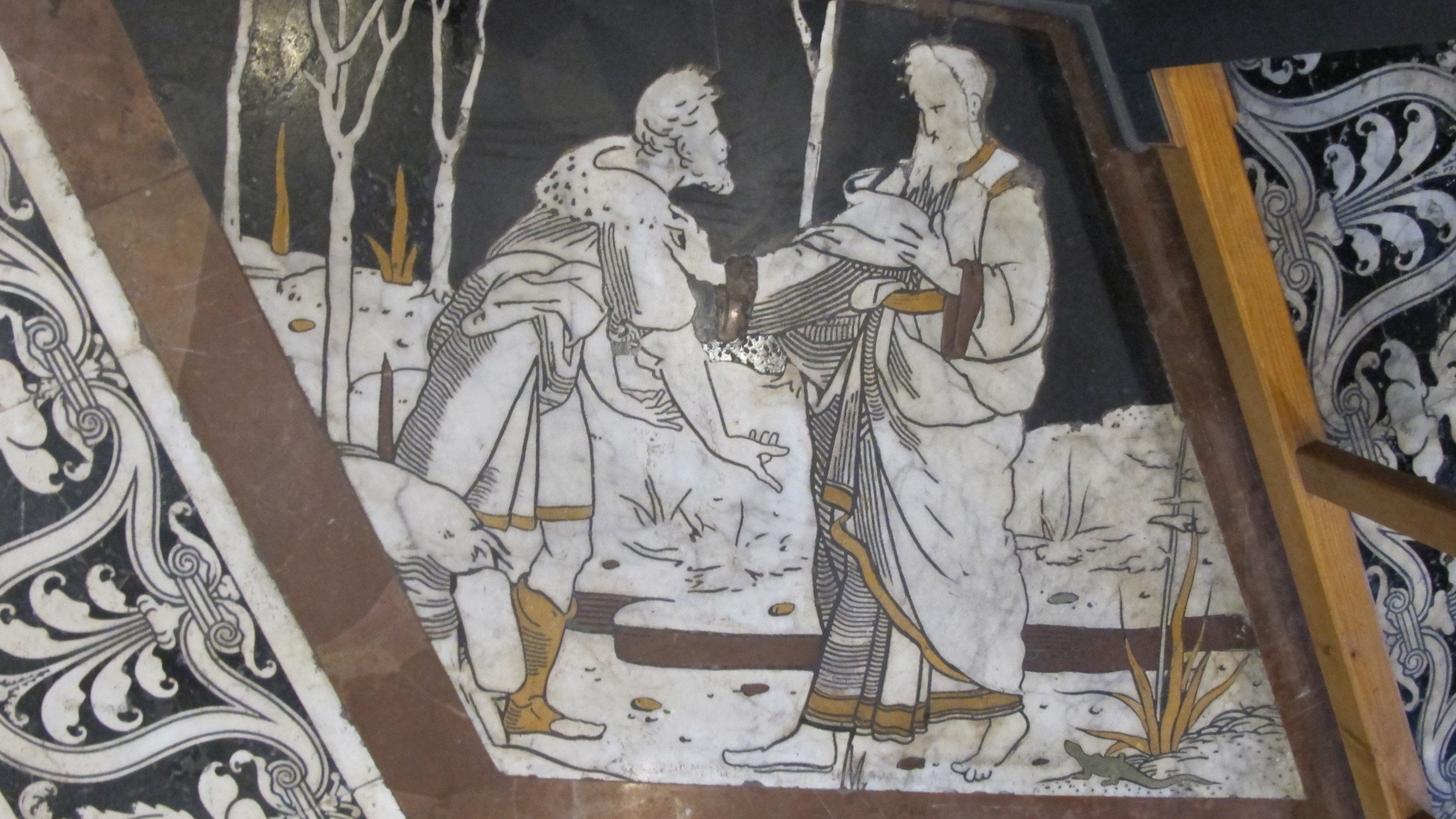
1 Kings 18
BibleHub
1 IAfter manyII daysIII the wordIV of the LordV
Notes on verse 1a
I {untranslated} = hayah. This is to be or become, to happen.
II “many” = rab. From rabab (increasing in any aspect whether quantity, authority, size, quality, greatness, etc.). This is abundance, many, elder, exceedingly, great. It refers to abundance of amount, rank, or status.
III “days” = yom. Root may mean being hot. This is the day in a literal or figurative sense. It can also mean birth, age, daylight, continually or other references to time.
IV “word” = dabar. From dabar (to speak, declare, discuss). This is speech, a word, a matter, an affair, charge, command, message, promise, purpose, report, request. It is a word, which implies things that are spoken of in a wide sense.
V “Lord” = YHVH. Related to {untranslated} in v1. From havah (to be, become) or hayah (see note I above). This is the name of the God of Israel, the self-existent and eternal one, the tetragrammaton. This pronunciation has been lost to time so “Lord” is generally used in its place.
cameVI to Elijah,VII in the thirdVIII yearIX of the drought,
Notes on verse 1b
VI “came” = hayah. Same as {untranslated} in v1. See note I above.
VII “Elijah” = Eliyyah. Related to {untranslated} and “Lord” in v1. From El (God, god) + Yah (the shortened form of the name of the God of Israel; God, Lord); {from YHVH (see note V above)}. This is Elijah, meaning “The Lord is God.”
VIII “third” = shelishi. From shalosh (three, fork, triad). This is third or one-third of something.
IX “year” = shanah. From shana (to change, alter). This is a year, age, old. It can also mean yearly.
saying,X “Go,XI presentXII yourself to Ahab;XIII
Notes on verse 1c
X “saying” = amar. This is to speak, say, answer, command, promise, report.
XI “go” = halak. This is go, come, walk. It is walk literally and figuratively and includes people and animals. It can be used figuratively for one’s moral life – how we walk according to God’s way or against it. It can also refer to the walk of life as in the course one’s life takes, the choices we make, etc.
XII “present” = raah. This is to see in a literal or figurative sense so stare, advise, think, view.
XIII “Ahab” = Achab. From ach (brother, kindred, another, other, like) + ab (father, ancestor, grandfather; father in a literal or figurative sense). This is Ahab, a name meaning “father’s brother” or “father’s friend.”
I will sendXIV rainXV onXVI the earth.”XVII
Notes on verse 1d
XIV “send” = natan. This is to give, put, set, offer. It is to give literally or figuratively.
XV “rain” = matar. This is rain or downpour.
XVI {untranslated} = paneh. From panah (to turn, face, appear). This is face in a literal or figurative sense. It could be face, presence, anger, respect. It can also be used of God to indicate divine favor or presence.
XVII “earth” = adamah. From the same as adam (man, humankind); perhaps from ‘adom (to be red). This is ground, earth, soil as red, or land.
2 So Elijah went to present himself to Ahab. The famineXVIII was severeXIX in Samaria.XX 3 Ahab summonedXXI Obadiah,XXII
Notes on verses 2-3a
XVIII “famine” = raab. From raeb (to be hungry). This is hunger, death, or hunger from famine.
XIX “severe” = chazaq. From chazaq (to strengthen, seize, be courageous, repair, bind, heal, conquer, harden). This is strong, hard, powerful, loud, bold, violent, impudent. It is usually strong in a negative sense.
XX “Samaria” = Shomron. From shamar (to keep, watch, or preserve; to guard something or to protect it as a thorny hedge protects something). This is Samaria, meaning watch station.
XXI “summoned” = qara. This is to call or call out – to call someone by name. Also used more broadly for calling forth.
XXII “Obadiah” = Obadyahu. Related to {untranslated} and “Lord” and “Elijah” in v1. From abad (to work, serve, compel; any kind of work; used causatively, can mean to enslave or keep in bondage) + Yah (see note VII above). This is Obadiah, meaning “servant of the Lord.”
who was in charge of the palace.XXIII(Now Obadiah reveredXXIV the Lord greatly;XXV 4 XXVIwhen JezebelXXVII
Notes on verses 3b-4a
XXIII “palace” = bayit. Probably from banah (to build, make, set up, obtain children; to build literally or figuratively). This is house, court, family, palace, temple.
XXIV “revered” = hayah + yare. Hayah is the same as {untranslated} in v1. See note I above. Yare is from the same as yare (to fear, be afraid, dreadful; also fearful reverence – to fear in a moral sense is to say to revere, respect). This is afraid, fearful, or reverent.
XXV “greatly” = meod. Perhaps from the same as uwd (firebrand, a poker). This is very, greatly, exceedingly. It can also mean vehemence, force, abundance.
XXVI {untranslated} = hayah. Same as {untranslated} in v1. See note I above.
XXVII “Jezebel” = Izebel. Perhaps from iy (not, island); {probably related to ay (where, how, whether); perhaps from ayin (where)} + Zebul (Zebul; a name meaning “dwelling”); {from zebul (height, dwelling, elevation, place); from zabal (to dwell, inclose, reside)}. This is Jezebel, a name which may mean “not honored by cohabitation” or “un-husbanded” or “without cohabitation” or “unmarried” or “chaste.” See https://www.abarim-publications.com/Meaning/Jezebel.html
was killing offXXVIII the prophetsXXIX of the Lord, Obadiah tookXXX a hundredXXXI prophets, hidXXXII them fiftyXXXIII, XXXIV
Notes on verse 4b
XXVIII “killing off” = karat. This is to cut down, cut off, or make a covenant (idiom for making a covenant is “to cut a covenant”). It can also mean to destroy, fail, or consume.
XXIX “prophets” = nabi. This is prophet, prophecy, speaker, or someone inspired.
XXX “took” = laqach. This is to take, accept, carry away, receive. It can also have the sense of take a wife or take in marriage.
XXXI “hundred” = meah. This is hundred or some number times one hundred (i.e. hundredfold or the base of two hundred, three hundred, etc.).
XXXII “hid” = chaba. This is to hide, hush, harden (like water freezing), or secret.
XXXIII “fifty” = chiashshim. From chamesh (five, fifth). This is fifty.
XXXIV {untranslated} = ish. Perhaps from enosh (human, humankind, mortal); from anash (to be weak, sick, or frail). This is man, husband, another, or humankind.
to a cave,XXXV and providedXXXVI them with breadXXXVII and water.)XXXVIII
Notes on verse 4c
XXXV “cave” = mearah. Perhaps from ur (to be made naked, exposed, or bare). This is a cave, cavern, den, or hole.
XXXVI “provided” = kul. This is to hold in. So, it can be to contain, measure, guide, or feed. It can also mean to be able to or sustain.
XXXVII “bread” = lechem. From lacham (to eat, feed on). This is bread, food, loaf. It can refer to food more generally for people or for animals.
XXXVIII “water” = mayim. This is water, waters, or waterway in a general sense. Figuratively, it can also mean juice, urine, or semen.
5 Then Ahab said to Obadiah, “Go through the landXXXIX to allXL the springsXLI of water and to all the wadis;XLII
Notes on verse 5a
XXXIX “land” = erets. Root may mean to be firm. This is earth, ground, field land, or country.
XL “all” = kol. From kalal (to complete). This is all or every.
XLI “springs” = mayan. From ayin (eye, appearance; eye in a literal or figurative sense; a fountain). This is a spring, well, or fountain. Figuratively, this is a source of contentment.
XLII “wadis” = nachal. From nachal (to take as heritage, inherit, or distribute). This is a river or stream. It could be a wadi or arroyo – sometimes a narrow valley with no water at all, but in strong rains or when winter snow melts, it swells or floods with water.
perhapsXLIII we may findXLIV grassXLV to keep the horsesXLVI
Notes on verse 5b
XLIII “perhaps” = ulay. Perhaps from o (or). This is perhaps, if, or suppose.
XLIV “find” = matsa. This is to find, catch or acquire. It can also mean to come forth or appear. Figuratively, this can mean to meet or be together with.
XLV “grass” = chatsir. Perhaps from the same as chatsir (village, settlement); from chatser (enclosure or court – a yard that is fenced in. It could also be a village or hamlet that is walled in); from chatsar (to blow a trumpet, trumpeter, to surround); from chatsotsrah (trumpet). This is grass, plant, hay, leeks.
XLVI “horses” = sus. Root may mean to skip as in jump for joy. This is a crane or a swift bird. It is also a horse as leaping.
and mulesXLVII aliveXLVIII and not loseXLIX some of the animals.”L
Notes on verse 5c
XLVII “mules” = pered. 14x in OT. Perhaps from parad (to divide, break through, scatter, sever, stretch, to spread oneself, or to be out of joint). This is a mule – perhaps as a lonely creature.
XLVIII “keep…alive” = chayah. This is to live or keep alive in a literal or figurative sense. So, it can be revive, nourish, or save.
XLIX “lose” = karat. Same as “killing off” in v4. See note XXVIII above.
L “animals” = behemah. This is animal or cattle. It is often used of large quadrupeds.
6 So they dividedLI the land between them to pass throughLII it; Ahab went in oneLIII
Notes on verse 6a
LI “divided” = chalaq. This is to be smooth in a figurative sense. So, it can refer to the stones that were part of casting lots – hence, apportion, share, distribute. Figuratively, it can also mean to flatter.
LII “pass through” = abar. This is to pass over or cross over. It is used for transitions, whether literal or figurative. It can also mean to escape, alienate, or fail. This is the root verb from which “Hebrew” is drawn.
LIII “one” = echad. Perhaps from achad (to unify, continue on a path; figuratively, to gather one’s thoughts). This is the number one, first, united. It can also be alone, altogether, a certain, a few.
directionLIV by himself,LV and Obadiah went in anotherLVI direction by himself.
Notes on verse 6b
LIV “direction” = derek. From darak (to tread, march, to walk. Can also mean affixing a string to a box since one needs to step on it to bend it in the process; so also an archer). This is a road as a thing that is walked on. Can be used figuratively for the path that one’s life takes or how one chooses to live one’s life.
LV “by himself” = bad. From badad (to divide or be separated; alone, solitary, lonely, isolated, straggler). This is apart, alone, separation, body part, tree branch, except. It can also be a city’s chief.
LVI “another” = echad. Same as “one” in v6. See note LIII above.
7 As Obadiah wasLVII on the way,LVIII LIXElijah metLX him;
Notes on verse 7a
LVII “was” = hayah. Same as {untranslated} in v1. See note I above.
LVIII “way” = derek. Same as “direction” in v6. See note LIV above.
LIX {untranslated} = hinneh. From hen (lo! Behold! If, though; an expression of surprise). This is to draw attention, show suddenness or surprise, or to emphasize the importance of the coming statement. See! Lo! Behold!
LX “met” = qara. This is to meet, befall, happen upon. It can be to encounter by chance or for aggression.
Obadiah recognizedLXI him, fellLXII on his face,LXIII and said, “Is it you, my lordLXIV Elijah?”
Notes on verse 7b
LXI “recognized” = nakar. This is to recognize, examine, take notice, show, scrutinize. It is looking at something in a fixed way, showing perhaps respect or reverence. Alternately, it can show gazing with suspicion. Also, it can mean being strange towards someone or something and rejecting or ignoring it.
LXII “fell” = naphal. This is to fall, whether by accident, to fall prostrate, or to fall in violent death. Figuratively, it can refer to personal ruin or calamity, a city falling, an attack or a falling away. It can also be a deep sleep or wasting away.
LXIII “face” = paneh. Same as {untranslated} in v1. See note XVI above.
LXIV “lord” = adon. From a root that means ruling or being sovereign. This is lord, master, or owner.
8 He answeredLXV him, “It is I. Go, tellLXVI your lordLXVII thatLXVIII Elijah is here.”
Notes on verse 8
LXV “answered” = amar. Same as “saying” in v1. See note X above.
LXVI “tell” = amar. Same as “saying” in v1. See note X above.
LXVII “lord” = adon. Same as “lord” in v7. See note LXIV above.
LXVIII {untranslated} = hinneh. Same as {untranslated} in v7. See note LIX above.
9 And he said, “How have I sinned,LXIX that you would hand your servantLXX overLXXI to Ahab to killLXXII me?
Notes on verse 9
LXIX “sinned” = chata. This is properly to miss, and so figuratively it is used for sinning, bearing the blame. It implies a forfeiture or loss of something.
LXX “servant” = ebed. From abad (to work, serve, compel; any kind of work; used causatively, can mean to enslave or keep in bondage). This is a servant, slave, or bondservant.
LXXI “hand…over” = natan…yad. Literally, “give…into the hand of.” Natan is the same as “send” in v1. See note XIV above. Yad is hand, ability, power. Hand in a literal sense, but also what one can do or the means by which one does it.
LXXII “kill” = mut. This is to die in a literal or figurative sense. It can also refer to being a dead body.
10 As the LordLXXIII your GodLXXIV lives,LXXV there isLXXVI no nationLXXVII
Notes on verse 10a
LXXIII “Lord” = YHVH. Same as “Lord” in v1. See note V above.
LXXIV “God” = Elohim. Related to “Elijah” in v1. See note VII above.
LXXV “lives” = chay. Related to “keep…alive” in v5. From chayah (see note XLVIII above). This is alive, living, lifetime. It can also be used to describe someone’s age. It can refer to animals, plants, water, or a company or congregation of people. It is life in a very broad sense.
LXXVI “there is” = yesh. This is being, existence, or substance.
LXXVII “nation” = goy. From the same root as gevah (the back, person, or body); related to gev (among); related to gaah (to rise up). This is nation or people. Often used to refer to Gentiles or foreign nations. It can also be used figuratively for a group of animals. This is where the Yiddish “goy” comes from.
or kingdomLXXVIII to which my lordLXXIX has not sentLXXX to seekLXXXI you,
Notes on verse 10b
LXXVIII “kingdom” = mamlakah. From the same as melek (king, royal). This is kingdom, dominion, sovereignty, rule. It can also refer to the realm.
LXXIX “lord” = adon. Same as “lord” in v7. See note LXIV above.
LXXX “sent” = shalach. This is to send out, away, send for, forsake. It can also mean to divorce or set a slave free.
LXXXI “seek” = baqash. This is to seek, ask, desire, or request. It can be any kind of searching. It can also mean to worship or pray – implies a striving for.
and when they would say, ‘He is notLXXXII here,’ he would require an oathLXXXIII of the kingdom or nation that they had not found you.
11 But nowLXXXIV you say, ‘Go, tell your lordLXXXV thatLXXXVI Elijah is here.’
Notes on verses 10c-11
LXXXII “not” = ayin. Perhaps from a word that means to be nothing. This means nothing, none, non-existent. It can also simply mean not or are not.
LXXXIII “require an oath” = shaba. Perhaps from sheba (seven – the number of perfection/sacred fullness). This is to swear, curse, vow, make a covenant. Properly, it can mean to be complete. This is to seven oneself – as in affirming something so strongly it is as though it were said seven times.
LXXXIV “now” = attah. Perhaps from et (a period or season; whenever or continually); probably from anah (to answer, sing, announce); from ad (forever, all, old); from adah (to pass on, advance, decorate oneself). This is now, from now on.
LXXXV “lord” = adon. Same as “lord” in v7. See note LXIV above.
LXXXVI {untranslated} = hinneh. Same as {untranslated} in v7. See note LIX above.
12 LXXXVIIAs soon as I have gone from you, the spiritLXXXVIII of the LordLXXXIX will carryXC you
Notes on verse 12a
LXXXVII {untranslated} = hayah. Same as {untranslated} in v1. See note I above.
LXXXVIII “spirit” = ruach. From ruach (smell, breathe, perceive, anticipate, accept, enjoy). This is breath, wind, air, cool, spirit. This is wind, which resembles the breath and so this can be used figuratively for life itself or being frail/mortal/impermanent. It can refer to the air of the sky or the spirit.
LXXXIX “Lord” = YHVH. Same as “Lord” in v1. See note V above.
XC “carry” = nasa. This is to lift in a broad sense, literally and figuratively. So it could be to carry, take, or arise. It could also be bring forth, advance, accept.
I knowXCI not where; so, when I comeXCII and tellXCIII Ahab and he cannot find you, he will killXCIV me,
Notes on verse 12b
XCI “know” = yada. This is to know, acknowledge, advise, answer, be aware, be acquainted with. Properly, this is to figure something out by seeing. It includes ideas of observation, recognition, and care about something. It can be used causatively for instruction, designation, and punishment.
XCII “come” = bo. This is to enter, come in, advance, fulfill, bring offerings, enter to worship, attack. It can also have a sexual connotation.
XCIII “tell” = nagad. This is to declare, make conspicuous, stand in front, manifest, predict, explain.
XCIV “kill” = harag. This is to strike with deadly intent so it can be kill, destroy, murder, or put to death.
although I your servant have reveredXCV the LordXCVI from my youth.XCVII 13 Has it not been toldXCVIII my lordXCIX what I didC
Notes on verses 12c-13a
XCV “revered” = yare. Related to “revered” in v3. See note XXIV above.
XCVI “Lord” = YHVH. Same as “Lord” in v1. See note V above.
XCVII “youth” = naur. From naar (child or a servant; a child in their active years so they could be aged anywhere from infancy to adolescence); perhaps from naar (to shake, toss up and down, tumble around). This is youth or childhood.
XCVIII “told” = nagad. Same as “tell” in v12. See note XCIII above.
XCIX “lord” = adon. Same as “lord” in v7. See note LXIV above.
C “did” = asah. This is to make, do, act, appoint, become in many senses.
when Jezebel killedCI the prophets of the Lord,CII how I hid a hundred of the Lord’sCIII prophets fifty toCIV a cave and provided them with bread and water?
Notes on verse 13b
CI “killed” = harag. Same as “kill” in v12. See note XCIV above.
CII “Lord” = YHVH. Same as “Lord” in v1. See note V above.
CIII “Lord’s” = YHVH. Same as “Lord” in v1. See note V above.
CIV “fifty to” = meah + ish + chamishshim + chamishshim. Meah is hundred or some number times one hundred (i.e. hundredfold or the base of two hundred, three hundred, etc.). Ish is the same as {untranslated} in v4. See note XXXIV above. Chamishshim is the same as “fifty” in v4. See note XXXIII above.
14 Yet now you say, ‘Go, tellCV your lordCVI thatCVII Elijah is here’; he will surely killCVIII me.”
15 Elijah said, “As the LordCIX of hostsCX lives,
Notes on verses 14-15a
CV “tell” = amar. Same as “saying” in v1. See note X above.
CVI “lord” = adon. Same as “lord” in v7. See note LXIV above.
CVII {untranslated} = hinneh. Same as {untranslated} in v7. See note LIX above.
CVIII “kill” = harag. Same as “kill” in v12. See note XCIV above.
CIX “Lord” = YHVH. Same as “Lord” in v1. See note V above.
CX “hosts” = tsaba. From tsaba (to wage war, serve, assemble, fight, perform, muster, wait on). This is a large group of persons (used figuratively for a group of things). It implies a campaign literally as with army, war, warfare, battle, company, soldiers. Can also be used figuratively for hardship or for worship.
beforeCXI whom I stand,CXII I will surely showCXIII myself to him today.”CXIV 16 So Obadiah went to meet Ahab and toldCXV him, and Ahab went to meet Elijah.
Notes on verses 15b-16
CXI “before” = paneh. Same as {untranslated} in v1. See note XVI above.
CXII “stand” = amad. This is to stand up in a literal or figurative sense. So it can be establish, continue, endure, take a stand, act, be a servant, stand still, remain, stand against an enemy.
CXIII “show” = raah. Same as “present” in v1. See note XII above.
CXIV “today” = yom. Same as “days” in v1. See note III above.
CXV “told” = nagad. Same as “tell” in v12. See note XCIII above.
17 CXVIWhen Ahab sawCXVII Elijah, Ahab said to him, “Is it you, you troublerCXVIII of Israel?”CXIX
Notes on verse 17
CXVI {untranslated} = hayah. Same as {untranslated} in v1. See note I above.
CXVII “saw” = raah. Same as “present” in v1. See note XII above.
CXVIII “troubler” = akar. 14x in OT. This is properly to stir water – figuratively it can be to trouble, harm, afflict, or worsen.
CXIX “Israel” = Yisrael. From sarah (to persist, exert oneself, contend, persevere, wrestle, prevail) + El (God or god). This is Israel, meaning God strives or one who strives with God; new name for Jacob and for his offspring. This refers to the people and to the land.
18 He answered, “I have not troubled Israel, but you have, and your father’sCXX house,CXXI because you have forsakenCXXII the commandmentsCXXIII
Notes on verse 18a
CXX “father’s” = ab. Related to “Ahab” in v1. See note XIII above.
CXXI “house” = bayit. Same as “palace” in v3. See note XXIII above.
CXXII “forsaken” = azab. To loosen, relinquish, permit, forsake, fail, leave destitute.
CXXIII “commandments” = mitsvah. From tsavah (to charge, command, order, enjoin). This is a commandment, law, ordinance obligation, or tradition. It is something commanded whether by God or by a human authority. This term is sometimes used collectively to refer to the Law.
of the LordCXXIV and followedCXXV the Baals.CXXVI 19 Now thereforeCXXVII have all Israel assembleCXXVIII for me
Notes on verses 18b-19a
CXXIV “Lord” = YHVH. Same as “Lord” in v1. See note V above.
CXXV “followed” = halak + achar. Halak is the same as “go” in v1. See note XI above. Achar is from achar (to remain behind, linger, continue, be behind, or delay; can also imply procrastination). This is after or the last part, following.
CXXVI “Baals” = Ba’al. From the same as ba’al (lord, owner, ally, or archer); from ba’al (to marry, have dominion, be master). This is Baal, literally “lord,” a Phoenician god.
CXXVII “therefore” = attah. Same as “now” in v11. See note LXXXIV above.
CXXVIII “have…assemble” = shalach + qabats. Shalach is the same as “sent” in v10. See note LXXX above. Qabats is to collect, assemble, heap, grasp, or gather.
at MountCXXIX Carmel,CXXX with the fourCXXXI hundred fifty prophets of Baal and the four hundred prophets of AsherahCXXXII
who eatCXXXIII at Jezebel’s table.”CXXXIV
20 So Ahab sent to all the IsraelitesCXXXV and assembledCXXXVI the prophets at Mount Carmel.
Notes on verses 19c-20
CXXXIII “eat” = akal. This is to eat, devour, burn up, or otherwise consume. It can be eating in a literal or figurative sense.
CXXXIV “table” = shulchan. Related to “sent” in v10. Perhaps from shalach (see note LXXX above). This is a table or meal.
CXXXV “Israelites” = ben + Yisrael. Literally, “children of Israel.” Ben is related to “palace” in v3. From banah (saee note XXIII above). This is son, age, child. It is son in a literal or figurative sense. Yisrael is the same as “Israel” in v17. See note CXIX above.
CXXXVI “assembled” = qabats. Same as “have…assemble” in v19. See note CXXVIII above.
21 Elijah then came nearCXXXVII to all the peopleCXXXVIII and said, “How long will you go limpingCXXXIX
Notes on verse 21a
CXXXVII “came near” = nagash. This is to draw, bring, or come near. It is approaching for any reason – as an attack on an enemy, in order to worship, to make an argument. It can also be used as a euphemism for sex.
CXXXVIII “people” = am. From amam (to darken, hide, associate; creating shadows by huddling together). This is people or nation. It can be used specifically for a tribe, collectively of troops or armies, or figuratively to refer to a flock of animals.
CXXXIX “go limping” = pasach. 8x in OT. This is to stop, pass over, skip over, to spare, become lame, hesitate. It is the root of the word for “Passover” in Hebrew.
with twoCXL different opinions?CXLI If the LordCXLII is God, follow him, but if Baal, then follow him.” The people did not answerCXLIII him a word.
Notes on verse 21b
CXL “two” = shenayim. From sheni (double, again, another, second); from shanah (to fold, repeat, double, alter, or disguise). This is two, both, second, couple.
CXLI “opinions” = saiph. 3x in OT. Akin to seippah (division, divided opinion); from the same as saiph (fissure, branch, cleft); from saaph (to divide, cut off branches from a tree, top off); from seappah (branch, twig). This is a divided mind – an opinion, thought, or sentiment.
CXLII “Lord” = YHVH. Same as “Lord” in v1. See note V above.
CXLIII “answer” = anah. Related to “now” in v11. See note LXXXIV above.
22 Then Elijah said to the people, “I, even I only,CXLIV am leftCXLV a prophet of the Lord,CXLVI but Baal’s prophets numberCXLVII four hundred fifty. 23 Let two bullsCXLVIII be givenCXLIX to us;
Notes on verses 22-23a
CXLIV “only” = bad. Same as “by himself” in v6. See note LV above.
CXLV “am left” = yathar. This is to jut over, remain behind, preserve, to excel. It can be to leave or to be in abundance.
CXLVI “Lord” = YHVH. Same as “Lord” in v1. See note V above.
CXLVII “number” = ish. Same as {untranslated} in v4. See note XXXIV above.
CXLVIII “bulls” = par. Perhaps related to parar (to break, defeat, frustrate, caste off, clean, cease). This is a young bull or ox.
CXLIX “given” = natan. Same as “send” in v1. See note XIV above.
let them chooseCL one bull for themselves, cut it in pieces,CLI and layCLII it on the woodCLIII
Notes on verse 23b
CL “choose” = bachar. This is to choose, appoint, try, excellent.
CLI “cut…in pieces” = nathach. 9x in OT. This is to dismember or divide at the joints.
CLII “lay” = sim. This is to put or place in a literal or figurative sense. It can be appoint, care, change, make, and may other things.
CLIII “wood” = ets. Perhaps from atsah (to shut, fasten, firm up, to close one’s eyes). This is tree or other things related to trees like wood, sticks, or stalks. It can also refer to wood products like a plank or staff or gallows. Additionally, this can refer to a carpenter.
but putCLIV no fireCLV to it; I will prepareCLVI the otherCLVII bull and layCLVIII it on the wood but put no fire to it.
Notes on verse 23c
CLIV “put” = sim. Same as “lay” in v23. See note CLII above.
CLV “fire” = esh. This is fire, burning, flaming, hot. It is fire in a literal or figurative sense.
CLVI “prepare” = asah. Same as “did” in v13. See note C above.
CLVII “other” = echad. Same as “one” in v6. See note LIII above.
CLVIII “lay” = natan. Same as “send” in v1. See note XIV above.
24 Then you callCLIX on the nameCLX of your god,CLXI and I will call on the name of the Lord;CLXII the god who answersCLXIII by fire is indeed God.”
Notes on verse 24a
CLIX “call” = qara. Same as “summoned” in v3. See note XXI above.
CLX “name” = shem. Related to “lay” in v23. May be from sim (see note CLIV above). This is name, fame, renown. A name was thought to indicate something essential about a person – something about their individuality. So, this word can also mean honor, authority, or character.
CLXI “god” = elohim. Same as “God” in v10. See note LXXIV above.
CLXII “Lord” = YHVH. Same as “Lord” in v1. See note V above.
CLXIII “answers” = anah. Same as “answer” in v21. See note CXLIII above.
All the people answered,CLXIV, CLXV “WellCLXVI spoken!”CLXVII
Notes on verse 24b
CLXIV “answered” = anah. Same as “answer” in v21. See note CXLIII above.
CLXV {untranslated} = amar. Same as “saying” in v1. See note X above.
CLXVI “well” = tob. From tob (to be pleasing, to be good). This is good, beautiful, pleasant, agreeable, bountiful, at ease. This word is used for goodness as a concept, a good thing, a good person. This can refer to prosperity and welfare as well as joy, kindness, sweetness, and graciousness. So, this is ethically good, but also enjoyably good.
CLXVII “spoken” = dabar. Same as “word” in v1. See note IV above.
25 Then Elijah said to the prophets of Baal, “Choose for yourselves one bull and prepare it first,CLXVIII for you are many; then call on the name of your god, but put no fire to it.”
26 So they took the bull that was given them, prepared it, and called on the name of Baal from morningCLXIX until noon,CLXX crying,CLXXI
Notes on verses 25-26a
CLXVIII “first” = rishon. From rishah (beginning or early time); from rosh (head, captain, or chief; excellent or the forefront; first in position or in statue or in time). This is first, former, ancestor, beginning, ranked first.
CLXIX “morning” = boqer. From baqar (to seek, plow, break forth, admire, care for). This refers to the break of day. So it is dawn, early, morning, or morrow.
CLXX “noon” = tsohar. From tsahar (pressing oil, glistening); from yitshar (fresh oil, anointed; oil as that which is burned to make light; used figuratively to talk about anointing). This is a light, window, or midday.
CLXXI “crying” = amar. Same as “saying” in v1. See note X above.
“O Baal, answerCLXXII us!” But there was noCLXXIII voiceCLXXIV and noCLXXV answer.CLXXVI They limped about the altarCLXXVII that they had made.CLXXVIII
Notes on verse 26b
CLXXII “answer” = anah. Same as “answer” in v21. See note CXLIII above.
CLXXIII “no” = ayin. Same as “not” in v10. See note LXXXII above.
CLXXIV “voice” = qol. This is a sound, used often for human voices. Also used when God speaks or angels, animals or instruments. It can be a cry or a noise, thunder or earthquakes and so on.
CLXXV “no” = ayin. Same as “not” in v10. See note LXXXII above.
CLXXVI “answer” = anah. Same as “answer” in v21. See note CXLIII above.
CLXXVII “altar” = mizbeach. From zabach (to kill, slay, offer; slaughtering an animal to offer as a sacrifice). This is an altar.
CLXXVIII “made” = asah. Same as “did” in v13. See note C above.
27 CLXXIXAt noon Elijah mockedCLXXX them, saying, “CryCLXXXI aloud!CLXXXII
Notes on verse 27a
CLXXIX {untranslated} = hayah. Same as {untranslated} in v1. See note I above.
CLXXX “mocked” = hathal. 10x in OT. This is to mock, deceive, or conduct business in a dubious fashion. It implies cheating.
CLXXXI “cry” = qara. Same as “summoned” in v3. See note XXI above.
CLXXXII “aloud” = qol + gadol. Qol is the same as “voice” in v26. See note CLXXIV above. Gadol is from gadal (to grow up, become great, become wealthy – to advance. The root meaning may be to twist in the sense of the process of growing). This is great, high, bigger, noble, old, marvelous. It can also refer to someone who is powerful or distinguished.
Surely he is a god; either he is meditating,CLXXXIII or he has wandered away,CLXXXIV or he is on a journey,CLXXXV or perhaps he is asleepCLXXXVI and must be awakened.”CLXXXVII
Notes on verse 27b
CLXXXIII “meditating” = siach. 13x in OT. Perhaps from siyach (to muse, meditate, complain, sing, sigh, speak, or utter). This is a musing, concern, communication, or prayer.
CLXXXIV “wandered away” = sig. 1x in OT. From the same as sig (dross, a moving away); from sug (to turn back, aside, or away; properly, to flinch, which implies moving away or going back; literally, can mean retreat or figuratively can mean backslide i.e. apostatize). This is pursuing or leaving to somewhere private.
CLXXXV “journey” = derek. Same as “direction” in v6. See note LIV above.
CLXXXVI “asleep” = yashen. 5x in OT. This is to be languid or go slack. By implication it can mean to sleep, become old or stale, or die.
CLXXXVII “be awakened” = yaqats. 10x in OT. This is to wake someone up.
28 Then they criedCLXXXVIII aloud, and, as was their custom,CLXXXIX they cutCXC themselves with swordsCXCI
Notes on verse 28a
CLXXXVIII “cried” = qara. Same as “summoned” in v3. See note XXI above.
CLXXXIX “custom” = mishpat. From shaphat (to judge, defend, pronounce judgment, condemn, govern). This is a verdict or formal sentence whether from humans or from God. It includes the act of judging as well as the place that judging takes place, the suit itself, and the penalty. Abstractly, this is justice, which includes the rights of the participants.
CXC “cut” = gadad. 8x in OT. This is to cut, gather, assemble, crowd. Also, it is to gash as pushing in.
CXCI “swords” = chereb. From charab (to attack, slay). This is any sharp instrument like a sword, dagger, axe, or mattock.
and lancesCXCII until the bloodCXCIII gushed outCXCIV over them.
Notes on verse 28b
CXCII “lances” = romach. 15x in OT. May come from a word that means to hurt. It could be a spear, lancet, buckler. It focuses on the iron tip.
CXCIII “blood” = dam. Perhaps from damam (to cease, be or become mute, silent, still, cut off, hold peace, be astonished, die). This is blood, bloodshed, bloodguilt, lifeblood, and death. It is used for people and animals. More often blood from a wound or the blood of the innocent. Used figuratively for violence or for wine. Closely tied to life and death.
CXCIV “gushed out” = shaphak. This is to pour out, gust, or slip. It can be to pour as blood, a drink offering, or molten metal. It can also mean to create a mound. Figuratively, it can refer to killing, or spending money.
29 CXCVAs middayCXCVI passed, they ravedCXCVII on until the time of the offeringCXCVIII of the oblation,CXCIX
Notes on verse 29a
CXCV {untranslated} = hayah. Same as {untranslated} in v1. See note I above.
CXCVI “midday” = tsohar. Same as “noon” in v26. See note CLXX above.
CXCVII “raved” = naba. Related to “prophets” in v4. Related to nabi (see note XXIX above). This is to prophesy. It can also refer to an ecstatic state – raving. It is associated with speech, song, teachings, and predictions.
CXCVIII “offering” = alah. This is to go up, approach, ascend, be high, be a priority; to arise in a literal or figurative sense.
CXCIX “oblation” = minchah. This is a gift or an offering, particularly a sacrificial one that is generally bloodless and given spontaneously (voluntarily).
but there was noCC voice, noCCI answer,CCII and noCCIII response.CCIV
Notes on verse 29b
CC “no” = ayin. Same as “not” in v10. See note LXXXII above.
CCI “no” = ayin. Same as “not” in v10. See note LXXXII above.
CCII “answer” = anah. Same as “answer” in v21. See note CXLIII above.
CCIII “no” = ayin. Same as “answer” in v21. See note CXLIII above.
CCIV “response” = qesheb. 4x in OT. From qashab (to listen, pay attention to, incline – used in the phrase incline the ears). This is attentiveness, hearing, response.
30 Then Elijah said to all the people, “Come closerCCV to me,” and all the people came closer to him. First he repairedCCVI the altar of the LordCCVII that had been thrown down;CCVIII
Notes on verse 30
CCV “come closer” = nagash. Same as “came…near” in v21. See note CXXXVII above.
CCVI “repaired” = rapha. Properly, this is to repair by stitching – figuratively this means to heal or cure. It can also mean to make whole.
CCVII “Lord” = YHVH. Same as “Lord” in v1. See note V above.
CCVIII “thrown down” = haras. This is to break down, throw down, ruin, overthrow, or destroy. It is breaking down in pieces.
31 Elijah took twelveCCIX stones,CCX according to the numberCCXI of the tribesCCXII
Notes on verse 31a
CCIX “twelve” = shenayim + asar. Shenayim is the same as “two” in v21. See note CXL above. Asar is from the same as eser (ten). This is -teen or -teenth.
CCX “stones” = eben. This is a stone, weight, or mason. It is part of the word “Ebenezer.”
CCXI “number” = mispar. From the same as sepher (writing itself or something that is written like a document, book, letter, evidence, bill, scroll, or register); from saphar (to tally or record something; to enumerate, recount, number, celebrate, or declare). This is a number, whether definite or symbolic – could be innumerable, few, abundance. It can also be a tally or account – or a narration.
CCXII “tribes” = shebet. This is a rod, staff, club, scepter, dart, or tribe. Literally a stick that can be used for punishing, writing, fighting, walking, ruling; thus, used figuratively for a clan.
of the sonsCCXIII of Jacob,CCXIV to whom the word of the LordCCXV came,CCXVI saying, “Israel shall be your name”; 32 with the stones he builtCCXVII an altar in the name of the Lord.CCXVIII
Notes on verses 31b-32a
CCXIII “sons” = ben. Same as “Israelites” in v20. See note CXXXV above.
CCXIV “Jacob” = Yaaqob. From the same as aqeb (heel, hind part, hoof, rear guard of an army, one who lies in wait, usurper). This is Isaac’s son and his descendants. The name means heel-catcher or supplanter.
CCXV “Lord” = YHVH. Same as “Lord” in v1. See note V above.
CCXVI “came” = hayah. Same as {untranslated} in v1. See note I above.
CCXVII “built” = banah. Related to “palace” in v3 & “Israelites” in v20. See note XXIII above.
CCXVIII “Lord” = YHVH. Same as “Lord” in v1. See note V above.
Then he made a trenchCCXIX aroundCCXX the altar, large enough to containCCXXI two measuresCCXXII of seed.CCXXIII
Notes on verse 32b
CCXIX “trench” = talah. Related to “offering” in v29. 11x in OT. From alah (see note CXCVIII above). This is a conduit, stream, channel for irrigation, or trench. It can also be a bandage for an injury.
CCXX “around” = sabib. From sabab (turning around, going around; to surround, cast, walk, fetch; to revolve or border in a literal or figurative sense). This is a circuit or a circle. It could refer to an environment, one’s neighbors, or a circular path round about.
CCXXI “large enough to contain” = bayit. Same as “palace” in v3. See note XXIII above.
CCXXII “measures” = seah. 9x in OT. This is a seah, used to measure flour or grain – about 7 quarts.
CCXXIII “seed” = zera. From zara (to sow or scatter seed; conceive or yield). This is seed or sowing. It can, thus, mean a fruit, plant, sowing time, child, offspring, or posterity.
33 Next he put the wood in order,CCXXIV cut the bull in pieces,CCXXV and laidCCXXVI it on the wood. He said, “FillCCXXVII four jarsCCXXVIII with water
Notes on verse 33a
CCXXIV “put…in order” = arak. This is to arrange by setting in a row. It can also mean to set a battle, estimate, put in order, or compare.
CCXXV “cut…in pieces” = nathach. Same as “cut…in pieces” in v23. See note CLI above.
CCXXVI “laid” = sim. Same as “lay” in v23. See note CLII above.
CCXXVII “fill” = male. This is fill, satisfy, replenish, accomplish, fulfill, confirm, or consecrate. It is fill in a literal or figurative sense.
CCXXVIII “jars” = kad. 18x in OT– 9x in Genesis 24 re: Isaac meeting Rebekah, 4x in Judges 7 of the empty jars that Gideon’s men had; 3x in 1 Kings 17 of the jar belonging to the widow of Zarephath, 1x in 1 Kings 18 of the jars filled with water as part of Elijah’s contest with the priests of Baal, and 1x in Ecclesiastes 12 regarding an extended metaphor of youth and old age – here a broken pitcher. This is a jar, pitcher, bowl, or pail. The root might mean to deepen. It is a vessel made of clay – earthenware, used domestically.
and pourCCXXIX it on the burnt offeringCCXXX and on the wood.”
34 Then he said, “Do it a second time,”CCXXXI and they did it a second time. Again he said, “Do it a third time,”CCXXXII and they did it a third time,
Notes on verses 33b-34
CCXXIX “pour” = yatsaq. This is to pour out, flow, wash away, or overflow. It can imply melting as one does to cast metal. By extension, it can refer to something being steadfast, stiffened, firmly in place.
CCXXX “burnt offering” = olah. Related to “offering” in v29 & “trench” in v32. From alah (see note CXCVIII above). This is a step, stairs, or some kind of ascent. It is also used for whole burnt offerings, being the offering in which the whole thing is burned and rises as smoke. Burnt offerings were the least common of the offerings: most were eaten, shared with the priest and the one bringing the offering.
CCXXXI “do…a second time” = shanah. Related to “two” in v21. See note CXL above.
CCXXXII “do…a third time” = shalash. Related to “third” in v1. 9x in OT. From shalosh (see note VIII above). This is to intensify, separate into three sections, do a third, triplicate.
35 so that the water ranCCXXXIII all aroundCCXXXIV the altar and filled the trench alsoCCXXXV with water.
36 CCXXXVIAt the time of the offering of the oblation, the prophet Elijah came near and said, “O Lord,CCXXXVII
Notes on verses 35-36a
CCXXXIII “ran” = halak. Same as “go” in v1. See note XI above.
CCXXXIV “all around” = sabib. Same as “around” in v32. See note CCXX above.
CCXXXV “also” = gam. This is also, moreover, again.
CCXXXVI {untranslated} = hayah. Same as {untranslated} in v1. See note I above.
CCXXXVII “Lord” = YHVH. Same as “Lord” in v1. See note V above.
God of Abraham,CCXXXVIII Isaac,CCXXXIX and Israel, let it be known this day that you are God in Israel, that I am your servant, and that I have done all these thingsCCXL at your bidding.CCXLI
Notes on verse 36b
CCXXXVIII “Abraham” = Abraham. Related to “Ahab” in v1 & “father’s” in v18. From the same as Abiram (exalted father, a high father – lofty) {from ab (see note XIII above) + rum (rise, bring up, being high, extol, exalt, haughty; to raise in a literal or figurative sense)}. This is Abraham, father of many nations or father of a multitude.
CCXXXIX “Isaac” = Yistchaq. From tsachaq (to laugh, mock, play, make sport; this is laughing out loud whether in joy or in a scornful way). This is Isaac, meaning “he laughs.”
CCXL “things” = dabar. Same as “word” in v1. See note IV above.
CCXLI “bidding” = dabar. Same as “word” in v1. See note IV above.
37 AnswerCCXLII me, O Lord,CCXLIII answer me, so that this people may know that you, O Lord, are God and that you have turnedCCXLIV their heartsCCXLV back.”CCXLVI
Notes on verse 37
CCXLII “answer” = anah. Same as “answer” in v21. See note CXLIII above.
CCXLIII “Lord” = YHVH. Same as “Lord” in v1. See note V above.
CCXLIV “turned” = sabab. Related to “around” in v32. See note CCXX above.
CCXLV “hearts” = leb. From the same as lebab (the heart, courage, one’s inner self, the mind, the will; only used in a figurative sense in the Bible); may be related to labab (to encourage; properly, to be encased as with fat; used in a good sense, this means to transport someone with love; used in a bad sense, it can mean to dull one’s senses). This is inner self, mind, will, feelings, the center.
CCXLVI “back” = achorannith. Related to “followed” in v18. 7x in OT. From achor (the back, behind, backward, time to come; facing to the north or the west); from achar (see note CXXV above). This is backwards, turned away, back.
38 Then the fire of the LordCCXLVII fell and consumedCCXLVIII the burnt offering, the wood, the stones, and the dustCCXLIX and even licked upCCL the water that was in the trench. 39 When all the people saw it, they fell on their faces and said, “The LordCCLI indeed is God; the LordCCLII indeed is God.”
Notes on verses 38-39
CCXLVII “Lord” = YHVH. Same as “Lord” in v1. See note V above.
CCXLVIII “consumed” = akal. Same as “eat” in v19. See note CXXXIII above.
CCXLIX “dust” = aphar. May be related to aphar (to throw dust, be dust). This is dust as powdered, perhaps gray colored. It could be ashes, powder, ground, dry earth, clay mud, or rubbish.
CCL “licked up” = lachak. This is to lick or lick up.
CCLI “Lord” = YHVH. Same as “Lord” in v1. See note V above.
CCLII “Lord” = YHVH. Same as “Lord” in v1. See note V above.
40 Elijah said to them, “SeizeCCLIII the prophets of Baal; do not let oneCCLIV of them escape.”CCLV Then they seized them, and Elijah brought them downCCLVI to the Wadi KishonCCLVII and killedCCLVIII them there.
Notes on verse 40
CCLIII “seize” = taphas. This is to catch, seize, wield, capture. It can also mean to use unwarrantably.
CCLIV “one” = ish. Same as {untranslated} in v4. See note XXXIV above.
CCLV “escape” = malat. This is to be smooth, which implies to escape as slipping away from. It can also be release, rescue, deliver, or preserve. It can be used specifically to meaning giving birth or making sparks.
CCLVI “brought…down” = yarad. This is to go down, descend; going down in a literal or figurative sense. It can be going to the shore or a boundary, bringing down an enemy.
CCLVII “Kishon” = Qishon. 6x in OT– regarding this incident and Elijah’s contest with the priests of Baal in 1 Kings 18. From qush (to ensnare, bend, set a trap); perhaps from yaqosh (ensnare, lay bait, lure, trapper; to snare literally or figuratively). This is Kishon or Qishon, meaning “winding.”
CCLVIII “killed” = shachath. This is to slaughter, slay, or beat. It can be slaying for a sacrifice or in a massacre.
41 Elijah said to Ahab, “Go up,CCLIX eat and drink,CCLX for there is a soundCCLXI of rushingCCLXII rain.”CCLXIII
Notes on verse 41
CCLIX “go up” = alah. Same as “offering” in v29. See note CXCVIII above.
CCLX “drink” = shathah. This is to drink literally or figuratively. It could also be a drinker.
CCLXI “sound” = qol. Same as “voice” in v26. See note CLXXIV above.
CCLXII “rushing” = hamon. From hamah (to growl, cry out, be moved, murmur, hum, mourn, rage, clamor). This is a sound, noise, roar, rumbling, wealth, crowd, disquietude.
CCLXIII “rain” = geshem. Perhaps from gasham (to rain). This is rain, shower, or rainy. It can be used figuratively for blessing or for destruction.
42 So Ahab went up to eat and to drink. Elijah went up to the topCCLXIV of Carmel; there he bowed himself downCCLXV upon the earthCCLXVI and put his face betweenCCLXVII his knees.CCLXVIII
Notes on verse 42
CCLXIV “top” = rosh. Related to “first” in v25. See note CLXVIII above.
CCLXV “bowed…down” = gahar. 3x in OT – all in 1 & 2 Kings. This is to crouch down, stretch, bow, or prostrate oneself.
CCLXVI “earth” = erets. Same as “land” in v5. See note XXXIX above.
CCLXVII “between” = bayin. From bin (to discern, consider, attend to; distinguishing things in one’s mind or, more generally, to understand). This is among, between, interval.
CCLXVIII “knees” = berek. From barak (to kneel, bless; blessing God as part of worship and adoration; blessing humans to help them; can be used as a euphemism to say curse God). This is the knee.
43 He said to his servant,CCLXIX “Go up now,CCLXX lookCCLXXI towardCCLXXII the sea.”CCLXXIII
Notes on verse 43a
CCLXIX “servant” = naar. Related to “youth” in v12. See note XCVII above.
CCLXX “now” = na. This particle is used for requests or for urging. It can be we pray, now, I ask you, oh. This is the same “na” in “hosanna.”
CCLXXI “look” = nabat. This is to behold, look at intently, consider, or scan. It can mean to have respect or regard someone favorably.
CCLXXII “toward” = derek. Same as “direction” in v6. See note LIV above.
CCLXXIII “sea” = yam. Root may mean to roar. This is the sea, often referring to the Mediterranean. It comes from the root in the sense of the roar of crashing surf. This word is sometimes used for rivers or other sources of water. It can mean to the west or to the south.
He went up and looked and said, “There is nothing.”CCLXXIV
Then he said, “Go againCCLXXV sevenCCLXXVI times.”CCLXXVII
Notes on verse 43b
CCLXXIV “nothing” = ayin + meumah. Ayin is the same as “not” in v10. See note LXXXII above. Meumah is from the same as mum (defect – an ethical one or a literal bodily one). Its root may mean to stain. This can mean a speck or fault. More broadly, it can also refer to anything or nothing.
CCLXXV “go again” = shub. To turn back, return, turn away – literally or figuratively. Doesn’t necessarily imply going back to where you started from. This is also the root verb for the Hebrew word for repentance “teshubah.”
CCLXXVI “seven” = sheba. Related to “require an oath” in v10. See note LXXXIII above.
CCLXXVII “times” = paam. From paam (to move, trouble; to tap in a regular rhythm; to agitate). This is a beat, stroke, footstep, or occurrence.
44 CCLXXVIIIAt the seventhCCLXXIX time he said, “Look,CCLXXX a littleCCLXXXI
Notes on verse 44a
CCLXXVIII {untranslated} = hayah. Same as {untranslated} in v1. See note I above.
CCLXXIX “seventh” = shebii. Related to “require an oath” in v10 & “seven” in v43. From sheba (see note LXXXIII above). This is seventh.
CCLXXX “look” = hinneh. Same as {untranslated} in v7. See note LIX above.
CCLXXXI “little” = qatan. From quwt (grieved, cut off, to detest). This is least, small, young, little one. It is literally smaller whether in amount or size. Figuratively it is smaller in the sense of younger or less important.
cloudCCLXXXII no bigger than a person’sCCLXXXIII handCCLXXXIV is risingCCLXXXV out of the sea.”
Notes on verse 44b
CCLXXXII “cloud” = ab. Perhaps from uwb (to be a think or dark cloud, a cloud covering). This is a dark or thick cloud that can envelope in darkness. It can also refer to a copse or to clay.
CCLXXXIII “person’s” = ish. Same as {untranslated} in v4. See note XXXIV above.
CCLXXXIV “hand” = kaph. From kaphaph (to bend – from a root meaning curve or bend down). This is palm of the hand or sole of the foot, footstep, grasp. Figuratively, it can also mean power.
CCLXXXV “rising” = alah. Same as “offering” in v29. See note CXCVIII above.
Then he said, “GoCCLXXXVI say to Ahab, ‘HarnessCCLXXXVII your chariot and go downCCLXXXVIII before the rainCCLXXXIX stopsCCXC you.’”
Notes on verse 44c
CCLXXXVI “go” = alah. Same as “offering” in v29. See note CXCVIII above.
CCLXXXVII “harness” = asar. This is to tie, yoke, bind, or fasten. It can mean to harness an animal, to join in fighting a battle, or to imprison someone.
CCLXXXVIII “go down” = yarad. Same as “brought…down” in v40. See note CCLVI above.
CCLXXXIX “rain” = geshem. Same as “rain” in v41. See note CCLXIII above.
CCXC “stops” = atsar. To inclose, restrain, keep, hold back, or prevail. It can also mean to maintain, rule, or gather together.
45 CCXCIIn a little whileCCXCII the heavensCCXCIII grew blackCCXCIV with clouds and wind;CCXCV
Notes on verse 45a
CCXCI {untranslated} = hayah. Same as {untranslated} in v1. See note I above.
CCXCII “in a little while” = ad + koh + ad + koh. Literally, “to thus and to thus.” Koh is perhaps from ki (that, for when, certainly) + hu (he, she, it). This is like this, thus, here, now.
CCXCIII “heavens” = shamayim. Root may mean being lofty. This is sky, the air, or heaven. It is in a dual noun form so this might refer to the part of the sky where the clouds move on the one hand and the part beyond that where the sun, moon, and stars are on the other hand.
CCXCIV “grew black” = qadar. 17x in OT. This is to be dark, grow black. It can be ashy or otherwise having a dark color. It can also imply mourning, wearing sackcloth.
CCXCV “wind” = ruach. Same as “spirit” in v12. See note LXXXVIII above.
there was a heavyCCXCVI rain.CCXCVII Ahab rode offCCXCVIII and went to Jezreel.CCXCIX 46 But the handCCC of the LordCCCI was on Elijah;
Notes on verses 45b-46a
CCXCVI “heavy” = gadol. Same as “aloud” in v27. See note CLXXXII above.
CCXCVII “rain” = geshem. Same as “rain” in v41. See note CCLXIII above.
CCXCVIII “rode off” = rakab. This is to ride an animal or in some vehicle. It can also mean bringing on a horse.
CCXCIX “Jezreel” = Yizreel. Related to “Elijah” in v1 & “God” in v10 & “Israel” in v17 and related to “seed” in v32. From zara (see note CCXXIII above) + El (see note VII above). This is Jezreel or Yizreel. It means “God sows” or “God will sow.”
CCC “hand” = yad. Same as “hand…over” in v9. See note LXXI above.
CCCI “Lord” = YHVH. Same as “Lord” in v1. See note V above.
he girded upCCCII his loinsCCCIII and ranCCCIV in front ofCCCV Ahab to the entranceCCCVI of Jezreel.
Notes on verse 46b
CCCII “girded up” = shanas. 1x in OT. This is to secure with a belt.
CCCIII “loins” = mothen. This is the waist, slender, or small of back. It can also refer to the loins when in plural.
CCCIV “ran” = ruts. This is to run or rush, divide quickly, bring swiftly. It can also refer to a footman or guard.
CCCV “in front of” = paneh. Same as {untranslated} in v1. See note XVI above.
CCCVI “entrance” = bo. Same as “come” in v12. See note XCII above.
Image credit: “Elijah orders Obadiah to bring him Ahab” on the floor of the Cathedral in Siena by Domenico Beccafumi, 16th century. Posted by Sailko, 2011.