
2 Samuel 23
1 Now these are the lastI wordsII of David:III
I “last” = acharon. From achar (to be behind, delay, be late, procrastinate, continue). This is end, last, coming behind, to loiter, later. It can also refer to the west.
II “words” = dabar. From dabar (to speak, declare, discuss). This is speech, a word, a matter, an affair, charge, command, message, promise, purpose, report, request. It is a word, which implies things that are spoken of in a wide sense.
III “David” = David. From the same as dod (beloved, love, uncle); the root may mean to boil, which is used figuratively to describe love. So, this implies someone you love such as a friend, a lover, or a close family member like an uncle. David’s name likely means something like “beloved one.”
The oracleIV of David, sonV of Jesse,VI
IV “oracle” = neum. From na’am (to speak a prophecy; properly, to whisper, which implies saying an oracle). This is an utterance or speaking an oracle.
V “son” = ben. From banah (to build or obtain children). This is son, age, child. It is son in a literal or figurative sense.
VI “Jesse” = Yishay. Perhaps from ish (man); {perhaps from enosh (human, humankind, mortal); from anash (to be weak, sick, or frail)} OR from the same as yesh (being, existence, substance). This is Jesse, a name which means “my husband” or “the Lord exists.” See https://www.abarim-publications.com/Meaning/Jesse.html
the oracle of the manVII whom God exalted,VIII
the anointedIX of the GodX of Jacob,XI
VII “man” = geber. From gabar (to be strong or mighty; to prevail or to be insolent) This is man, warrior, a person generally, or a valiant person.
VIII “exalted” = qum + al. Qum is to arise, stand, accomplish, establish, abide. This is rising as in rising against, getting up after being sick or asleep, arising from one state to another, becoming powerful, or rising for action. It can also be standing in a figurative sense. Al is 4x in OT. From alah (to go up, ascend, be high, be a priority; to arise in a literal or figurative sense). This is upward, the top, aloft, highest, to God.
IX “anointed” = mashiach. From mashach (to smear or anoint; to run oil on, to consecrate). This is the anointed or consecrated one. So, it could refer to a king, priest, or saint. It is also the root of the word “messiah.”
X “God” = Elohim.
XI “Jacob” = Yaaqob. From the same as aqeb (heel, hind part, hoof, rear guard of an army, one who lies in wait, usurper). This is Isaac’s son and his descendants. The name means heel-catcher or supplanter.
the favoriteXII of the Strong OneXIII of Israel:XIV
XII “favorite” = na’iym. 13x in OT. From na’em (to be pleasant or lovely; to surpass in beauty; to be delightful in a literal or figurative sense). This is sweet, lovely, or delightful.
XIII “Strong One” = zamir. 7x in OT. From zamar (making music; used specially of music to worship God; music with singing, singing praise, singing psalms); may be from zamar (to trim or prune). This is a song, psalm, or other music accompanied with instruments.
XIV “Israel” = Yisrael. Related to “God” in v1. From sarah (to persist, exert oneself, contend, persevere, wrestle, prevail) +El (see note X above). This is Israel, meaning God strives or one who strives with God; new name for Jacob and for his offspring. This refers to the people and to the land.
2 The spiritXV of the LordXVI speaksXVII through me;
XV “spirit” = ruach. From ruach (smell, breathe, perceive, anticipate, accept, enjoy). This is breath, wind, air, cool, spirit. This is wind, which resembles the breath and so this can be used figuratively for life itself or being frail/mortal/impermanent. It can refer to the air of the sky or the spirit.
XVI “Lord” = YHVH. From havah (to be, become) or hayah (to come to pass, become, be). This is the name of the God of Israel, the self-existent and eternal one, the tetragrammaton. This pronunciation has been lost to time so “Lord” is generally used in its place.
XVII “speaks” = dabar. Related to “words” in v1. See note II above.
his wordXVIII is upon my tongue.XIX
3 The God of Israel has spoken;XX
the RockXXI of Israel has saidXXII to me:
XVIII “word” = millah. From malal (to say, speak; often used in a poetic sense). This is something said – a word, speech, talking, or discourse.
XIX “tongue” = lashon. This is tongue, talker, language, or wedge. It can also be a tongue of flame or a water cove.
XX “spoken” = amar. This is to speak, say, answer, command, promise, report.
XXI “Rock” = tsur. From tsur (to confine, cramp, or bind in a literal or figurative sense; to besiege, assault, or distress). This is rock, stone, cliff, boulder, rocky. It can also be a refuge, a way to refer to God.
XXII “said” = dabar. Same as “speaks” in v2. See note XVII above.
“One who rulesXXIII over peopleXXIV justly,XXV
ruling in the fearXXVI of God,
XXIII “rules” = mashal. This is to rule, reign, govern, have authority, wield.
XXIV “people” = adam. Perhaps from adam (to be red, make ruddy); related to adamah (ground, dirt, earth). This is man, humankind, also Adam’s name. It refers to a human individual or humanity.
XXV “justly” = tsaddiq. From the same as tsedeq (rightness, righteousness, just cause, vindication; that which is right in a natural, moral, or legal sense; abstractly equity; figuratively prosperity). This is just, innocent, righteous, righteous one, or lawful.
XXVI “fear” = yirah. From yare (to fear, be afraid, dreadful; also fearful reverence – to fear in a moral sense is to say to revere, respect). This is fear or reverence.
4 is like the lightXXVII of morning,XXVIII
like the sunXXIX risingXXX on a cloudlessXXXI morning,
XXVII “light” = or. From or (to be or become light). This is light, sun, sunshine, dawn, or daylight. Figuratively, it can refer to light from instruction, light of a face (that is to say one that is cheerful or finds favor). It can refer to prosperity or salvation; a light that guides, a light eternal from Zion.
XXVIII “morning” = boqer. From baqar (to seek, plow, break forth, admire, care for). This refers to the break of day. So it is dawn, early, morning, or morrow.
XXIX “sun” = shemesh. This is sun or toward the east. Its root may mean being brilliant. Figuratively, this could be a ray or an arch.
XXX “rising” = zarach. 18x in OT. This is to rise, shine, or dawn. It can also be used to describe symptoms of leprosy.
XXXI “cloudless” = lo + ab. Ab is perhaps from uwb (to be a think or dark cloud, a cloud covering). This is a dark or thick cloud that can envelope in darkness. It can also refer to a copse or to clay.
gleamingXXXII from the rain on the grassyXXXIII land.”XXXIV
5 Is not my houseXXXV like thisXXXVI with God?XXXVII
XXXII “gleaming” = nogah. 19x in OT. From nagah (to shine – root may mean to glitter). This is light, radiance, being bright, sunshine.
XXXIII “grassy” = deshe. 15x in OT– including “vegetation” from Genesis 1:11-12. From dasha (to sprout, grow green). This is grass, a shoot, or a tender herb.
XXXIV “land” = erets. Root may mean to be firm. This is earth, ground, field land, or country.
XXXV “house” = bayit. Related to “son” in v1. Probably from banah (see note V above). This is house, court, family, palace, temple.
XXXVI “this” = ken. Perhaps from kun (properly, in a perpendicular position; literally, to establish, fix, fasten, prepare; figuratively, it is certainty, to be firm, faithfulness, render sure or prosperous). This is to set upright. Generally used figuratively to mean thus, so, afterwards, rightly so.
XXXVII “God” = El. Related to “God” and “Israel” in v1. See note X above.
For he has madeXXXVIII with me an everlastingXXXIX covenant,XL
XXXVIII “made” = sim. This is to put or place in a literal or figurative sense. It can be appoint, care, change, make, and may other things.
XXXIX “everlasting” = olam. This is a long scope of time whether in the past (antiquity, ancient time) or in the future (eternal, everlasting).
XL “covenant” = berit. Perhaps from barah (to eat, choose, make clear); perhaps from bar (grain, wheat); from barar (to select, purify, cleanse, test, brighten, polish). This is a compact, covenant, alliance, treaty, or league.
orderedXLI in allXLII things and secure.XLIII
Will he not cause to prosperXLIV
XLI “ordered” = arak. This is to arrange by setting in a row. It can also mean to set a battle, estimate, put in order, or compare.
XLII “all” = kol. From kalal (to complete). This is all or every.
XLIII “secure” = shamar. This is to keep, watch, or preserve. It means to guard something or to protect it as a thorny hedge protects something.
XLIV “cause to prosper” = tsamach. This is to sprout, grow, or spring up – literal or figurative.
all my helpXLV andXLVI my desire?XLVII
XLV “help” = yesha. From yasha (to deliver, defend, help, preserve, rescue, be safe. Properly, to be open, wide or free, which implies being safe. Used causatively, it means to free). This is salvation, deliverance, rescue, safety, welfare, liberty.
XLVI {untranslated} = kol. Same as “all” in v5. See note XLII above.
XLVII “desire” = chephets. From chaphets (properly, inclined towards or bending to; figuratively, to desire, delight in, or be pleased with). This is a delight, care, or pleasure. It is what you desire or what is acceptable. It can also be used concretely for a precious thing or something that one is thinking about.
6 But the godlessXLVIII are all like thornsXLIX that are thrown away,L
for they cannot be picked upLI with the hand;LII
XLVIII “godless” = beliyyaal. From beli (lack, nothing, without, wearing out, failure, destruction); {from balah (to grow old, wear out, waste away, consume, spend)} + yaal (to gain, profit, do good, ascend, be useful or valuable; benefitted). This is lacking profit i.e. worthlessness, destruction, evil, ungodly person, wickedness, or Belial.
XLIX “thorns” = qots. 12x in OT. Perhaps from quts (summer, clip off); from qayits (fruit, harvest, dry season). This is a thorn or thornbush.
L “thrown away” = nadad. This is to wave back and forth. Figuratively, it is to flee, stray, flutter chase away, shake, or shrink. It can also refer to a fugitive.
LI “picked up” = laqach. This is to take, accept, carry away, receive. It can also have the sense of take a wife or take in marriage.
LII “hand” = yad. This is hand, ability, power. Hand in a literal sense, but also what one can do or the means by which one does it.
7 to touchLIII them oneLIV usesLV an iron barLVI
LIII “touch” = naga. This is touch, reach, arrive, come near, strike. This is touching for any reason including sexual or violent.
LIV “one” = ish. Related to “Jesse” in v1. See note VI above.
LV “uses” = male. This is fill, satisfy, replenish, accomplish, fulfill, confirm, or consecrate. It is fill in a literal or figurative sense.
LVI “iron bar” = barzel. From the same as Birzoth (a name meaning holes). Root may mean to pierce. This is iron as something used as a cutting implement. It can also specifically mean ax head.
or the shaftLVII of a spear.LVIII
And they are entirely consumedLIX in fireLX on the spot.LXI
LVII “shaft” = ets. Perhaps from atsah (to shut, fasten, firm up, to close one’s eyes). This is tree or other things related to trees like wood, sticks, or stalks. It can also refer to wood products like a plank or staff or gallows. Additionally, this can refer to a carpenter.
LVIII “spear” = chanit. From chanah (to decline, bending down, or living in tents; can be camping to create a home or camping as a part of battle). This is a spear or lance as a weapon that is thrust in the same way one pitches a tent.
LIX “entirely consumed” = saraph + saraph. This is to burn or kindle. This is the root that “seraphim” comes from. The word is repeated twice – the first time as an Infinitive Absolute. The Infinitive Absolute serves to emphasize the sentiment of the word. It is rather like Foghorn Leghorn’s speech pattern, “I said, I said.”
LX “fire” = esh. This is fire, burning, flaming, hot. It is fire in a literal or figurative sense.
LXI “spot” = shebeth. 5x in OT. From yashab (to sit and so to remain and so to dwell; sitting for any reason – as a judge, in order to ambush, or just sitting quietly; can mean settling or marrying; continue, endure, or establish). This is a seat, site, or abode.
8 These are the namesLXII of the warriorsLXIII whom David had: Josheb-basshebethLXIV a Tahchemonite;LXV
LXII “names” = shem. Related to “made” in v5. May be from sim (see note XXXVIII above). This is name, fame, renown. A name was thought to indicate something essential about a person – something about their individuality. So, this word can also mean honor, authority, or character.
LXIII “warriors” = gibbor. Related to “man” in v1. From gabar (see note VII above). This is strong, mighty, or powerful. This can imply a warrior, hero, or tyrant.
LXIV “Josheb-basshebeth” = yashab + shebeth. Yashab is related to “spot” in v7. See note LXI above. Shebeth is the same as “spot” in v7. See note above. This is Josheb-basshebeth, meaning “he who sits on the seat” or “sitting in his seat.” See https://www.abarim-publications.com/Meaning/Josheb-basshebeth.html
LXV “Tahchemonite” = Tachkemoni. 1x in OT. From Chakmoni (Hachmonite; “skillful” or “wise”); from chakam (to be wise or teach wisdom; this is wisdom in thought, word, or action). This is Tahchemonite, which may mean “sagacious” or “wise” or “of wisdom.” See https://www.abarim-publications.com/Meaning/Hachmoni.html
he was chiefLXVI of the Three;LXVII he wielded his spearLXVIII
LXVI “chief” = rosh. This may come a word that means to shake. It is the head, captain, or chief. It can also be excellent or the forefront. It can be first in position or in statue or in time (i.e. the beginning).
LXVII “Three” = shaliysh. 17x in OT. From shalosh (three, fork, triad). This is literally a third. So, it could refer to some kind of musical instrument like a triangle or a lute with three strings. It could also refer to a triple measure. Additionally, it could be a highly ranked person like a captain, lord, or prince.
LXVIII “wielded his spear” – in some translations “Adino the Eznite.” Adino is 1x in OT. From adin (delicate, gentle, voluptuous); from adan (foundation, pedestal, delight, luxuriate); from eden (luxury, delight, pleasure). This is Adino, which means “his spear” or “voluptuous” or “his delight” or “his luxury” or splendor.” See https://www.abarim-publications.com/Meaning/Adino.html Etsni is 1x in OT. Its derivation is uncertain, but seems to come from a root that means being sharp or mighty. This is Etsni, meaning “spear.”
against eightLXIX hundredLXX whom he killedLXXI at oneLXXII time.LXXIII
LXIX “eight” = shemoneh. Perhaps from shamen (to shine, which implies being oily, growing fat); from shaman (to grow fat, shine, be oily). This is eight or eighth. It can refer to abundance as being more than 7, the number of sacred fullness.
LXX “hundred” = meah. This is hundred or some number times one hundred (i.e. hundredfold or the base of two hundred, three hundred, etc.).
LXXI “killed” = chalal. From chalal (to pierce, to wound; figuratively, making someone or something profane or breaking your word; to begin as though one opened a wedge; to eat something as a common thing). This is to pierce, profane or pollute. It can also refer to slain or deadly.
LXXII “one” = echad. Perhaps from achad (to unify, continue on a path; figuratively, to gather one’s thoughts). This is the number one, first, united. It can also be alone, altogether, a certain, a few.
LXXIII “time” = paam. From paam (to move, trouble; to tap in a regular rhythm; to agitate). This is a beat, stroke, footstep, or occurrence.
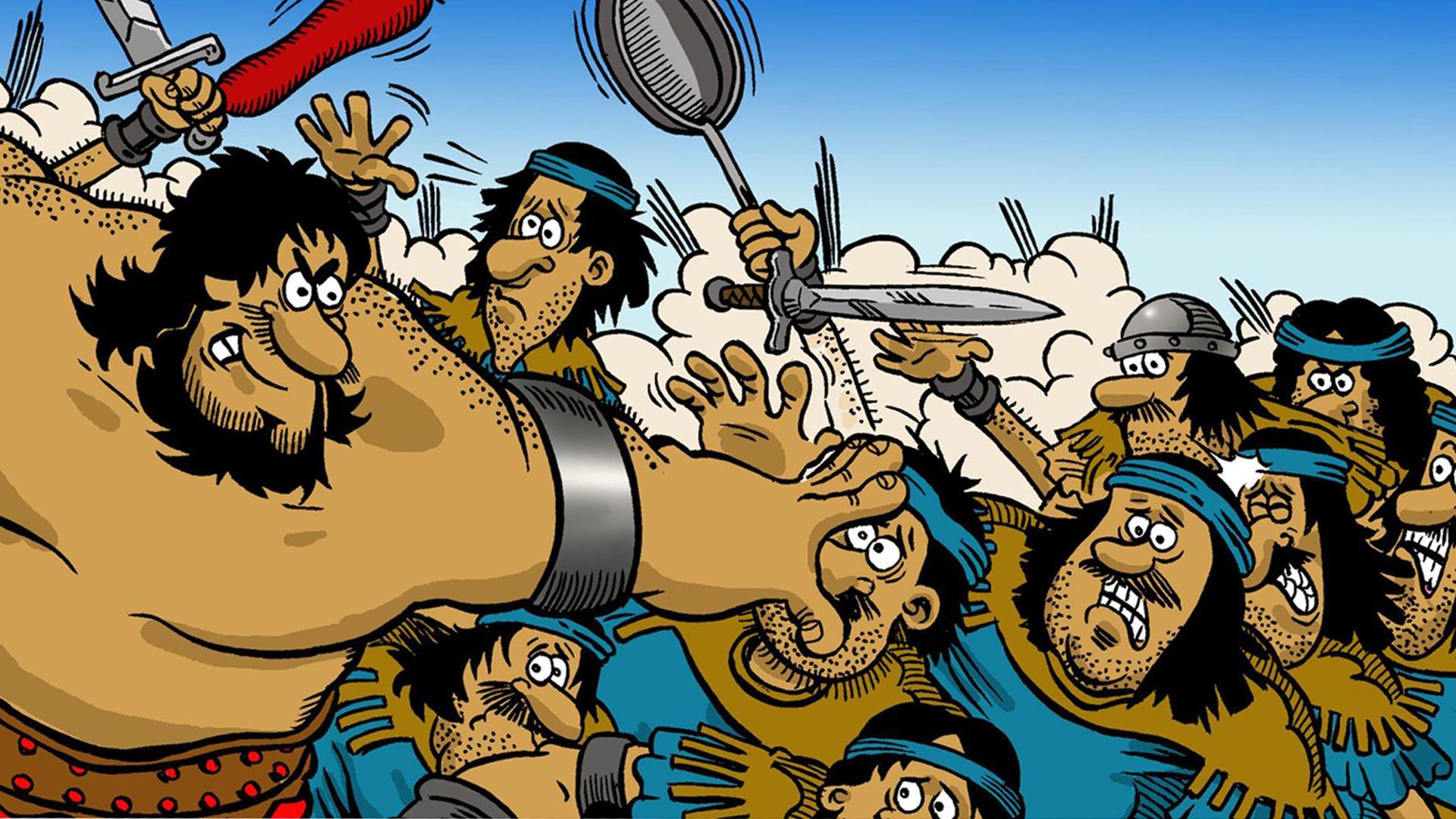
9 Next toLXXIV him among the threeLXXV warriors was EleazarLXXVI son of DodoLXXVII son of Ahohi.LXXVIII
LXXIV “next to” = achar. Related to “last” in v1. From achar (see note I above). This is after or the last part, following.
LXXV “three” = shalosh. Related to “Three” in v8. See note LXVII above.
LXXVI “Eleazar” = Elazar. Related to “God” and “Israel” in v1 & “God” in v5. From El (see note X above) + azar (to help, protect, support, ally; properly, to surround so as to provide aid). This is Elezar or Elazar, meaning “God has helped” or “God is helper.”
LXXVII “Dodo” = Dodo. Related to “David” in v1. 5x in OT. From the same as dod (see note III above). This is Dodo, a name that means “his beloved” or “loving.”
LXXVIII “Ahohi” = Achochi. 5x in OT. From achavah (brotherhood, fellowship, kinship); from ach (brother, kindred, another, other, like). This is Ahohite, which means one descended from Ahoach – “brotherly.”
He was with David when they defiedLXXIX the PhilistinesLXXX who were gatheredLXXXI there for battle.LXXXII
LXXIX “defied” = charaph. This is to expose and so figuratively to reproach, defame, carp at, defy. It can also mean spend the winter or betroth.
LXXX “Philistines” = Pelishti. From Pelesheth (Philistia); from palash (to mourn, wallow, maybe roll in). This is Philistines. Their name may mean “griever” or “burrower” or “weakener.” See https://www.abarim-publications.com/Meaning/Philistine.html.
LXXXI “gathered” = asaph. This is to gather, assemble, or bring. It can also mean to take away, destroy, or remove.
LXXXII “battle” = milchamah. From lacham (to eat or feed on; figuratively, to battle as a kind of consumption/destruction). This is battle, war, fighting, or one who fights (i.e. a warrior).
The IsraelitesLXXXIII withdrew,LXXXIV 10 but he stood his ground.LXXXV He struck downLXXXVI the Philistines until his armLXXXVII grew weary,LXXXVIII
LXXXIII “Israelites” = Ish + Yisrael. Literally, “man of Israel.” Ish is the same as “one” in v7. See note LIV above. Yisrael is the same as “Israel” in v1. See note XIV above.
LXXXIV “withdrew” = alah. Related to “exalted” in v1. See note VIII above.
LXXXV “stood…ground” = qum. Same as “exalted” in v1. See note VIII above.
LXXXVI “struck down” = nakah. This is to hit whether lightly or severely. It can be used in a literal or figurative sense. So, this could be beat, punish, give wounds, kill, or slaughter.
LXXXVII “arm” = yad. Same as “hand” in v6. See note LII above.
LXXXVIII “grew weary” = yaga. This is to work, become weary, to gasp or be exhausted, to toil.
though his hand clungLXXXIX to the sword.XC The Lord brought aboutXCI
LXXXIX “clung” = dabaq. This is to follow closely or abide fast, to cling or be joined together. Figuratively, it can mean to catch something by chasing after it, to overtake, or to stick. A man clings to his wife in Genesis 2:24, Shechem was deeply attracted to Dinah in Genesis 34:3, Ruth clung to Naomi in Ruth 1:14, Solomon clung to his foreign wives and concubines in 1 Kings 11:2. It is also used of a tongue sticking to the mouth, pursuing or overtaking as in battle, and also clinging to God.
XC “sword” = chereb. From charab (to attack, slay). This is any sharp instrument like a sword, dagger, axe, or mattock.
XCI “brought about” = asah. This is to make, do, act, appoint, become in many senses.
a greatXCII victoryXCIII that day.XCIV
XCII “great” = gadol. From gadal (to grow up, become great, become wealthy – to advance. The root meaning may be to twist in the sense of the process of growing). This is great, high, bigger, noble, old, marvelous. It can also refer to someone who is powerful or distinguished.
XCIII “victory” = teshuah. Related to “help” in v5. From yasha (see note XLV above). This is deliverance or salvation.
XCIV “day” = yom. Root may mean being hot. This is the day in a literal or figurative sense. It can also mean birth, age, daylight, continually or other references to time.
Then the peopleXCV came backXCVI toXCVII him—but onlyXCVIII to strip the dead.XCIX
XCV “people” = am. From amam (to darken, hide, associate; creating shadows by huddling together). This is people or nation. It can be used specifically for a tribe, collectively of troops or armies, or figuratively to refer to a flock of animals.
XCVI “came back” = shub. To turn back, return, turn away – literally or figuratively. Doesn’t necessarily imply going back to where you started from. This is also the root verb for the Hebrew word for repentance “teshubah.”
XCVII “to” = achar. Same as “next to” in v9. See note LXXIV above.
XCVIII “only” = ak. Related to “this” in v5. Related to aken (surely, truly, nevertheless); from kun (see note XXXVI above). This is a positive statement – surely, also, certainly, alone, only.
XCIX “strip the dead” = pashat. This is to raid or invade. Figuratively, it means to strip or plunder.
11 Next to him was ShammahC son of AgeeCI the Hararite.CII The Philistines gathered togetherCIII at Lehi,
C “Shammah” = Shamma. 2x in OT. From shamem (to be appalled, astonished; to stun or devastate, be destitute). This is Shamma, meaning “desolation” or “waste” or “astonishment.” See https://www.abarim-publications.com/Meaning/Shamma.html
CI “Agee” = Age. 1x in OT. Uncertain derivation. Agee may mean “eternity” or “everlasting” or “perpetual.”
CII “Hararite” = Harari. 5x in OT. From harar (mountain, hill); from the same as har (hill country, promotion; lit or fig). This is Hararite, meaning “mountain dweller” or “mountaineer.”
CIII {untranslated} = chay. From chayah (to live or keep alive literally or figuratively). This is alive, living, lifetime. It can also be used to describe someone’s age. It can refer to animals, plants, water, or a company or congregation of people. It is life in a very broad sense.
where there wasCIV a plotCV of groundCVI fullCVII
CIV “was” = hayah. Related to “Lord” in v2. See note XVI above.
CV “plot” = chelqah. From cheleq (portion, catch, division, reward, share, smooth tongue, flattery, associate); from chalaq (to be smooth in a figurative sense; can refer to the stones that were part of casting lots – hence, apportion, share, distribute; figuratively, it can also mean to flatter). This is smoothness. Figuratively it can mean a tract of land or other allotment or flattery.
CVI “ground” = sadeh. From the same as shadday (almighty, field, land); from shadad (to devastate, ruin, destroy, oppress, be powerful). Or, it may be from a word that means to spread out. This is field, ground, soil, or land. It can be used to mean wild as in a wild animal.
CVII “full” = meleah. Related to “uses” in v7. 8x in OT. From male (see note LV above). This is fullness, abundance of harvest.
of lentils,CVIII and the armyCIX fledCX fromCXI the Philistines.
CVIII “lentils” = adashah. 4x in OT. This is a lentil.
CIX “army” = am. Same as “people” in v10. See note XCV above.
CX “fled” = nus. This is to flee, vanish away, hide, escape, be displayed.
CXI “from” = paneh. From panah (to turn, face, appear). This is face in a literal or figurative sense. It could be face, presence, anger, respect. It can also be used of God to indicate divine favor or presence.
12 But he took his standCXII in the middleCXIII of the plot, defendedCXIV it, and killedCXV the Philistines, and the Lord brought about a great victory.
CXII “took…stand” = natsab. This is to station, appoint, establish, take a stand.
CXIII “middle” = tavek. This is among, middle, in the midst, the center. Perhaps, properly, to sever.
CXIV “defended” = natsal. This is to snatch someone or something away in a good sense – as rescue, defend, or deliver – or in a bad sense – as strip or plunder.
CXV “killed” = nakah. Same as “struck down” in v10. See note LXXXVI above.
13 Toward the beginning of harvestCXVI threeCXVII of the thirtyCXVIII chiefs went downCXIX to joinCXX David
CXVI “harvest” = qatsiyr. From qatsar (to cut down, be short, reap, curtail; used especially for harvesting grass or grain; figuratively, to be discouraged or grieve). This is branch, harvest, one who harvests. Properly, this means severed, reaped. It is the crop being harvested, the time of harvest or the one who harvests. It can also be a bough.
CXVII “three” = sheloshim. Related to “Three” in v8 & “three” in v9. From the same as shalosh (see note LXVII above). This is thirty or thirtieth.
CXVIII “thirty” = sheloshim. Same as “three” in v13. See note CXVII above.
CXIX “went down” = yarad. This is to go down, descend; going down in a literal or figurative sense. It can be going to the shore or a boundary, bringing down an enemy.
CXX “join” = bo. This is to enter, come in, advance, fulfill, bring offerings, enter to worship, attack. It can also have a sexual connotation.
at the caveCXXI of AdullamCXXII while a bandCXXIII of Philistines
CXXI “cave” = mearah. Perhaps from ur (to be made naked, exposed, or bare). This is a cave, cavern, den, or hole.
CXXII “Adullam” = Adullam. 8x in OT. Perhaps from the same as Adlay (Adlay, a person); {from adal (to flee, to be just) + am (people or nation; a tribe, troops or armies, or figuratively to refer to a flock of animals); {from amam (to darken, hide, associate; creating shadows by huddling together)}}. This is Adullam, a city name meaning “the justice of the people,” “retreat,” or “refuge.” See https://www.abarim-publications.com/Meaning/Adullam.html
CXXIII “band” = chay. Same as {untranslated} in v11. See note CIII above.
was encampedCXXIV in the valleyCXXV of Rephaim.CXXVI
CXXIV “encamped” = chanah. Related to “spear” in v7. See note LVIII above.
CXXV “valley” = emeq. From amoq (to be deep in a literal or figurative sense; profound). This is Vale or valley – frequently part of place names.
CXXVI “Rephaim” = Rapha. From raphah (to slacken in a literal or figurative sense. So, it could be to hang, be feeble, fail, drop, be helpless, relax, slink, subside, or wait) OR from rapha (properly, to repair by stitching – figuratively to heal or cure; to make whole). This is Rapha or Rephaim. It is someone who lived east of Jordan, a giant. It may mean “faded ones,” “healed ones,” or “what we’ve been healed from.” See https://www.abarim-publications.com/Meaning/Rephaim.html
14 David was thenCXXVII in the stronghold,CXXVIII and the garrisonCXXIX of the Philistines was then at Bethlehem.CXXX
CXXVII “then” = az. This is beginning, now, from, since.
CXXVIII “stronghold” = matsud. From matsod (bulwark, siege works, net, snare); from tsud (to hunt, to lie in wait in order to catch an animal; used figuratively for capturing people). This is a castle, fortress, or stronghold. Also, a snare, net, or prey. It can abstractly mean capture.
CXXIX “garrison” = matstsab. Related to “took…stand” in v12. 10x in OT. From natsab (see note CXII above). This is a standing place – it could be an office, garrison, or post.
CXXX “Bethlehem” = Beth lechem. Related to “son” in v1 & “house” in v5 and related to “battle” in v9. From bayit (see note XXXV above) + lechem (bread, food, loaf; food for people or for animals); {from lacham (see note LXXXII above)}. This is Bethlehem, meaning “house of bread.”
15 David saidCXXXI longingly,CXXXII “Oh, that someone would give me waterCXXXIII to drinkCXXXIV from the wellCXXXV of Bethlehem that is by the gate!”CXXXVI
CXXXI “said” = amar. Same as “spoken” in v3. See note XX above.
CXXXII “longingly” = avah. This is to desire, wish for, crave, lust after, to incline.
CXXXIII “water” = mayim. This is water, waters, or waterway in a general sense. Figuratively, it can also mean juice, urine, or semen.
CXXXIV “give…to drink” = shaqah. This is to give water to, to cause to drink – to irrigate, drown. It can be used for watering plants or giving water to flocks.
CXXXV “well” = bor. 4x in OT. From baar (to make plain; to dig; can also mean to engrave or figuratively to explain). This is a cistern or well.
CXXXVI “gate” = shaar. May be related to sha’ar (to calculate or reckon; may come from a root that means to open up or split). This is a gate, door, or other opening like a port.
16 Then the threeCXXXVII warriors broke throughCXXXVIII the campCXXXIX of the Philistines, drewCXL water from the well of Bethlehem that was by the gate, andCXLI broughtCXLII it to David.
CXXXVII “three” = shalosh. Same as “three” in v9. See note LXXV above.
CXXXVIII “broke through” = baqa. This is to break open, breach, divide, rip, shake, tear. It can also mean dash into pieces or being ready to burst.
CXXXIX “camp” = machaneh. Related to “spear” in v7 & “encamped” in v13. From chanah (see note LVIII above). This is an encampment, whether of people traveling together or soldiers. So, it can be a camp band, or company as well as an army of soldiers. Also can be used of other groups like animals, angels or stars.
CXL “drew” = shaab. 19x in OT. This is to draw water – as pulling it up from a well.
CXLI {untranslated} = nasa. This is to lift in a broad sense, literally and figuratively. So it could be to carry, take, or arise. It could also be bring forth, advance, accept.
CXLII “brought” = bo. Same as “join” in v13. See note CXX above.
But he wouldCXLIII not drinkCXLIV of it; he pouredCXLV it out to the Lord, 17 for he said,CXLVI “The Lord forbidCXLVII that I should doCXLVIII this.
CXLIII “would” = abah. This is to breathe after, be willing, obey, accept, be content with, satisfy.
CXLIV “drink” = shathah. This is to drink literally or figuratively. It could also be a drinker.
CXLV “poured” = nasak. This is to cover, pour out, offer like a libation, or to cast like one casts metal. By analogy, it can mean anointing a king.
CXLVI “said” = amar. Same as “spoken” in v3. See note XX above.
CXLVII “forbid” = chalilah. From chalal (to defile, pollute). This is literally something that is profaned. It is used to mean “God forbid” or “far be it.”
CXLVIII “do” = asah. Same as “brought about” in v10. See note XCI above.
Can I drink the bloodCXLIX of the menCL who wentCLI at the risk of their lives?”CLII
CXLIX “blood” = dam. Perhaps from damam (to cease, be or become mute, silent, still, cut off, hold peace, be astonished, die). This is blood, bloodshed, bloodguilt, lifeblood, and death. It is used for people and animals. More often blood from a wound or the blood of the innocent. Used figuratively for violence or for wine. Closely tied to life and death.
CL “men” = enosh. Related to “Jesse” in v1 & “one” in v7. See note VI above.
CLI “went” = halak. This is go, come, walk. It is walk literally and figuratively and includes people and animals. It can be used figuratively for one’s moral life – how we walk according to God’s way or against it. It can also refer to the walk of life as in the course one’s life takes, the choices we make, etc.
CLII “lives” = nephesh. Related to naphash (to refresh or be refreshed). This is soul, self, person, emotion. It is a breathing creature. Can also refer to appetites and desires.
Therefore he wouldCLIII not drink it. The threeCLIV warriors did these things.
18 Now AbishaiCLV son of Zeruiah,CLVI
CLIII “would” = abah. Same as “would” in v16. See note CXLIII above.
CLIV “three” = shalosh. Same as “three” in v9. See note LXXV above.
CLV “Abishai” = Abishay. From ab (father, ancestor, grandfather; father in a literal or figurative sense) + shay (a gift or present; something given as an act of homage); {from shavah (to equalize, resemble, agree with, compare, adjust, compose, place, or yield)}. This is Abishai, meaning “father of a gift,” which could mean “generous.”
CLVI “Zeruiah” = Tseruyah. Related to “Rock” in v3 and related to “Lord” in v2 & “was” in v11 & “Joab” in v18. From the same as tsori (root might be to crack as under pressure, to leak; gum from the balsam tree – perhaps commiphora gileadensis) + Yah (the shortened form of the name of the God of Israel; God, Lord); {from YHVH (see note XVI above) OR tsur (see note XXI above) + Yah (see above). This is Zeruiah, meaning “wounded” or “balsam of the Lord” or “his rock is the Lord.” See https://www.abarim-publications.com/Meaning/Zeruiah.html & https://en.wikipedia.org/wiki/Balsam & https://en.wikipedia.org/wiki/Balm_of_Gilead.
the brotherCLVII of Joab,CLVIII was chief of the Thirty.CLIX With his spear he foughtCLX against threeCLXI hundred men and killedCLXII them and won a name beside the Three.CLXIII
CLVII “brother” = ach. Related to “Ahohi” in v9. See note LXXVIII above.
CLVIII “Joab” = Yoab. Related to “Lord” in v2 & “was” in v11 and related to “Abishai” in v18. From YHVH (see note XVI above) + ab (see note CLV above). This is Joab or Yoab, meaning “the Lord is father.”
CLIX “Thirty” = shelishi. Related to “Three” in v8 & “three” in v9 & “three” in v13. From shalosh (see note LXVII above). This is third or one-third of something.
CLX “fought” = ur. This is to arise, lift, exult, or stir. It is to wake in a literal or figurative sense.
CLXI “three” = shalosh. Same as “three” in v9. See note LXXV above.
CLXII “killed” = chalal. Same as “killed” in v8. See note LXXI above.
CLXIII “Three” = shalosh. Same as “three” in v9. See note LXXV above.
19 He was the most renownedCLXIV of the ThirtyCLXV and becameCLXVI their commander,CLXVII but he did not attain toCLXVIII the Three.CLXIX
CLXIV “renowned” = kabad. To be heavy, weighty, or severe. It can also be positive abounding in, rich, or honorable. The Hebrew word for “glory,” kabod, is taken from this root.
CLXV “Thirty” = shalosh. Same as “three” in v9. See note LXXV above.
CLXVI “became” = hayah. Same as “was” in v11. See note CIV above.
CLXVII “commander” = sar. This is chief, leader, ruler, lord, official, governor, prince, military leader. It refers to someone at the top of a rank or class.
CLXVIII “attain to” = bo. Same as “join” in v13. See note CXX above.
CLXIX “Three” = shalosh. Same as “three” in v9. See note LXXV above.
20 BenaiahCLXX son of JehoiadaCLXXI was aCLXXII
CLXX “Benaiah” = Benayahu. Related to “son” in v1 & “house” in v5 & “Bethlehem” in v14 and related to “Lord” in v2 & “was” in v11 & “Joab” in v18 & “Zeruiah” in v18. From banah (see note V above) + Yah (see note CLVI above) OR from ben (see note V above) + Yah (see above). This is Benaiah, meaning “the Lord has built up” or “built by the Lord” or “child of God.” See https://www.abarim-publications.com/Meaning/Benaiah.html
CLXXI “Jehoiada” = Yehoyada. Related to “Lord” in v2 & “was” in v11 & “Joab” in v18 & “Zeruiah” in v18 & “Benaiah” in v20. From YHVH (see note XVI above) + yada (to know, be aware, see and so understand – includes observation, care, recognition; can also be used as a euphemism). This is Jehoiada, meaning “the Lord knows” or “Lord-known.”
CLXXII {untranslated} = ben. Same as “son” in v1. See note V above.
valiant warriorCLXXIII from Kabzeel,CLXXIV a doerCLXXV of great deeds;
CLXXIII “valiant warrior” = ish + chayil + rab. Literally, “a man very valliant.” Ish is the same as “one” in v7. See note LIV above. Chayil is from chul (to be firm, strong, prosperous; to endure). This is strength, wealth, ability, activity. It can refer to soldier or a company of soldiers as well as goods. It is a force of people, means, or goods. It can speak of valor, virtue, or strength. Rab is from rabab (increasing in any aspect whether quantity, authority, size, quality, greatness, etc.). This is abundance, many, elder, exceedingly, great. It refers to abundance of amount, rank, or status.
CLXXIV “Kabzeel” = Qabtseel. Related to “God” and “Israel” in v1 & “God” in v5 & “Eleazar” in v9. 3x in OT. From qabats (to collect, assemble, heap, grasp, gather) + El (see note X above). This is Kabzeel, a city whose name means “God gathers” or “God has gathered” or “God will assemble together” or “God’s gathering.” See https://www.abarim-publications.com/Meaning/Kabzeel.html
CLXXV “doer” = poal. From paal (to do, make, work, or accomplish; generally refers to regularly repeated or systematic action – to practice). This is an action or deed, conduct. It is the act of working or the work itself. It can also be wages or maker.
he struck down twoCLXXVI sons of ArielCLXXVII of Moab.CLXXVIII
CLXXVI “two” = shenayim. From sheni (double, again, another, second); from shanah (to fold, repeat, double, alter, or disguise). This is two, both, second, couple.
CLXXVII “Ariel” = Ariel. Related to “God” and “Israel” in v1 & “God” in v5 & “Eleazar” in v9 & “Kabzeel” in v20. 2x in OT. From ari (lion); {from arah (to gather, pluck)} + El (see note X above). This is Ariel, meaning “lion of God,” which is to say “heroic.”
CLXXVIII “Moab” = Moab. Related to “Abishai” and “Joab” in v18. May be from ab (see note CLV above). This is Moab or Moabite. Name could mean “from her father” in reference to the incestuous relationship between Lot and his daughters. The name could also mean, more pleasantly, “seed of a father” or “desirable land.” See https://en.wikipedia.org/wiki/Moab
He also went downCLXXIX and killedCLXXX a lionCLXXXI inCLXXXII a pitCLXXXIII on a day when snowCLXXXIV had fallen.
CLXXIX “went down” = yarad. Same as “went down” in v13. See note CXIX above.
CLXXX “killed” = nakah. Same as “struck down” in v10. See note LXXXVI above.
CLXXXI “lion” = ari. Related to “Ariel” in v20. See note CLXXVII above.
CLXXXII “in” = tavek. Same as “middle” In v12. See note CXIII above.
CLXXXIII “pit” = bor. Related to “well” in v15. From bur (to bore; figuratively, to explain, examine, or clear up); akin to baar (see note CXXXV above). This is a pit – generally a cistern or dungeon. It could also be a well or fountain.
CLXXXIV “snow” = sheleg. 19x in OT. Perhaps from shalag (to snow, to be white). This is snow or snowy.
21 And he killedCLXXXV an Egyptian,CLXXXVI a handsomeCLXXXVII man.CLXXXVIII
CLXXXV “killed” = nakah. Same as “struck down” in v10. See note LXXXVI above.
CLXXXVI “Egyptian” = Mitsri. Related to “Rock” in v3 & “Zeruiah” in v18. From the same as mitsrayim (Egypt); perhaps from matsor (besieged or fortified place, bulwark, entrenchment; something hemmed in; a siege or distress or fastness); from tsur (see note XXI above). This is Egyptian.
CLXXXVII “handsome” = mareh. From raah (to see, show, stare, think, view; to see in a literal or figurative sense). This is sight, appearance, or vision. It can be a view, seeing itself, that which is seen, something real, or a vision one sees.
CLXXXVIII “man” = ish. Same as “one” in v7. See note LIV above.
The Egyptian had a spear in his hand, but Benaiah wentCLXXXIX against him with a staff,CXC snatchedCXCI the spear out of the Egyptian’s hand, and killedCXCII him with his own spear.
CLXXXIX “went” = yarad. Same as “went down” in v13. See note CXIX above.
CXC “staff” = shebet. This is a rod, staff, club, scepter, dart, or tribe. Literally a stick that can be used for punishing, writing, fighting, walking, ruling; thus, used figuratively for a clan.
CXCI “snatched” = gazal. This is snatch, take violently, seize, tear away. It can also mean flay or rob.
CXCII “killed” = harag. This is to strike with deadly intent so it can be kill, destroy, murder, or put to death.
22 Such were the things Benaiah son of Jehoiada did and won a name beside the threeCXCIII warriors. 23 He was renowned among the Thirty,CXCIV but he did not attain to the Three. And David put him in chargeCXCV of his bodyguard.CXCVI
CXCIII “three” = shalosh. Same as “three” in v9. See note LXXV above.
CXCIV “Thirty” = sheloshim. Same as “three” in v13. See note CXVII above.
CXCV “put…in charge” = sim. Same as “made” in v5. See note XXXVIII above.
CXCVI “bodyguard” = mishmaath. 3x in OT. From shama (hear, call, consent, or consider; implies listening intelligently, giving attention; obedience and action are often implied). This is report, news, subject, proverb, superiority.
24 Among the ThirtyCXCVII were AsahelCXCVIII brother of Joab; ElhananCXCIX son of Dodo of Bethlehem;
CXCVII “Thirty” = sheloshim. Same as “three” in v13. See note CXVII above.
CXCVIII “Asahel” = Asahel. Related to “brought about” in v10 and related to “God” and “Israel” in v1 & “God” in v5 & “Eleazar” in v9 & “Kabzeel” and “Ariel” in v20. 18x in OT. From asah (see note XCI above) + El (see note X above). This is Asahel, which means “God has made” or “made by God.” See https://www.abarim-publications.com/Meaning/Asahel.html
CXCIX “Elhanan” = Elchanan. Related to “God” and “Israel” in v1 & “God” in v5 & “Eleazar” in v9 & “Kabzeel” and “Ariel” in v20 & “Asahel” in v24. 4x in OT. From El (see note X above) + chanan (beseech, show favor, be gracious; properly, to bend in kindness to someone with less status). This is Elhanan, meaning “God is gracious” or “God has been gracious.”
25 ShammahCC of Harod;CCI ElikaCCII of Harod;
CC “Shammah” = Shammah. Related to “Shammah” in v11. 7x in OT. From the same as shammah (desolation, horror, dismay, waste); from shamem (see note C above). This is Shammah. It means “appalling desolation” or “waste.” See https://www.abarim-publications.com/Meaning/Shammah.html
CCI “Harod” = Charodi. 2x in OT. From charad (to tremble, being afraid, or being terrified; to moving quickly due to anxiety). This is Harodite – someone who lives in Harod.
CCII “Elika” = Eliqa. Related to “God” and “Israel” in v1 & “God” in v5 & “Eleazar” in v9 & “Kabzeel” and “Ariel” in v20 & “Asahel” and “Elhanan” in v24. 1x in OT. From El (see note X above) + qo (vomit up, vomit out); {from qayah (to vomit up)}. This is Elika, meaning “God of rejection.”
26 HelezCCIII the Paltite;CCIV IraCCV
CCIII “Helez” = Chelets. 5x in OT. From chalats (to arm, give strength). This is Helez, meaning “armor” or “breastplate” or “strength.”
CCIV “Paltite” = Palti. 1x in OT. From Palti (Palti, meaning “escape” or “delivered”); from palat (to escape, slip out, deliver, calve). This is Paltite, meaning “escape.”
CCV “Ira” = Ira. Related to “fought” in v18. 6x in OT. From uwr (see note CLX above) OR from the same as ayir (a male donkey or a colt as an animal of labor who is newly domesticated to bear loads); {perhaps from ur (see above)} OR from arar (to strip, make bare, destroy). This is Ira, which means “wakefulness” or “watchful” or “wild ass.” See https://www.abarim-publications.com/Meaning/Ira.html
son of IkkeshCCVI of Tekoa;CCVII 27 AbiezerCCVIII of Anathoth;CCIX
CCVI “Ikkesh” = Iqqesh. 3x in OT. From iqqesh (twisted, distorted, crooked, or perverted); from aqash (to twist, knot, distort; to act in a perverse manner). This is Ikkesh, meaning “perverse.”
CCVII “Tekoa” = Teqoi. 7x in OT. From Teqoa (Tekoa or Tekoah, meaning “trumpet” or “sudden thrust” or “firm” or “settlement” or “pitching;” see https://www.abarim-publications.com/Meaning/Tekoa.html ); from taqoa (a sound from a trump or other wind instrument; a blast); from taqa (clap, clatter, thrust, sound an instrument, hammer a nail, be a bondsman). This is someone from Tekoa.
CCVIII “Abiezer” = Abiezer. Related to “Abishai” and “Joab” in v18 & “Moab” in v20 and related to “Eleazar” in v9. 7x in OT. From ab (see note CLV above) + Ezer (Ezer; “help”); {from the same as ezer (help, aid, helper); {from azar (see note LXXVI above)}. His is Abiezer, which means “my father is help” or “father of help” or “helpful.”
CCIX “Anathoth” = Annethoti. 5x in OT. From Anathoth (Anathoth, perhaps meaning “answers” or “answers to prayers” or “afflictions;” see https://www.abarim-publications.com/Meaning/Anath.html & https://www.abarim-publications.com/Meaning/Anathoth.html); perhaps from Anath (Anath, meaning “answer” or “eye” or “fountain” or “answer to prayer”); {from anah (to answer, respond, announce, sing, shout, or testify; to pay attention, which implies responding and, by extension, starting to talk; singing, shouting, testifying, etc.) or from ayin (eye, appearance; eye in a literal or figurative sense; a fountain)} OR from anah (to be busy, occupied) OR from anah (to be bowed down; humility or being browbeaten, oppressed, afflicted, or depressed; literal or figurative – depressed in mood or circumstance). This is someone from Anathoth – meaning “answers” or “answers to prayers” or “afflictions.”
MebunnaiCCX the Hushathite;CCXI 28 ZalmonCCXII the Ahohite;CCXIII
CCX “Mebunnai” = Mebunnay. Related to “son” in v1 & “house” in v5 & “Bethlehem” in v14 & “Benaiah” in v20. 1x in OT. From banah (see note V above). This is Mebunnai, meaning “built up” or “building.”
CCXI “Hushathite” = Chushati. 5x in OT. From Chushah (Hushah; “haste”); from chush (to hurry, be eager). This is someone descended from Hushah.
CCXII “Zalmon” = Tsalmon. 3x in OT. From tselem (phantom, resemblance, illusion, image, idol). This is Zalmon, a place whose name may mean “shady,” “dark,” “place of the idol,” or “man of the idol.” See https://www.abarim-publications.com/Meaning/Zalmon.html
CCXIII “Ahohite” = Achochi. Same as “Ahohi” in v9. See note LXXVIII above.
MaharaiCCXIV of Netophah;CCXV 29 HelebCCXVI son of BaanahCCXVII of Netophah;
CCXIV “Maharai” = Maharay. 3x in OT. From mahar (being liquid, which implies flowing; implies hurrying forward, whether in a positive or negative sense). This is Maharai, meaning “hasty” or “swift” or “skilled.” See https://www.abarim-publications.com/Meaning/Maharai.html
CCXV “Netophah” = Netophati. 11x in OT. From Netophah (Netophah; “distillation”); from nataph (to drip, ooze, or drop; the process of gradual distillation that causes liquid to fall drop by drop; figuratively, prophesying or inspired speech). This is someone who lives in Netophah – a place that means “dropping” or “dripping.” See https://www.abarim-publications.com/Meaning/Netophah.html
CCXVI “Heleb” = Cheleb. 1x in OT. From cheleb (fat, finest, marrow; fat in a literal or figurative sense; the richest or best part). This is Heleb, meaning “fatness.”
CCXVII “Baanah” = Baanah. Related to “Anathoth” in v27 and related to “son” in v1 & “house” in v5 & “Bethlehem” in v14 & “Benaiah” in v20 & “Mebunnai” in v27. 9x in OT. Perhaps from anah (see note CCIX above) OR from ben (see note V above) + anah (see note CCIX above). This is Baanah, meaning “in affliction” or “son of affliction” or “son of distress” or “son of response.” See https://www.abarim-publications.com/Meaning/Baana.html
IttaiCCXVIII son of RibaiCCXIX of GibeahCCXX of the Benjaminites;CCXXI
CCXVIII “Ittai” = Ittay. 9x in OT. From et (with, among, beside, concerning, near); {from anah (to meet, happen, approach)}. This is Ithai or Ittai, a name which may mean, “companionable” or “near.” See https://www.abarim-publications.com/Meaning/Ittai.html
CCXIX “Ribai” = Ribay. 2x in OT. From rib (verb). This is Ribai, meaning “contentious.”
CCXX “Gibeah” = Gibah. From the same as Geba (Geba or Gibeah; hillock); from the same as gabia (cup, bowl, flower; root might mean being convex). This is Gibeah, a city whose name means “hill.”
CCXXI “Benjaminites” = ben + Binyamin. Literally, “children of Benjamin.” Ben is the same as “son” in v1. See note V above. Binyamin is related to “son” in v1 & “house” in v5 & “Bethlehem” in v14 & “Benaiah” in v20 & “Mebunnai” in v27 & “Baanah” in v29. From ben (see note V above) + from yamin (right hand or side; that which is stronger or more agile; the south); {perhaps yamam (to go or choose the right, use the right hand; to be physically fit or firm)}. This is Benjamin, meaning “son of the right hand.” It could refer to Benjamin himself, his offspring, their tribe, or their territory.
30 Benaiah of Pirathon;CCXXII HiddaiCCXXIII of the wadisCCXXIV of Gaash;CCXXV
CCXXII “Pirathon” = Pirathoni. 5x in OT. From Pirathon (Pirathon; “height” or “chieftaincy”); from the same as pera (leader, revenge, lengthy hair); from pera (hair, unkempt hair); from para (to avenge, avoid, loosen, expose, begin). This is Pirathonite, someone from Pirathon, which man mean “place of the little pharaoh” or “town of the confederation” or “height” or “just revenge.” See https://www.abarim-publications.com/Meaning/Pirathon.html
CCXXIII “Hiddai” = Hidday. 1x in OT. This is Hiddai.
CCXXIV “wadis” = nachal. From nachal (to take as heritage, inherit, or distribute). This is a river or stream. It could be a wadi or arroyo – sometimes a narrow valley with no water at all, but in strong rains or when winter snow melts, it swells or floods with water.
CCXXV “Gaash” = Gaash. 4x in OT. From gaash (to shake, quake, move, trouble, surge, or agitate violently). This is Gaash, meaning “a quaking.”
31 Abi-albonCCXXVI the Arbathite;CCXXVII AzmavethCCXXVIII of Bahurim;CCXXIX
CCXXVI “Abi-albon” = Abi-albon. Related to “Abishai” and “Joab” in v18 & “Moab” in v20 & “Abiezer” in v27. 1x in OT. From ab (see note CLV above) + unused root. This is Abi-albon, which may mean “father or strength,” which is to say valiant.
CCXXVII “Arbathite” = Arbati. 2x in OT. From arabah (a desert valley or plain, wilderness; the name of a place Arabah); {from the same as arab (desert plateau, Arabia)} OR from arab (to become evening); {from ereb (evening) or from arab (to exchange, give or take on pledge, braid, intermix)}. This is Arbathite – someone who comes from Arabah or Bath-arabah.
CCXXVIII “Azmaveth” = Azmavet. 8x in OT. From az (strong or mighty; power, vehemence, greedy); {from azaz (to be strong, become fixed, be bold, prevail, be impudent; it means to be stout literally or figuratively. A Late Hebrew word)} + mavet (death, deadliness, the dead, or the place where the dead go; figuratively, pestilence or ruin); {from mut (to die in a literal or figurative sense)}. This is Azmaveth, meaning “strong one of death” or “death is strong.” See https://www.abarim-publications.com/Meaning/Azmaveth.html
CCXXIX “Bahurim” = Barchumi. 1x in OT. From Baharumite (Baharumite – someone living in Bachurim); from Bachurim (Bahurim; “young men” or “young men’s village” or “the preferred ones” or “village of young men;” see https://www.abarim-publications.com/Meaning/Bahurim.html); from bachur (choice, chosen, selected; a youth or young man); from bachar (to choose, appoint, try, excellent). This is Barhumite – someone from Bahurim.
32 EliahbaCCXXX of Shaalbon;CCXXXI the sons of Jashen:CCXXXII JonathanCCXXXIII
CCXXX “Eliahba” = Elyachba. Related to “God” and “Israel” in v1 & “God” in v5 & “Eleazar” in v9 & “Kabzeel” and “Ariel” in v20 & “Asahel” and “Elhanan” in v24 & “Elika” in v25. 2x in OT. From El (see note X above) + chaba (to hide, hush, harden (like water freezing), or secret). This is Eliahba, which means “God will hide” or “God hides” or “God conceals.” See https://www.abarim-publications.com/Meaning/Eliahba.html
CCXXXI “Shaalbon” = Shaalboni. 2x in OT. From Shaalbim (Shaalbin or Shaalbim; “foxholes” or “haunt of foxes”)’ from shual (a fox or jackal; an animal that spends its time in ruins or wastelands and eats carrion); {perhaps from the same as sho’al (to hollow, the palm, a handful)} OR perhaps from shual (see above) + bin (to discern, consider, attend to; distinguishing things in one’s mind or, more generally, to understand). This is Shaalbon or someone from Shaalbon, meaning “foxhole” or “sly fox” or “understanding by ferreting.” See https://www.abarim-publications.com/Meaning/Shaalabbin.html
CCXXXII “Jashen” = Yashen. 1x in OT. From yashen (sleeping, asleep); from yashen (to be languid or go slack; it can mean to sleep, become old or stale, or die). This is Jashen, meaning “sleeping.”
CCXXXIII “Jonathan” = Yehonatan. Related to “Lord” in v2 & “was” in v11 & “Joab” in v18 & “Zeruiah” in v18 & “Benaiah” and “Jehoiada” in v20. From YHVH (see note XVI above) + natan (to give, put, set, offer; to give literally or figuratively). This is Jonathan or Jehonathan, meaning “the Lord has given.”
33 son of ShammahCCXXXIV the Hararite; AhiamCCXXXV son of ShararCCXXXVI the Hararite;
CCXXXIV “Shammah” = Shammah. Same as “Shammah” in v25. See note CC above.
CCXXXV “Ahiam” = Achiam. Related to “Ahohi” in v9 & “brother” in v18. 2x in OT. From ach (see note LXXVIII above) + em (mother as binding a family together or a breeding female animal; mother in a literal or figurative sense). This is Ahiam, which may mean “brother of the mother,” which is to say “uncle.” It could also be mother in a figurative sense so, for example “kin of the motherland.” See https://www.abarim-publications.com/Meaning/Ahiam.html
CCXXXVI “Sharar” = Sharar. 2x in OT. From sharar (be firm, hostile); {akin to shorer (treacherous, foe); from shur (to behold, see, watch, perceive; to spy out, lie in wait, lurk for; can also be to care for)} OR from the same as shor (body, umbilical cord, core of strength); {perhaps from sharar (enemy); akin to shorer (see above)}. This is Sharar, meaning “naval” or “umbilical cord” or “hostile” or “firm.” See https://www.abarim-publications.com/Meaning/Sharar.html
34 ElipheletCCXXXVII son of AhasbaiCCXXXVIII, CCXXXIX of Maacah;CCXL
CCXXXVII “Eliphelet” = Eliphelet. Related to “God” and “Israel” in v1 & “God” in v5 & “Eleazar” in v9 & “Kabzeel” and “Ariel” in v20 & “Asahel” and “Elhanan” in v24 & “Elika” in v25 & “Eliahba” in v32 and related to “Paltite” in v26. 9x in OT. From El (see note X above) + pallet (deliverance, escape); {from palat (see note CCIV above)}. This is Eliphelet, meaning “God of deliverance” or “God is deliverance.”
CCXXXVIII “Ahasbai” = Achasbay. 1x in OT. derivation uncertain. This is Ahasbai.
CCXXXIX {untranslated} = ben. Same as “son” in v1. See note V above.
CCXL “Maacah” = Maakati. 8x in OT. From Maakah (Maacah or Maakath; “depression,” “oppression,” “squeezer”); from maak (to pierce, squeeze, stick, handle). This is Maacathite – someone living in Maacah.
EliamCCXLI son of AhithophelCCXLII the Gilonite;CCXLIII
CCXLI “Eliam” = Eliam. Related to “God” and “Israel” in v1 & “God” in v5 & “Eleazar” in v9 & “Kabzeel” and “Ariel” in v20 & “Asahel” and “Elhanan” in v24 & “Elika” in v25 & “Eliahba” in v32 & “Eliphelet” in v34 and related to “people” in v10. 2x in OT. From El (see note X above) + am (see note XCV above). This is Eliam, a name meaning “God is kinsman,” “God of the people,” or “God’s people.” See https://www.abarim-publications.com/Meaning/Eliam.html
CCXLII “Ahithophel” = Achithophel. Related to “Ahohi” in v9 & “brother” in v18 & “Ahiam” in v33. From ach (see note LXXVIII above) + taphel (root means to smear; something that is tasteless, unseasoned, or whitewashed; figuratively, frivolous, foolish, or unsavory). This is Ahithophel, which means “brother of folly” or “my brother is folly.” See https://www.abarim-publications.com/Meaning/Ahithophel.html
CCXLIII “Gilonite” = Giloni. 2x in OT. From Giloh (Giloh, meaning “open” or “exile” or “exposed” or “basin” or “rejoicing”); {from galah (to remove, bring, carry, lead, appear; to strip someone or something bare in a negative sense; captives were typically stripped before being sent into exile; figuratively, in a positive sense, to reveal, disclose, discover) OR from gil (properly, twirling around because of a strong feeling – whether of rejoicing or from fear; to rejoice, be glad or joyful, to cry)}. This is someone from Giloh. See https://www.abarim-publications.com/Meaning/Giloh.html
35 HezroCCXLIV of Carmel;CCXLV PaaraiCCXLVI the Arbite;CCXLVII
CCXLIV “Hezro” = Chetsro. 2x in OT. From Chetsron (Hezron, meaning “courtyard” or “enclosure” or “surrounded by a wall” or “cluster” or “village;” see https://www.abarim-publications.com/Meaning/Hezron.html); from the same as chatser (enclosure or court – a yard that is fenced in; a village or hamlet that is walled in). This is Hezro, meaning “enclosure.”
CCXLV “Carmel” = Karmeli. 5x in OT. From Karmel (Carmel; “fruitful plentiful field” or “plantation” or “orchard” or “garden”); from the same as kerem (vineyard, garden, vines, or a vintage). This is Carmelite. See https://www.abarim-publications.com/Meaning/Carmel.html
CCXLVI “Paarai” = Paaray. 1x in OT. From paar (to gape, yawn; open wide – especially the mouth – in a literal or figurative sense). This is Paarai, meaning “yawning” or “opening.” See https://www.abarim-publications.com/Meaning/Paarai.html
CCXLVII “Arbite” = Arbi. 1x in OT. Perhaps from Arab (Arab; ambush); from arab (to ambush, lurk, lie in wait). This is Arbite or from Arab.
36 IgalCCXLVIII son of NathanCCXLIX of Zobah;CCL
CCXLVIII “Igal” = Yigal. 3x in OT. From gaal (to redeem someone or something according to kinship laws; acting on a relative’s behalf to buy back their property, to marry one’s brother’s widow; to redeem, acts as kinsman; as a noun, deliverer or avenger). This is Igal or Yigal, meaning “he will redeem” or “he will defile.” See https://www.abarim-publications.com/Meaning/Igal.html
CCXLIX “Nathan” = Natan. Related to “Jonathan” in v32. From natan (see note CCXXXIII above). This is Nathan, meaning “given” or “[God] gives.”
CCL “Zobah” = Tsoba. 12x in OT. Perhaps from tsaba (to wage war, serve, assemble, fight, perform, muster, wait on) OR from tsabah (to swell, grow, amass like an army). This is Zobah, Tsoba, or Tsobah, which may come from a word meaning to station. So, it is “a station” or “engagement” or “collective” or “beauty” or “depression.” See https://www.abarim-publications.com/Meaning/Zobah.html
BaniCCLI the Gadite;CCLII 37 ZelekCCLIII the Ammonite;CCLIV
CCLI “Bani” = Bani. Related to “son” in v1 & “house” in v5 & “Bethlehem” in v14 & “Benaiah” in v20 & “Mebunnai” in v27 & “Baanah” and “Benjaminites” in v29. 14x in OT. From banah (see note V above). This is Bani, meaning “built.”
CCLII “Gadite” = Gadi. 15x in OT. From Gad (Gad, “fortune” or “fortunate”); perhaps from gad (fortune, troop; Gad, the name of a god of Babylon); from gad (fortunate, a troop); from gud (to invade, overcome, attack). This is Gadite, someone who comes from the tribe of Gad.
CCLIII “Zelek” = Tseleq. 2x in OT. Derivation uncertain. This is Zelek, meaning “scar” or “wound” or “fissure” or “cleft.” See https://www.abarim-publications.com/Meaning/Zelek.html
CCLIV “Ammonite” = Ammoni. Related to “people” in v10 & “Eliam” in v34. 17x in OT. From Ammon (Ammon, Ammonite; perhaps meaning “tribal”); {from im (with, against, before, beside); {perhaps from amam (see note XCV above)} OR from am (see note XCV above)}. This is Ammonite or like the Ammonites.
NaharaiCCLV of Beeroth,CCLVI the armor-bearerCCLVII of Joab son of Zeruiah;
CCLV “Naharai” = Nacharay. 2x in OT. From nachar (nostril or snorting; root means to snort or snore). This is Naharai, meaning “snorter” or “snorting” or “hotly.” See https://www.abarim-publications.com/Meaning/Naharai.html
CCLVI “Beeroth” = Beeroti. Related to “well” in v15 & “pit” in v20. 5x in OT. From Beeroth (Beeroth, a place whose name means “wells”); from beer (a well or pit); from baar (see note CXXXV above). This is someone from Beeroth – a Beerothite.
CCLVII “armor-bearer” = nasa + keli. Nasa is the same as {untranslated} in v16. See note CXLI above. Keli is from kalah (to end, be finished, complete, prepare, consume, spent, or completely destroyed). This is something that was prepared – any implement, utensil, article, vessel, weapon, or instrument. Also includes jewels, weapons, bags, carriages, and furniture.
38 Ira the Ithrite;CCLVIII GarebCCLIX the Ithrite; 39 UriahCCLX the HittiteCCLXI—thirty-sevenCCLXII in all.
CCLVIII “Ithrite” = Yithri. 5x in OT. From Yether (Jethro; “excellent” or “his excellence” or “his remnant;” see https://www.abarim-publications.com/Meaning/Jethro.html); from yether (a remainder or excess; abundant, superiority; a cord a free-hanging rope); from yathar (to jut over, remain behind, preserve, to excel). This is Ithrite, someone descended from Jether or Jethro.
CCLIX “Gareb” = Gareb. 3x in OT. From the same as garab (may come from a word that means to scratch; an itch or scab, eczema). This is Gareb, meaning “scabby.”
CCLX “Uriah” = Uriyah. Related to “light” in v4 and related to “Lord” in v2 & “was” in v11 & “Joab” in v18 & “Zeruiah” in v18 & “Benaiah” and “Jehoiada” in v20. From ur (fire, light, the east); {from or (see note XXVII above)} + Yah (see note CLVI above)}. This is Uriah or Urijah, a name meaning “flame of the Lord,” “the Lord is light,” “light of the Lord.” See https://www.abarim-publications.com/Meaning/Uriah.html
CCLXI “Hittite” = Chitti. From cheth (Heth or Cheth; one of Canaan’s sons from whom perhaps the Hittites descend) OR from hatat (terror, lacking strength or courage); perhaps from hata (to seize; often used of coals from a fire). This is Hittite – perhaps meaning terrors or terrible. See https://www.abarim-publications.com/Meaning/Hittite.html#.XyMgpp5KhPY
CCLXII “thirty-seven” = sheloshim + sheba. Sheloshim is the same as “three” in v13. See note CXVII above. Sheba is seven or by sevenfold. It can also be used to imply a week or an indefinite number. Symbolically, this is the number of fullness, sacredness, perfection.
Image credit: “Eleazar son of Dodo” from “David’s Three Mighty Men” from the “Lion Kids Bible Comic” by Mychailo Kazybbrid of Edge Group – Lion Hudson.
