
Galatians 1
1 PaulI an apostleII—sent neither by human commissionIII nor from human authoritiesIV
I “Paul” = Paulos. From Latin Paulus (small, little). This is Paul or Paulos, meaning little.
II “apostle” = apostolos. From apostello (to send, send away, send forth as a messenger, to commission); {from apo (from, away from) + stello (to set, arrange, prepare, provide for); {probably from histemi (to stand, place, set up, establish, stand firm)}}. This is a messenger – someone sent out on a mission as an envoy or delegate. It can also refer to someone set at liberty. Generally, this is a messenger who is meant to be a representative of the one who sent them. They are thus, set apart on a mission literally or figuratively.
III “human commission” = anthropos. Probably from aner (man, male, husband) + ops (eye, face); {from optanomai (to appear, be seen); perhaps from horao (become, seem, appear)}. This is human, humankind. Used for all genders.
IV “human authorities” = anthropos. Same as “human commission” in v1. See note III above.
but through JesusV ChristVI and GodVII the Father,VIII
V “Jesus” = Iesous. From Hebrew Yehoshua (Joshua, the Lord is salvation); {from YHVH (proper name of the God of Israel; the self-existent and eternal one); {from havah (to become) or from hayah (to come to pass, become, be)} + yasha (to deliver, defend, help, preserve, rescue; properly, to be open, wide or free, which implies being safe. So, in a causative sense, this is to free someone)}. This is Jesus or Joshua in Greek – the Lord saves or the Lord is salvation.
VI “Christ” = Christos. From chrio (consecrate by anointing with oil; often done for prophets, priests, or kings). Literally, the anointed one, Christ. The Greek word for Messiah.
VII “God” = Theos. From Proto-Indo-European origins, meaning do, put, place. This is God or a god in general.
VIII “Father” = Pater. This is father in a literal or figurative sense. Could be elder, senior, ancestor, originator, or patriarch.
who raisedIX him from the deadX— 2 and allXI the brothersXII and sisters with me,
IX “raised” = egeiro. This is to awake, raise up or lift up. It can be to get up from sitting or lying down, to get up from sleeping, to rise from a disease or from death. Figuratively, it can be rising from inactivity or from ruins.
X “dead” = nekros. Perhaps from nekus (corpse). This is dead or lifeless, mortal, corpse. It can also be used figuratively for powerless or ineffective. It is where the word “necrotic” comes from.
XI “all” = pas. This is all, every.
XII “brothers” = adelphos. From a (with, community, fellowship) + delphus (womb). This is a brother in a literal or figurative sense. It is also used of another member of the Church.
To the churchesXIII of Galatia:XIV
3 GraceXV to you
XIII “churches” = ekklesia. From ek (from, out from) + kaleo (to call by name, invite, to name, bid, summon, call aloud) {related to keleuo (to command, order, direct); from kelomai (to urge on)}. This is properly a calling out or an assembly. It was used to refer to a church.
XIV “Galatia” = Galatia. 4x in NT. From gal (to be able; taken from the Gallic tribes who intermingled with Greeks by marriage). This is Galatia.
XV “grace” = charis. From chairo (to rejoice, be glad; used to say hello; properly, delighting in the grace of God or experiencing God’s favor); from char– (to extend favor, lean towards, be inclined to be favorable towards). This is grace, kindness, favor, gratitude, thanks. It is the sense of being inclined to or favorable towards – leaning towards someone to share some good or benefit. This can be literal, figurative, or spiritual. It is grace as abstract concept, manner, or action.
and peaceXVI from God our Father and the LordXVII Jesus Christ, 4 who gaveXVIII himself for our sinsXIX
XVI “peace” = eirene. Perhaps from eiro (to join, tie together to form a whole). This is one, peace, quietness, rest, peace of mind, harmony. Peace was a common farewell among Jews (i.e. shalom) and this well-wishing included a blessing of health and wholeness for the individual. This word also indicates wholeness and well-being – when everything that is essential is joined together properly. This is peace literally or figuratively. By implication, it is prosperity (but not in the sense of excessive wealth. Prosperity would have meant having enough from day to day.)
XVII “Lord” = Kurios. From kuros (authority, supremacy). This is a respectful address meaning master or sir. It refers to one who has control or power greater than one’s own. So, it was also applied to God and Jesus as Master or Lord.
XVIII “gave” = didomi. To give, offer, place, bestow, deliver. This is give in a literal or figurative sense.
XIX “sins” = hamartia. From hamartano (to miss the mark, do wrong, make a mistake, sin); {from a (not) + meros (a part or share)}. Literally, this means not having one’s share or portion – like not receiving inheritance or what was allotted to you. This word means missing the mark so it is used for guilt, fault, and acts of sin.
to set us freeXX from the presentXXI evilXXII age,XXIII
XX “set…free” = exaireo. 8x in NT. From ek (from, from out of) + haireo (to take, choose, or prefer) {probably related to airo (raise, take up, lift, remove)}. This is to remove, pluck, tear, or choose. Properly, it refers to a complete removal or a complete rescue.
XXI “present” = enistemi. Related to “apostle” in v1. 7x in NT. From en (in, on, at, by with, among) + histemi (see note II above). This is literally to place in or be at hand. Thus, it is to be present or the things that are present. It can also be something that is impending or instant.
XXII “evil” = poneros. From poneo (to toil); related to ponos (pain, trouble, labor, distress, suffering; toil, which implies anguish); from the base of penes (a laborer, poor person, starving or indigent person; someone who works for their living); from pernomai (working for a living; laborer, poor person; to work for daily bread); from peno (to toil to survive day by day). This is bad, evil, wicked, malicious, grievous, or toilsome. Properly, it is something that bears pain – it emphasizes the miseries and pains that come with evil. By contrast, the Greek kakos refers to evil as part of someone’s core character. Also contrasting the Greek sapros, which deals with falling away from a previously embodied virtue. This word can mean ill, diseased, morally culpable, derelict, vicious, malicious, or guilt. It can also refer to the devil or sinners.
XXIII “age” = aion. From the same as aei (ever, always, unceasingly, perpetually; on every occasion). This is an age, cycle of time, course, continued duration. It is also used to describe the eternal or forever. This is the word used to discuss the present age or the messianic age.
according to the willXXIV of our God and Father, 5 to whom be the gloryXXV forever and ever.XXVI Amen.XXVII
XXIV “will” = thelema. From thelo (to desire, wise, will, intend). This is the act of will, choice, purpose, or decree.
XXV “glory” = doxa. From dokeo (to have an opinion, seem, appear, suppose; a personal judgment; to think); from dokos (opinion). This is literally something that evokes a good opinion – something that connects to our understanding of intrinsic worth. The ultimate expression of this is, of course, God and God’s manifestation. So, this is opinion, honor, and dignity, but also praise, glory, renown, and worship.
XXVI “forever and ever” = eis + aion + ho + aion. Literally, “to the ages of the ages.” Aion is the same as “age” in v4. See note XXIII above.
XXVII “amen” = amen. From Hebrew amen (verily, truly, amen, truth, so be it, faithfulness); from aman (to believe, endure, fulfill, confirm, support, be faithful, put one’s trust in, be steadfast. Figuratively, this is to be firm, steadfast, or faithful, trusting, believing, being permanent, morally solid). This word is literally firmness, but figuratively fidelity, faithfulness, honesty, responsibility, trust, truth, steadfastness. Properly, it is to be sure, certain, or firm. This is a word of emphasis indicating that something crucial follows.
6 I am astonishedXXVIII that you are so quicklyXXIX desertingXXX
XXVIII “astonished” = thaumazo. From thauma (a wonder or marvel; used abstractly for wonderment or amazement; something that evokes emotional astonishment); may be from theaomai (to behold, look upon, see, contemplate, visit); from thaomai (to gaze at a spectacle; to look at or contemplate as a spectator; to interpret something in efforts to grasp its significance). This is to marvel, wonder, or admire. To be amazed out of one’s senses or be awestruck. Being astonished and starting to contemplate what was beheld. This root is where the word “theatre” comes from.
XXIX “quickly” = tacheos. 10x in NT. From tachus (quickly, promptly; without unreasonable delay). This is quickly, at once, soon, suddenly.
XXX “deserting” = metatithemi. 6x in NT. From meta (with, among, after, beyond) + tithemi (to put, place, set, fix, establish in a literal or figurative sense; properly, this is placing something in a passive or horizontal position). This is to transfer, bring back, desert, translate, pervert.
the one who calledXXXI you in the grace of Christ and are turning to a differentXXXII gospelXXXIII—
XXXI “called” = kaleo. Related to “churches” in v2. See note XIII above.
XXXII “different” = heteros. This is other, another, different, strange. It is another of a different kind in contrast to the Greek word allos, which is another of the same kind. This could be a different quality, type, or group.
XXXIII “gospel” = euaggelion. From eu (well, good, rightly) + aggelos (angel, messenger; a messenger from God bringing news – whether a prophet or an angel); {from aggellos (to bring tidings); probably from ago (to bring, lead, carry, guide)}. This is literally “the good news,” used for the gospel. This is also where “evangelism” comes from.
7 not that there isXXXIV anotherXXXV gospel, but there are some who are confusingXXXVI you and wantXXXVII to pervertXXXVIII the gospel of Christ.
XXXIV “is” = eimi. This is to be, exist.
XXXV “another” = allos. This is other, another. Specifically, it is another of a similar kind or type. There is a different word in Greek that speaks of another as a different kind (heteros).
XXXVI “confusing” = tarasso. 18x in NT. This is trouble, agitate, stir up. It is motion back and forth, creating inner turmoil or confusion, roiling water.
XXXVII “want” = thelo. Related to “will” in v4. See note XXIV above.
XXXVIII “pervert” = metastrepho. 3x in NT. From meta (with among, behind, beyond; implies a change following contact or action) + strepho (to turn, change, turn back, be converted; to turn around completely to take the opposite path or a completely different one); {from trope (turning, shifting, a revolution; figuratively, a variation); from trepo (to turn)}. This is to turn, change, distort, corrupt, or transmute.
8 But even if we or an angelXXXIX from heavenXL should proclaim to you a gospelXLI contrary to what we proclaimed to you, let that one be accursed!XLII
XXXIX “angel” = aggelos. Related to “gospel” in v6. See note XXXIII above.
XL “heaven” = ouranos. Related to “set…free” in v4. May be related to oros (mountain, hill); probably related to airo (see note XX above). This is the air, the sky, the atmosphere, and heaven. It is the sky that is visible and the spiritual heaven where God dwells. Heaven implies happiness, power, and eternity.
XLI “proclaim…a gospel” = euaggelizo. Related to “gospel” in v6 and related to “gospel” in v6 & “angel” in v8. From eu (see note XXXIII above) + aggelos (see note XXXIII above). This is evangelize – literally to preach the good news. It can be those who hear the news, the news, or a way to say gospel.
XLII “accursed” = anathema. Related to “deserting” in v6. 6x in NT. From anatithemi (to set up or fort, communicate, submit, declare); {from ana (up, again, back, among, anew) + tithemi (see note XXX above)}. This is solemn, anathema, or accursed. From its root, it is a thing that is laid up, such as a votive offering or something one pledges to God. So, it can be a divine curse or a divine ban, something or someone that is cast out.
9 As we have said before,XLIII so nowXLIV I repeat,XLV if anyone proclaims to you a gospel contrary to what you received,XLVI let that one be accursed!
XLIII “said before” = prolego. 14x in NT. From pro (before, earlier than, ahead, prior) + lego (to speak, tell, mention). This is to forewarn, state clearly, predict. It is saying ahead of time.
XLIV “now” = arti. Related to “set…free” in v4 & “heaven” in v8. Perhaps from airo (see note XX above). This is now, the present, from now.
XLV “repeat” = palin + lego. Palin is perhaps from the same as pale (wrestling, struggle, conflict); from pallo (to sway or vibrate). This is back, again, anew. Lego is related to “said before” in v9. See note XLIII above.
XLVI “received” = paralambano. From para (beside, by, in the presence of) + lambano (active acceptance/taking of what is available or what has been offered; emphasizes the choice and action of the individual). This is to receive, take, acknowledge, associate with. It can also mean to take on an office or to learn.
10 Am I now seeking human approvalXLVII or God’s approval? Or am I tryingXLVIII to pleaseXLIX
XLVII “seeking…approval” = peitho. This is to have confidence, to urge, be persuaded, agree, assure, believe, have confidence, trust. It is the root from which the Greek word for faith is drawn (pistis).
XLVIII “trying” = zeteo. This is to seek, search for, desire. It is searching for something by inquiring or investigation. It can be seek in a literal or figurative sense. There is a Hebrew figure of speech “to seek God’s face” so it can also mean to worship God. Alternately, you could seek someone’s life i.e. plot to kill them.
XLIX “please” = aresko. Related to “set…free” in v4 & “heaven” in v8 & “now” in v9. 17x in NT. Root means to fit together. Perhaps related to airo (see note XX above). This is to please or be agreeable. It implies voluntarily serving others, satisfying others, or making good to win their favor or approval. It is often used for moral agreement. It can mean being agreeable or trying to be agreeable. Used 9x of pleasing people in a negative way, 5x of pleasing people in a positive way, and 3x of pleasing God.
people?L If I were stillLI pleasing people, I would not be a servantLII of Christ.
L “people” = anthropos. Same as “human commission” in v1. See note III above.
LI “still” = eti. Perhaps similar to etos (year, age). This is still, even, in addition.
LII “servant” = doulos. Perhaps from deo (to tie, bind, fasten, impel, compel; to declare something against the law or prohibited). This is used for a servant or for a slave, enslaved. It refers to someone who belongs to someone else. But, it could be voluntary (choosing to be enslaved to pay off debt) or involuntary (captured in war and enslaved). It is used as a metaphor for serving Christ. Slavery was not inherited (i.e. the children of slaves were not assumed to be slaves) and slaves could buy their way to freedom. Slavery was generally on a contractual basis (that is for the duration of how long it took you to pay your debt and/or save up enough money to buy your freedom).
11 For I want you to know,LIII brothers and sisters, that the gospel that was proclaimed by me is not of human origin, 12 for I did not receive it from a human source, nor was I taughtLIV it, but I received it through a revelationLV of Jesus Christ.
LIII “know” = gnorizo. From ginosko (to know, recognize, realize, perceive, learn; gaining knowledge through personal experience). This is to declare, know, discover, make known.
LIV “taught” = didasko. From dao (learn). This is to teach, direct, instruct, or impart knowledge. In the New Testament, this is almost always used for teaching scripture.
LV “revelation” = apokalupsis. 18x in NT. From apokalupto (properly to uncover; revealing something that was hidden or obstructed; particularly refers to revealing the essence of something; to make plain or manifest); {fromapo (from, away from) + kalupto (to cover, hide, conceal; figuratively, to keep hidden or secret) {related to kalube (hut, cabin)}. This is uncovering, unveiling, appearing, manifestation, or revelation. This is where the word “apocalypse” comes from.
13 You have heard,LVI no doubt, of my earlierLVII lifeLVIII in Judaism.LIX
LVI “heard” = akouo. This is hear or listen, but it also means to understand by hearing. This is where the word “acoustics” comes from.
LVII “earlier” = pote. From the same as posos (how much, how many, how big); {from pos (who, what) + hos (who, which, that)} + te (and, both). This is once, ever, formerly.
LVIII “life” = anastrophe. Related to “pervert” in v7. 13x in NT. From anastrepho (to turn back, return, or overturn; can also imply busying oneself and so to remain, dwell, behave, or live somewhere); {fromana (up, again, back, among, anew) + strepho (see note XXXVIII above)}. This is behavior, conduct, life, or manner of life. It is behavior drawn from core beliefs.
LIX “Judaism” = Ioudaismos. 2x in NT. From Ioudaios (Jewish, a Jew, Judea); From Ioudas (Judah, Judas); from Hebrew Yehudah (Judah, son of Jacob, his tribal descendants, a name for the southern kingdom. Literally, it means praised); probably from yadah (to throw one’s hands into the air in a gesture of praise). This is Judaism.
I was violentlyLX persecutingLXI the church of God and was trying to destroyLXII it.
LX “violently” = kata + huperbole. Literally, “beyond measure.” Huperbole is 8x in NT. From huperballo (to surpass, exceed, or excel; properly, to throw beyond or run beyond; transcending, eminent, or surpassing); {from huper (over, above, beyond) + ballo (to throw, cast, place, put, rush, drop)}. This is excess, surpassing, exceedingly. Properly, it means to throw past so it can also mean abundance or preeminence. It is where the word “hyperbole” comes from.
LXI “persecuting” = dioko. From dio (put to flight). This is chase or pursue in an aggressive fashion. By implication, it is persecute. It can also be used positively for eagerly pursuing something.
LXII “trying to destroy” = portheo. 3x in NT. From pertho (to ravage, sack). This is to destroy, lay waste, make havoc.
14 I advancedLXIII in Judaism beyond manyLXIV among my peopleLXV
LXIII “advanced” = prokopto. 6x in NT. From pro (before, first, in front of, earlier) + kopto (to cut, strike, cut off; beating the chest to lament and so to mourn). This is to advance, lead, proceed. It is to trailblaze while moving forward. It can also mean other forms of advancing like time passing or profit increasing.
LXIV “many” = polus. This is much, often, plenteous – a large number or a great extent.
LXV “people” = genos. From ginomai (to come into being, to happen, become, be born; to emerge from one state or condition to another; this is coming into being with the sense of movement or growth). This is family, offspring, kin – in a literal or figurative sense.
of the same age,LXVI for I wasLXVII far moreLXVIII
LXVI “same age” = sunelikiotes. 1x in NT. From sun (with, together with) + helikia (maturity, stature, life span, or being of a suitable age; maturity in terms of years or size); {from the same as helikos (of what size, how much; properly, full grown, an adult); from helix (mature, adult, of the same age)}. This is contemporary, equal, same aged.
LXVII “was” = huparcho. From hupo (by, under, about, subordinate to) + archo (to rule, begin, have first rank or have political power). This is to begin or be ready, to exist or possess. It is what one already has or possesses.
LXVIII “more” = perissos. 17x in NT. From perissos (abundant, more, excessive, advantage, vehemently); from peri (all-around, encompassing, excess). This is abundantly, exceedingly, far more, or all the more. This is going beyond what is anticipated or past the upper limit.
zealousLXIX for the traditionsLXX of my ancestors.LXXI
LXIX “zealous” = zelotes. 8x in NT. From zeloo (jealous, eager for, burning with zeal, deeply committed, envy); from zelos (eagerness or zeal on the one hand or rivalry and jealousy on the other; burning anger or burning love) perhaps from zeo (to boil, be hot, ferment, bubble, boil, or glow; used figuratively for being fervent or earnest). This is zealous or a zealot – someone eagerly devoted to someone or something. This is where the word “zealot” comes from.
LXX “traditions” = paradosis. Related to “gave” in v4. 13x in NT. From paradidomi (literally to hand over – hence to deliver, abandon, or betray. It implies a personal involvement); {from para (from beside, by) + didomi (see note XVIII above)}. This is something handed down or handed over. So, it could be some kind of instruction, ordinance, or tradition. It can be used to refer to the tradition of the elders within Judaism.
LXXI “ancestors” = patrikos. Related to “Father” in v1. 1x in NT. From pater (see note VIII above). This is paternal or ancestral.
15 But when the one who had set me apartLXXII before I was bornLXXIII and called me through his grace was pleasedLXXIV
LXXII “set…apart” = aphorizo. 10x in NT. From apo (from, away from) + horizo (to determine, set boundaries, appoint, designate, pre-determined; literally, this is setting horizons); {from the same as horion (boundary, territory); from horos (limit, boundary)}. This is to set off by a boundary – to divide, separate, exclude. It can also mean ostracize or keep aloof.
LXXIII “before I was born” = ek + koilia + meter + ego. Literally, “from my mother’s womb.” Koilia is belly or organs in the abdomen. So, it could be stomach, womb, or heart. Figuratively, this refers to one’s inner self. Meter is mother in a literal or figurative sense.
LXXIV “was pleased” = eudokeo. Related to “gospel” in v6 & “proclaim…a gospel” in v8 and related to “glory” in v5.From eu (see note XXXIII above) + dokeo (see note XXV above). This is to think well of, to be pleased or resolved. Properly, this is what someone finds good or acceptable – approving of some action or generally thinking well of.
16 to revealLXXV his SonLXXVI to me, so that I might proclaim him among the gentiles,LXXVII I did not conferLXXVIII
LXXV “reveal” = apokalupto. Related to “revelation” in v12. See note LV above.
LXXVI “Son” = huios. This is son, descendant – a son whether natural born or adopted. It can be used figuratively for other forms of kinship.
LXXVII “gentiles” = ethnos. Probably from etho (a custom or culture). This is people who are united by having similar customs or culture. Generally, it is used to refer to Gentiles. This is a tribe, race, nation, or Gentiles in general. This is where the term “ethnicity” comes from.
LXXVIII “confer” = prosanatithemi. Related to “deserting” in v6 & “accursed” in v8 & {untranslated} in v16. 2x in NT – both in Galatians. From pros (at, to, toward, with) + anatithemi (to set up or fort, communicate, submit, declare); {from ana (up, again, back, among, anew) + tithemi (see note XXX above)}. This is to confer, contribute, impart.
with any human,LXXIX 17 nor did I go upLXXX to JerusalemLXXXI to those who were already apostles before me,
LXXIX “human” = sarx + kai + haima. Literally, “flesh and blood.” Sarx may be from saroo (to sweep, cleanse by sweeping); from sairo (to brush off). This is flesh, the body, human nature, materiality, kindred. Flesh is not always evil in scripture (as when it refers to Jesus taking on a human body). However, it is generally used in a negative way for actions made selfishly and not through faith. This can mean animal flesh, i.e. meat, or refer to body in contrast to soul/spirit. Flesh can be a way of talking about how things or people are related or talking about human frailty (physical or moral). Haima is blood in a literal sense as bloodshed. Figuratively, it can also be used to refer to wine or to kinship (being related).
LXXX “go up” = anerchomai. 3x in NT. From ana (up, again, back, anew) + erchomai (to come, go). This is to go up or ascend.
LXXXI “Jerusalem” = Hierosoluma. From Hebrew Yerushalaim (probably foundation of peace); {from yarah (to throw, shoot, be stunned; to flow as water so figuratively to instruct or teach) + shalam (to make amends, to be complete or sound)}. This is Jerusalem, dwelling of peace.
but I went awayLXXXII at onceLXXXIII into Arabia,LXXXIV
LXXXII “went away” = aperchomai. Related to “go up” in v17. From apo (from, away from) + erchomai (see note LXXX above). This is to depart, follow, or go off in a literal or figurative sense.
LXXXIII “at once” = eutheos. Related to “gospel” in v6 & “proclaim…a gospel” in v8 & “was pleased” in v15 and related to “deserting” in v6 & “accursed” in v8. From euthus (immediately, upright, straight and not crooked); {perhaps from eu (see note XXXIII above) + tithemi (see note XXX above)}. This is directly, soon, at once.
LXXXIV “Arabia” = Arabia. 2x in NT. From Hebrew Arab (Arab, “a desert plateau”) OR from Arabic ‘arab (declare, Arabicize); from ‘-r-b (to do business, declare). This is Arabia. See https://en.wiktionary.org/wiki/%D8%B9%D8%B1%D8%A8#Arabic
and afterwardLXXXV I returnedLXXXVI to Damascus.LXXXVII
18 ThenLXXXVIII after threeLXXXIX yearsXC
LXXXV “afterward” = palin. Same as “repeat” in v9. See note XLV above.
LXXXVI “returned” = hupostrepho. Related to “pervert” in v7 & “life” in v13. From hupo (by, under, about) + strepho (see note XXXVIII above). This is to turn back or behind in a literal or figurative sense.
LXXXVII “Damascus” = Damaskos. 15x in NT. From Hebrew Dammeseq (Damascus is Aram/Syria – foreign origin unclear). This is Damascus in Syria.
LXXXVIII “then” = epeita. 16x in NT. From epi (on, upon, what is fitting) + eita (then, next, afterward). This is properly only then. It places emphasis on the previous statement as being necessary for the next statement.
LXXXIX “three” = treis. This is three, third.
XC “years” = etos. Related to “still” in v10. See note LI above.
I did go upXCI to Jerusalem to visitXCII CephasXCIII
XCI “go up” = anerchomai. Same as “go up” in v17. See note LXXX above.
XCII “visit” = historeo. 1x in NT. From histor (one who knows, a judge) OR from eido (to know, remember, perceive – to see and so understand). This is to visit to get information – perhaps an interview or inquiry to learn something from a person who has firsthand experience.
XCIII “Cephas” = Kephas. 9x in NT. From Aramaic kepha (stone or rock). This is Cephas, the Aramaic translation of Peter’s name.
and stayedXCIV with him fifteenXCV days,XCVI
XCIV “stayed” = epimeno. 17x in NT. From epi (on, upon, what is fitting) + meno (to stay, remain, wait, await, continue, abide, endure; to literally stay in a place or to remain in a condition; to continue with hope and expectation). This is to remain, terry, continue, or persevere. It denotes persistence in pursing a goal or task.
XCV “fifteen” = dekapente. 3x in NT. From deka (ten, -teen) + pente (five). This is fifteen.
XCVI “days” = hemera. Perhaps from hemai (to sit). This is day, time, or daybreak.
19 but I did not seeXCVII any otherXCVIII apostle except JamesXCIX the Lord’s brother. 20 In what I am writingC to you,CI
XCVII “see” = horao. Related to “human commission” in v1. See note III above.
XCVIII “other” = heteros. Same as “different” in v6. See note XXXII above.
XCIX “James” = Iakob. From Hebrew Yaaqob (Jacob); from the same as aqeb (heel, hind part, hoof, rear guard of an army, one who lies in wait, usurper). This is James, meaning heel grabber or usurper.
C “writing” = grapho. This is to write or describe. It is where the word “graphic” comes from.
CI {untranslated} = idou. Related to “visit” in v18. From eido (see note XCII above). This is see! Lo! Behold! Look! Used to express surprise and or draw attention to the statement.
beforeCII God, I do not lie!CIII 21 Then I wentCIV into the regionsCV
CII “before” = enopios. Related to “human commission” in v1 & “see” in v19. From en (in, on, at, by, with) + ops (see note III above). This is literally “in sight of.” It means before in a literal or figurative sense.
CIII “lie” = pseudomai. 12x in NT. From pseudo (to lie or falsify). This is to lie or falsify – whether outright or by misleading.
CIV “went” = erchomai. Related to “go up” and “went away” in v17. See note LXXX above.
CV “regions” = klima. 3x in NT. From klino (to slant, rest, recline, approach an end, wear; to bend in a literal or figurative sense – to lay down, a day ending, causing an opposing army to flee). This is a region, district, or territory. It is where the words “clime” and “climate” come from.
of SyriaCVI and Cilicia,CVII 22 andCVIII I was still unknownCIX
CVI “Syria” = Suria. 8x in NT. From Akkadian ashshur (after the god Ashur, head of their gods). This is Syria. See https://en.wiktionary.org/wiki/Syria; https://en.wikipedia.org/wiki/Ashur_(god)
CVII “Cilicia” = Kilikia. 8x in NT. This is Cilicia – origin uncertain.
CVIII {untranslated} = eimi. Same as “is” in v7. See note XXXIV above.
CIX “was…unknown” = agnoeo. Related to “know” in v11. From a (not) + noieo (to perceive, think, understand); {from nous (mind, understanding, reasoning faculty, intellect, capacity to reflect); from noos (mind); probably from the base as ginosko (see note LIII above)}. This is unaware not to know. Sometimes it is willful ignorance, but other times it is simply not knowing.
by sightCX to the churches of JudeaCXI that are in Christ; 23 they onlyCXII heard it said,CXIII “The one who formerlyCXIV was persecuting us is nowCXV
CX “sight” = prosopon. Related to “human commission” in v1 & “see” in v19 & “before” in v20. From pros (at, towards, with) + ops (see note III above). This is the face, surface, or front. It can imply presence more generally.
CXI “Judea” = Ioudaia. Related to “Judaism” in v13. From Hebrew Yehudah (see note LIX above). This is Judea, which was a Roman province.
CXII “only” = monon. Related to “stayed” in v18. From monos (alone, single, remaining, mere, desolate); from meno (see note XCIV above). This is merely, only, simply, sole. It can also imply alone.
CXIII “said” = eimi. Same as “is” in v7. See note XXXIV above.
CXIV “formerly” = pote. Same as “earlier” in v13. See note LVII above.
CXV “now” = nun. This can mean simply now, at the present moment, or immediately. It can also mean now as the logical consequence of what has come before.
proclaiming the faithCXVI he onceCXVII tried to destroy.”CXVIII 24 And they glorifiedCXIX God because of me.
CXVI “faith” = pistis. Related to “seeking…approval” in v10. From peitho (see note XLVII above). This is less about knowing, believing, and repeating a list of doctrines then it is about trusting God. Faith means listening to God and seeking to live a holy life even (and especially) when we don’t understand how everything works or fits together. Faith is about being faithful (trusting and doing) rather than being all knowing.
CXVII “once” = pote. Same as “earlier” in v13. See note LVII above.
CXVIII “tried to destroy” = portheo. Same as “trying to destroy” in v13. See note LXII above.
CXIX “glorified” = doxazo. Related to “glory” in v5 & “was pleased” in v15. From doxa (see note XXV above). This is to render or hold something as glorious, to glorify, honor, magnify, or celebrate. This is ascribing weight to something by recognizing its true value or essence.
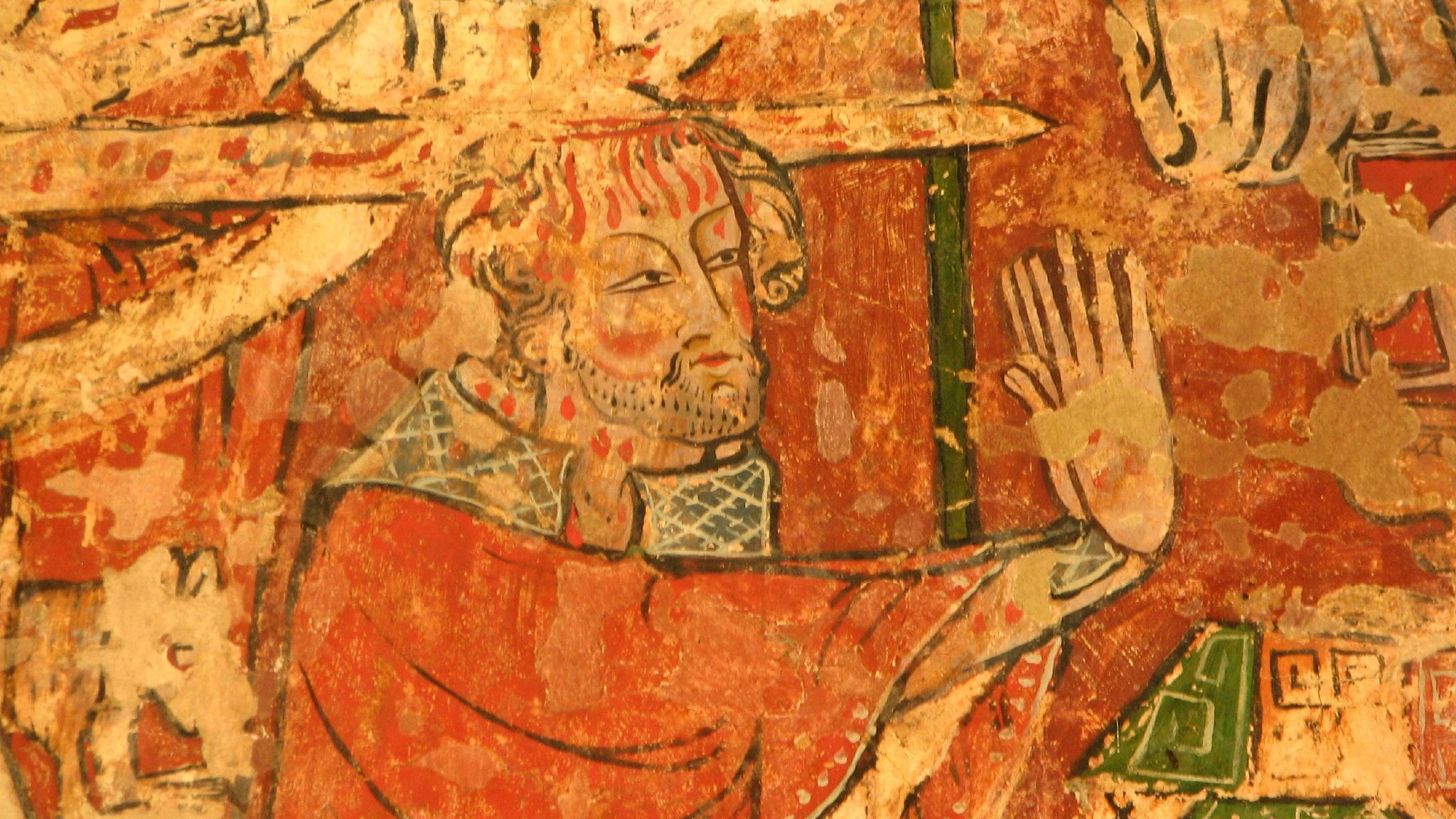
Image credit: Detail of a medieval icon of St. Thomas of Canterbury. Photo by Lawrence OP, 2007.
